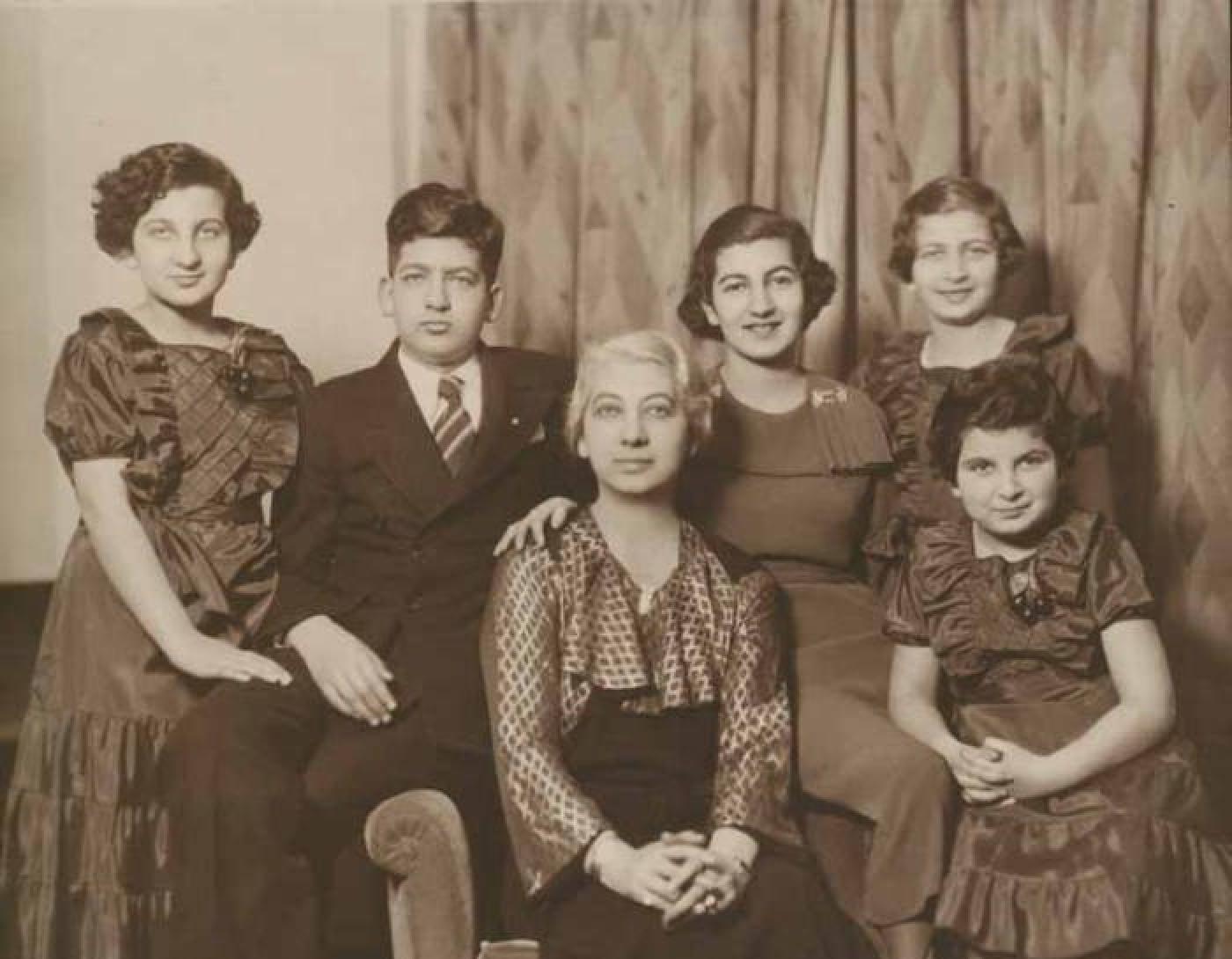
Shafer family portrait, Seattle, Washington, approximately 1925-1935
Courtesy of UW Special Collections
Shafer family portrait, Seattle, Washington, approximately 1925-1935
Courtesy of UW Special Collections
Passport to Washington
Passport to Washington explores the stories of Jewish migration to Seattle and the remarkable contributions of Jewish residents across the state. Curated by Joel Magalnick, the exhibit highlights themes such as arts, education, music, food and wine, science and medicine, public affairs, and technology, showcasing 6–10 individuals in each category and sharing how their work and experiences connect to their Jewish heritage. Presented in spring 2016 at the Seattle Design Center, the exhibit also features the beautiful paintings of Joanne Shellan, whose artistry brings these stories to life.
Introduction
Learn more about the artist, Joanne Shellan.
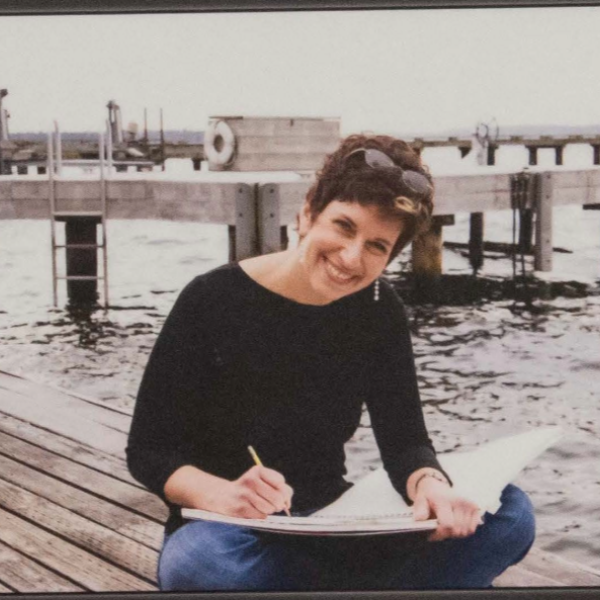
About the Artist
Joanne Shellan, Painter of Your Life in Color
When your father and grandmother paint, you come by the addiction to the brush honestly. "I always felt at home doing any kind of art, from as far back as I can remember," Joanne Shellan says.
Joanne, born and raised in the Pacific Northwest, has studied and painted full-time for almost twenty years in Kirkland, Wash. After graduating from Washington State University in Communications and Art, she worked at her family business until she began her second career as an artist. She recently studied under master painter Liana Bennett of Kenmore, Wash. Over her career, she has explored a variety of mediums, moving from watercolors (in which she received her Signature Membership from the Northwest Watercolor Society) to acrylics and oils.
Shellan's paintings have won dozens of awards, including first and second place awards this past summer. She has been in over three dozen group shows and has had almost two dozen solo shows. She was chosen to represent Washington State in a year-long solo show at the Governor's Mansion in Olympia in 2012-2013. Two of Joanne's donated paintings were auctioned for $10,000.
Her work is part of the permanent collection at Evergreen Hospital (Kirkland) and the Stroum Jewish Community Center on Mercer Island. The Seattle Public Library Foundation used one of her images for all of their media in 2015. She is represented by several agencies in Oregon and Washington. Shellan also co-started the Kirkland Artist Studio Tour, which is now entering its twelfth year.
A consistent theme in Joanne's impressionist-style paintings has been to push the boundaries of color and use strong compositions to support her bold brushstrokes.
"I like to paint subjects that are a little off the beaten path, especially small groups of people in interiors, cities, and landscapes," she says. To help keep her painting style loose, she likes to turn her paintings upside down and then take off her glasses.
Though she is primarily a studio painter, Joanne loves to take on outside projects. Shellan's parents were both German Jewish refugees, so when the chance opened up to work on the Washington State Jewish Historical Society's show, she was happy to take on the challenge.
Shellan annually commits 25% of her profits to local charities and donates her artwork to dozens of charity auctions. You can learn more about Joanne's art at her website, www.joanneshellan.com.
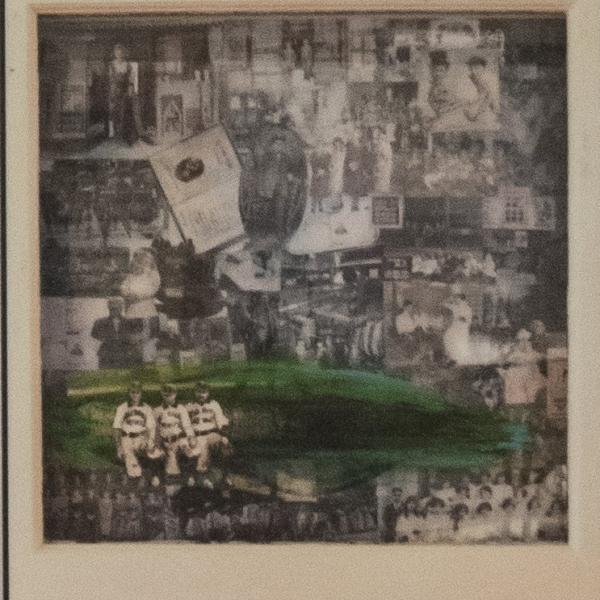
Artists Statement
Even as a kid, I paid attention to graphic designs in bold, bright colors, and I was crazy about lettering and the way type and pictures were laid out on a page. I always felt I was creative and liked making something out of nothing. My father and grandmother painted, so I had the example that making art was something regular people could do. I also had a good eye for photography and choosing subjects. After trying all sorts of art, I finally discovered painting and found it an intensely satisfying way to tie together all of the things I had always loved.
I want to create art without any pretenses. I want it to be honest; never cute, whimsical, or pretending to be deeper than I am. I want my viewers to see beauty in what I see, so I paint subjects in a representational way, except I play with color and brushwork to add emotion, strength, and energy to the vision. I want my love of my subject to come across to you.
When I offered to do these four pieces for the WSJHS. I knew I would be given a gigantic file of old photos of Jews who immigrated to Washington State. It seemed natural to want to include every single person from those files in a big collage, so I took curator Joel's advice: I printed them all out and divided the photos into four groups based on years, 1890-1920, 1920-1930, 1930-1950, 1950-1970. I imagined that it would be effective to place an old window in front of each collage panel.
I thought of the analogy "window to the past" and how we're all drawn to windows, light, and to peeking into other people's lives. I asked a friend of mine, a contractor, where I could buy some old windows. She had some old windows coming out of a house right then, and she said she would give them to me. (When life and your plans fall into place like that, it's the sweetest thing!)
If you look closely, you'll see some tiny photos of windows tucked in here and there among the people. I wanted to highlight a few people from each era, so I painted them in acrylic on the front of each glass and used a slash of color on the backside of the glass to help them stand out and add a modern twist. I like having a part of the painting on each layer of this painting, just as there are layers to each of us as people and layers to our stories.
My own parents were German Jewish immigrants who originally met in a children's home in France, then re-met on a New York City street in their late teens shortly after arriving in the U.S. They moved out west and married to start life afresh. Their story is everyone's story, and I'm happy to have a part in re-telling it.
- Joanne Shellan
Education
The first step in helping our children make their way in the world is a good education. So many people in our community have devoted their lives to educating young and old alike, from early childhood to the university level.
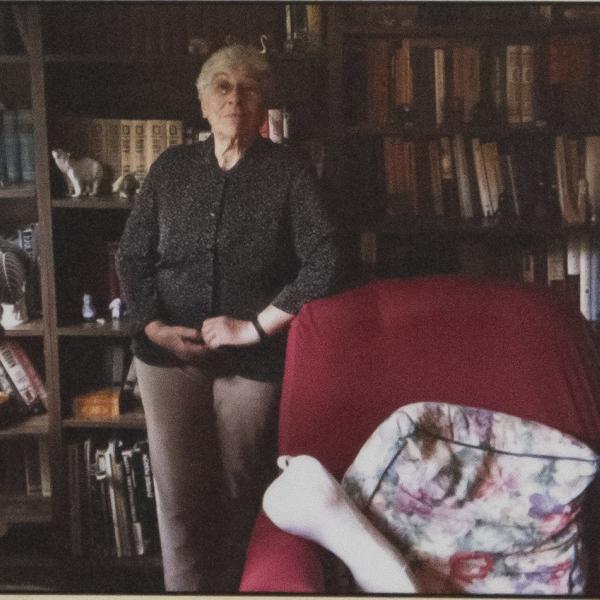
Erika Plisteskaya
Born 1929, Leningrad/St. Petersburg, Russia. Arrived in Washington, 1980
Erika Plisteskaya holds a Ph.D. in physiology, which she earned in Leningrad, but the Soviet government would not allow her to contact or communicate with her global scientific community. Erika felt her career would remain stagnant if she stayed, so when she got the opportunity to leave, the scientific papers she had read led her to the University of Washington, to work for a professor she admired.
Erika was one of the first researchers to show that aquatic animals also have insulin, the hormone important for their metabolism, very similar to humans.
“Indirectly, it could help with human application, yes, but not directly,” she says. “Our research added knowledge to the evolution of insulin in aquatic animals.”
Erika managed to leave Russia in 1979, after working in Leningrad for 28 years. By that time, she had become renowned internationally for her work. She emigrated first to Italy, and one year later came to Seattle.
She landed her coveted position at the UW, and as a research professor Erika traveled all over the world to give scientific presentations.
“I travelled to many countries to collaborate with my colleagues in Australia, Germany, France, all the Northern European countries, England, Canada, Spain, Portugal and other countries,” she says.
Growing up, Erika’s parents did not expose her to Judaism, as they had assimilated into Russian culture due to worries about persecution. However, Jewish organizations helped her to migrate. The Hebrew Immigrant Aid Society brought her to the U.S. from Italy and Jewish Family Service met her in Seattle when she arrived in April 1980.
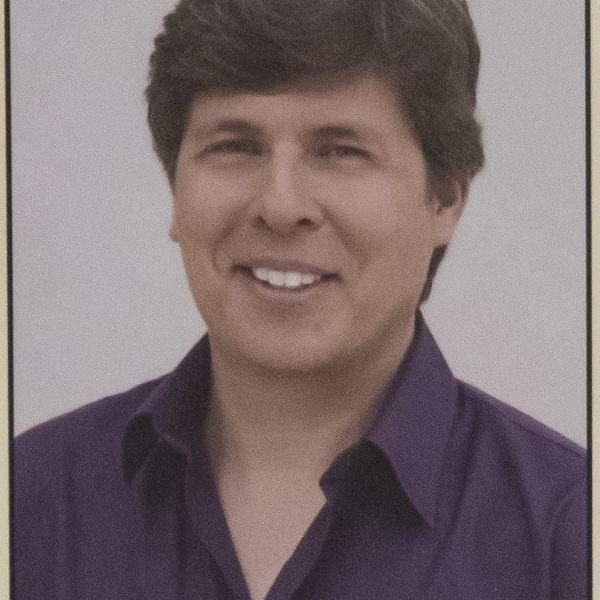
Oren Etzioni
Born 1964, New York, N.Y. Arrived in Washington, 1991
Even as a boy growing up in Israel, Oren Etzioni knew he wanted to be a scientist. He attended a school for gifted students when a reporter from a children’s magazine came for a visit.
“The interviewer asked the natural question you ask a 9-year-old, ‘What do you want to be when you grow up?’” Oren says. “I said a biochemist.”
Oren moved back to New York at age 13 to live with his father. He earned the first degree in computer science in Harvard University’s history, then completed his doctorate at Carnegie Mellon. He came to Seattle because his then-wife loved the beauty and the opportunities for her career.
“I realized the department at the University of Washington was an up-and-coming department and Seattle is a lot better place to live than Providence,” the other natural choice for Oren’s career, he says.
Through the years Oren cultivated a love for teaching and mentored fifteen Ph.D. students. But he also had an entrepreneurial bent, and was in the right place at the right time to launch several Internet companies that were soon gobbled up by larger Internet companies.
In 2014, Oren left his position at the UW to lead the Allen Institute for Artificial Intelligence, a research organization on the cusp of leading technology.
Though his family belongs to Temple Beth Am, “my own personal journey has been to be less close to Judaism as an organized religion,” he says. “At the same time, I’m very proud of being a Jew. I’m very proud of Israel in a time when Israel is very much criticized, if not vilified.”
My father was a professor, but also a social activist. He argued for the role of the intellectual in society as an activist, not somebody who sits in an ivory tower and produces tomes that nobody reads, but somebody who uses their training, their position and their voice to have an impact. I got from him the desire to have an impact.
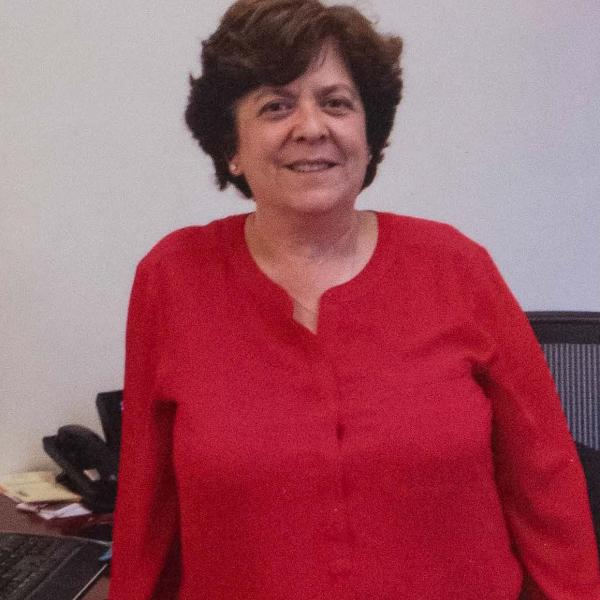
Connie Kanter
Born 1957, Villanova, Penn. Arrived in Washington, 1983
Connie Kanter grew up knowing the importance of education-her parents reminded her of it all the time.
"My parents stressed to my sister and me that our education was our job;' she says.
The Jesuit character at Seattle University is very special. Take the '' mission statement, we are committed to the whole person," and compare it to Seattle Hebrew Academy. Take out Jewish/Jesuit, and it's the same mission.
Today, grown up with children of her own, those lessons have found their way into her philanthropic giving and her career. Since 2012, Connie has been Chief Financial Officer and Vice President of Finance and Business Affairs at Seattle University.
Part of Connie's journey to the university was four years working in development at Seattle Hebrew Academy. She and her husband, Chuck Broches, are longtime supporters of Seattle's oldest Jewish day school and early childhood program.
Connie grew up in a Reform Jewish family and attended Wharton Business School for undergrad. She worked in the private sector for a few years, then obtained her MBA from the University of Chicago. Work brought her to Seattle, but she fell in love with the state's natural beauty and the city's urban landscape.
Her first experience with the Jewish community here was as a
volunteer at the Kline Galland nursing center, helping out with
Bingo. From there, she became involved with the Jewish Federation, served on its board, and has also served on the boards of Seattle Hebrew Academy, Kline Galland, and the Samis Foundation.
Today, Connie loves the work she does. The ''biggest aspect of Seattle U and Jesuits is the degree of common purpose, the focus of social justice," she says. "This is a parallel to tikkun olam, and the notion of serving others:'
Food, Fermentation, and Fine Wine
The guy who made us appreciate that beer can be more than cheap swill in a can made a name for himself here. So have countless winemakers, chefs, and food enthusiasts. And so many of them grew up in the Jewish community. B'teavon!
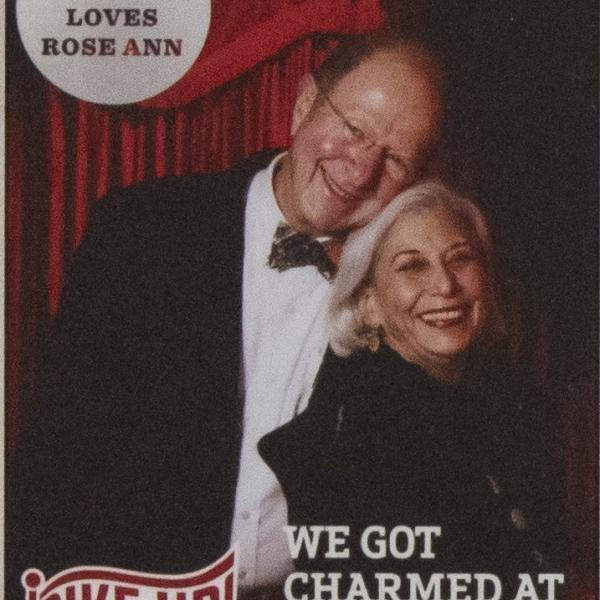
Charles and RoseAnn Finkel & Nathan Degginger
FOOD, FERMENTATION AND FINE WINE
“I used to be Charles Finkel,” says Charles Finkel, “but now a lot of people call me Mr. RoseAnn Finkel.”
The founders and owners of the Pike Brewing Company, one of the state’s oldest craft breweries, have a long history in the beer industry. But the two met over wine—at a tasting Charles was conducting.
“The only wine she’d ever tasted was Manischewitz or Mogen David at the Passover seder,” Charles says. “And RoseAnn said to herself, ‘Why would I possibly like anyone in the wine business? I hate wine.’”
Charles’s visibility increased in the wine world, and a larger company eventually swallowed his distribution business. He began to think about a market that up to that point had been untapped, so to speak.
“Beer was not a beverage of scholarship, it was a beverage more of the drink of the common man—to a lifestyle product,” Charles says. “It wasn’t until we had a craft beer renaissance we proselytized that beer is no less noble than wine or cheese, and it could be considered in such a way.”
The Finkels started with importing, both domestically from the last of the country’s smaller breweries, and from older brewers in Europe, and found a thirst for their products. By 1982, Bert Grant had opened up the first craft brewery in Yakima. Hale’s, Red Hook and Pyramid followed close behind, and Charles and RoseAnn opened The Pike Place Brewery in 1989. Though the holding company that owned Pike Place was sold in 1997, the Finkels reacquired the brewery in 2006 and have been raking in awards and beer enthusiasts since.
Ever the entrepreneur, Nathan Degginger and his sister Carrie’s husband, Edward Friend, found success in beer. First they owned Friend-Degginger Importing Co., a liquor and importing business, then expanded to the Pioneer Square saloon Billy Mug’s, which at one point sold more barrels of beer than any bar in the country.
Eventually the partners, realizing that they could do well by making their own beer, formed the Slaughter Malt and Brewery Company in the town of the same name, which today is known as Auburn. However, at some point the two businesses became too much, and, according to Nathan’s grandson Joe Greengard, advertised “two successful businesses showing good margins.”
Nine months later, in 1897, the brewery burned to the ground. Soon after, Nathan left his family behind and headed north to prospect for gold in Alaska. He spent five years away from his wife and two children before his return, and owned first a stall in the public market and later a delicatessen.
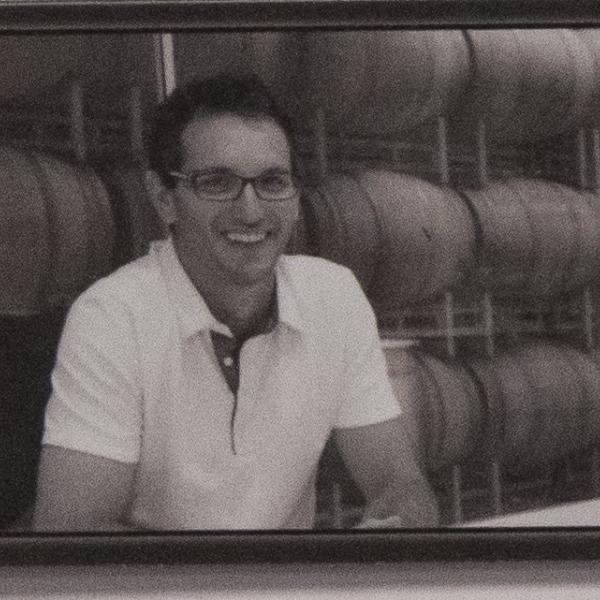
David Rosenthal
Born 1979, Denver, Colo. Arrived in Washington, 1997
David Rosenthal came across his success the old-fashioned way: he worked for it. For someone who grew up with barely an inkling that wine comes from grapes, David has certainly made a name for himself as the head white winemaker for Chateau Ste. Michelle winery.
The Denver native came to Tacoma to attend the University of Puget Sound. As soon as he graduated, he headed south, to the Napa Valley.
He took a job at the Robert Mondavi winery not because he was seeking to gain entry into the industry, but because it was a job. And though he knew nothing about wines as he worked his first harvest, he hasn’t looked back.
He worked a few seasons in California, learning more about harvesting and making wine, and spending time in the lab to understand what goes into the perfect blend.
“I enjoyed the lab work. I enjoyed being around wine,” David says. “It took a while for me to really develop that passion. Once I recognized that I had developed that passion was when I decided I really wanted to pursue winemaking.”
He spent some time in Oregon and Australia working on harvests—it’s relatively easy to jump between hemispheres since the harvest down under comes six months behind ours—but settled in Washington in 2006 and has been with Chateau Ste. Michelle since.
Depending upon the time of year, you can find David among the barrels in Woodinville testing and blending to come up with the right flavor profile, or you can find him among the vines in Eastern Washington, checking for the right time to begin the harvest. He loves the combination of art and science—measuring the yeast and bacteria, nutrient levels, acid and sugar, all the things needed to create balance, then the art of mixing the varietals together for the right product.
Since working his way up to the head white wine maker a year and a half ago, David has approached the job with a mix of excitement and awe.
“It’s one thing to be an assistant winemaker and work for someone else and execute a plan, and be a part of a team that makes good wines,” he says. “But when you’re the one driving the plan, driving little stylistic changes, it still is a little nerve wracking.”
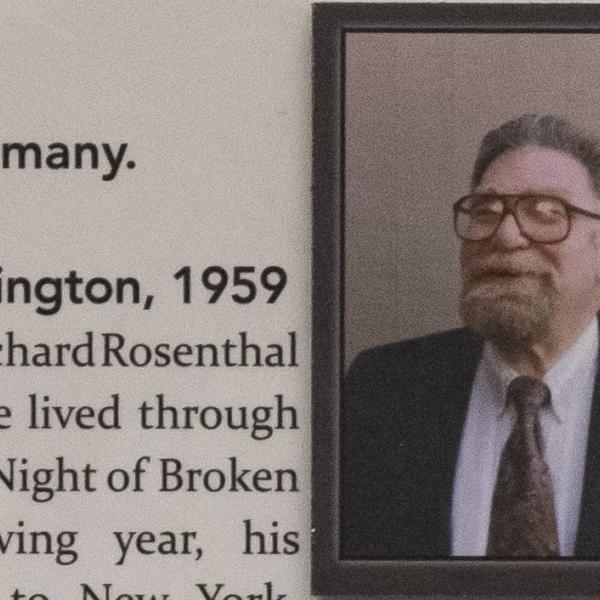
Rabbi Richard Rosenthal & Rabbi Jason Levine
THE RABBIS OF WASHINGTON
Born 1929, Germany. Died 1999. Arrived in Washington, 1959
“There have been seven rabbis who as kids went through religion school at Temple Beth El with Rabbi Rosenthal. For a small congregation it’s amazing that seven people went on to rabbinical school, ranging from Orthodox to Reform.” — Rabbi Rosenthal’s daughter Debbie Calderon
In 1938, when Richard Rosenthal was 9 years old, he lived through Kristallnacht, the Night of Broken Glass. The following year, his family emigrated to New York, then went to Louisiana.
Upon his graduation from the Hebrew Union College in Cincinnati, Rabbi Rosenthal was assigned as a chaplain at an army base in Missouri. That’s where he met his wife, Barbara, who had been attending college nearby.
When the pulpit at a small Reform temple in Tacoma came open, Richard jumped at the opportunity. So he and Barbara packed up their belongings and took their very first trip west.
“We did not know the difference between Spokane and Tacoma,” said Barbara. “We thought we were going to Spokane, but when we got off the plane we found out that Tacoma was near Seattle.”
Rabbi Rosenthal was very active in Tacoma’s community and served on many boards, including the Tacoma Urban League and Rotary. He taught Comparative Religion at the University of Puget Sound and would visit the penitentiary at McNeil Island twice a month.
When Richard passed away from cancer in 1999, the city practically closed down, with standing room only at his funeral. Clergy from many ministries in Tacoma attended.
Born 1983, St. Louis, Mo. Arrived in Washington, 2013
From a young age, Jason Levine knew he wanted to be a scientist. He studied neurobiology at Cornell University, spending much of his time in the lab. But when he got involved in Jewish activities on campus and added a second major in Near Eastern Studies, his focus led him to the career we know today.
After college, Jason worked at a Hillel, then as a youth director and religious school teacher. At that point he realized he should follow his passion toward becoming a rabbi.
He attended Hebrew Union College, with a focus on returning to the Hillel world. But he had trouble finding something that clicked. When he discovered Temple Beth Am in Seattle, he knew about the synagogue’s stellar reputation and that Seattle was a booming and exciting city. So he decided to apply.
Rabbi Levine loved seeing a congregation driven by its community and dedicated to being welcoming and inclusive while exploring new things. He liked that Beth Am lives its values of social justice, enthusiastic worship, and commitment to educating and mentoring youth.
Now, in his fourth year at Beth Am, Rabbi Levine has been promoted to Associate Rabbi and made lifelong friends in his adopted city. He loves pushing himself out of his comfort zone and feels lucky to serve in a congregation that helps him grow, gives him chances to make mistakes and try new things, and believes in his future as a rabbi.

The man behind the Frango & Michael Natkin
FOOD, FERMENTATION AND FINE WINE
When it became clear in the spring of 1992 that Frederick & Nelson was indeed about to close forever, throngs of panicked Frango lovers descended on the store to stock up on their beloved confection.
But not to worry, said Pete Vinikow, because the chocolate mint truffle is nothing unusual in itself, and is something that could easily be duplicated by other candy makers. Vinikow ought to know, because it was his father, Joe Vinikow, who made Frangos for Frederick & Nelson for many years.
Frederick & Nelson paid the sum of $2 million to patent and copyright the Frango, said Pete Vinikow. His father never owned the Frango name.
In 1908 Joe Vinikow established a factory, the Parisian Candy Company, at 13th and Yesler, the present site of the Bailey Gatzert Elementary School. Joe made candy for many companies to use as their house brands, including Schwabacher Grocery, his biggest wholesale account; G. O. Guy and Bartell Drugs and Kress Five and Dime Stores.
When World War II came along, sugar was rationed, and the amount of sugar available to candy makers was based on previous production amounts. Vinikow’s factory had a large quota, because of the amount of sugar it used.
In 1944 Frederick & Nelson bought the Parisian Candy Company from Vinikow, not because they wanted the company or its physical plant. What they really wanted was the sugar quota. When F&N built additional floors onto their store at Fifth & Pine in downtown Seattle, they included a floor specifically designed the manufacture of their candy.
Michael Natkin’s love of food and cooking came early in his life. At around age 8, his mother was diagnosed with breast cancer, which she battled for 10 years until she passed away. Michael liked to help around the house by cooking for his mother and the rest of his family—his earliest experiences in the kitchen.
Following his sophomore year at Brown University, Michael headed west to Green Gulch Farm Zen Center near Muir Beach, California, where he had his first opportunity to cook on a commercial level. Each evening he would cook for around thirty people using ingredients grown on the farm.
“It doesn’t get any better than the potatoes with the dirt still clinging to them, flowers on the table all coming from the fields nearby,” he says.
Michael returned to Brown, then found work in the tech industry. But he never lost his passion for cooking. Soon after he arrived in Seattle he met Sarina Behar, they married, and had already had children by the time he was ready to try a venture of his own.
In 2007, Michael started his vegetarian food blog Herbivoracious. He found relative success early on, but still needed to work his day job. Michael’s passion and efforts paid off in 2011 when Harvard Common Press offered him a deal to write a cookbook—not a common occurrence back then.
Following his book tour, Michael brought together his tech experience and love for cooking by joining Chef Steps, a company that mixes technology, science and great recipes together to create an online culinary school. Its new product, Joule, which Michael put much of his efforts into, comes out this fall.
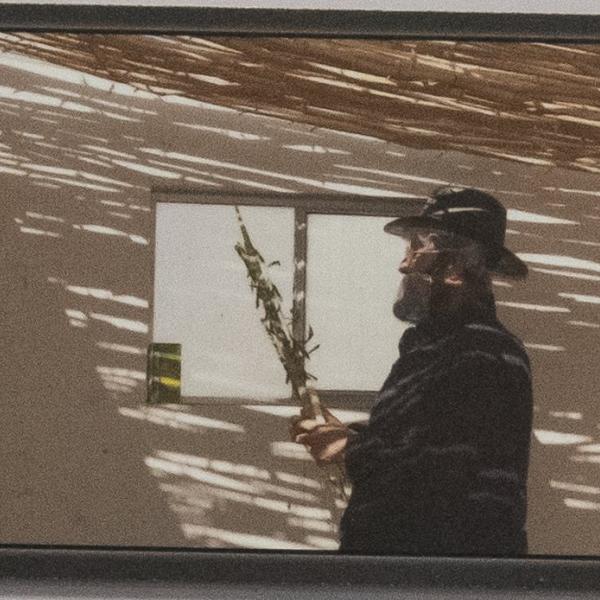
The Rabbis of Prosser
FOOD, FERMENTATION AND FINE WINE
Between the dusty desert scrub and the perfectly lined orchards and grape vines, this vast area known as the Yakima Valley can be a lonely place. Even more so during the fall harvest season when a minyan of Orthodox rabbis, most of them from the East Coast and as far away as Israel, checks into Sunnyside’s Best Western hotel and hunkers down for six or more weeks of constant hashgacha, supervision, ensuring the grape juice that consumers find on their store shelves over the next year will, in fact, be kosher.
The vast majority of concord grapes, the sweet varietal that makes up most of the bottled grape juice in this country, comes from the Yakima Valley. The containers of grape juice that show up on shelves of grocery stores across the country are the results of about six weeks of work every year.
Unlike other crops grown in the area such as apples or pears, where the machinery can get cleaned, checked, and certified kosher at the start of the harvest, grapes are a sacramental fruit with specific rules set forth in the Torah about how they can be handled.
As a result, the making of juice, which for all intents and purposes is considered the same as wine, must have a mashgiach, a Sabbath-observant Jew, on hand 24 hours a day, seven days a week until the harvest and subsequent bottling is finished.
It means that even through the High Holidays — with the sweet essence of grape embedding itself in the clothes of these rabbis while they conduct their Yom Kippur fast — they are working and performing the same tasks they must perform on any other day.
Relatively speaking, ensuring kashrut for the apples at facilities such as Treetop, which as of this year is the largest kosher juice facility in the Yakima Valley, is a simple task. The rabbis generally only need to go in once to certify the equipment, and barring any unforeseen glitches, Gallor makes trips to the area every few weeks throughout the year to ensure compliance and to answer any questions.
With the grapes, however, the process is more painstaking — and mechanized — than some guy with hopefully clean feet jumping up and down in a barrel.
“I had images of Lucille Ball in a vat, but the scale is way too big,” said Rabbi Edward Shapiro, one of the mashgichim on contract with the OU who came in from Denver.
For one thing, unless the guy who would be doing the stomping — or who does the picking or any actual step in the juice-making process — is a Shabbat-observant Jew, the grapes must be pasteurized so they become mevushal, meaning they can be handled by non-Jews in any type of situation.
In kosher winemaking, the wine is flash heated to near boiling point — the OU uses 175°F as a benchmark, though a buffer of 10° additional or more is general practice. For juice, however, the process is different. The grapes, pre-mashing, are continuously cycled through a series of heated tubes until they reach the set temperature, and are then released into a vat that can be as large as 60,000 gallons.
Despite the long, often boring hours, being a couple hundred miles from fresh kosher food, and even farther from their young families, Rabbi Yitzchok Gallor, who leads the operation said people line up to try to get one of the coveted mashgiach positions. Turnover, he said, is practically nil.
“They get paid pretty well,” Gallor said. “The ones that are learning, living off the dust of the earth, this is all their money all year.”
Music and the Arts
Children all over the world sing "I Have a Little Dreidel," written by Temple De Hirsch cantor Samuel Goldfarb. Maria Frank Abrams, featured in this exhibit, had her work shown all across the world. Gerard Schwarz led the Seattle Symphony for decades. You'll find a Jewish flavor here in everything from folk art to klezmer revivals to paintings in our state's finest museums.
Cindy Linkon
Born 1959, Santa Monica, Calif. Arrived in Washington, 2004
That Cindy Linkon runs two art schools should come as no surprise. “This is my love. I’m working with children as well as doing art,” she says. “It was always in my blood.”
That she doesn’t have a lot of time to work on her own art should also come as no surprise, given her busy schedule. But she feels gratified that so many others can allow their own talent to bloom.
She, her husband Steve, and her family came from Southern California to Bellevue in 2004 because they felt like Washington would be a much nicer place to raise children. That has turned out to be true.
“My husband and I found that the people here in Washington are very warm, very down to earth,” she says.
They joined a temple when they got here and later sent their daughter to the Jewish Day School. Cindy got involved with fundraisers, auctions, and the like and began to introduce art lessons to the students.
From there it was a short road to her own school, Studio Fine Art Classes, first in downtown Bellevue, then a second location at Crossroads Mall.
Today, between the two studios, Cindy sees about 200 kids and 50 adults each week.
“As an educator, I am rehabilitating the community through the arts and I see a lot of children and adults learning the basics,” she says.
Gustave Stern
Born 1900, Germany. Died 1990. Arrived in Washington, 1945
Those of you who frolicked on the fields of Volunteer Park back in the 1950s may remember the outdoor concerts led by the great conductor Gustave Stern. Or perhaps the shows at the Greenlake Aqua Theatre that brought people in during the summer months to entertain the crowds at just $2 or $3 a pop. But the life of this dedicated musician was not all opera and folly.
Gustave, with his wife Gertrude and sons John and Michel, learned early on that life in Nazi Germany would be bad for them, so they immigrated to France. France, it turned out, would not be much better. So following Kristallnacht, the family applied to leave for North Dakota, where Gustave’s uncle, Herman Stern, offered to sponsor them.
They spent a year in Chicago before they left for North Dakota. Gustave worked for Herman as a salesman, but it was clear that his first love was music. So the Stern family continued its trek west.
Gustave got his start in Seattle working at what is now Seattle University, where he taught in the music department. He would often have clergy and staff over for a Sunday afternoon of drinks and religious discussion.
“My father was very learned, he really did know a lot about Judaism, and had been quite religious as a young man,” says Michel.
In 1950, Gustave was hired to conduct outdoor concerts in Volunteer Park’s new outdoor amphitheatre. The concerts, using musicians hired from Seattle Symphony, would draw as many as 15,000-20,000 people. He followed that by producing and directing shows at the newly built Greenlake Aqua Theater. Though he would still teach and perform on occasion, Gustave more or less retired in 1960.
In 1984, however, Gustave performed an oratorio of Judas Maccabee at Temple De Hirsch Sinai that featured Mel Poll, another well-known musical personality, who had just returned from performing with the New York City Opera.
Gustave died in 1990, but his legacy lives on. His piano, which along with some furniture made it out of France and reunited with its family in Seattle in 1948, now resides at Cornish College. The piano, which still gets used today, was a gift from Michel and his wife Bobbie.
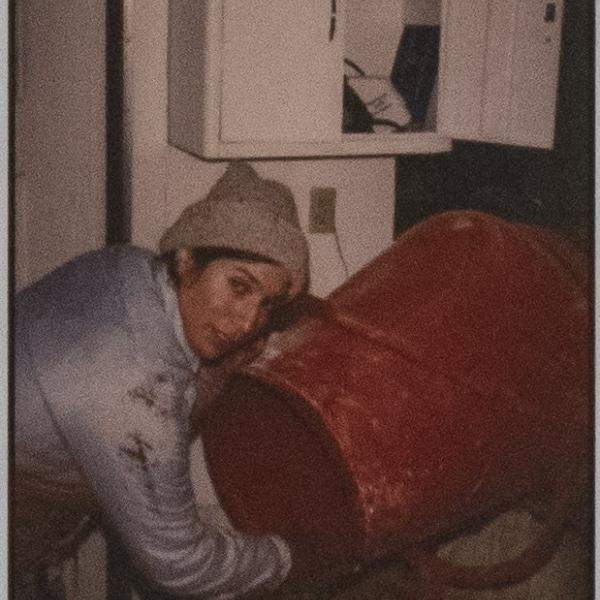
Joan Rudd
Born 1948, New York, N.Y. Arrived in Washington, 1988
Making new friends over 40 proved daunting until Joan Rudd cultivated her interest in Yiddish language.
“Tying myself and my various productions in art to a sense of peoplehood was key in creating a body of work,” she says.
Starting in 1997, Joan worked with a group to create a Yiddish-themed weekend, Mame Loshn NW, which ran through 2002.
More recently, joined by a committee of volunteers, all transplants to the area, she created a Jewish cultural heritage exhibit through the “Storefronts” program installed at the Bellevue City Hall Park Pavilion in spring 2014.
“My work in making Yiddish culture ‘visible,’ whether painted on a bus stop or as an unexpected addition to an international scientific conference, is somewhat unique,” she says.
In 2013, Joan and her husband Joe Felsenstein, a faculty member in biology at the University of Washington, traveled to Japan to accept the International Prize. The Emperor and Empress of Japan received the couple, and Joan presented the Empress, a known admirer of folk tales, with Yiddish children’s stories, including two books by Eric Kimmel of Portland.
The Empress said she was particularly grateful, as the stories would help her to understand the life of the Holocaust survivor she was scheduled to meet soon after.
Though she grew up in a Reform congregation, and served as president of the Bronx and Manhattan Federation of Temple Youth from 1964-65, today she attends four different synagogues in Seattle, from Reform to Modern Orthodox.
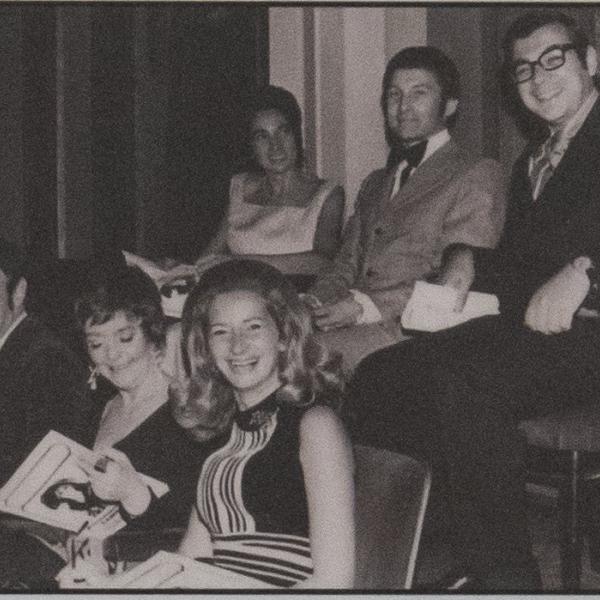
Lucy and Herb Pruzan
Lucy born 1939, Montevideo, Uruguay. Arrived in Washington, 1953
Lucy Pruzan arrived in Seattle via Greyhound bus, but the road to get here took far more twists and turns than the long ride from New York.
“We traveled by ship from Montevideo to London because my dad had a very close cousin who had taken good care of him during his time in England when he was in the British army,” Lucy says. “We left Montevideo in September and got here in November. It was a long trip.”
Lucy’s family had left Berlin in the 1930s and arrived in Uruguay in 1938. Because Jews had not been allowed to attend college in Germany, her mother Frieda went to a trade school and trained to become a dressmaker, a skill she took with her to Montevideo. Once they arrived in Seattle, her parents took odd jobs until they eventually bought a dry cleaner in West Seattle.
Lucy became an “American girl” very quickly, she says. She met Herb Pruzan, the man she would soon marry, because her parents met Herb’s parents and became good friends. After their wedding, Herb’s father Jack, an artist, gave them some of his acquired pieces as a gift to start out.
“It wasn’t a conscious decision to collect art,” Lucy says. “When Herb and I were on our honeymoon, we went to Palm Springs and saw a painting we liked.”
And that began a lifelong love of art collecting.
“We both really enjoyed it,” she says. “It was entertainment at first and then when could afford to buy, we bought some of our first pieces paid off on time.”
They began to nurture Northwest artists, and bought early pieces from artists at the Pilchuck Glass School who later became famous. Their collection, which Lucy calls “eclectic and whimsical,” has been featured in a book published by the Tacoma Art Museum in 2013, Creating the New Northwest: Selections from the Herb and Lucy Pruzan Collection, written by Rock Hushka and Matthew Kangas.
“We just sort of drifted into collecting art slowly, and it became a passion and we couldn’t stop!” Lucy says.
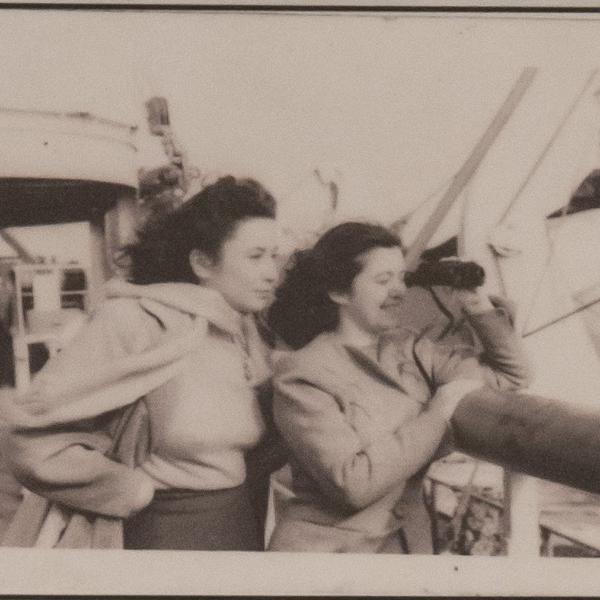
Maria Frank Abrams
Born 1924, Hungary. Died 2013. Arrived in Washington, 1948
Maria Frank began drawing and painting when she was a 5-year-old in Hungary.
“I enjoyed doing illustrations to the children’s stories that were read to me,” she said.
She drew and painted throughout her childhood, though she never received any formal art training until she escaped to the United States.
In 1944, at the age of 19, the Nazis took Maria and her family from their home and deported them to Auschwitz. The small consolation she took from her imprisonment was her work in a factory, where she was able to get her hands on pencil and paper and the other women would ask her to draw how they looked before the war.
“I would draw a figure in this kind of clothes, and they loved it! And I loved it. It was very strange,” she said. “I guess it was a reaching for some reality from this completely mad, unreal tortured world that we lived in.”
Only she and a cousin, Vera, survived.
Upon liberation she worked with the American Jewish Joint Distribution Committee in Austria before she came to the U.S. through a Hillel scholarship to the art program at the University of Washington.
Maria’s influences included Paul Klée, Mark Tobey, Paul Cézanne, and Walter Isaacs, her professor at the University of Washington and a renowned Northwest School painter.
“The Northwest affects my work very, very much,” she said. “Most of my work is inspired by the landscape around me, and by the colors around me.”
Maria died at her home on Mercer Island in 2013 at the age of 88, but not before having received four King County Arts Commission awards, and been featured across the world including the Seattle Art Museum, the Henry Gallery at the UW, and in approximately 150 shows regionally and worldwide.
Public Affairs and Social Justice
From Bailey Gatzert, Seattle's first Jewish mayor, to the many people who advocate for ending poverty and homelessness, Jews in Washington State have a long history of involvement in public affairs and social justice. Meet the people who came and made a difference.
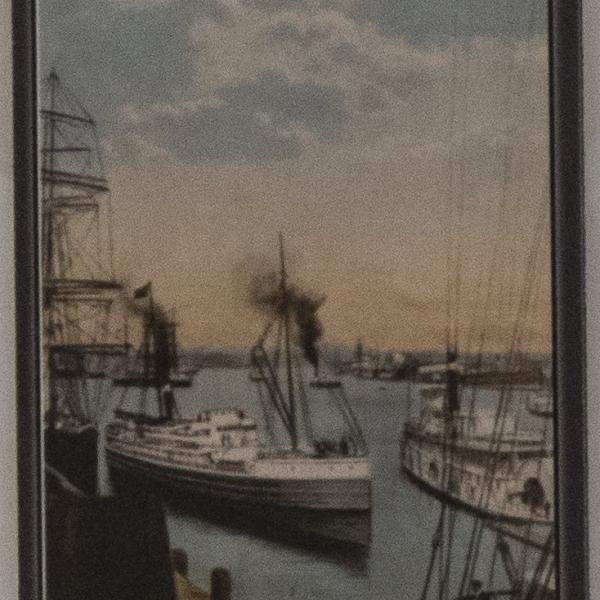
The Bailey Gatzert Riverboat Stamp
From the Archives
Bailey Gatzert (1829-1893) was one of Seattle’s most notable Jewish citizens. The German-born immigrant was elected Seattle’s first and only Jewish mayor in 1875, and when President Rutherford B. Hayes visited Seattle (the first president west of the Rockies), the Gatzerts entertained him at their home.
The Bailey Gatzert, a riverboat named for the mayor, operated on the Columbia River and Puget Sound from 1890 to 1923. It was constructed by the Seattle Steam Navigation and Transportation Company incorporated in Seattle May 31, 1890 by John Leary, Jacob Furth, Edward Neufelder, W.R. Ballard and H.G. Struve. Furth and Neufelder were Jewish, early comers to Seattle and prominent citizens. Furth organized the Puget Sound National Bank and his wife Lucy was a founder of the Seattle Children’s Home. Neufelder was president of the People’s Savings Bank from 1900 until his death in 1923. He was a founder of the Seattle Golf and Country Club and left a large bequest to the Ladies Hebrew Benevolent Society.
The ship was launched at Salmon Bay November 22, 1890. She was 177 feet, three inches long, sailed between Seattle, Tacoma and Olympia, and was the first automobile ferry to operate in the Olympic Peninsula. On the Columbia River, she engaged in the excursion trade. In 1928, the hull of the ship was used as a floating machine shop at the plant of the Lake Union Dock and Machine Works.
The Bailey Gatzert had the most beautiful whistle ever heard in the Northwest. Its four deep musical tones blended as in a calliope, echoed from Seattle’s hills every time she arrived and sailed, much to the delight of old timers on the waterfront. The ship has been described as “one of the finest sternwheel steamers afloat.” And “the queen of them all and one of the fastest ships on Puget Sound in her day.”
Bailey and Babette Schwabacher were married in 1861. Emily Schwabacher, Bailey Gatzert’s grand-niece, says Gatzert “was very public spirited and very convivial.”
“For any movement for the advancement of Seattle at home and abroad, Bailey’s hand went freely to his pocket,” wrote Clarence Bagley in his history of Seattle. Bailey fought for the Lake Washington Ship Canal, and helped interest the Hananese Nipon Yusen Kaisha steamship line in making Seattle a port of call.
In 1996, the U.S. Postal Service issued a set of five riverboat stamps that included the Bailey Gatzert.
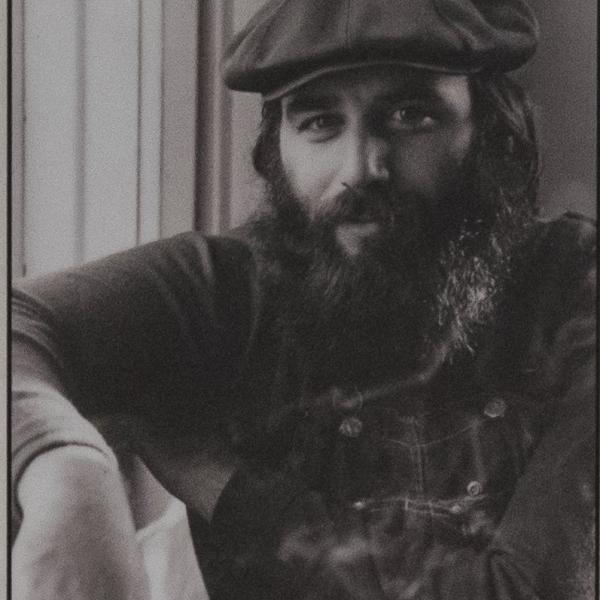
Barry Goren
Born 1950, Brooklyn, N.Y. Arrived in Washington, 1972
“I spent the first year here walking around, slack-jawed, at the physical beauty of Seattle. I just couldn’t believe it,” Barry Goren says. “I grew up in Brooklyn, a very urban environment. The lush green, the snowcapped mountains, the hills, the water. I was completely agog.”
Upon graduation from Brooklyn College and feeling a need to get out of his cocoon, Barry sought to go west. He joined VISTA, the domestic peace corps, where he became interested in juvenile crime and prevention. He spent nine years working for the City of Seattle, helping to prevent juvenile crime through direct intervention.
Barry left his city job in 1981 to run a city council campaign. When his candidate lost the election, he did what any self-respecting single, unemployed 30-something would do: he ran off to Europe.
“It was transformational,” Barry says. “I had a Jewish awakening. I found myself going to synagogues and places like Bern, Switzerland and Morocco. I had very positive experiences. People welcomed me and invited me into their homes. I realized that I’m part of this extended family that exists all over the world.”
One of Barry Goren’s first forays into Jewish activism was the campaign to free Soviet Jewry. But he wasn’t alone. Hundreds of people in Seattle’s Jewish community protested, wrote letters, and met with elected officials to try to gain the Soviet refuseniks freedom. Their efforts eventually succeeded.
Barry returned and worked on many activist causes, from advocating for Seattle’s black community to the fight to free Soviet Jewry and Israel advocacy. He befriended Judy Balint, founder of Seattle Action for Soviet Jewry. Together they worked with Sen. Henry Jackson, who championed the issue, and Barry attended the march on Washington in 1985.
Also at this time, Barry joined the Community Relations Council at the Jewish Federation of Greater Seattle as a volunteer and discovered an interest in working as a professional in the Jewish community. He joined the Federation’s staff in 1984 and eventually became its director, a position he left in 2005.
“One of the great opportunities I had working for the Federation is that I got to travel around the Jewish world quite a bit,” Barry says. “I got to go to Israel about 30 times.”
Barry now works to help students in underserved and lower-income communities find success in graduating from high school and moving on to college.
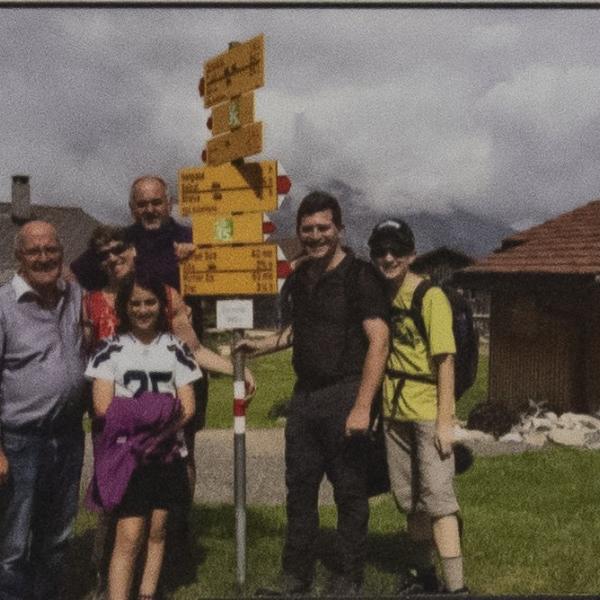
Ambassador Suzi Levine & Eric Levine
PUBLIC AFFAIRS AND SOCIAL JUSTICE. Ambassador Suzi Levine: Born 1969, Chester, Pa. Arrived in Washington, 1993. Eric Levine: Born 1969, Boston, Mass. Arrived in Washington, 1992
Ambassador Suzi Levine & Eric Levine
PUBLIC AFFAIRS AND SOCIAL JUSTICE. Ambassador Suzi Levine: Born 1969, Chester, Pa. Arrived in Washington, 1993. Eric Levine: Born 1969, Boston, Mass. Arrived in Washington, 1992
Today, Suzan LeVine serves as the Ambassador for the United States to the Swiss Confederation and the Principality of Liechtenstein. But her journey to the U.S. Embassy in Geneva came through her Jewish life in Seattle.
Suzi arrived in Seattle to work for Microsoft, and quickly sought Jewish community. She found Hillel at the University of Washington, and became active in its Grads-Plus program. She met her husband Eric through work, but Hillel sealed the deal.
“The moment when Rabbi Dan [Bridge] introduced himself to Eric and gave him a giant bear hug was part of why, I think, Eric actually decided to marry me!” she says.
She eventually began to seek out a new spiritual home, but what she wanted didn’t exist. So in 2006, partnered with Rabbi Rachel Nussbaum, Suzi launched The Kavana Cooperative, an innovative religious, learning and social action organization that today is “informing and collaborating on much of the innovative Jewish community building happening across the United States,” Suzi says.
At the same time Suzi was rethinking her religious community, she was also becoming more politically active. At a conference for an advocacy group focused on Israel, reproductive rights, and the separation of church and state, she met the junior senator from Illinois, Barack Obama.
“I was so moved by our meeting that I called Eric that evening and shared that when Senator Obama ran for president, I would do everything in my power to get him elected,” Suzi says.
And she did. She became a campaign organizer, co-chaired multiple groups including Jews for Obama, and plenty more. After Obama won his second term, “President Obama and his team asked me if I would serve as Ambassador to Switzerland,” she says. “On June 2, 2014, the LeVine family arrived in Switzerland.”
Eric LeVine defines his Jewish life in two phases: “pre-Suzi” and “with-Suzi.” Despite the fairly typical life of a Jewish kid, Eric’s Bar Mitzvah was a milestone in more ways than one: he used his gift money to purchase his first computer, an Apple Macintosh.
“This ignited a lifelong passion for technology that ultimately led me to Harvard College and then to Seattle in 1992 to work for Microsoft,” Eric says.
He had intended to stay here for three or four years, then move back home, but one fateful evening in November 1993 changed everything: “I was introduced to Suzi Davidson at a work event,” he says.
Nothing happened for a couple years, but then they got together for brunch. They found they had a lot in common.
“I remember very distinctly thinking that I could picture spending the rest of my life with Suzi,” he says. “I think that she was thinking that the huevos rancheros at Longshoreman’s Daughter were really terrific.”
And so Eric’s “with-Suzi” period began, which included a newly found conscious relationship with Judaism.
“Shabbat had become a welcome ritual for Suzi and I, and it remains such 20 years later,” he says.
In 2003, Suzi dragged him to Jewish Family Service’s annual luncheon. “I was ridiculously busy with work and a bit resentful of having to spend a chunk of my day on this,” Eric recalls. “That changed the moment the video rolled and I realized the power of the work done by JFS.”
Former JFS director Ken Weinberg invited Eric to join the board, and “thus began 11 amazing years on the JFS board,” he says, ultimately resulting in a term as board president.
But duty called. When the Senate confirmed Suzi as U.S. Ambassador to Switzerland, he needed to step down, which he called one of the biggest sacrifices of his life.
But Eric has received an honor of his own: In July 2016, President Obama appointed Eric to serve as a member of the United States Holocaust Memorial Council.
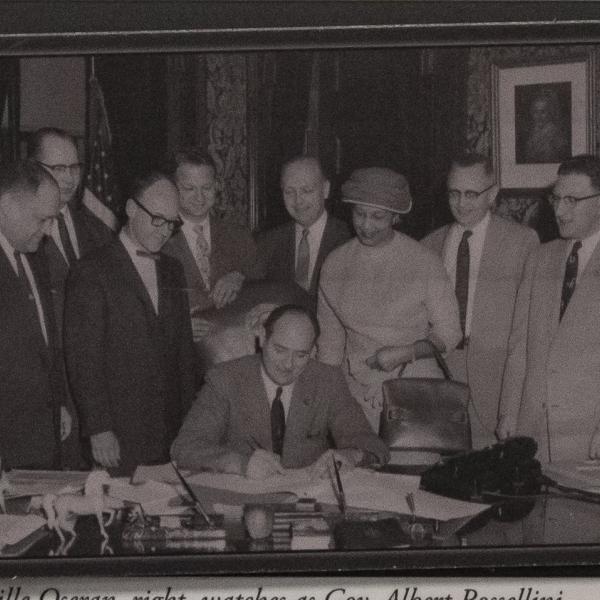
Melville Oseran & Neal Schindler
PUBLIC AFFAIRS AND SOCIAL JUSTICE
Melville Oseran’s career in social justice began with the Anti-Defamation League, where he spent three years as director before becoming its chairman. In his landmark case, he successfully lobbied the Legislature to pass the Washington State Public Accommodations Act, an anti-discrimination law. It took months, Melville said.
“First of all, we found our friends in the legislature to introduce the bill,” he said. “We used to go every weekend to talk to all the people and get the vote for it.”
Once passed, Melville first took on the Laurelhurst Country Club, which would not allow Jews as members. After his work with the ADL, Melville became president of B’nai B’rith and, shortly after, Hillel at the University of Washington. At Hillel, he worked with Rabbi Arthur Jacobovitz to attempt to turn back a visit by George Lincoln Rockwell, one of the major figures in the American neo-Nazi movement.
“We took care of him,” Melville said. “He came and went and didn’t accomplish anything.”
Melville continued his work in the Jewish community throughout his life, serving as president of Jewish Family Service, the Jewish Federation, Temple De Hirsch Sinai and with many other local organizations.
In a large urban area like Seattle, people know they’ll often run into someone they know. Such is not the case in smaller cities like Spokane.
“This is the least Jewish place I’ve lived, but I’m more involved in the Jewish community here,” says Neal Schindler. “It’s great!”
Neal is director of the smallest Jewish Family Service in the country. Including himself, he leads a staff of two—and he’s part-time! Most of the people he works with are elderly, so he arranges home visits and ensures proper care and connection to the Jewish community.
“It’s definitely one of the best jobs I’ve ever had,” he says.
Neal arrived in Spokane in 2011 to attend Eastern Washington University for his master’s degree in counseling. He had spent nearly a decade working as a journalist in Seattle, and coming to such a tiny Jewish community certainly changed his outlook on Jewish life. He’s involved through his work of course, which includes organizing monthly Jewish senior lunches and organizing the Spokane Jewish Film Festival, and also represents the Jewish community in public forums.
“I’m the only secular, non-synagogue affiliated, non-religious Jewish agency in Spokane,” he says. “So I basically end up on diversity panels.”
He also keeps up his writing with his “Ask a Jew” column on the Spokane Faith and Values website, which he shares with Rabbi Tamar Malino of Temple Beth Shalom. Neal calls the site and the community that surrounds it “a unique thing and I’m just really glad we have it here in Spokane.”
Rep. Tana Senn & Jack Bookey
PUBLIC AFFAIRS AND SOCIAL JUSTICE
Tana Senn had an interest in politics from an early age. Her grandparents and great-grandmother, all Holocaust survivors, came to the U.S. in the 1970s and became citizens in the 1980s. It was the first time they had ever lived in a place where they could vote. Tana’s great-grandmother voted in every election, and Tana learned from her the importance of paying attention in the political arena.
With a Master of Public of Affairs from Columbia University, Tana was doing policy work for Hadassah, but decided in 2000 to jump on a plane to work on her cousin Deborah Senn’s campaign for the State of Washington’s Insurance Commissioner. When she came from the airport, Tana was taken with the water, trees, the urban quality and the industrial aspects. She hasn’t looked back.
Tana worked on policy for the Jewish Federation of Greater Seattle, first as a volunteer and later as its director of communications. A road safety issue on Mercer Island spurred Tana’s first attempt to get appointed to the city council. When that failed, she successfully ran for a seat and her political career began.
Her big break came in 2013, when the King County Council appointed her to an open seat in the state legislature.
“I looked at my kids and I thought, ‘this is going to be really hard,’” she told the JTNews at the time. “I also looked at them and I thought, ‘I have to do this, because we need more women and people with kids in Olympia.’ I thought it was really important to do this.”
A near-death experience in a mineshaft made Jack Bookey realize that as a geologist he’d spend the remainder of his career working his way up to a desk by a window. So he did something about it: he went to law school.
He landed at the U.S. Attorney’s office in Butte, and a simple courtesy during that time—picking up the SEC Commissioner from the airport for a conference in Portland—paid off several months later with an appointment as administrator of the Seattle regional office. He stayed in that position for 23 years.
Jack’s tenure included a push for equality in the workplace at a time when people didn’t think about such things.
“One thing I did was hire a lot of women attorneys – and our office was one of the first for women,” he says. “I hired the first women investigators, CPAs and brokerage inspectors.”
Jack and his wife Frankie also became active in Bellevue’s nascent Jewish community.
“We were looking for a Jewish active life and saw something in the newspaper about a Jewish study group being formed,” Jack says. “We attended and found a large number of couples interested in founding a Reform synagogue in Bellevue.”
Temple Sinai, which later merged with Temple De Hirsch, constituted the Bookey’s social circle and the family is still active there today.
Jews in Washington State
PUBLIC AFFAIRS AND SOCIAL JUSTICE
From Bailey Gatzert, Seattle’s first Jewish mayor, to the many people who advocate for ending poverty and homelessness, Jews in Washington State have a long history of involvement in public affairs and social justice. Meet the people who came and made a difference.
Science and Medicine
It's a cliché at this point to expect that Jews grow up to be doctors. But many who enter medicine and the sciences do more than treat patients. They are at the forefront of some of the most important breakthroughs in history, and many of those experts are innovating right here in our backyard.
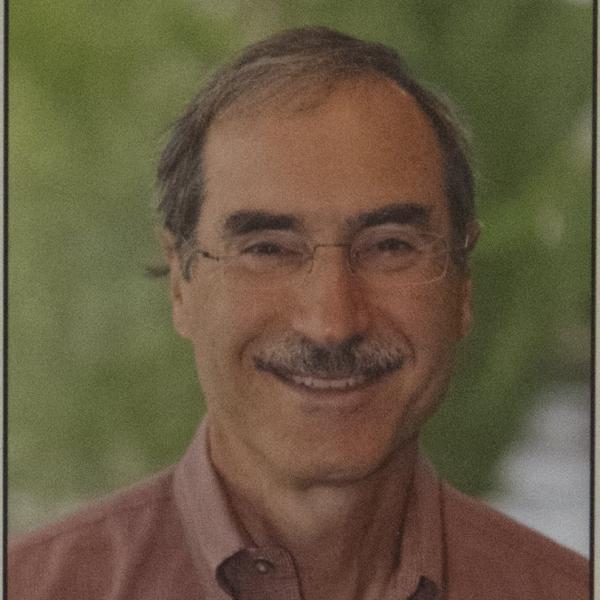
Dr. Allen Gown
Born 1950, Bayside, N.Y. Arrived in Washington, 1975
Allen Gown received his M.D. from the Albert Einstein College of Medicine of Yeshiva University, Bronx, N.Y. in 1975.
“It turned out there was something called the Vietnam War,” Allen says. “I really had two choices. If I wanted to escape the draft, one was going to medical school, the other was teaching in the inner city, in the South Bronx. And since I thought that the latter was only marginally safer than going to Vietnam, I chose a career in medicine.”
He then completed his residency in pathology as well as pathology fellowship training here at the University of Washington under the aegis of Dr. Earl Benditt.
Allen rose through the ranks to full professor of pathology and served as attending pathologist at the UW Medical Center. In 1997, however, the entrepreneurial bug bit and he left the UW to found PhenoPath, an internationally renowned reference laboratory. Nearly 20 years later, Allen serves as medical director and chief pathologist.
Today Allen is recognized as one of the world’s leading experts in the diagnostic and research applications of immunohistochemistry (IHC). He has developed numerous clinically important monoclonal antibodies employed in pathology laboratories around the world and continues to be at the forefront of clinical investigative studies employing IHC and other modalities, publishing widely and presenting at national and international conferences. Allen sits on the editorial boards of many of the major pathology journals. He is also a clinical professor of pathology at the University of British Columbia in Vancouver and an affiliate investigator in the Clinical Research Division of the Fred Hutchinson Cancer Research Center in Seattle. Allen has contributed extensively to the expanding horizons of IHC with over 300 peer-reviewed publications.
Today Allen and his wife Carol have two grown sons, and they recently became grandparents for the first time.

Henry Levine
Born 1947, Passaic, N.J. Arrived in Washington, 1973
When he first devoted his time to chair the Committee to End the War in Vietnam, Henry Levine had no idea that he’d devote even more time—years of his life, as it turns out—to the health and welfare of a Native American tribe thousands of miles from home. But as a non-violent objector to that war, Henry served his country via an alternate commission: as the sole primary care doctor on the Lummi Indian Reservation, just outside of Bellingham.
Henry did his two years, then went to North Carolina for his residency.
But in 1979 he came back, and worked as the only doctor, lab tech, pharmacist, mental health counselor, and jack-of-all-trades at the Lummi Indian Health Clinic, which at the time was vastly understaffed and underfunded.
“I had the opportunity to join the tribal leadership and testify before the U.S. Congress on the need for a more adequate facility there,” Henry says. “We were successful, and the ‘new’ (built in 1983) clinic on the Lummi Reservation now holds three or more doctors, a pharmacy, a mental health division with many counselors, and a laboratory.”
The Lummi, Henry says, are a stoic, largely silent bunch, a far cry from what a boisterous boy from Jersey was used to. Working with them “was absolutely befuddling at first. I didn’t know quite how to handle it,” Henry says. “It required one BIG adjustment and many incidents of faux pas to learn!”
An interesting thing happened to Henry as he continued to work with the Lummi. It gave him a better appreciation and attitude toward his own Jewish observance.
“I am not sure that all this would have occurred had I remained in the East,” he says.
In New Jersey and Cleveland, I never had to seek out Jewish culture. It was there whenever and wherever I wanted it, and sometimes when I didn’t. My Jewish identity was strong, but I never had to work at it until I came to Bellingham.

Eugene Normand
Born 1942, Brooklyn, N.Y. Arrived in Washington, 1964
You know how, when you fly, you expect all of the hundreds of dials, screens, gauges and moving parts to work properly so you can get safely from here to there? It used to be that engineers thought the atmosphere had no effect on the electronics of an aircraft barreling near the speed of sound from city to city. Eugene Normand, however, showed that wasn’t the case.
This Brooklyn-born Boeing engineer’s discovery showed that little blips—energy surges, really—in the atmosphere could have an effect on the on/off states of digital electronics, which became much more prevalent when the aircraft company introduced the 777 in the 1990s.
“Prior to this, the aircraft environment had been considered benign for electronics,” Eugene says, “but after obtaining computer upset data from new Boeing aircraft being flight tested in Europe, I showed the correlation between the frequency of the bit flips, or upsets, and the intensity of the neutron environment, which varies with both altitude and latitude.”
That discovery may have saved countless lives. It also elevated Eugene’s status within the company, which gave him international recognition and made him the leading expert on single-event effects in avionics.
When Eugene arrived in Washington, he became involved with the local Orthodox community through his involvement at Sephardic Bikur Holim, where he met his wife Esther during a young adults’ outing to Mt. Rainier. They married in 1967, and had their first of three children in 1971. He retired from Boeing in 2011.
So next time you fly (or, actually, land), think of Eugene. And thank him.
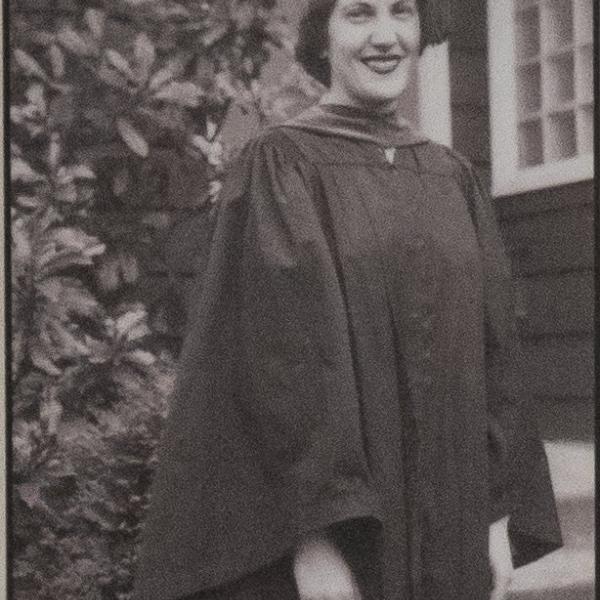
Doris Stiefel
Born 1928, Aachen, Germany. Arrived in Washington, 1948
Doris Stiefel comes from a long line of German Jews—she can trace her ancestors back to 500 years of synagogue and community leaders. But that ended in 1938, when her family needed to escape the Nazi regime. So they first went to London, where Doris finished high school then enrolled in dental school.
“Dentistry was not an unusual career choice for a woman,” she says. “There were several girls in my class.”
In the meanwhile, an aunt and uncle hoping to get as far from the Nazis as possible had settled in Seattle, and convinced Doris’s family to join them. So in 1948, they sailed to New York then rode a Greyhound bus across America to Seattle.
Doris could not transfer the credits she had already earned in her British dental school, so she had to restart her secondary education from the very beginning. She ended up retaking five quarters of pre-dental studies when she was admitted to the newly established UW School of Dentistry in 1950.
“As it turned out,” she said, “I was the only woman in my class and the first to graduate from the school.”
Not long after she arrived in Seattle, Doris met Ernie Stiefel, another German Jewish refugee, at a Zionist youth group meeting. The two married in 1950.
“Ernie was already active in the community (Jewish Youth Council of the Federation, Hillel) when we met,” Doris says.
Doris and Ernie raised their family in Seattle and while Ernie passed away in 2013, Doris and her now-grown children continue to support the region’s community and many of its organizations, including the Jewish Federation and the Washington State Jewish Historical Society.
“We have continued being active in the Jewish and broader communities all our lives,” Doris says. “We felt strongly it was important to give back to the community that had been supportive of us when we first came here.”
The Road Through Asia
Before continuing on to Seattle, a number of Jewish families from Germany and Eastern Europe settled in small communities in Shanghai during the '30s and '40s. Their time spent in Shanghai was an important chapter in their journey to the Pacific Northwest.
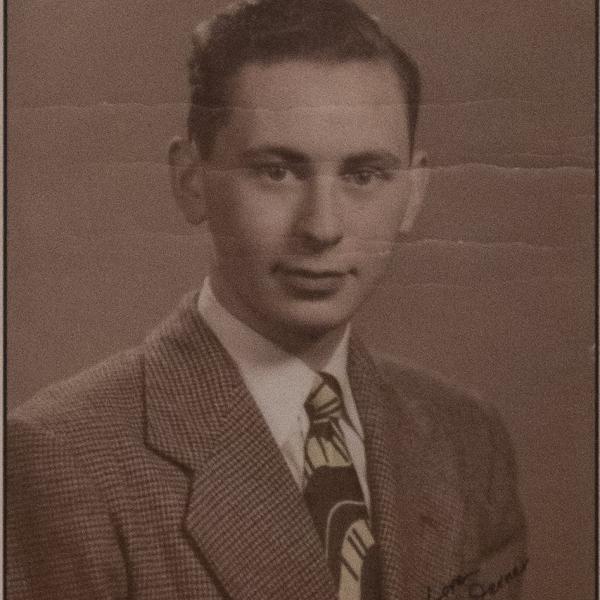
Werner and Lois Glass
Werner born in Berlin, Germany, 1927. Arrived in Washington, 2009
Had Germany not lost World War I, Werner Glass’s parents would have never met. Werner’s father’s family came from a part of Germany that was ceded to Poland. So they moved to Berlin.
His mother’s family came from land that became occupied by the French. So off to Berlin they went. But they didn’t stay long.
In 1933, when Werner was 6 years old, his parents could see the writing on the wall and moved the family to Shanghai. They remained there for 14 years.
Werner came to the U.S. in 1947. His parents, seeing no future in Shanghai, came two years later.
“It was easy leaving Shanghai if you had a place to go,” he says. “The trouble was, where do you go?”
Werner attended Syracuse University, where he met his future wife Lois. They married in 1952.
The two made a life in the New York/New Jersey area, Werner working as a chemical engineer, Lois as a teacher.
“We moved a lot over the years,” Werner says. “It takes time to be part of community.”
They were part of a chavurah that remained very close over the years. In 2009, after they had retired, they decided to make a new life on Mercer Island. Today they belong to Herzl-Ner Tamid Conservative Congregation and the Stroum JCC.
“We walk a lot,” Werner says. “The community puts out a notice that we can’t drive. Everyone offers rides for the JCC, minyan.”
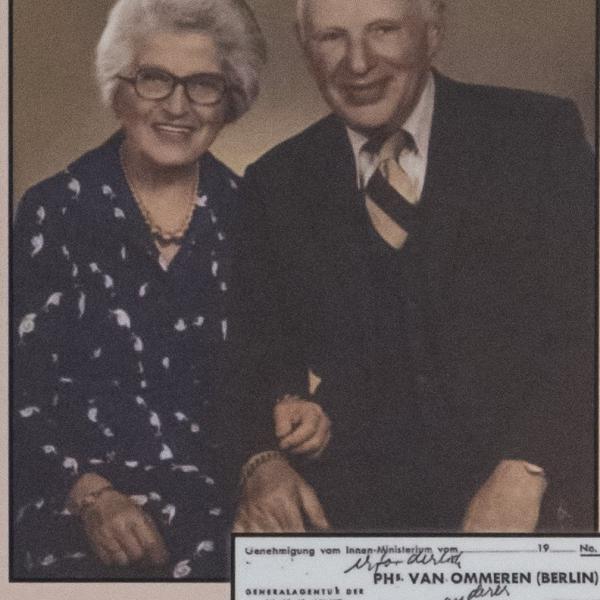
Manfred and Laura Selig
Manfred born 1902, Germany. Died 1992. Laura born 1907, Germany. Died 2003. Arrived in Washington, 1939
Manfred and Laura Selig
Manfred born 1902, Germany. Died 1992. Laura born 1907, Germany. Died 2003. Arrived in Washington, 1939
In 1939, Manfred Selig came to America. Then, almost immediately, he turned around and went back to Germany. He and his wife Laura, and their two children Bertelle and Martin, had already escaped from the town of Arnstein, where his neighbor had delivered the news that the Nazis had labeled the Seligs as “undesirable.” They had spent time in Frankfurt, where Manfred worked as a baker so he could work at night and hide during the day.
“I remember my mother coming down the stairs [and] telling the people, ‘He’s not coming today,’” Manfred’s son Martin recalls. “And I believe that was the day we decided we were leaving.”
The plan was that the family would emigrate to America through France. But during that quick sojourn to the U.S., where Manfred had secured passports and visas, France fell to the Nazi regime.
“We couldn’t go to the west anymore. [We] had to go to the east,” Martin says.
So they went through Warsaw, then they got on a train, which took them through North Korea, then to South Korea. They got on a boat that crossed the Sea of Japan, and they stopped in Japan, but they didn’t have to stay long.
Then, finally, the Seligs sailed to America. Once settled in Seattle, the family struggled to get going, but compared to Germany they did okay.
“The struggle that my parents had was really not what you’d call a struggle,” Martin says. “This is just something they had to do. They had absolutely no choices.”
Manfred, who had been a relatively successful salesman in Germany, used those skills to sell textiles door to door. He and Laura eventually opened a fine linen store, Selig’s Linen Shop, which they kept open for about eight years. The store and the family’s existence centered around the Central District.
“We had a tiny little place...and then I remember right before my Bar Mitzvah we moved to the house at 803 32nd Avenue South,” Martin remembers. “They lived there forever. And they would go to the linen shop, which was on 23rd and Jackson, back and forth.”
Manfred later distributed children’s clothing with Empire Children’s Wear throughout the Northwest until his retirement at age 65.
Taken from Martin’s oral history, 2007.
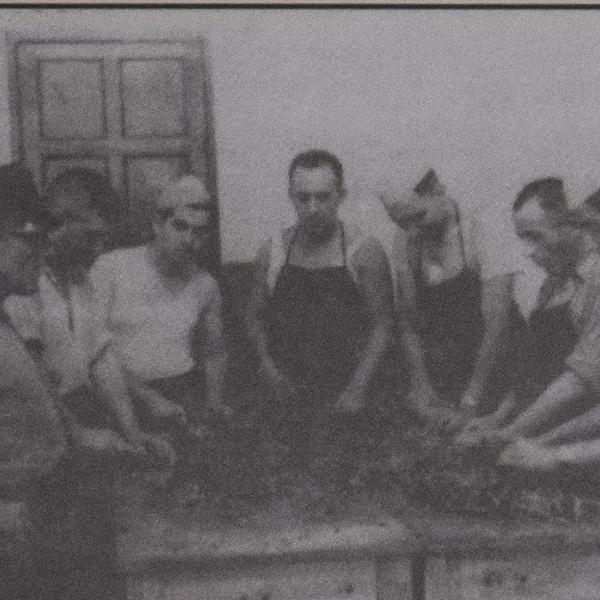
Seattle’s Jews from China
From the Archives
I lived from 1935-1947 in Shanghai, where my father, Rev. Mendel Brown, as Rabbi of Ohel Rachel Synagogue and principal of the Shanghai Jewish School, was heavily involved with improving the lot of refugees from Germany and Eastern Europe.
As long as the number of arrivals were few, the existing Jewish communities were able to cope in helping the newcomers to settle; however, when the trickle grew to a flood in the late ‘30s and early ‘40s, they did not have the resources or experience to resettle such large numbers all at once in a small overcrowded area.
When the Pacific War broke out on December 7, 1941, the Japanese army and navy arrived the following day to take over the foreign settlements, causing dire results for Jewish refugees. From then on until the end of the war, conditions deteriorated rapidly despite the efforts of the only functioning Jewish community under the leadership of Rabbi Meier Ashkenazi.
While a number of the Russian Jewish community were also refugees and also suffered hardships from the general deteriorating wartime conditions, they were not harassed in the same manner. In fact, they were one of the few Shanghai communities who were not disturbed by the Japanese.
However, in retaliation for the internment of Americans of Japanese descent on the West Coast, the Japanese in March, 1943 interned American, British, free French citizens and took over their homes as well as their businesses. This vengeful action had a great impact on the wealthier and long established Sephardic community because most of their leaders were British citizens. This placed a large share of the responsibility for refugees on my father, the Rev. Mendel Brown, and on the shoulders of the less affluent Russian Jewish community. For most people, life in Shanghai was a nightmare, but a rare few, mostly children, did enjoy their stay there.
A common thread runs through people’s experiences with regard to poor housing conditions, inadequate food, and lack of meaningful opportunities, but each story is unique. Some came from concentration camps, some were students at the Mirrer Yeshiva. Some made contacts outside the Hongkew District while others remained completely within it. Some managed to make a living; others found it more difficult. At the end of World War II, some came to Seattle with the help of relatives of Jewish organizations. Some came directly from Shanghai, others several years later.
Technology and Startups
We all hear about those intrepid entrepreneurs who create billion-dollar companies out of nothing. We even feature some of those people here. But others have created community, or helped to turn a small company into a big one that has shaped our landscape today. All of them, however, can turn an idea into something beautiful.
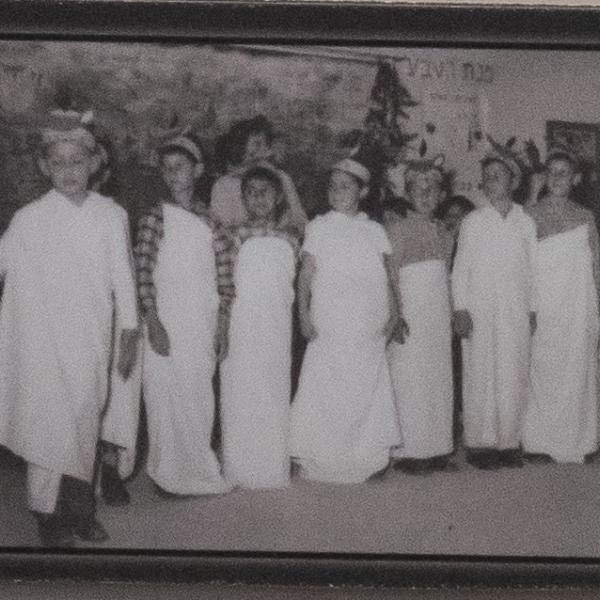
Eyal Levy
Born 1951, Jerusalem, Israel. Arrived in Washington, 1989 and 2002
For anyone who visited Israel from the mid-1990s on and heard anyone refer to their Pelophone, you can thank Eyal Levy.
Eyal ran the cellphone company from 1994-97 and grew it from a tiny outlier to a major player, with more than 2 million subscribers, at a time when the cellular world looked to Israel as the leader in this exploding space. But to ascribe that success to Eyal without seeing everything else he’s done tells only a fraction of his story.
He attended Stanford for a year, but with the Six Day War having just ended and Israel in the midst of its war of attrition, “I decided to leave everything and move back and join the military.”
He spent five years on active duty, worked in South America and Africa, then became a lecturer at Tel Aviv University.
Eyal taught database management systems, which introduced him to the students who created Israel’s first wave of startups.
“I think close to three, four thousand of them were my students,” he says.
A company Eyal founded in the early 1980s went public and brought him to the U.S. Motorola recruited him in 1989 to run operations in Washington, where he stayed for five years before returning to Israel.
Following his Pelophone stint, Eyal moved into venture capital, which created the partnerships with companies like Microsoft that have made Israel such a strong center of research and development. He returned here in 2002 with his wife, Dr. Zehava Chen-Levy.
In 2007 Eyal joined and helped to fund the Washington-Israel Business Council, an effort to bring Israeli companies to our state while bringing companies to Israel to create jobs there. He said the council got very little support from local government and even the Jewish community, “but we gave it a shot.” The effort ended in 2015.
Eyal is grounded by the simple concept of human dignity. As such, he was a founding member of Peace Now, is today involved in New Israel Fund, and supports a successful conclusion to the peace process. Without strong leadership on either side, however, he doesn’t have a lot of optimism.
“But you never stop trying,” he says. “The easiest thing to do is to give up.”
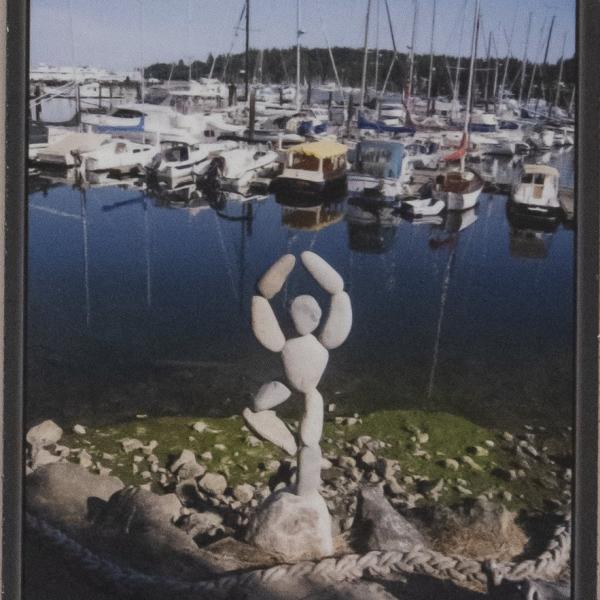
Janet Hanrahan
Born 1944, Santa Barbara, Calif. Arrived in Washington, 1977
Coming from one area with a small Jewish community to another where any semblance of Jewish community is invisible can be a challenge. So when your kids come home from school and say that their classmates told them they were going to hell because they did not believe in Jesus? That’s a whole new level of disappointment. But that’s what happened to Janet Hanrahan, who moved to Bainbridge Island in the late ’70s for her husband’s job.
It was “a real wake-up call for us,” Janet says. “I was worried we were the only Jewish family on Bainbridge. So very upsetting.”
So you can imagine her surprise when she came to the mainland to shop for Chanukah supplies. While perusing the selection at Temple De Hirsch Sinai, she met another woman also from Bainbridge. Janet invited her family over to celebrate the holiday. That family invited another. The end result, says Janet, “seventy people came to our Chanukah party and the Bainbridge Island Chavurah was born.”
Over the years the Chavurah grew. At one point the group divided— one became Shir Hayam and the other the Reform Congregation Kol Shalom—both of which have active memberships today.
Janet feels a special kinship to the Chavurah she helped found. In the 1930s, Janet’s parents had founded the B’nai B’rith Synagogue in California. Decades later, Janet founded her own.
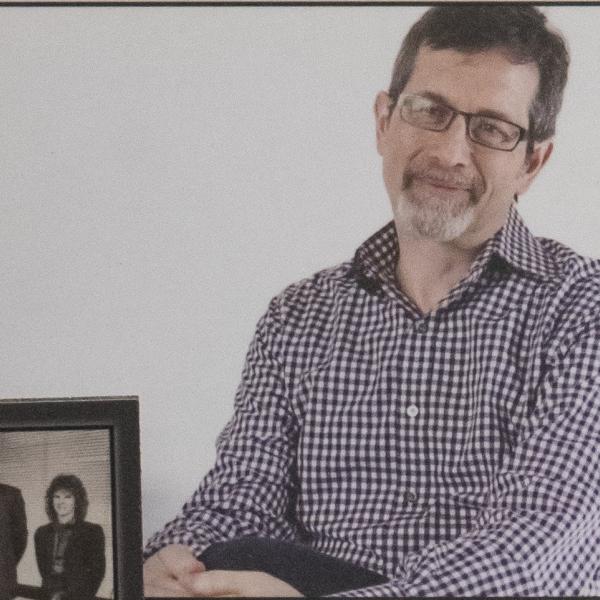
Jerry Dunietz
Born 1959, Brooklyn, N.Y. Arrived in Washington, 1981
You know how people no longer stick around a company for many years and will even jump from career to career? Jerry Dunietz apparently didn’t get the memo. Today he is the longest-serving full-time employee in Microsoft’s history.
That certainly wasn’t a goal when he rolled into the small—but fast growing—software company fresh out of Harvard with a degree in applied mathematics.
While in school, Jerry would read about this up-and-coming industry and developed an expertise in the UNIX computer system. When he came out for his first interview, the Eastside was still a sleepy suburban area and Microsoft was in the middle of nowhere.
“My first impression was, where am I? There’s nothing here,” he says.
Though more focused on his sphere of coworkers, most of them also transplants who didn’t know anybody in their adopted city, Jerry would occasionally notice the lack of a Jewish presence in the company. Early in his tenure, Steve Ballmer stopped him in the hallway and said, “Jerry, I didn’t know you were Jewish.”
Ballmer had observed that Jerry had taken the High Holidays off of work. Steve went on to explain that one of his parents was Jewish and he was familiar with the Jewish calendar, Jerry says. “Now I see so many Israelis and so many Jews in my community at Microsoft.”
Today Jerry is much more active in his Jewish community, and talks about the growth he’s seen on the east side of Lake Washington.
“The influx of technology business and workers, among other things, the city just seems like it’s blooming in a remarkable way compared to the much sleepier place I came to 34 years ago,” he says.
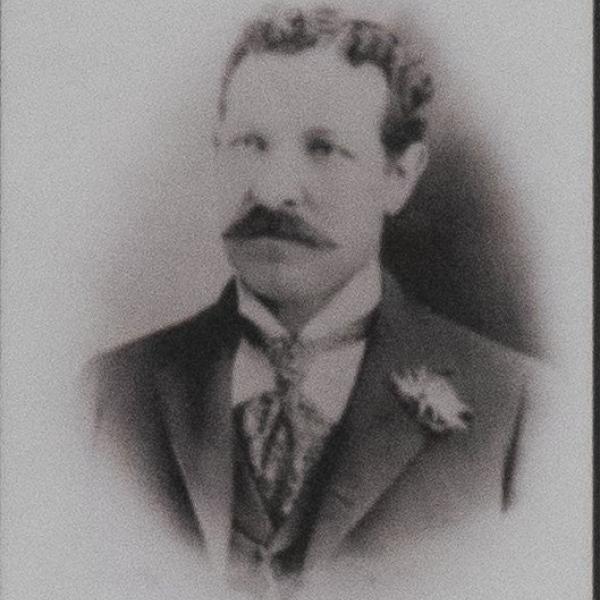
Kleinberg Family Business
From the Archives
Western Discount Corporation, now owned by WSJHS Vice President Larry Kleinberg, is celebrating its 100th anniversary this year. This Seattle firm has been owned and operated by the same Jewish family for a full century now. Initially named Kleinberg Brothers, the firm was founded in Ellensburg, Washington in 1895, by Larry’s grandfather Henry Kleinberg and Henry’s brother Sam Kleinberg, who had arrived in Washington in 1873. It was the first hay business founded in the State of Washington. (Henry and Sam previously had a men’s clothing store in Ellensburg, which opened for business in the 1880s.) The brothers began shipping hay from the Kittitas Valley to the Puget Sound area and eventually built what became recognized as the largest hay and grain business in the Pacific Northwest. One of their most interesting transactions occurred in 1903, when they shipped some high quality timothy hay to Japan, apparently for use in the emperor’s royal stables.
Sam Kleinberg died in 1908, and Henry Kleinberg moved the headquarters of the business to Seattle in 1918. After Henry’s death in 1932, Larry’s father Lester, Lester’s brother Alfred, and their cousin Dan Kleinberg became the owners and operators of the company. In 1942 Dan Kleinberg left the firm (to buy the Columbia Brewery in Tacoma – later known as the “Alt Heidelberg” brewery—with partner Norman Davis), and Lester and Alfred remained the owners of the business until 1965, when Alfred left and Larry quit practicing law to join his father at the firm, which then became known as Western Discount Corporation. In the early 1950s, the business had evolved into a sales finance company, which buys installment contracts from retail sellers of various types of merchandise and equipment, and that remains the primary business of Western Discount Corporation to this day. Lester died in 1981 and his son Larry is now the sole owner of the firm.
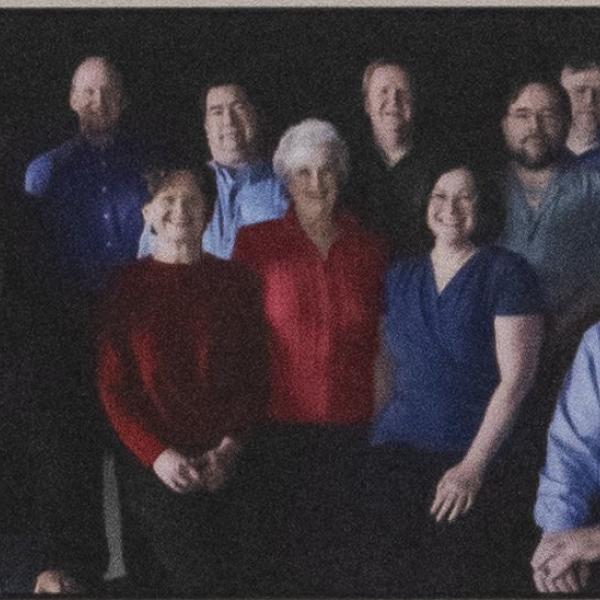
Miriam Bernstein Lubow
Born 1935, Milan, Italy. Died 2008. Arrived in Washington, circa 1980
It’s one of those rare things that answering a simple want ad can lead to a life of privilege. But it happened to Miriam Lubow, whose four children had approached high school age and she was looking for something to do. So she answered an ad in the Albuquerque Journal for a “Girl Friday,” as they were still called in the late ’70s, for a couple of young punks named Bill Gates and Paul Allen.
Miriam became Bill Gates’s first secretary—and one of the original ten employees of Microsoft. Fittingly, her grandfather had introduced the manual typewriter to Italy.
Her father, a well-to-do economist, recognized as early as 1938 that Italy would not be safe for Jews, so he moved his family to France. The family spent a short time there before Miriam’s father recognized that France would be just as bad.
“Looking back, I now realize that my father was a bright and courageous man who knew enough to leave Italy in time,” she wrote in her autobiography. “I truly believe that if it were not for my father’s foresight and courage, we would have died in concentration camps along with millions of other Jewish people.”
So with a box of chocolates and an envelope stuffed with cash given to the American Consul, the Bernstein family found passage to America. Miriam spent her younger years in New York, where she met and married Milton Lubow. When they decided New York was no place to raise a family, they relocated to New Mexico. The rest, of course, is history.
Miriam became known as “mama” to Bill and Paul and many of their coworkers. She stayed behind when Microsoft moved its headquarters to Redmond—that is, until Bill personally reached out and asked Miriam to leave Albuquerque behind, with the promise of any job she wanted. She decided to take on a new challenge and served for years as the credit and collections manager.
Even after she left the company, Bill and Paul would always take her calls, accept her unannounced visits, and they would remain great friends until her death in 2008.
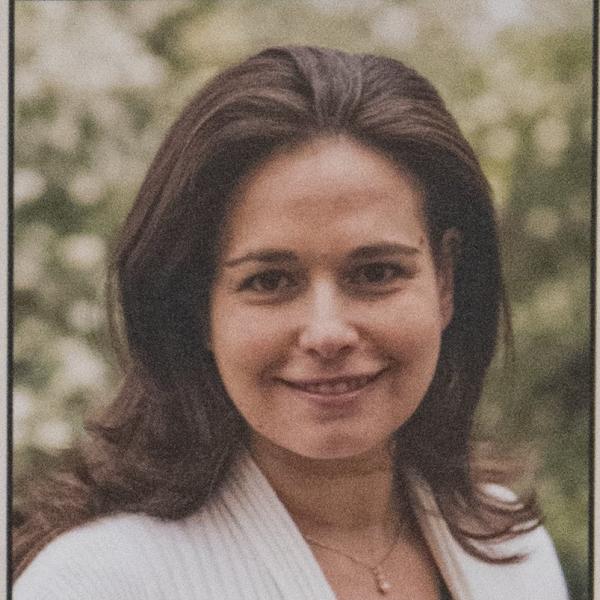
Sigal Saar Ben-Ari
Born 1977, Israel. Arrived in Washington, 2012
Sigal Saar Ben-Ari leverages technology to empower healthcare. In 2015, Sigal co-founded Kodu Care, a startup that uses technology to further healthcare strategies after an operation or to match a patient with proper mental health resources, for example.
“I am passionate about creating technologies in healthcare to improve people’s quality of life, so I am creating my own company to use my engineering skills to create post-surgical monitoring,” she says.
One of the products she’s working on will alert patients and their medical teams that something may be wrong during post-operation recovery. That way, the patient can seek help more quickly and have a better chance at recovering successfully.
The goal, of course, is to not only save lives, but to make quality of life and care much better.
Sigal has a list of university degrees about a half page long: a Bachelor of Science degree from the Technion in Electrical Engineering, with a minor in Medical Electronics; a Master’s Degree from the Technion in Biomedical Engineering; her Ph.D. from City University of New York in Bio-informatics; and, most recently, an MBA from Wharton with a focus on healthcare.
Though they landed here only four years ago—her husband is chief medical information officer for Veterans Hospital of Puget Sound—the landscape has been fruitful both in career and in life.
“Seattle’s been very good for us and our career options,” she says. “People seem more calm and balanced here than in other cities.”
She has also, in that time, become a mom. Her son is 3 and her daughter just under a year old.
At this point, Sigal and her family have no plans to return to Israel. “For now, my husband and I enjoy raising our children in the type of world we want our kids to grow up in,” she says. “As for living in Israel later, who knows? Life is long. The present is very good.”
The Rabbis of Washington
Some people are born rabbis and come from a long line of religious leaders. Others take a while before they realize their calling and study their way to the bima. What they all have in common is that they have made Washington their home.
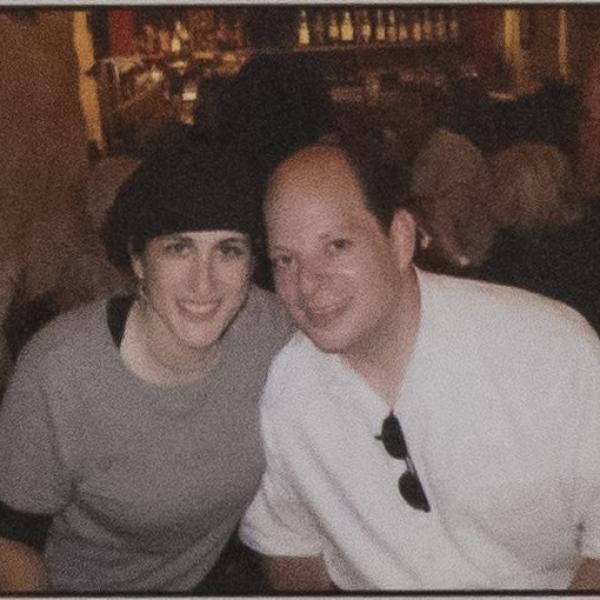
Rabbi Chaim Weiss & Rebbetzin Hinda Shapiro
THE RABBIS OF WASHINGTON
The trek from Pittsburgh to Seattle is a long one. It takes an extra adventurous soul to make that move at 14. But having known both the head of school Rabbi Bernie Fox and the head of Judaics Rabbi Moskowitz at the Northwest Yeshiva High School from their time in Pittsburgh, Chaim Weiss decided to enroll.
Northwest Yeshiva fostered in Chaim a love of learning and a passion for growth—so much so that he ultimately followed in the rabbis’ footsteps.
Chaim had considered professions such as real estate and computer science, but he knew he had one overpowering passion: teaching. As he entered his 20s, he would take whatever teaching opportunities he could get, and helped to found Masoret Institute for Advanced Judaic Studies for Women, a groundbreaking institution that provided advanced Torah studies for women.
As he discovered a love for teaching students with special needs, Chaim completed his master’s in special education at Adelphi University, then built programs for students who may have otherwise been left behind.
While attending the yeshiva on Mercer Island, Chaim had found the love of his life: Chaim and Sara Twersky married at 21 and now have four children. Sara’s desire to move closer to family brought them back to Seattle, where the rabbi now serves as an educator and director of learning resources at Northwest Yeshiva. Sara teaches at the Seattle Hebrew Academy. The couple also spent more than a decade running Camp Kol Rena, an Orthodox overnight camp affiliated with Congregation Bikur Cholim Machzikay Hadath.
All of this work, says the rabbi, is an opportunity to return to a community what gave so much to him.
The rebbitzen, married to Rabbi Baruch Shapiro of Congregation Machzikay Hadath, shines like a bright star. Rabbi Nissom Wolpin, editor of the Jewish Observer, lived in Seattle then and wrote, ‘she devoted herself to fully freeing the rabbi from all outside distractions and disturbances, in giving him the opportunity for maximum involvement in Torah. She arranged their house with his study in a front room walled in by windows on three sides, ‘so that,’ as she said, ‘if anyone wants to come in to waste his time, they should realize how busy he is and then maybe not disturb him.’ In a sense, the rebbitzen was mother to the larger Jewish community. If something was amiss...she did not hesitate to pick up her famous telephone to inquire after general welfare, and then get to specifics. These telephone calls from the rebbitzen were well known....”
Charles Jassen said, “Rebbitzen Shapiro was a woman that I suppose we would call a mediator. She could handle everybody and everything. She made everything work. She was a very brilliant woman. She was wonderful with children.”
And these children have wonderful memories. Isadore Feinberg said, “The kids loved to congregate at the rabbi’s house on Shabbos. The rebbitzen always taught a class. She was an expert on Pirkei Avos. She always served lemonade and cookies.” Amy Schreiber recalls, “...the rebbitzen taught the children to love the Torah. They loved her.”
Rabbi Wolpin remembers her classes. “During the summer we would sit around her old oak dining table, sip lemonade and recite and discuss Pirkei Avos from siddurim (prayer books) with English translation...During August we’d report to her house for Shacharis (morning prayers) at nine in the morning to pick cherries from her trees [and] to learn Chumash (Bible) and Rashi.”

Rabbi David Lipper & Rabbi James Mirel
THE RABBIS OF WASHINGTON
Change can sometimes create opportunity. That was the case for Rabbi David Lipper. Rabbi Lipper came to Bellevue’s Temple B’nai Torah in 2014, intending to be an interim rabbi as the board began a search for a successor to the long-tenured and popular Rabbi Jim Mirel. After two years and an exhaustive national search, TBT found what they were seeking in Rabbi Lipper. So a new sheriff, so to speak, came to town. Rabbi Lipper is probably the only rabbi you’ll find riding a Texas Longhorn steer.
Rabbi Lipper grew up in Houston. After serving nine congregations in seven states, the rabbi, an alumnus of the Hebrew Union College in Cincinnati, Ohio, decided to embrace the role as an interim rabbi. He would spend a year or two in congregations across the country, oftentimes as they faced a crossroads and needed a steady hand to guide them down a new path without the emotional relationships a permanent rabbi creates with his or her community.
Rabbi Lipper and his wife Dora now live in downtown Bellevue and enjoy the phenomenal views the high-rises have to offer. But the rabbi also loves golf. Venture out to the local links and you might see a man with the longest drive of any member of the clergy in all of King County.
Rabbi Jim Mirel and his wife Julie knew, as they crossed over Snoqualmie Pass that first time on their way to Temple De Hirsch Sinai, that they would love the state of Washington and all of the challenges of keeping Judaism alive with the relatively small Reform Jewish community in Seattle.
More than 40 years later, they are still here.
One of the draws to Temple De Hirsch Sinai was its organ and rich musical history initiated by the late Samuel Goldfarb. As an accomplished musician, the rabbi has performed in several klezmer bands and helped to found “Music of Remembrance,” an organization that commemorates victims of the Holocaust through recovered and commissioned musical performances.
In 1985, Rabbi Mirel accepted the position of senior rabbi at Temple B’nai Torah on Mercer Island, where he served until his retirement in 2014. He has long been a tireless advocate for oppressed and marginalized people in the community—at the forefront of gay rights, interfaith dialogue, and fighting Islamophobia. He has played a leading role in Mazon, a national organization that fights hunger, and also hosted Tent City, an encampment of homeless people that resided multiple times on the temple campus.
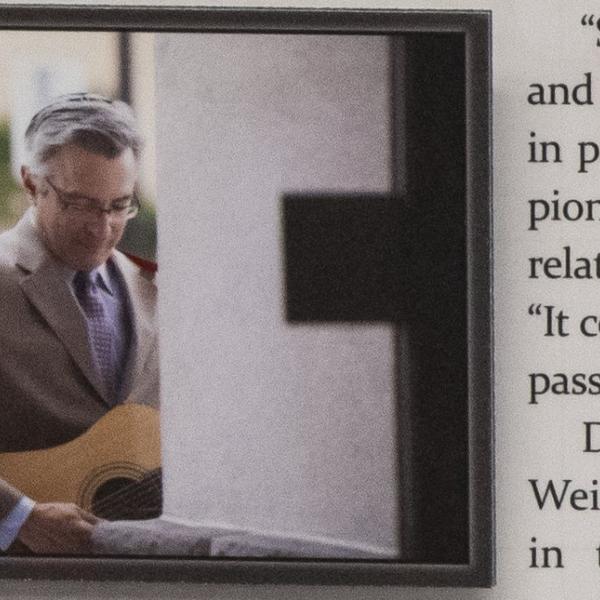
Rabbi Daniel Weiner & Rabbis Emily and Aaron Meyer
Born 1964, San Francisco, Calif. Arrived in Washington, 2001. Born 1982, Lexington, Mass. (Emily); Erie, Pa. (Aaron). Arrived in Washington, 2011
Rabbi Daniel Weiner & Rabbis Emily and Aaron Meyer
Born 1964, San Francisco, Calif. Arrived in Washington, 2001. Born 1982, Lexington, Mass. (Emily); Erie, Pa. (Aaron). Arrived in Washington, 2011
Daniel Weiner spent ten years as a rabbi on the East Coast before coming to Seattle to serve as senior rabbi of Temple De Hirsch Sinai. He has led the city’s oldest Reform congregation for more than 15 years and has served as a mentor for dozens of rabbis who have served on both bimas before moving on to their own bigger rabbinical careers.
One of the reasons Rabbi Weiner loves the area is its commitment to progressive values.
“Seattle in general, and Temple De Hirsch Sinai in particular, have a long and pioneering history in interfaith relations and efforts,” he says. “It continues to be an ongoing passion.”
During his tenure, Rabbi Weiner has seen growth both in the greater and Jewish communities—and a need to be thoughtful about this development, whether it’s via construction crane or spiritual values.
“We need to manage growth more judiciously, and respond more thoughtfully to changing needs of an eclectic population,” he says. That said, “I hope to contribute to the building and binding of the entire Puget Sound region, with the values and structures of faith as a basis for constructive change.”
Emily knew even when she was a teen that she wanted to become a rabbi. Aaron, as a budding scientist, came to that realization a little bit later. Since arriving in Seattle, however, they have both embedded themselves into the local Jewish community.
Aaron began his rabbinate at Temple De Hirsch Sinai, where today he serves as associate rabbi. Emily soon after began a teaching career at the Seattle Jewish Community School, which she says gives her enthusiasm for the bright future of Judaism.
While Aaron relished the idea of coming here to work under Rabbi Daniel Weiner, he has since begun to derive a lot of satisfaction from working with Cantor David Serkin-Poole on Sha’arei Tikvah, “a program that strives to create meaningful Jewish experiences for people of all abilities,” Aaron says. “Rosh Hashanah in particular is a raucous, musical affair far closer to the celebratory nature of the day than we can do in a formal congregational setting.”
Emily now pulls double duty. In addition to teaching, she has recently taken the pulpit at Congregation Bet Chaverim, a small Reform temple that serves Des Moines and south King County.
If they have wished for anything different about their experiences here so far, Emily would want to be closer to family on the East Coast. Aaron would like to see more of a dress code.
“Going to a play in New York or the symphony in Washington, D.C.? I know what to wear. In Seattle, anything goes, from flip-flops to bowties,” he says.

Rabbi Jessica Kessler Marshall & Rabbi Arthur Jacobovitz
THE RABBIS OF WASHINGTON
Spend a few minutes with Rabbi Jessica Marshall, and you will come away with an image. One of a spiritual person, a lover of the mountains, the flora and fauna, and Judaism.
Rabbi Marshall studied psychology at the University of Illinois at Champaign-Urbana, where a desire to pursue the rabbinate led her to the Hebrew Union College in New York.
After working with Hillel at the University of North Carolina, Rabbi Marshall’s desire to explore new parts of the country and embrace the outdoors tugged at her heartstrings. She learned about an opening at Temple Beth Or in Everett and knew right away she had to apply.
As a young rabbi, she had to believe that she could minister to congregants more than twice her age. That she could combine a Shabbat hike with Torah discussions. That she could create new liturgy for a children’s High Holiday Machzor and prayer books for Yom HaShoah and healing services. Seven years and many spiritual hikes later, it looks like Rabbi Marshall has blazed her trail.
During a hike in rabbinical school, Rabbi Marshall was struck with awe on a mountaintop at the beauty of creation surrounding her. Wrestling with her own labels for the Transcendent, she questioned why the mountaintop experience couldn’t just be a beautiful view, why it had to be “God.” A mentor asked, “Why not call it God? Why limit yourself?”
That experience has guided Rabbi Marshall to this day.
Rabbi Jacobovitz served as Hillel director for three decades. He pointed out that he was the first Orthodox rabbi at a Hillel west of the Mississippi. This presented some special challenges to the new Orthodox director. In his first annual report, Rabbi Jacobovitz emphasized that all Hillel directors serve the needs of all Jewish students. The Orthodox, Conservative or Reform label pertained basically to the directors’ private lives.
Rabbi J, as he was also known, felt it was important to impart to the students a knowledge about Israel. As a result, prominent lecturers were brought to Hillel and the campus. Rabbi J presented slides and films on Israel and introduced an Israel Program Fair offering information on summer programs.
In 1961 Rabbi Jacobovitz commenced teaching Jewish theology to honor students at Seattle University, a Jesuit school. His role was gradually expanded into other courses, including Hebrew, in the regular Theology department. It was the first time in the history of a Catholic institution. Rabbi J recalled that this event made national news.
The community was stirred by an announcement that George Lincoln Rockwell, a rabid anti-Semite and former leader of the American Nazi party, with no academic credentials, would speak on the campus on May 29, 1964. The Jewish Students placed an ad in the University Daily affirming faith in the democratic system and at the same time decrying the justification of Rockwell to further a fright campaign.
Rabbi Jacobovitz and Mel Oseran, president of the Hillel board, met with a committee from the Federated Fund to discuss how such matters might be handled in the future. Oseran made a proposal to set up a Community Relations Council. The Federated Fund became the Jewish Federation and a CRC was established.
One of Rabbi Jacobovitz’s proudest accomplishments was the success of his strong advocacy with the University administration to never again start the school year on Rosh Hashanah and also not to schedule final exams on Jewish holidays.
He retired from Hillel in 1988, though he continued to oversee kashrut of the Hillel kitchen for many years after.
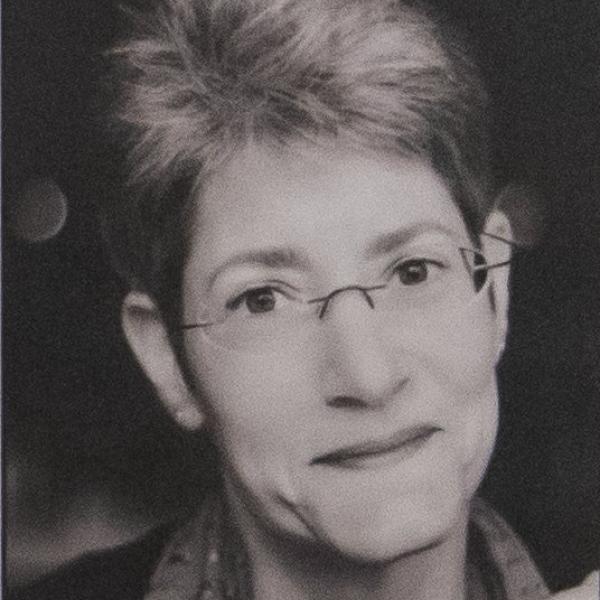
Rabbi Olivier BenHaim
Born 1971, Marseille, France. Arrived in Washington, 1998
The road Olivier BenHaim traveled to the rabbinate differs from probably any rabbi you’ll meet. Though he grew up in a secular Jewish home in Lyon, France, when he graduated high school he embraced Orthodox Judaism and moved to Israel.
Rabbi BenHaim spent five years in Israel, including two in the Israeli Defense Forces, where he served in the Golani Brigade. From there he came to the United States, spending a year in Portland, Maine before coming with his soon-to-be-wife to Seattle to be closer to her family.
He found an office job at Starbucks and would have worked his way up the ladder but for events that roiled his spiritual life. The assassination of Yitzhak Rabin in 1995 made him feel like he no longer fit into the traditional Jewish mold. So he explored meditation and Buddhism, which led him to an event co-hosted by Rabbi Ted Falcon, the founder of Bet Alef Meditative Synagogue.
Olivier, intrigued, saw a path back to his Jewish home to further his exploration of meditation. Over the course of a decade, he studied with Rabbi Falcon, helped out in the synagogue, and returned to school to earn his bachelor’s and master’s degrees in Jewish Studies. He then did a four-year practicum that culminated with his ordination in 2009.
“This is really unique,” Rabbi Falcon told the JTNews at the time. “To my knowledge this is the first time an ordination like this is happening. It certainly hasn’t happened in this city before.”
Following his ordination, Rabbi BenHaim took over the bima at Bet Alef and has put his own stamp on the growing synagogue.
Rabbi Richard Rosenthal & Rabbi Jason Levine
THE RABBIS OF WASHINGTON
Born 1929, Germany. Died 1999. Arrived in Washington, 1959
“There have been seven rabbis who as kids went through religion school at Temple Beth El with Rabbi Rosenthal. For a small congregation it’s amazing that seven people went on to rabbinical school, ranging from Orthodox to Reform.” — Rabbi Rosenthal’s daughter Debbie Calderon
In 1938, when Richard Rosenthal was 9 years old, he lived through Kristallnacht, the Night of Broken Glass. The following year, his family emigrated to New York, then went to Louisiana.
Upon his graduation from the Hebrew Union College in Cincinnati, Rabbi Rosenthal was assigned as a chaplain at an army base in Missouri. That’s where he met his wife, Barbara, who had been attending college nearby.
When the pulpit at a small Reform temple in Tacoma came open, Richard jumped at the opportunity. So he and Barbara packed up their belongings and took their very first trip west.
“We did not know the difference between Spokane and Tacoma,” said Barbara. “We thought we were going to Spokane, but when we got off the plane we found out that Tacoma was near Seattle.”
Rabbi Rosenthal was very active in Tacoma’s community and served on many boards, including the Tacoma Urban League and Rotary. He taught Comparative Religion at the University of Puget Sound and would visit the penitentiary at McNeil Island twice a month.
When Richard passed away from cancer in 1999, the city practically closed down, with standing room only at his funeral. Clergy from many ministries in Tacoma attended.
Born 1983, St. Louis, Mo. Arrived in Washington, 2013
From a young age, Jason Levine knew he wanted to be a scientist. He studied neurobiology at Cornell University, spending much of his time in the lab. But when he got involved in Jewish activities on campus and added a second major in Near Eastern Studies, his focus led him to the career we know today.
After college, Jason worked at a Hillel, then as a youth director and religious school teacher. At that point he realized he should follow his passion toward becoming a rabbi.
He attended Hebrew Union College, with a focus on returning to the Hillel world. But he had trouble finding something that clicked. When he discovered Temple Beth Am in Seattle, he knew about the synagogue’s stellar reputation and that Seattle was a booming and exciting city. So he decided to apply.
Rabbi Levine loved seeing a congregation driven by its community and dedicated to being welcoming and inclusive while exploring new things. He liked that Beth Am lives its values of social justice, enthusiastic worship, and commitment to educating and mentoring youth.
Now, in his fourth year at Beth Am, Rabbi Levine has been promoted to Associate Rabbi and made lifelong friends in his adopted city. He loves pushing himself out of his comfort zone and feels lucky to serve in a congregation that helps him grow, gives him chances to make mistakes and try new things, and believes in his future as a rabbi.
The Washington State Jewish Historical Society Thanks our Sponsors and Staff:
Martin Selig Real Estate, Ben Bridge Jewelers, The Loeb Family Charitable Foundation, Humanities Washington, 4 Culture, The Jewish Federation of Greater Seattle, The Seattle Jewish Chorale, Dennis B. Goldstein & Associates, P.S., Alpha Graphics, The Rita & Herbert Rosen Family Foundation, Faye Sarkowsky, Alfred and Tillie Shemanski Testamentary Trust, and the Altabet Memorial Fund.
Joel Magalnick, Exhibit Curator. Joanne Shellan, Visual Artist. Lisa Kranseler, Project Manager and Exhibit Liaison. Jessica Hyde, WSJHS Engagement Manager. Paula Podemski and Cynthia Flash Hemphill, Event Co-chairs. Nancy Blase and the Archives Committee, Archives Committee Chair. As well as Louise Berman, Linda Bookey, Gayle Carrol, Jackie Cohn, Ari Einbinder, Greg Gans, Albert Israel, Laura Miller, Doris Stiefel, Annette Peizer, Jacqueline Williams, and Barbara Winkelman.
