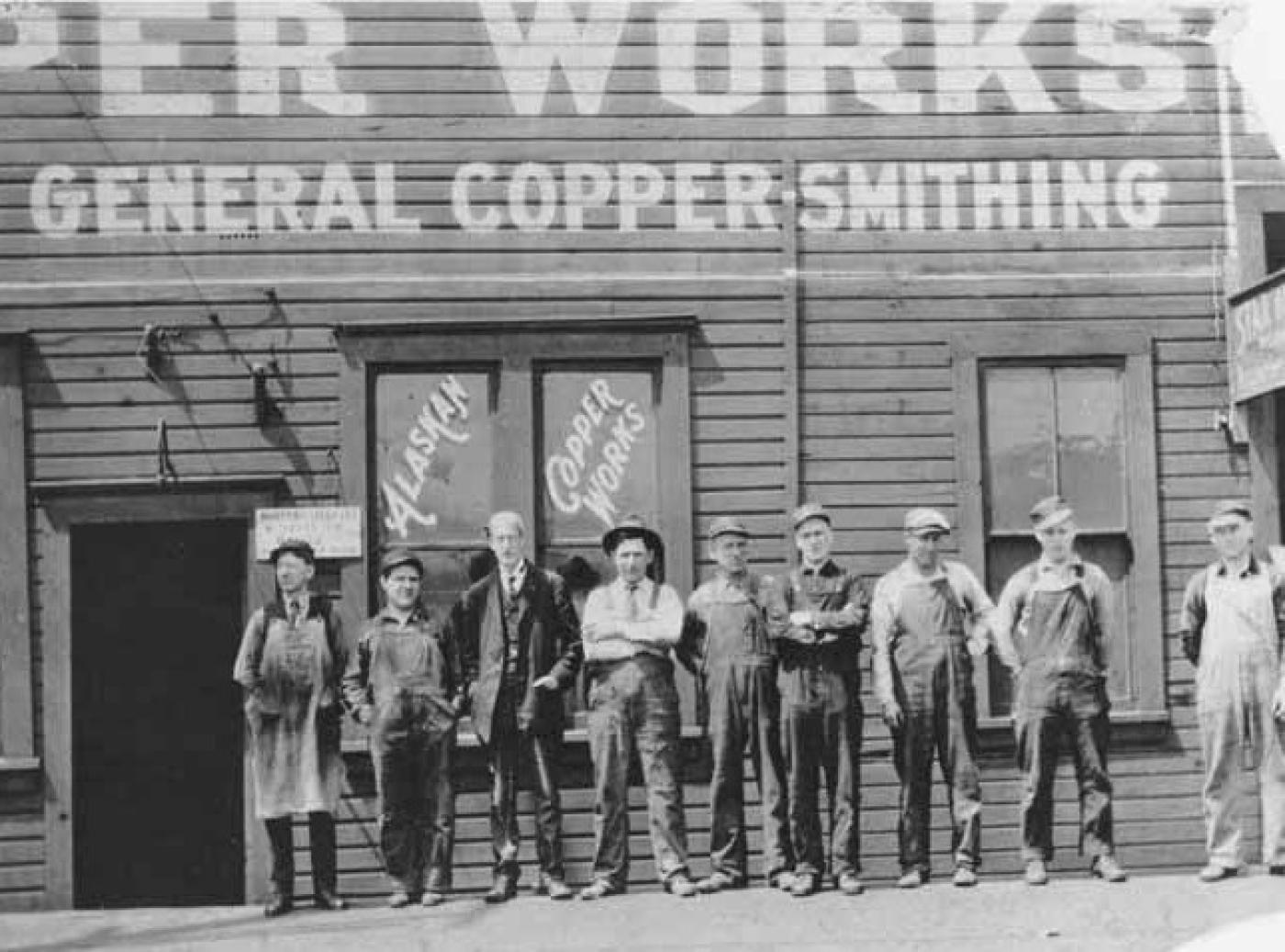
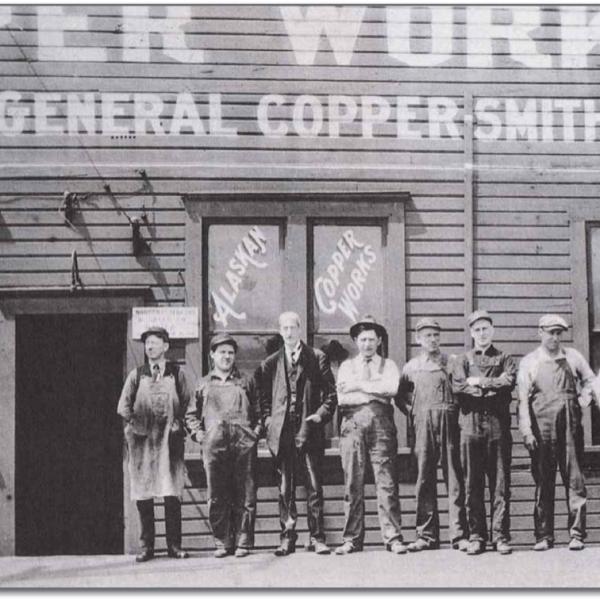
Alaskan Copper Works crew in front of Alaskan Copper Works building, Seattle, Washington, approximately 1918
Courtesy of UW Special Collections
Alaskan Copper Works crew in front of Alaskan Copper Works building, Seattle, Washington, approximately 1918
Courtesy of UW Special Collections
Open for Business
From neighborhood storefronts to landmark institutions, Jewish-owned businesses have helped shape Washington State’s economic and civic life. Who’s Minding the Store? (2009) was the first major effort by the Washington State Jewish Historical Society to document this legacy, highlighting more than 170 businesses and the entrepreneurial spirit behind them.
Building on that work, Shalom! Open for Business (2014), presented at the Museum of History & Industry (MOHAI), expanded the story through thematic curation and historic artifacts. Together, these exhibitions trace a history not only of commerce, but of community, continuity, and contribution. Have a story about this exhibit? Click here to share your story.
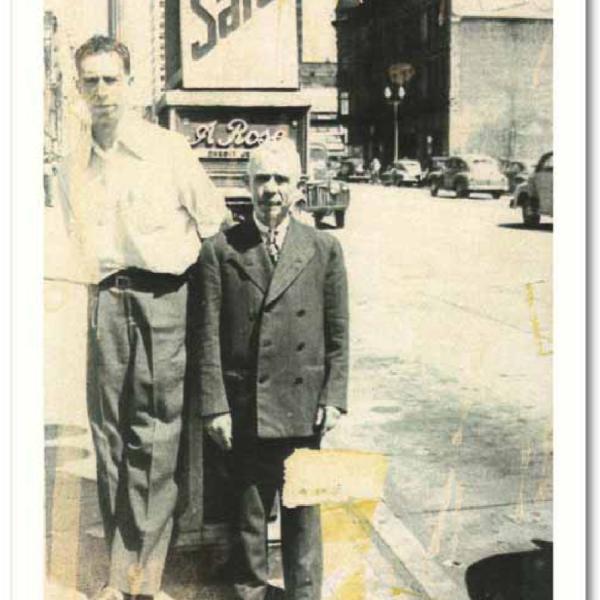
A. Rose and Son
Tacoma, Wa
When Abraham Rosenberger started the trek from his shtetl in Poland to the Goldene Medine, known as America, he had no way of knowing what lay in store for him and his younger brother, Hyman. The year was 1899, and he was barely 20. But, there they came, through Halifax, Nova Scotia, into the good old USA.
Abraham had a little training as a schneider (tailor) and worked in New York City for a while at fifty cents a day. Work was slow and somehow he ended up in San Francisco.
It was there he met his future father-in-law, Berel Shapiro. Things weren’t much better in San Francisco when friends notified him that things were better in the Northwest. He and his newfound buddy, Berel, scraped together enough to get up there.
He found employment at Gross Brothers, went to night school, learned a little English, and by 1904, decided to give it a shot and go out on his own. He opened a small jewelry store at 14th and Pacific Avenue.
Although he never became an entrepreneur, he scratched out a living for himself. In the meantime, Berel sent for his family in Europe, and Abe married his daughter, Sadie in 1908.
In 1920 Abe moved his store across the Street to 1328 Pacific Avenue. After WWII his son, Si, joined Abe and they were together until 1958 when Abe passed away at 78.
Si operated the business until 1984. By that time, Tacoma had lost many of its retail stores to malls and other areas. The store operated for 80 years, from 1904-1984. A parking lot now occupies the site where A. Rose and Son once stood.
Acme Food Sales, Inc.
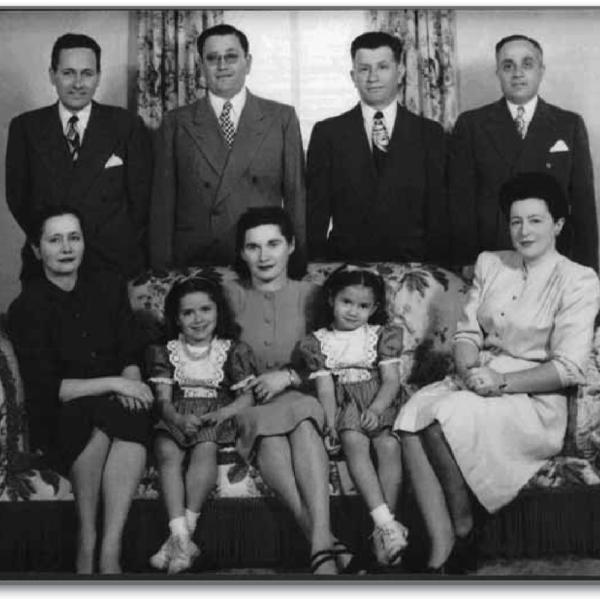
Back row (left to right): George Nolde, Morris Polack, Jack Polack, Abe Polik Front Row (left to right): Eugenia Nolde, Valerie Polack, Edith Polack, Marlene Polack, Ethel Polik A before its closure in 1958, Abe met Bud Nesnow from New York City and Max Fisherow from San Francisco. Bud introduced Abe to import opportunities in Asia, and Max with opportunities in Europe. Acme Food Sales, Inc. was born. be, Morris, Jack and Eugenia left Tchernigov, Ukraine in the early 1920s. Abe was 17. They were sent away by their father, a produce trader, who knew that the Russian Revolution was coming and his homeland was no longer safe for his family. They left Eugenia in Europe to save her the arduous trip to North America and they promised to send for her after they saved enough money to pay for her passage. Abe imported canned fruits, vegetables and seafood from Asia and further processed pork products from Europe. His customers were local grocery stores and restaurants.
Abe ended up in Canada while his brothers went on to Seattle. Abe ran and then owned a general store in North Saskatchewan for almost ten years.
Missing his family in Seattle, Abe sold the store and moved to Vancouver, B.C. He started a ready-to-wear women’s clothing company with a partner who absconded with all of Abe’s funds, leaving him penniless. Morris, Jack, the Hebrew Free Loan Association and Jewish Family Services helped Abe get to Seattle and open a downtown Seattle grocery store called Queen City Market in the late 1930s. After losing his lease at that location, he opened the Town Food Mart two blocks away.
Abe met Ethel Levin on a business trip to Chicago and they were married in 1946.
With suburban sprawl came chain grocery stores and the closure of the Town Food Mart. Shortly before its closure in 1958, Abe met Bud Nesnow from New York City and Max Fisherow from San Francisco. Bud introduced Abe to import opportunities in Asia, and Max with opportunities in Europe. Acme Food Sales, Inc. was born.
Abe imported canned fruits, vegetables and seafood from Asia and further processed pork products from Europe. His customers were local grocery stores and restaurants.
In late 1969, his son, Dean joined the business. In 1973, Morris and Jack Polack, owners of Acme Poultry Company, purchased 50% of Acme Food Sales. (A common misconception has always been that Acme Poultry bought 50% of Acme Food Sales, but it was Morris and Jack as private investors.)With Abe’s passing in 1979, the brothers’ shares were sold to Valerie Polack. Dean and Valerie became partners and remain so today.
Dean’s son Rob joined Acme Food Sales in 1993 and runs the purchasing department of the company after initial stints in the warehouse and sales department. Dean started the same way. Abe used to say that you will never totally understand the business unless you learn to do every aspect of it.
Story from Dean Polik
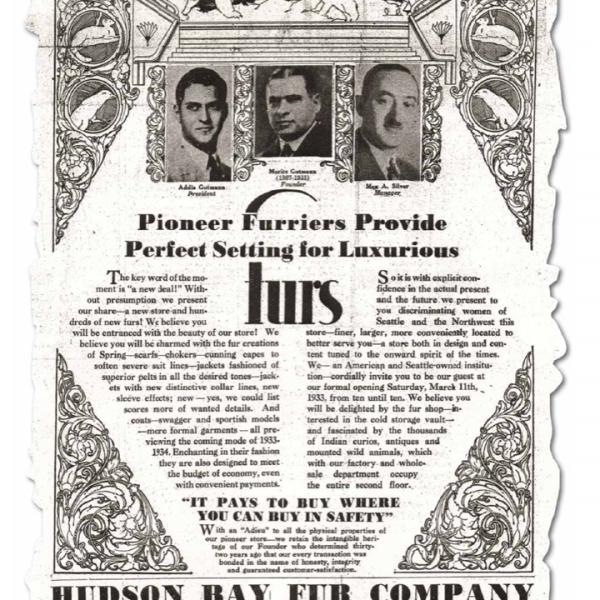
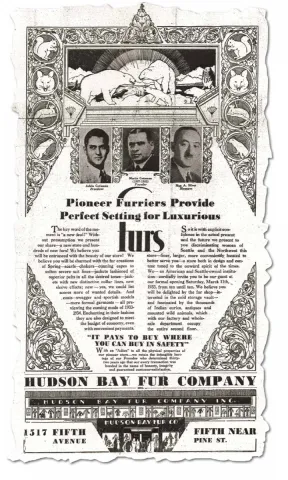
Alaska Fur / Hudson Bay Fur
th 1517 5 Avenue
Alaskan Copper Works
A laskan Copper Works was founded as a coppersmithing shop by Morris Rosen, an expert coppersmith who had learned his trade as a boy in Europe. Arriving in America in 1898, he was employed as a coppersmith in a shop in Philadelphia, Pennsylvania. He later worked on the construction of the Panama Canal, earning a princely, at the time, sum of 68¢ per hour. Attracted by information about Seattle, Washington being a growing seaport, he moved here in 1913 and established his own fabrication shop, naming it Alaskan Copper Works, an appropriate name for his skills and for a Pacific Northwest enterprise.
Over the following twenty years, Alaskan Copper Works became a supplier of bronze, stainless steel and other corrosion-resistant metal piping and equipment to the growing pulp and paper, food processing and shipbuilding industries locally and across the country.
Morris Rosen’s sons, William and Kermit Rosen, joined their father in the business in the early
1930s and, capitalizing on the firm’s knowledge and experience in the corrosion-resistant metals market, formed Alaskan Copper & Brass Company in 1932 as a corrosive-resistant metals distributor.
The company has continued to grow, adding distribution branches in Portland, Oregon; Coquitlam, B.C.; and San Diego, California.
The number of family members in the business has grown also, with the third generation of William M. Rosen, Donald Rosen, Kermit Rosen, Jr., Alan Rosen and Douglas Rosen taking leading roles in various divisions of the company. At this time, there are seven members of the fourth generation working at the company alongside their fathers and uncles.
The Alaskan Copper companies are looking forward to their upcoming 100th anniversary of continuing business in the metals industry in the Pacific Northwest.
Allen’s Fifth Avenue Jewelers
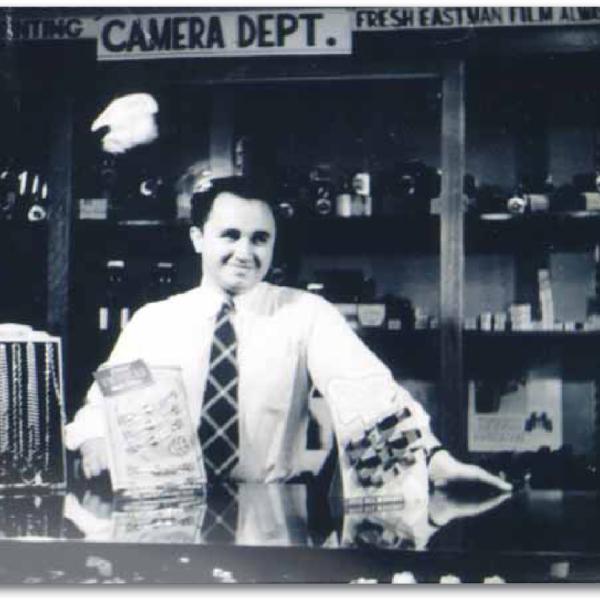
Seattle native Isaac A. Ovadia dreamed of owning a fine jewelry store on 5th Avenue. In 1967 the dream became reality with the opening of Allen’s Fifth Avenue Jewelers, replete with marble storefront, carpeting, chandeliers and French provincial counters and furnishings.
The genesis of the dream began in 1940 when Ike purchased Adler’s Jewelry, a 3rd Avenue pawn shop, from his uncle, Sam Baruch. The store’s employee became a partner and they renamed the store Allen’s Jewelry. In 1946 they bought a second store in West Seattle. Soon they dissolved the partnership and Ike remained in the 3rd Avenue location.
In the late 1950s Ike and his wife Mary purchased a store on University Way. Manager Mordie Eskenazi left to pursue other opportunities and Beatrice Sedis (Horowitz) stayed until they liquidated both stores in 1966.
Among their customers were many celebrities including Olympic Gold Medalist Dorothy Hamill, singer Harry Belafonte, and artist Mark Tobey, who, at Ike’s suggestion, designed his ring. He gave permission to use his design provided that his name would be engraved on the shank of each piece. Pins and cufflinks followed and all were set with diamonds and emeralds.
Later Mr. Tobey sent the Ovadias an autographed photograph, a letter of permission to use his design and a small painting. The design, photos and letter have been donated to the University of Washington archives.
Ike’s dream came true at 1518 5th Avenue. He and Mary were in business there designing and selling fine jewelry until 1990.
Story from Mary Ovadia
ALMAC Stroum Electronics
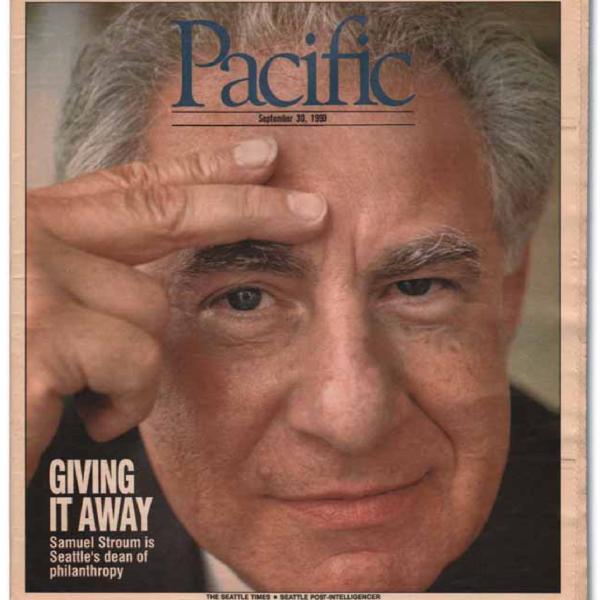
I n the September 30, 1990 edition of the Seattle Times’ Pacific Sunday magazine, Samuel Stroum was characterized as taking “the high profile road on his journey as one of Seattle’s leading philanthropists.”
It was no accident that Sam and Althea became so highly recognized and admired in our community. But it was a long road to such success. Sam didn’t have a college education. When he and Althea were married, it was Althea who paid the $3.00 license fee. Their story started when Sam left the Air Force following the war, and became a sales rep for an electronics company. His business story truly accelerated when Sam founded ALMAC-Stroum Electronics which distributed electronic supplies to the burgeoning economy that was undergoing a Technological Revolution. Instead of cotton gins and railroads, the need was for tiny electronic devices. Sam saw the need, met it and began an incredible journey.
Sam invested in companies like Imre Corp, Procyte Corp, Advanced Technology Laboratories as well as numerous tiny technology start-ups. He saw the future and set out to help build the component parts of this New Age. Perhaps be- ing more prescient than many, he invested in Schuck’s Auto Supply in the 1960s and sold ALMAC-Stroum Electronics in 1974.
Sam Stroum learned about life and business in the trenches. Eventually after succeeding in his business ventures, he served on the boards of Seafirst Bank and the University Hospital and served several years on the University of Washington Board of Regents, eventually serving as its president. As the story goes, his co-Board of Regents member Mary Gates asked Sam to speak with her young Harvard University student son Bill Gates, Jr. Apparently Ms. Gates chose the right man to counsel her son as Sam “encouraged young Gates to forget Harvard and continue with his plans for what a decade later would become the world’s largest PC software maker.”
The community is the beneficiary of Sam and Althea Stroum’s talent and vision. Althea who today continues their work which for the last years of Sam’s life was to watch over the community, lending aid wherever it was needed to the best of their ability.
Stories from Althea Stroum and Pacific Magazine
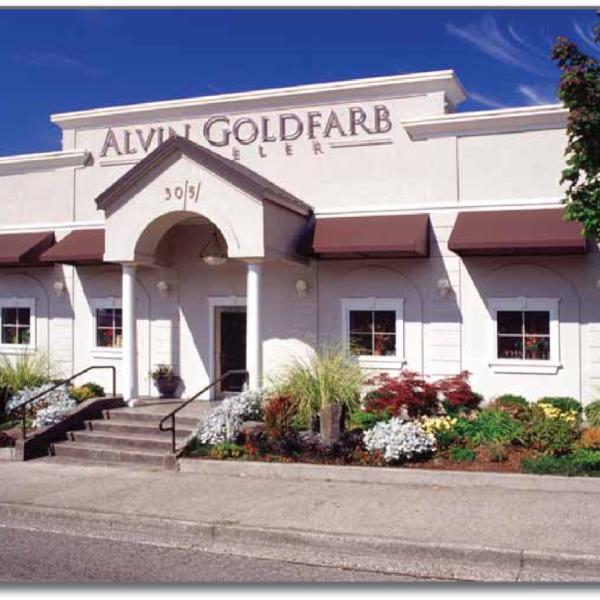
Alvin Goldfarb, Jeweler
Browsing at Alvin Goldfarb Jeweler, you’re as likely to encounter a Sonic, Seahawk or Mariner as you are a diamond, emerald or ruby.
After 30 years in business, Goldfarb has established his reputation not only in the community, but also with the city’s celebrity elite. He is the “go-to” guy to some of Seattle’s most prominent individuals, including professional athletes, who turn to him for impeccable quality, integrity and customer service.
When a new “Kid” in town wanted some “bling,” Goldfarb fashioned a 24-karat “#24” pendant later prominently pictured on a Sports Illustrated cover, adorning the chest of owner Ken Griffey, Jr., the Mariners superstar who wears number 24. The walls of Goldfarb’s office serve as testimonial to his commitment to service: Jerseys personally inscribed by Griffey, teammate Jay “the Bone” Buehner, and more than a dozen others thank Goldfarb for his personal attention and friendship. Personal relationships with luxury watch companies Rolex and Breitling have brought tennis celebrities and Blue Angels pilots into Goldfarb’s circle.
Goldfarb’s success was hardly a sure thing back in 1980, when he left a 25-year career with Se-
Story from Susan Goldfarb Wolfe Ken Griffey Jr., Jackie Goldfarb, Melissa Griffey, and Alvin Goldfarb attle’s venerable Friedlander & Sons to launch a contemporary jewelry boutique. The economic downturn of the time made the decision more difficult. So did the fact that he is married to a Friedlander! But somewhere deep in his kishkes, Goldfarb knew: If he built it, they would come. Goldfarb grew up in the Montlake neighborhood of Seattle, the son of Temple de Hirsch Sinai Music Director Sam Goldfarb. He earned a varsity letter in basketball at Garfield High School, where he was team captain and senior class president. He graduated from the University of Washington, served in the U.S. Air Force, earned his graduate gemology degree and launched his jewelry career. When he married Jackie Friedlander in 1957, his father-in-law insisted Goldfarb join the family business. It’s been a family affair ever since.
Alvin Goldfarb Jeweler continues to flourish with Goldfarb’s son Steven joining the company in 1987.
“When Steven agreed to join me, I was the proudest Papa alive,” Goldfarb said. “We’ve worked very hard to avoid the pitfalls inherent in most family businesses, and I couldn’t be happier that Steven has succeeded in making our business his own.”
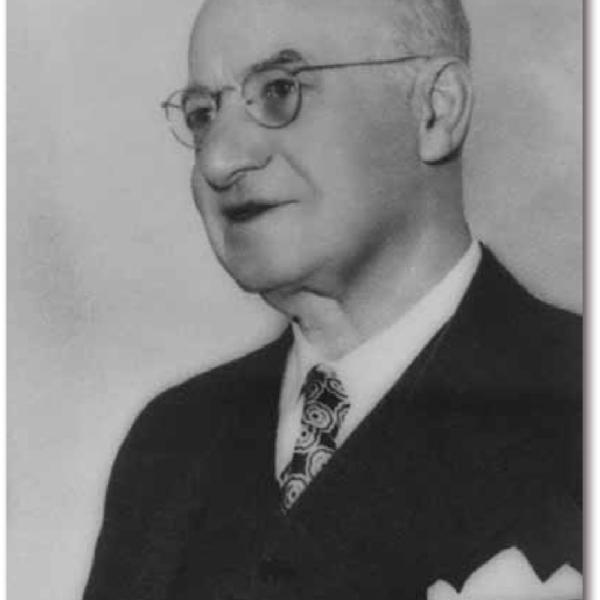
American Discount Corporation
Edward Stern Sr. Leopold Stern, age 73 (1945) T his is the story of how a law practice turned into a viable business in the thriving commerce of Seattle.
In 1921 my grandfather, Leopold Stern, formed the American Discount Corporation (ADC). At first he was an attorney with offices in the Smith Tower in Seattle. His main practice was bankruptcy law; however he had a client from the Chicago area selling commercial goods in the Pacific Northwest that extended credit on promissory notes prepared by my grandfather. Those who did not pay were turned over to Leopold to collect.
The collection and finance business grew so much that my grandfather did not have the time to devote to his law practice. That is how ADC came into being.
At the same time there was a small insurance agency in a neighboring Smith Tower office, Lipman and Esfeld. Sol Esfeld was a junior partner in the agency, but he soon grew to like the finance business more. He purchased 50% of ADC and became active in the daily business.
My father, Edward F. Stern, Sr., graduated from Michigan Law School in 1928 and returned to Seattle to practice law. He too fell into the finance business and became a partner in ADC, sharing a wonderful business relationship with Sol Esfeld over the years.
The business gained a third generation in the ‘50s when Donald Esfeld joined the firm. I followed shortly thereafter. Don and I continued the daily operations and grew the business substantially during our tenure and through the sale of ADC in 1979.
In the meantime, the two surviving senior partners devoted much of their time and energy to civic causes and charitable organizations. Sol was involved in raising millions of dollars towards the Kline Galland Home’s facility remodel. Ed Sr. was on the boards of the American Jewish Committee and Seattle Urban league among others.
ADC is another fine instance where a successful business contributed greatly to the Jewish Community and the Greater Seattle community at large.
Story from Ed “Socco” Stern
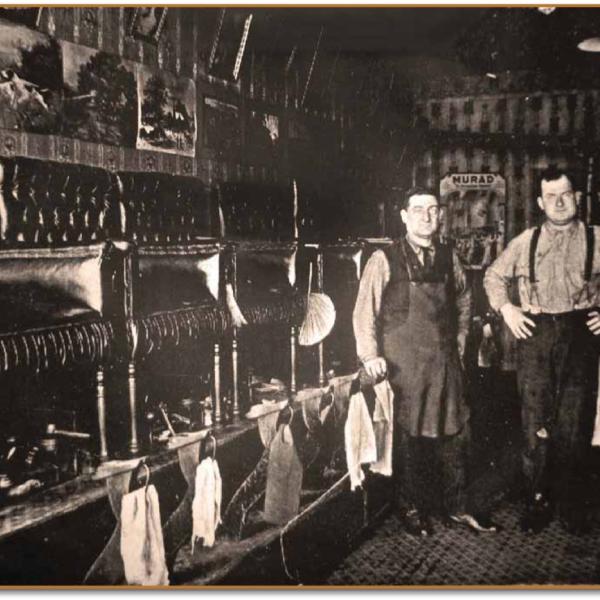
Angel’s Shoe Repair
1465 East Republican
My grandfather Joseph came to Seattle from Rhodes in 1910 with the conviction that the streets were paved with gold. He started a smoke shop down by where the Smith Tower now stands. It didn’t last long and by 1912 he started a new business, a shoe repair shop. It wasn’t until 1920 that he was finally able to send for his family. This was all during the pre- and post-years of “The Great War” of the infant 20th Century.
Typical of small businesses in those years, my father, Eli, had to quit school in the 9th grade to help my grandfather run his business. Eli had a photographic memory and spoke several languages – Ladino, French, Italian and English. If that wasn’t enough, I heard him sing three Turkish songs with a customer from Turkey. They just don’t make them like that anymore! And, in addition, he read Hebrew and could recite numerous prayers by heart.
Eli’s industry enabled me to attend and graduate from the University of Washington with a B.A. in Law, Society and Justice. It was a recession year and I was having a hard time finding work.
My dad was as busy as ever and needed help. He took “his son the college graduate” in as an apprentice and I’ve been here ever since.
A 2006 story in the Seattle P-I highlighted our business. In it they noted that the shop is “full of old-world charm” pointing out that we still use a stitching machine from 1912 and a sewing machine patented in 1880. It’s almost as if my grandfather and father are still here. In many respects I know they are!
Story from Ray Angel
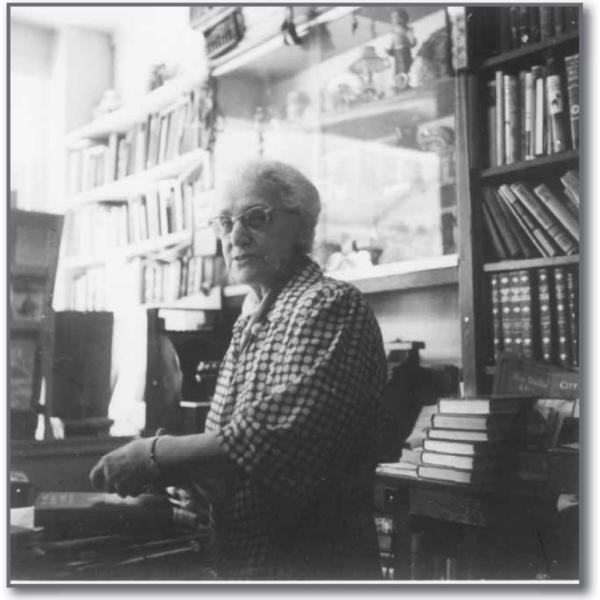
Anna Blom’s Book Store
Aberdeen and Olympia, Wa
I t sounds like the plot of a 1930s movie – a young mother opens a business; she succeeds in spite of adversity; the depression nearly wipes her out; she prevails and is successful for many, many years. Anna Blom’s story, however, isn’t fiction - it all happened in Aberdeen and Olympia.
Anna came from Russia in 1907, essentially selfeducated, but very well-read. She learned English by listening to someone reading classic fiction and Shakespeare while she was ironing for her employer. In 1923 she arrived in Aberdeen to open a book store so that she could support herself and her two children. Having persuaded the owner of a building to partition off a small area, she borrowed $25 to pay the rent, and opened for business. Her stock consisted of 50 volumes from her private collection, but the community soon discovered that Anna could order the books they wanted, and that you could find good conversation at her store, as well as good reading.
From the original store with its salvaged shelving and sparse stock, the Grays Harbor Book Store grew into an Aberdeen institution, and the largest book store in Southwest Washington. By the late 1920s Anna had moved to the new Aberdeen Elks building, and murals of Russian scenes complimented the well stocked shelves. One element that the two stores had in common, however, was Anna’s samovar, which was always at hand should anyone want a cup of tea while they were browsing or chatting with the owner or other customers.
During the depression, Anna moved the books, the samovar, and the children to Olympia, hoping that business would be better there. And it was – as of 1964 she had more than 100,000 new and used books on the shelves and stopping by Anna Blom’s Book Shop had become tradition for many customers throughout the area. Anna remained a fiercely independent life-long learner well into her 80s, and resisted offers to buy the store until the 1970s. However, according to one source, even after she no longer owned the business, she continued to keep an eye on it from her rooms in the Hotel Olympia across the street!
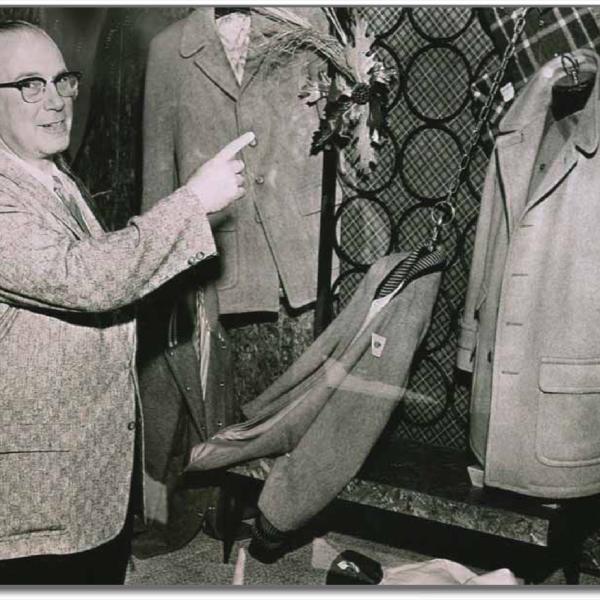
Arnstein’s Men’s and Boy’s Shop
4536 University Way N. E.
A rnstein’s Boy’s Store was bought in December, 1949, by my parents, Julian and Eleanor Arnstein. It was in the heart of the University District, known as “The Ave.” After being in business for several years, the name was changed to Arnstein’s Boy’s and Men’s Shop and later to just Arnstein’s Men’s Wear.
Eleanor ran the business until Julian could quit his clothing manufacturers’ rep job and devote full time to the operation of Arnstein’s. I was in high school when they bought the business and I would take care of my younger brother and sister during the summers while my mother worked and ran the store. My father was able to devote full time to the store and support our family without his having to work at another job.
My father was well known and took an active role in the University Chamber of Commerce, the Kiwanis Club and was elected President of the University Lions Club in the early 1980s. He was affectionately known as “Mr. A” by employees and customers alike.
Dad had a gumball machine in the store and he would give the children pennies to put in the machine to get one gumball. The freight would be brought into the store from the back alley and the sign “Arnstein’s” is still above the back of the store which can be seen from the alley and street today. Every year at Seafair time, I would take my sons to The Ave to watch the University Seafair Parade. Dad would set out chairs in front of the store. We felt so important to be able to sit and watch the parade instead of standing like the other spectators.
The Ave was a great area at the time and our store was just one of many Jewish-owned businesses in the district. My father hired many college students as part time help. Dad finally retired in 1980, after 3l years in business. It was a good time to be on The Ave and his name and memory continue to live on.
Story from Sandy Naon
B. Barer & Sons
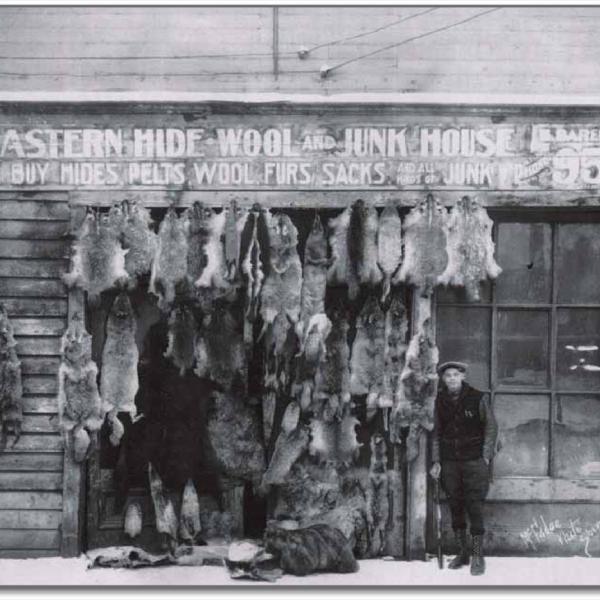
B . (Barrel) Barer, an apprentice barrel maker in Russia arrived in Walla Walla from Philadelphia in about 1917. His brother Ike was already travelling as a salesman in the Pacific Northwest. Grandfather worked as a cooper but supplemented this by selling produce to the surrounding farms and collecting skins and scrap metal. In 1921, now a U. S. citizen, he returned to Europe and rescued other family members. His sons, Israel (our father) and our uncle David each joined him in business on their sixteenth birthdays. The beginnings of the current business were when they rented a location, seen on the accompanying photo, in downtown Walla Walla; the sign shows the grandiose name of Eastern Hide and Junk and B. Barer, but quickly changed to only B. Barer. In 1936, B. Barer made his two sons partners and the firm became B. Barer & Sons.
The photo above was taken in about 1925 or 1926. It shows Uncle Dave who was about 15 at the time. The business continued at that location. We recall the original phone number, 953, which was used until the Bell system required uniform multi-digit phone prefixes.
During the 1920s and 30s Israel, and David ranged through eastern Washington and Oregon and northern Idaho buying raw wool and skins. As travel was restricted during WWII, the firm became a scrap metals dealer and a distributor for welding gasses and structural steel. Uncle David was a savvy metal trader and marketed scrap as far away as Montana and Utah. Israel was the operations man. For many years a side business was the Waitsburg Welding Works, Inc., a fabricator of gasoline and oil storage tanks. The company operated from 1947 through 1968. The twenty foot tall gasoline storage containers can still be seen at distributor plants throughout the Northwest. Only Alan continued the Barer business, and after college became the successor to Israel and David. In 2000, on retiring, Alan liquidated the scrap metals operations and sold the welding supply business to OXARC Company which now operates at B. Barer’s property. Alan’s son Steve Barer, a fourth generation family member, is a manager for OXARC at that location.
Story from Alan and Arny Barer
Becker Brothers Grocery
th 85 Avenue & Greenwood Street
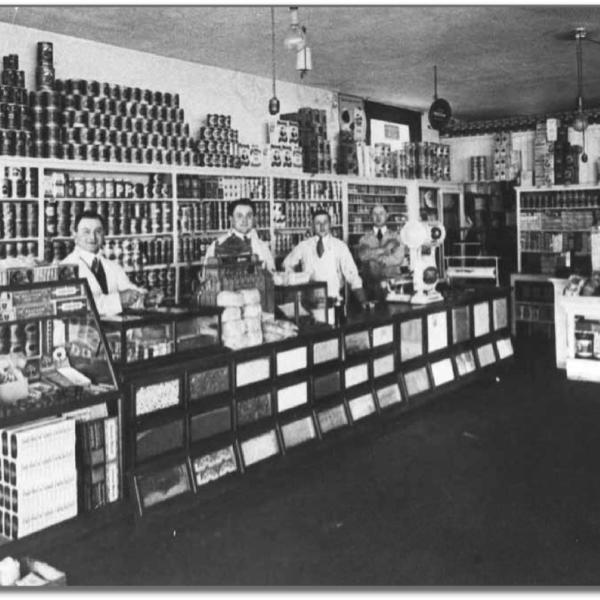
I was a second-generation grocery kid that never got a chance to run the family business. Although only 17 years old at the time the business was sold in 1944, I felt like I’d spent a whole career there! My father Sol Becker and his two brothers, Robert and Louis, made up the ownership of Becker Brothers right in the heart of the Greenwood neighborhood in Seattle, and they ran it like a well-oiled machine. During the several years they “let” me work there I learned a lot about the grocery business as well as lessons in life! I started my “lessons” when I was in the first grade. t*MFBSOFEBCPVUSFTQPOTJCJMJUZXIFO*GPSHPUUP move the milk bottles to the rear of the store. t*EJTDPWFSFEXIBUIBSEXPSLXBTMJLF TQFOEJOH afternoons sweeping the floor. t*MFBSOFEIPXUPUSFBUDVTUPNFSTSJHIUCZFYtending them credit during the depression. t.ZMFTTPOJODPNNVOJUZTFSWJDFXBTMFBSOFEBT the store worked with food banks. t"OETPNVDINPSF
One funny story was that the combination to the office safe was written in Hebrew! That kept it real safe! And, oh, did my dad get mad at my sister when she didn’t stock the shelves the “right way” with the oldest merchandise in front! And when I asked my Uncle Robert if he knew what time it was, he looked at his watch and simply said “Yes!” Ah, what memories!
Our meat market was popular, even in the rationing years of WWII. I remember the little red disks folks brought into the store to get their weekly portion of meat. At times we had lines clear out to the street and around the building. We obviously had a good supply and the word got out quickly.
During the war years the three brothers became exhausted and in ill health from working the many hours at the store over some very tough years. They saw the handwriting on the wall as Safeway and the A & P became popular. But Becker Brothers Grocery maintained its small business atmosphere until its sale in 1944. The building still stands, housing an antique store, at the intersection of 85th and Greenwood.
Story from Jerry Becker
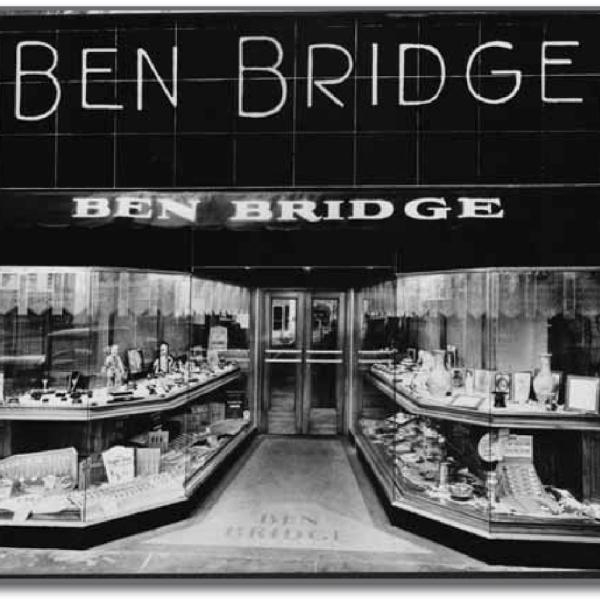
Ben Bridge Jewelers
Our original family name was Bryczkowski which became Bridge. The family came to the United States from Poland in 1906, part of the millions who left Eastern Europe to escape pogroms.
When Ben Bridge was 17 or 18, he went to work for Schwabacher Bros., where, when WWI broke out, he was head of the candy and tobacco department. His mentor, Nathan Eckstein, told Dad to do a payroll deduction and buy property on Mercer Island. So Dad and his brother Abe canoed over to Mercer Island, and came to the conclusion that it wasn’t going to be worth anything. So Dad didn’t do his payroll deduction!
Dad was a protégée of Schwabacher. After the war he briefly went back to work for Schwabacher Bros. In 1922 Dad met and married Sally Silverman who talked him into going into partnership with her father, Samuel. Grandpa Silverman was a master watchmaker and an optician in Seattle since 1912. (It was customary at that time that opticians were watchmakers, too). The company became Silverman and Bridge – located on 3rd Avenue. When Silverman needed to move south for health reasons, Dad bought out his father-in-law in 1926 and promptly changed the name to Ben Bridge.
I began working at the store when I became tall enough to reach the counter. I was cleaning and polishing, followed by my brother Bob who is six years younger.
I always believed that an essential part of being a jeweler was being a watchmaker. Dad had two watchmakers, Mr. Cook and Mr. Blanks, and I became an apprentice to them. After school and on Saturdays I worked in the store, doing janitorial and silver polishing as well as taking care of the beautiful wood on the showcases.
After serving in WWII and graduating from the University of Washington, I joined my father’s business. Brother Bob and I had no choice. When I was in the Pacific, at age 18, my father sent a note to be signed, telling me that I was a one-fourth owner of the store. That was career counseling – Ben Bridge style.
The Navy has always been a big part of Bridge life. Chief Petty Officer Ben, Rear Admiral Herb, Commander Bob and Captain Jon have donned the uniform, as dedicated to the country as the Bridge family has been dedicated to its customers all those years.
Herb and Bob took over the business completely in 1954, and together with sons Jon and Ed developed a chain of more than 79 stores from Minnesota to Hawaii.
Story from Herb Bridge
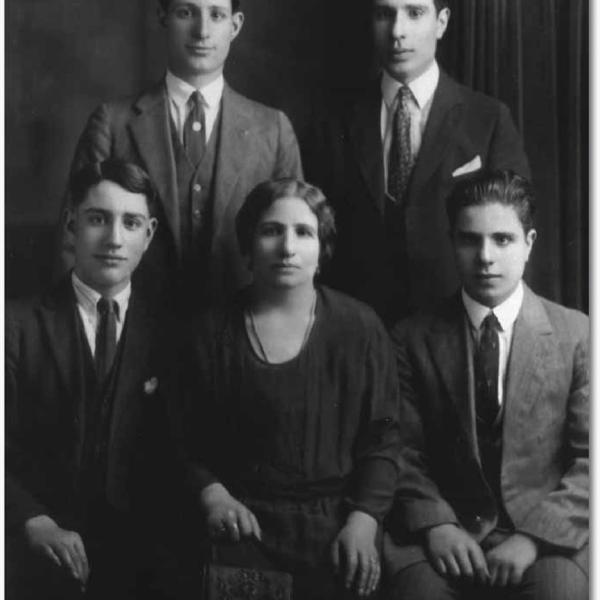
Ben’s Fuel Co.
th 4200 10 Avenue NE
My father and uncle, Benjamin and Joseph Mezistrano, had a storefront at 42nd and Roosevelt in North Seattle. The business was open from the mid-1930s until about 1952. It was one of those open storefront businesses which, if you can visualize, was at the mercy of the weather. They sold groceries but mostly fruit and produce. Eventually they enlarged and opened a fuel yard adjacent to the store.
The essence of the story about Ben’s Fuel Company was working long and hard hours. “Everyone had to,” said Leon, Ben’s son, “for these were depression years.”
As the bahor, or first son born, Leon Mezistrano recalls, “I worked in the store and fuel yard very early in my years. I can recall helping close up the store for the night, often getting into a large fuel truck to make a delivery of coal or wood to someone in our neighborhood, likely a member of the synagogue. And we got home quite late.”
One adventure, Leon recalled, was unloading a boxcar of wood. “We went to the rail yard and had to find the right boxcar first; these cars were different – they were open on top with sliding doors on the side.” Unable to slide the door open, Leon was hoisted first atop the truck and then he scrambled over the top of the boxcar. Next became the task of, piece by piece, heaving the wood over the side of the box car. As you can imagine, the lower the load in the boxcar became, the more difficult it would be to toss it up and over the sides of the box car to the waiting father and uncle outside. “Finally my dad could open the door and go to work. I had no idea the amount of labor my dad and uncle did on that day.”
But Leon’s story exemplifies the amount of hard work required to make a small business successful, providing commerce to the community and, in this case, a living to support two families during difficult times.
Based on notes from Leon B. Mezistrano
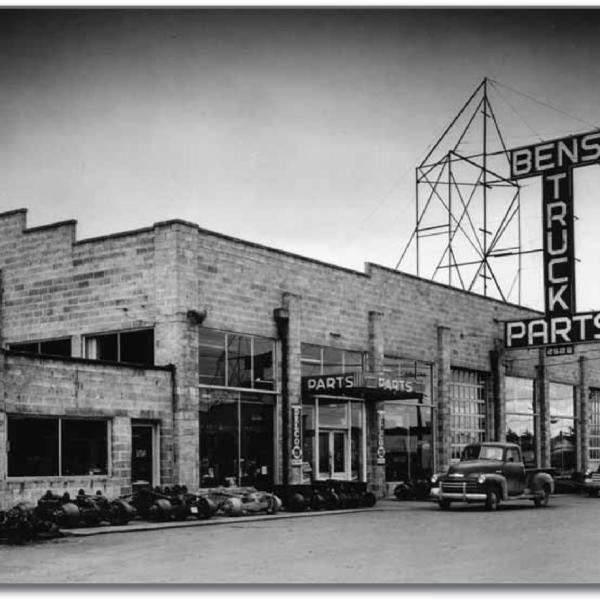
Ben’s Truck Parts
Tacoma, Wa
Ben Etsekson arrived in Tacoma in 1916 at the age of 21. He came from Tomsk, Siberia, where his family operated a farm and would regularly travel across the border to China to sell their goods.
“In 1917, I bought a truck, it wouldn’t run, so I sold the tires, the magneto, the steering wheel, then I was in business.” That’s how Ben Etsekson became one of the earliest pioneers of the truck parts industry. In his stock was every part for every truck ever made, which was possible at the time because of the comparatively few models made.
However, it was far from a straight and easy path; he failed several times before finally succeeding in his business. During one of these ventures, his partner changed the locks on the door and Ben was forced to relocate across the street and start up anew. This became his first of many real estate purchases.
After WWII, his son Wally joined the business. Veterans had a special privilege to buy army surplus. Because there was no civilian manufacturing of trucks during the war, the surplus trucks and equipment were high in demand and created a whole new direction and prosperity for the business.
Ben had a soft spot in his heart for the unfortunate, oftentimes employing new immigrants from his native Russia. Ultimately, he had locations in Tacoma, Portland, Seattle, Los Angeles and Vancouver, B.C.
He became the first Jewish member of the Tacoma Yacht Club and a Director of the Central Bank. He was an early conservationist with peacocks, peahens, deer and other animals protected on his 30 acre estate. He built an elaborate dam and fish ladder for migrating salmon on Chambers Creek running through his property.
Ben Etsekson was eulogized by many friends and acquaintances across the United States as gentle, kind, sincere and considerate of other’s interests. As one contemporary observed, “Ben was a rare jewel. . .(he) and his fellow immigrants brought a heritage to our country never duplicated since.”
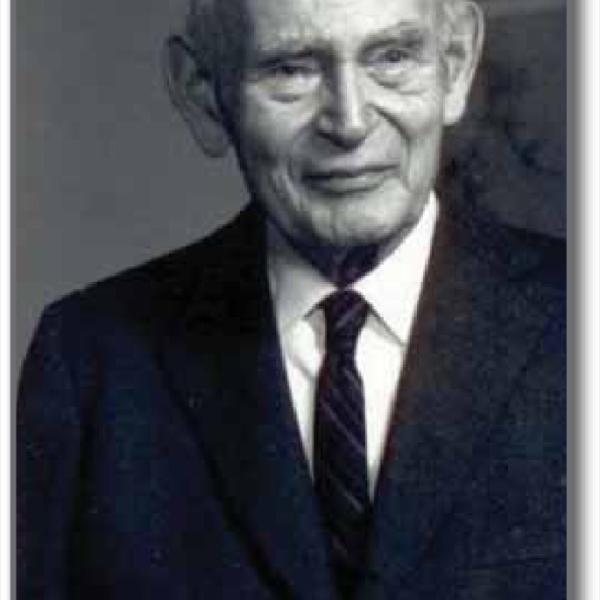
Bergman Luggage
rd 3 Avenue & Stewart Street
With the sullen disdain of a teenager, I once asked my father, “Why do you spend so much time talking to the customers? You’re a businessman, not a social worker.” I don’t think he bothered to respond. What I only later came to appreciate was that friendship was the essence of Bergman Luggage. Product and price were afterthoughts to long personal conversations. Fred Bergman founded the store at 2nd and Jackson in 1937. The proximity to the train stations, and wartime mobilization gave the small business a boost.
Dad became friendly with many of the Japanese families who lived and worked on Jackson Street. When their “relocation” was ordered in 1942, there were many sad farewells. My father was one of the few who publicly condemned the treatment of the Japanese. (“How could any Jew not speak out about this injustice?” he said.) That stance made a huge impression on me; I was forever proud of him.
I recall two groups of regulars: The first were a steady stream of bearded meschulachim (charitable emissaries). Because of its proximity to the train station, Bergman Luggage was often their first Seattle stop. All were treated with respect, and after a few words of Torah, left with a check.
Another group, also garbed in black, was the nuns. They would only be waited on by Mr. Bergman. He treated them like royalty. There were long discussions of theology and world affairs. Again, sales seemed incidental to socialization.
A host of aunts, uncles, cousins, and other members of the Jewish community worked at Bergman Luggage. Most notable was my mother’s brother, Si Hurwitz who arrived after discharge from the army in 1946. Where my father was ultra-conservative, Si was a visionary in his business philosophy. He challenged the “fair trade laws” of the day, by selling name-brand appliances at a 20% discount.
In the early 50s, Bergman Luggage moved uptown to 3rd and Lenora. When my father retired in 1956, Si became the sole owner. When he died in 1986, his son Jay Hurwitz left an academic career at North Carolina State University to take over management. During Jay’s tenure, the number of outlets expanded from one to eight, and number of employees from 14 to 100. Bergman Luggage was sold to a California firm in 1991; there have been several owners since.
Story from Abe Bergman
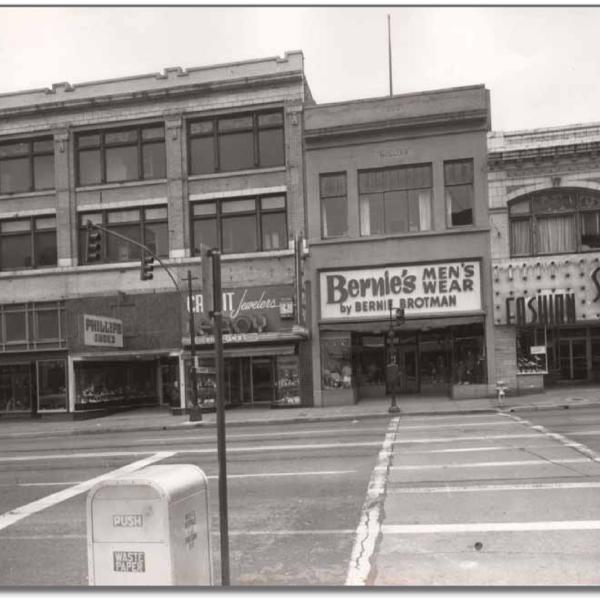
Bernie’s Men’s Wear
Tacoma, Wa
Whenever I wander the aisles of the original Costco on 4th Avenue South, I smile when I remember that all of this started with the discount mentality of my father, Bernie Brotman. He didn’t start Costco. That was his son Jeff. But it was my father’s discount DNA in Jeff that ultimately created the most successful discount concept in America.
Sometime in the early 1950s Dad and his brothers Hal and Morley, joined forces to create Brotman Brothers Clothiers, a men’s store in downtown Tacoma. By the late ‘50s, the brothers went their separate ways and my father planned to create the first Bernie’s Bargain Basement! He was convinced that by selling lots of merchandise at small profit margins he would be successful. Does that approach to retailing sound familiar? But my sophisticated mother would have nothing to do with a bargain basement business and the final result became Bernie’s Men’s Wear at 1130 Broadway in downtown Tacoma!
My dad thought and behaved far younger than his years. And that mentality, with the help of my business-minded mother, Pearl, made Bernie’s the coolest store for young men and teenagers in the entire Puget Sound region. People came to Bernie’s from as far away as Seattle and Vancouver, B.C. to do their shopping for trendy pants, shirts and even suits and tuxedos for prom. Imagine having a father who owns the hottest fashion store in Tacoma!
By the early ‘60s, demand for a Bernie’s in Seattle was satisfied with the opening of his second store on “The Ave” near the University of Washington. In the early ‘70s, Dad realized that women were now able to wear pants to work, school and out to dinner. And with that awareness, my parents opened the first Bottoms store at Seattle’s Southcenter Mall.
At this point Dad’s company became a family affair. I left my advertising career after the Bottoms explosion when my father strongly urged me to help him slow down and work less. Thus started my long retail career at the knee of my father, a retailing legend whose lessons still help me to this day. I often ask myself what my father would do in any given situation.
Story from Michel Brotman
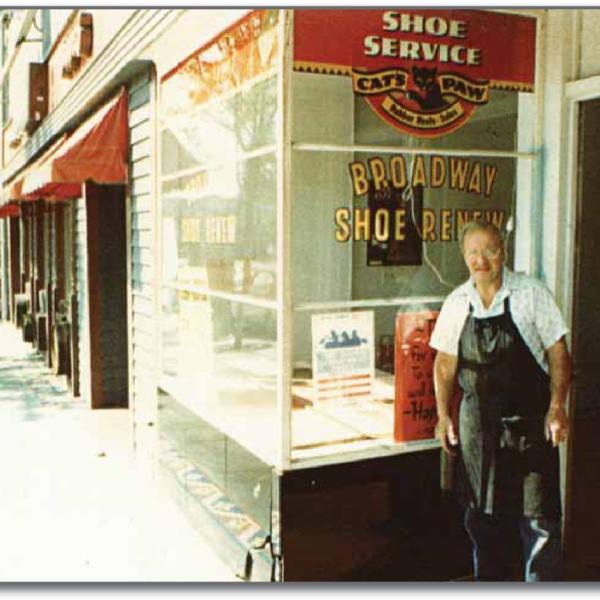
Broadway Shoe Renew
617 Broadway East
he Talmud teaches “Kol Yisrael aravim zeh b’zeh – all the people of Israel are responsible for one another.” Within the Jewish community, we look out for each other and help each other out. Albert Benaltabe’s story is a perfect example. T
While in high school, Albert (Al) worked for his brother-in-law Victor Mayo, a grocer, and family friend Ralph Capeluto, owner of Seattle Curtain. After finishing high school, Al went to work as an apprentice without pay for his next-door neighbor Isaac Hasson, who had a shoe repair business. Al pulled out heels and soles. As Al put it, “There was a lot to learn.” In the years following, he worked for family friends Isaac Angel and then Benny Habib, learning the shoe craft.
Prior to joining the Air Force in 1942, Al worked in the shoe repair department at Frederick & Nelson, trimming and finishing shoes, married Becky Menashe in 1943, and resumed working at F & N briefly when he returned from the service in 1945. Around that time, his friend Morris Franco – who owned a flower shop – told him about a shoe repair shop for sale on Broadway Avenue. Vic Mayo loaned him the money to open Broadway Shoe Renew in 1946, and subsequently Al paid his brother-in-law back. Al repaired shoes, and hired Marco Israel to clean, dye and shine them. Once a week Al and Marco counted the tax tokens in the cup to settle the earnings.
Years later, after Benny Habib retired, he came to work for Al part-time for a couple of years.
Al took great pride in his work. “I was fussy about workmanship,” he recalls. “I had wonderful customers – all kinds. I would always give them a smile. Sometimes I would fix an old lady’s purse and not charge her.” The business lost its lease at the end of July, 1983.
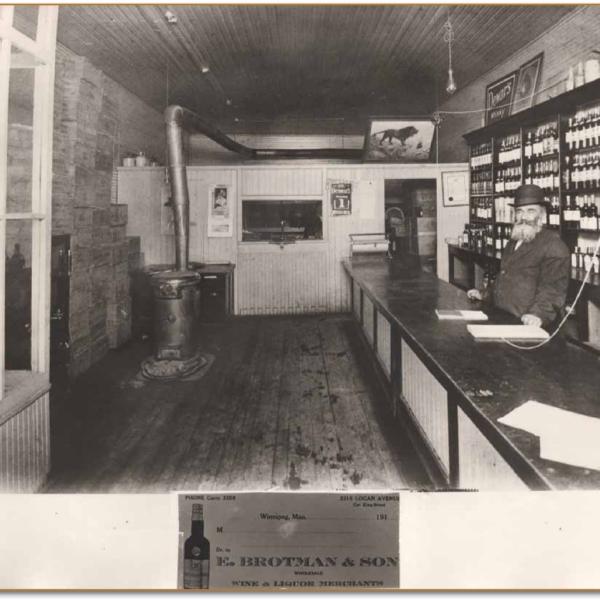
Brotman Brothers
Tacoma, Wa
I n 1923 Samuel and Fanny Brotman emigrated from Romania to Balgonie, Saskatchewan where their six children were born. The family moved to Tacoma in the 1930s, bought a house at 4109 North 29th and stayed put.
However, Sam’s business, Western Furniture & Hardware, moved around quite a bit, with at least 5 different locations on Commerce Street. After 1945 Sam worked as a salesman in his son’s clothing store. It was first the Brotman Toggery, then Brotman Brothers. Sam, who died in 1962, worked with his sons Hal, Morley, and Bernie until about 1956.
The close knit brothers shared a retailing genius and a love of sports.
Hal Brotman moved up to Broadway and started Hal Brotman’s Men’s Apparel. He often said “OK” for servicemen to pay their balance on the next pay day. He was always involved in the sports community, sponsoring youth and adult teams for many years. His love for athletics goes back to Stadium High School and the College of Puget Sound where he starred as a halfback in football. He died in 1982.
Morley Brotman was a prominent businessman and civic leader in Tacoma. He owned a photography business, was the official photographer at the Seattle World’s Fair in 1962 and extremely active in all of the World’s Fairs from then until 1980 when he died. Hal and Morley always supported Tacoma minor league baseball. They owned half shares in the league.
Bernie Brotman was a retailer who by the 1970s operated 18 stores with his brothers in Washington and Oregon, and was an owner of Seattle Knitting Mills. According to sons Jeff and Mike, he originated the concept that became Costco. Bernie died in 1996.
Story from Mike Brotman, Deb Freedman, and historylink.org
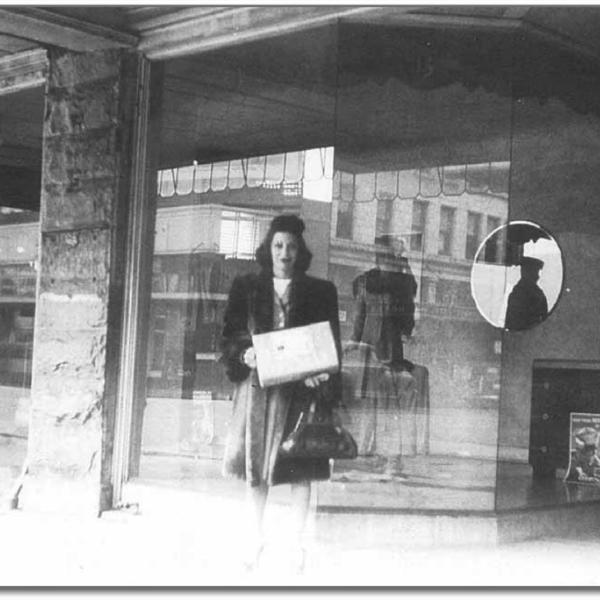
Brower’s of Aberdeen
Aberdeen, Wa
Brower’s, a fine ladies dress store in Aberdeen, was founded by Dave and Ann Brower in the 1920s. Dave and Ann had lived in Ketchikan, Alaska and Portland, Oregon before moving to Aberdeen. They had two daughters, one born in Alaska and the other in Aberdeen. Together they operated Brower’s, Dave attending to the business side and Ann managing the fashion side, until Dave’s death in 1945. Ann then asked her brother, Eddie Weinstein, who was merchandise manager for Meier and Frank in Portland, to assist her in selling the store because she wanted to move to Seattle.
But Eddie had two sons, Larry and Marvin, returning from World War II. He purchased the store from his sister so his sons would have “something to do.” Marvin soon determined that ladies ready-to-wear was not his “thing,” and left Aberdeen to attend medical school. Larry and his wife Sally ran Brower’s from 1947 until 1982, when they sold the store and moved to Seattle. In Aberdeen they also reared their two children, daughter Terry and son Edward, now a noted Seattle architect.
Following in the footsteps of the Brower’s, Larry attended to the business, while Sally took care of fashion and sales. Her sure sense of fashion, fabric, and craftsmanship developed in her years at her own store led her into a post-retirement career working for Joe Greengard in his clothing manufacturing business in Seattle.
Story from Ed Weinstein
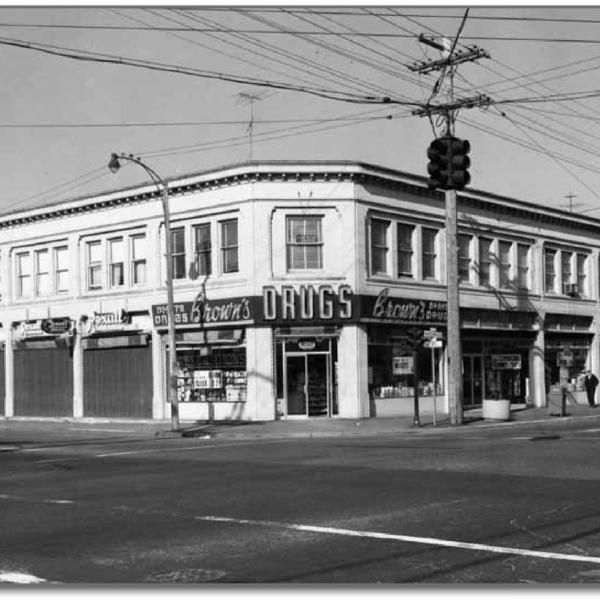
Brown’s Bi-rite Drug Store
th 85 Avenue & Greenwood Street
Perhaps you want an ointment for a freckled skin, Or a razor for a bearded chin, All these items can be conveniently found, At . . . Brown’s Bi-Rite Drug Store Verses 2 of 4 from Seattle radio ads in the 1950s
If you want some magazines or candy, Or a tonic that is dandy, You can find these items very handy, At . . . Brown’s Bi-Rite Drug Store.
When Harry Saul Brown of Seattle married Mary Kosher of Everett in 1939 he told her she was a “big city gal.” But instead of New York or Chicago and with a world war brewing, they moved to Toppenish Washington, population 2000!
Brown’s Bi-rite Drugstore opened with a flourish. Mary, a first class journalist, wrote a full page ad surrounded in red flames for the local paper: “No longer do you have to go to Yakima to get your cut rate prices.” Harry had stocked his shelves and when the start-up money ran out, he filled the rest with toilet tissue and sold it CHEAP. Sold they did, everything! The store was a huge success. Harry mixed prescription salves and ointments and put “leftovers” in a vat he called “Ointments Compound.” When a cure for an unresponding rash was needed, Harry pulled out “Ointments Compound.” It always worked. The locals thought him a genius! Can you imagine what would happen today?
In 1945, with a new baby on the way and a five year old son who would need a Jewish education, it was back to Seattle and Brown’s Bi-Rite took up residence at 85th and Greenwood. The store was open from 9:00 a.m. to 10:00 p.m., 365 days a year. The biggest sellers on Christmas, Easter and Thanksgiving were film, flashbulbs, and Alka Seltzer. Harry sold drugs and Mary did the ads and buying. All clergy, including rabbis, priests and ministers, got their drugs at cost. Brown’s became the most successful independent drugstore in the Northwest.
When Brown’s closed its doors in the mid-1970s, Harry worked as a pharmacist on First Hill. Mary returned to journalism at the UW where she worked into her 80s. It was a great run!
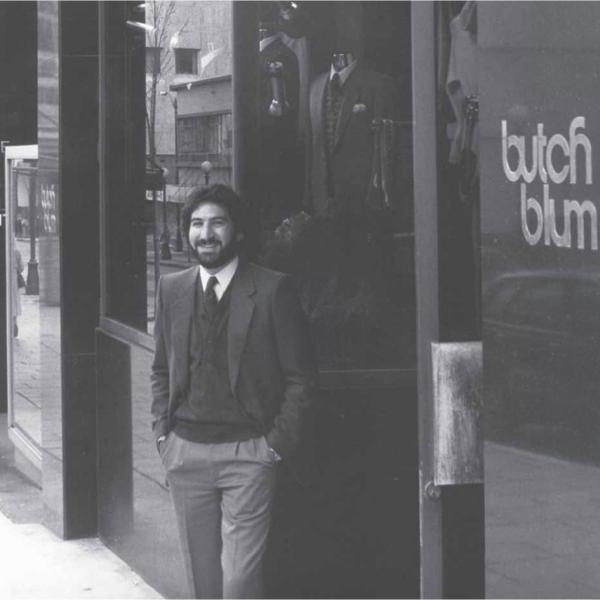
Butch Blum
th 1408 5 Avenue
When I was twelve, living in Salem, Oregon, I started working at The Shoe Box, a discount shoe store owned by my parents Maurice and Ruth (Rosenberg) Blum. From a very early age I had strong opinions about what I wanted to wear and how I wanted to look. My dad wore bespoke tailored suits. Even then I knew they weren’t my style, but I could appreciate the fact that my father had such nice suits. On breaks and for a few minutes at lunch time, I’d go around the corner to look at the clothes at Bishop’s department store.
When I came to Seattle for college at the University of Washington, I worked in retail to help pay for my education. I worked at both Nordstrom and Jay Jacobs, selling shoes part-time.
While at the UW I traveled around Europe for four months. It didn’t take long for my eyes to open to a world of style the likes of which I had never seen. That’s when I began to truly appreciate quality and fashion apparel.
When I finished my stint in the Army, I began an apprenticeship in retail, starting at The Bon Marche. I quickly moved through the ranks and eventually became the head buyer for men’s apparel. About that time, my old friends at Jay Jacobs beckoned and I became a men’s buyer there, slowly raising the level of quality of the fashionable goods sold in the downtown flagship store. I began to develop a vision which crystallized into a store in which I would offer the stylish clothes that I had come to love and appreciate.
I found a location in downtown Seattle and then headed off to Europe and New York to find product for the new store. Thirty five years later, the rest is history. My wife Kay Smith-Blum now directs the very successful women’s apparel department. Butch Blum is the quintessential men’s store in Seattle, following a long history of fine menswear emporiums of the previous century.
As told by Butch Blum to Joe Greengard
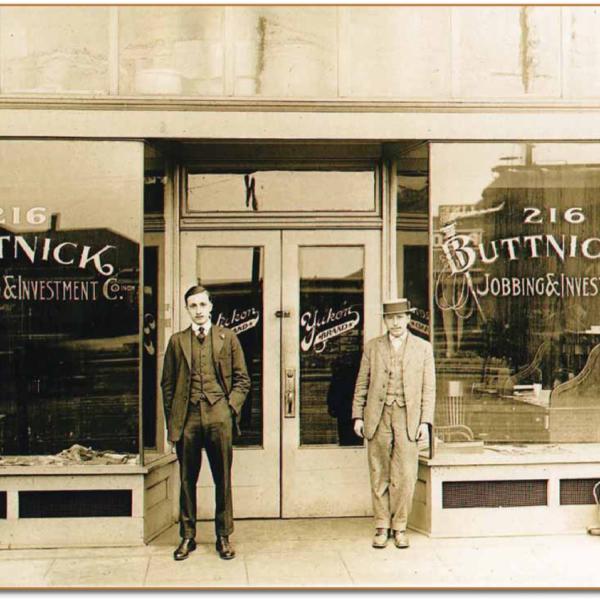
Buttnick Jobbing and Investment Co.
216 Railroad Avenue
Left to right: Buttnick brothers, Harry and Sam M Shortly thereafter, my late father, Harry Buttnick, and his brother Samuel G. Buttnick ran a business which they called the Buttnick Jobbing and Investment Company. The business was located in the OK Hotel building. y grandfather, J.M. Buttnick, brought his wife and family to Seattle in 1893. They came from White Russia, where he owned an inn and some property. My father was born in Seattle after the family arrived. J.M. Buttnick bought the land and built a hotel in the early 1900s at 216 Railroad Avenue (now Alaska Way). The building still stands behind the Alaskan Way Viaduct. The family started various businesses including jewelry and jobbing. As they were always Sabbath observers they were limited as to hours of operation and scope. Jobbing is buying distressed merchandise from manufacturers and other stores and reselling it to the public. In this effort they were greatly aided by another son named Phillip who had a talent for spotting merchandise with good resale potential. He died early on, and the other brothers were left to carry on the business.
Shortly thereafter, my late father, Harry Buttnick, and his brother Samuel G. Buttnick ran a business which they called the Buttnick Jobbing and Investment Company. The business was located in the OK Hotel building. The family started various businesses including jewelry and jobbing. As they were always Sabbath observers they were limited as to hours of operation and scope. Jobbing is buying distressed merchandise from manufacturers and other stores and reselling it to the public. In this effort they were greatly aided by another son named Phillip who had a talent for spotting merchandise with good resale potential. He died early on, and the other brothers were left to carry on the business.
Over the years, the family expanded into manufacturing and other enterprises. When the Sephardic Jews began arriving in Seattle, J.M. Buttnick acted as their banker, safe-guarding their money until they got established. Story from Morris A. Buttnick
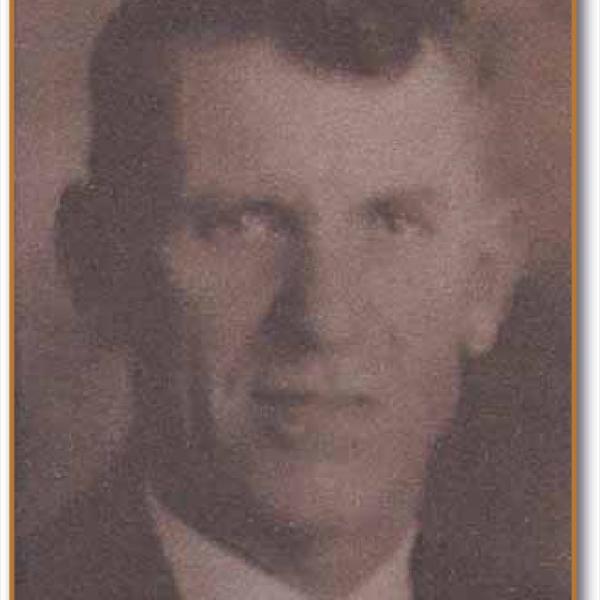
C. Rosenstein’s and Kraff’s
Toppenish, Wa
Clara Schecter of Chicago was one determined woman who, as luck would have it, chose two men who had a love of retailing. And specifically men’s clothing.
The story begins with Colman Rosenstein who came to America from Romania in 1900. He started off for California with $4 in his pocket, held various jobs and ended up in Portland, Oregon. In 1910, he purchased a small clothing store in Goldendale, Washington. After marrying his first wife, Ethel, also an emigrant from Romania, the couple settled in Goldendale and six months later moved the store to Toppenish, Washington. Colman eventually had four stores in Toppenish, and served on the city council.
An early newspaper ad for C. Rosenstein’s told of Ethel’s “devious” plans to “sell all the inventory” while husband Colman was away in “the big city of Seattle” buying new merchandise.
Colman sold the Toppenish stores in 1927 and opened a store in Mabton, Washington in 1929. After Ethel passed away in 1930, Colman married Clara Schecter. He was later elected Mayor of Mabton. Clara was active in the business as well and when Colman died in 1935 she liquidated the business and moved back to Chicago with her three year old son, Manus. She maintained ties to the local community, returning yearly cross country by automobile with her son to operate a dry goods and grocery store concession at The Yakima Chief Hops Ranch in Mabton.
As happens in our Jewish community, Clara was “fixed up” by friends Alex and Jennie Shafran of Toppenish with Sol Kraff of Anchorage, Alaska, Jennie’s brother. Clara and Sol married in 1939 and soon purchased the Toppenish Clothing Store from brother-in-law Alex Shafran. The name of the Toppenish store was changed in 1941 to Kraff ’s. The store was operated by Sol and Clara for 30 years.
When Sol passed away in 1971, Clara sold the store to Dan Johnson, an employee. Dan still operates the store as Kraff ’s, which now sells Indian blankets in addition to fine men’s wear. Kraff ’s, of tiny Toppenish, is a familiar name well beyond the Yakima Valley as it sells its blankets at Native American get-togethers throughout the West.
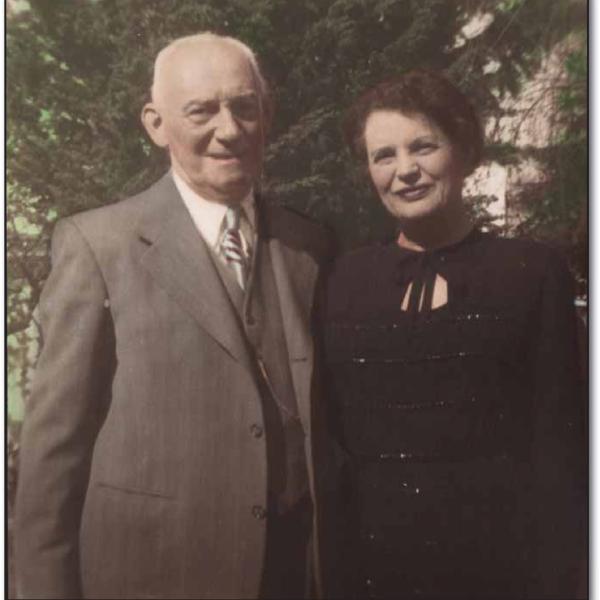
Carrol Company, Luggage Purveyors
The Carrol Company was founded in Seattle in 1900 by George Carrrol at 501 1st Avenue. Exactly what goods he sold is not known, but included were luggage and leather goods. In 1908 George had electric lights installed in his store for $21 per month which included the light bulbs. When World War I began, George registered for the draft, but was not called upon to serve. In 1915 he left his business partner and moved his family to Anchorage which was nothing more than a tent city at the time.
In Anchorage he was a men’s outfitter. He carried luggage, clothing of all sorts and he had a shoemaker working for him. His slogan was “On your soles we put our uppers.” Life was very hard in Alaska in those days and when the boom in Anchorage was over, George moved the family back to Seattle. No mention of the partner was made and George ran the business which moved to 108 1st Avenue at Occidental. George Carrol and wife Sarah luggage damaged by the airline and a new business started.
George continued to sell luggage and leather goods. He moved the store to 2nd Avenue near Union. Some of his neighbors were Bauer’s Sporting Goods and Prager’s Mens Wear. He also manufactured trunks. During World War II, he made trunks for the military. After the war George decided that it was time to retire. His son Ted took over the business and changed the name to T.W. Carrol & Co.
Ted decided that the retail business was not enough and that there was still great opportunity in Alaska. He began selling luggage and gifts in Alaska in the early 1950s. In the late 1950s people he knew at Pan Am asked if he could repair
In 1974 Ted turned the business over to Joe. The business ran pretty much in the same manner as before, but Joe moved the business out of the downtown Seattle area to find more space. T.W. Carrol & Co. has become the largest luggage repair center in the Northwest and continues retail luggage sales and wholesale sales in Alaska.
In 2000, fourth-generation Andy joined the company, and he and Joe run the business today.
Cascade Market
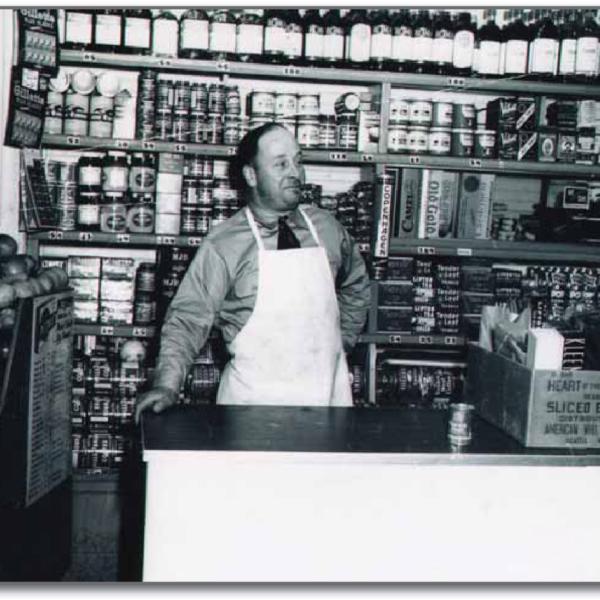
This business was the result of the generosity of Sam Israel towards his family. He provided the seed money and property to Nissim Israel and Albert Hasson to start the business in the early 1930s. He felt that Aurora Avenue, destined to become the “Great Arterial to the North,” was a perfect place to gain customers due to the building traffic volume.
At first the Cascade Market was a produce stand with a grocery store. That it started in the Great Depression and succeeded is a credit to Nissim and Albert. In spite of their hard work and dedication, the business struggled until the onset of WWII. They had a side business delivering produce to restaurants. Their success was due to their allotment of butter and cigarettes. However, when rationing ended so did their business. Cascade Market changed after WWII into more of a flower store, still selling some produce and groceries.
Sons and nephews, reaching the age of 16, worked at the store, enabling Cascade Market to be open on Sundays. The store opened each day, except the High Holidays, marked by the display cases being rolled out for customers to shop. There was a small wood burning stove in the back which tried to keep us warm in the win- ter. On really cold days we literally had to cut the flower stems out of the ice.
As traffic and times changed so did the nature of the business. With the advent of the freeway, Aurora became a lesser-travelled roadway. The supermarkets marked the end of businesses like Cascade Market and eventually it was closed. As is typical with small businesses, the location of Cascade Market is now a huge condominium building hiding an icon of Seattle’s Jewish-owned business history.
Story from Eddie Hasson, Lucy Sytman, and Robert Albert Hasson
Charleston Hardware
Bremerton, Wa
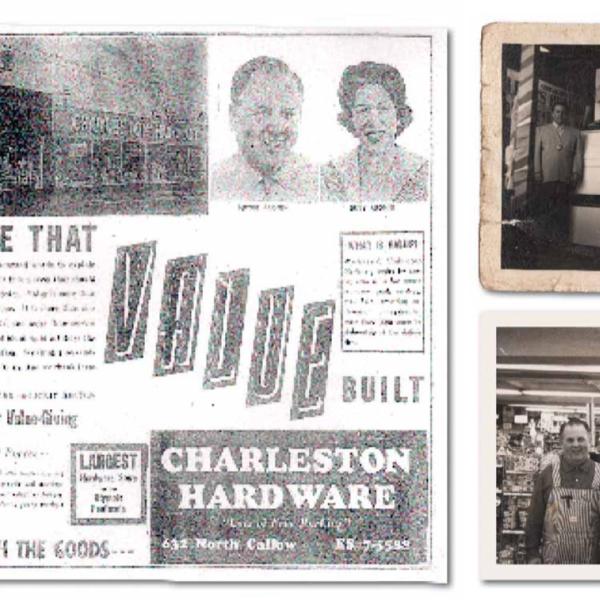
Clockwise from far left: Ad from the 1950s; Meyer in 1940s; Meyer and Ruby in 1960s C harleston Hardware was owned by Ruby and Meyer Aronin. They bought the store in 1940, moved to a larger location and retired in 1976. The store was so small when they originally bought it on Charleston Street that half of the merchandise had to be displayed outside. The entire town supported their business and their daughter, Carol Arnstein Marks, attributed their success to its being operated like a mom and pop store. The store carried some 360,000 different items at their bigger location. Their motto was: “If we don’t have it, you don’t need it.” Carol and her brother, Eddie, never felt neglected as both parents divided their time equally between their children and the running of the store. Ruby once stated that the permanent bend in her right index finger was due to pushing the cash register keys. During the Christmas Holiday season they always provided food and drink for their good customers. All their customers loved them. nin allocated a portion of the store and its sales and receipts from that space to be given to the Center for its operating budget. Meyer Aronin was president of the Bremerton Chamber of Commerce and involved in the Lions Club as well. When Carol was fourteen, she went with their father to visit the USS Missouri for the day, which was thrilling for them both. Meyer’s grandfather had owned a hardware store in Seattle and died prematurely. This had an effect on Meyer and influenced his decision to retire early. There was humor in running the business. Children would actually use the toilet displays – this would require immediate attention. On one occasion Meyer locked a customer in the store and had to come down after hours to let him out. Melmac dinnerware had a guarantee of never breaking and when Ruby demonstrated this to a customer by dropping the plate, it broke. In later years, the grandchildren would love to go to the store and sit on the tractors.
The Jewish Community Center of Bremerton also benefited from Charleston Hardware. They were having financial problems and Meyer Aro- nin allocated a portion of the store and its sales and receipts from that space to be given to the Center for its operating budget. Meyer Aronin was president of the Bremerton Chamber of Commerce and involved in the Lions Club as well. When Carol was fourteen, she went with their father to visit the USS Missouri for the day, which was thrilling for them both. Meyer’s grandfather had owned a hardware store in Seattle and died prematurely. This had an effect on Meyer and influenced his decision to retire early.
There was humor in running the business. Children would actually use the toilet displays – this would require immediate attention. On one occasion Meyer locked a customer in the store and had to come down after hours to let him out. Melmac dinnerware had a guarantee of never breaking and when Ruby demonstrated this to a customer by dropping the plate, it broke. In later years, the grandchildren would love to go to the store and sit on the tractors.
Story from Carol Marks
Cheim Mens Wear
Tacoma, Wa
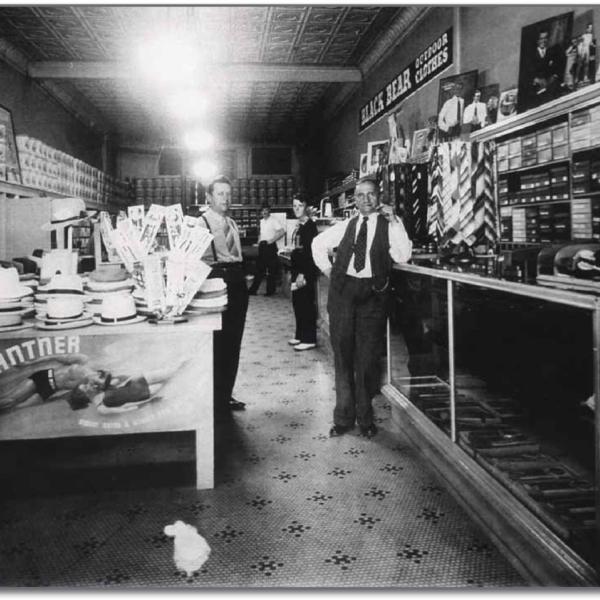
Joseph Cheim was the first of three brothers to operate clothing stores in Territorial Washington. In the early 1880s, he worked at Olympia’s White House store on Main Street, purchasing it from owner Sam Gottschalk in 1884. The store was most likely not as imposing as its namesake, Raphael Weill’s White House in San Francisco. Joseph married Rose Davis in 1887, niece of Steilacoom’s Seraphina Pincus. Only one of their five children survived the childhood diseases of the time. In 1898 Joseph moved to Tacoma, operating a store for many years at 1136 Pacific.
Joseph’s younger brother George worked with him in Olympia, then moved to Tacoma in 1891. For several years George operated a clothing store in what is now Old Tacoma, moving to 819 Pacific Avenue in 1896. He then moved to Hoquiam, where he operated a store for many years. The family eventually moved to California.
Joseph’s youngest brother Morris Cheim also worked in Olympia in the early 1880s. He moved to Tacoma in January of 1885, operating the Great Eastern store for Sam Gottschalk and later a partner, Louis Lask. Like his brother, Morris was able to purchase his business from his employer. He married Essie Miller in 1896. She was twice secretary and twice president of the Ladies’ Judith Montefiore Society, the forerunner of Sisterhood. Upon Morris’ death in 1944 it was noted that he was the last surviving charter member of Tacoma’s Temple Beth Israel.
Morris’ son Herbert continued the tradition.
Article from December 30, 1884:
The festive burglar has come again.
Last week Mr. Joseph Cheim was awakened at 2 a.m. by someone trying to force an entrance to the store through the rear door. Failing in the attempt he tried one of the side windows where, after breaking one of the panes, he had the pleasure of looking down the barrels of two – seven shooters, and into the calm, placid, tranquil face of Mr. C. who quietly informed him that it would be better for him not to call again. He didn’t.
Chips Produce Company
1507 Occidental South
Morrie “Chip” Chiprut was born in Seattle in 1916 to Sephardic immigrants and Sephardic Bikur Holim founders Louise Azose Chiprut and Behor Yehuda Chiprut.
He served in the US Army during World War II shortly after marrying his wife Susie. Upon his return to Seattle he began what was to be his lifelong career in the produce industry.
In 1945 Morrie started working for Publix Fruit and Produce. In the early 1960s he and childhood friend Albert Viesse started their own produce company, V & C Produce in a warehouse on Western Avenue below the Pike Place Market.
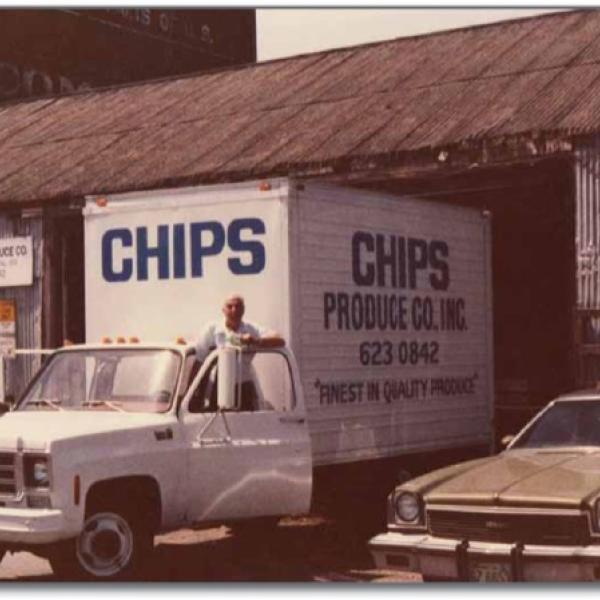
About 10 years later Morrie started his own company, Chips Produce Company. In the early days he worked by himself taking orders in the morning and delivering in the afternoon. His wife Susie helped him with the paperwork and bookkeeping. The company was first located in a warehouse at 1507 Occidental South, across the street from Capeloto Brothers and Rosella’s.
The company flourished and grew with Morrie’s devotion to his customers. After a few years, his son Jerry joined him in the business and they moved to a larger facility at 1260 6th Avenue South, the current site of Seattle’s bus barn. They operated several trucks and made daily deliveries to many of Seattle’s finest restaurants. Mr. Chiprut offered advice to a young Jon Schwartz in creating the salad bar at the newly opened Butcher Restaurant in Georgetown.
Morrie retired in the early 1990s and his son Jerry took over the operation. Morrie died in 2000 at the age of 84. Jerry continued for some time but succumbed to complications from diabetes in 2004.
Mr. Chiprut was known by all in the industry as a kind and honest gentleman. His wealth was measured in the number of people who respected him throughout his life.
Chips Produce no longer exists but is surely remembered in Seattle’s restaurant and produce industries.
Coast Jewelry & Loan
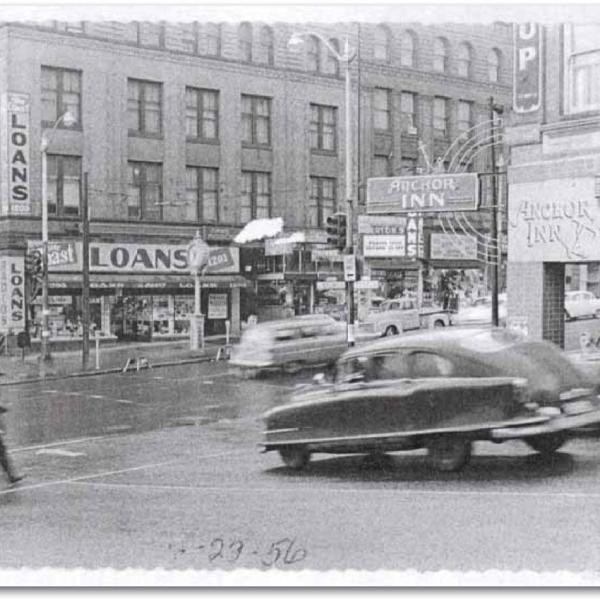
My late husband Milt Shindell’s business career spanned many decades but was highlighted by three separate jewelry businesses interrupted by World War II.
Coast Jewelry & Loan Company was located at 1201 1st Avenue in downtown Seattle. It opened in 1935 and was owned and operated by Milt Shindell and my brother, Joe J. Berol.
In 1942, when Milt went to war, I went to work there. I had previously worked for 20th Century Fox on Film Road – 2nd Avenue South – just a few blocks away. War caused us all to change our directions and I “held down the fort” until Milt returned from the service. While he was gone, I recall the time when a man pawned a radio. As he walked out of the store he picked up another radio and marched off to another pawn shop presumably to continue his “marketing”! This business was sold in the ‘50s.
Concurrently, in 1945, Milt and Joe opened Berton’s Jewelers (combining parts of their two names) and it continued in operation until its building was demolished for the Benaroya Hall project. I recall another classic incident: A nice young Jewish man broke the window, took the jewelry and promptly ran into the police! Our family went to City Hall but was unsuccessful in bailing the young man out. It finally took a Jewish Community worker to intercede in the fellow’s behalf.
In his later years Milt opened a small store in the Joshua Green Building called The Watch Shop. He happily plied his watch making skills well into his later years. The jewelry business was in his blood, a vocation and avocation which pleased him his entire life. After Milt’s passing the Berol-Shindell Scholarship Fund was established at the University of Washington Hillel to memorialize them.
Story from Ruth Shindell
Columbia Printing Company
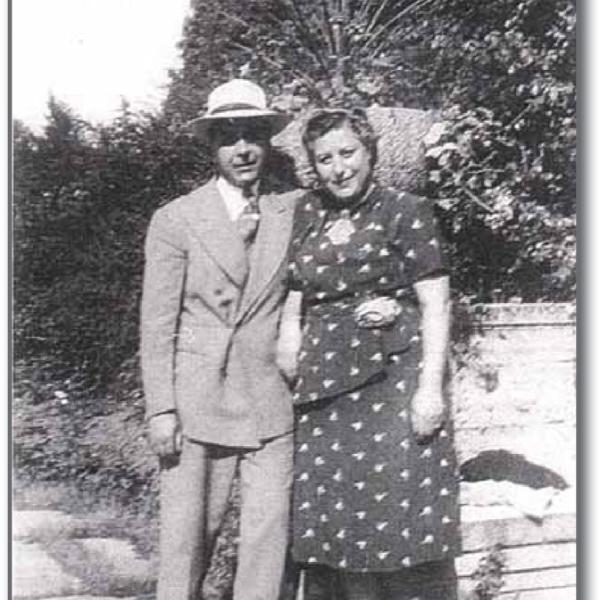
Typical of successful Jewish-owned businesses in the early 20th Century was Columbia Printing Company founded in the late 1930s by Joseph Albert Souriano. Born in Istanbul in 1900, Joe’s command of seven languages, including German, “qualified” him as an apprentice in a German-speaking printing company. When he began his business he was the only printer in Seattle to feature Hebrew type.
Columbia Printing was widely sought after by Jewish community members. It was a source for bar mitzvah, bat mitzvah and wedding invitations. Joe’s clients included area synagogues, the
Jewish Federation, the Jewish National Fund as well as The Bank of California, Swedish Hospital and Georgia Pacific.
Joe’s business was a family business as much as it was a community-oriented business. Joe and Becky were members and active in both Sephardic Bikur Cholim and Ezra Bessaroth. Customers could call at their place of business in the Polson building downtown or at their home. The business was eventually sold out of the family and no longer operates.
Story from Charlene Souriano
Condiotti’s Confectionary Store
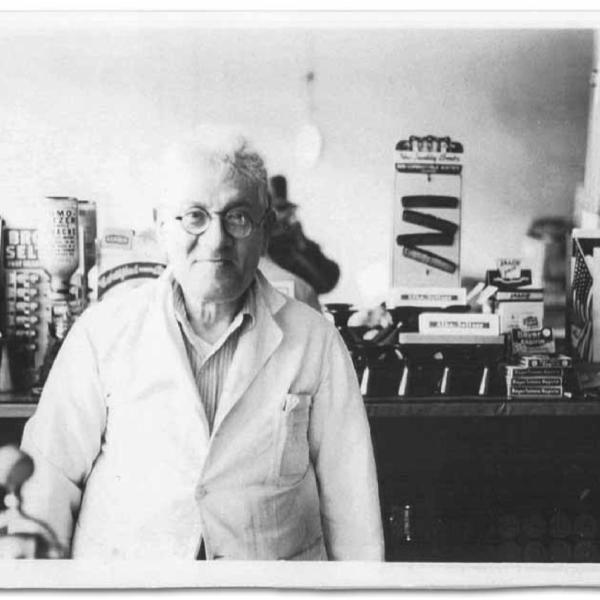
Twenty-eight year old Behor (Benny) Condiotti came to Chicago from Gallipoli, Turkey in 1909. After about five years he had saved enough money to send for his wife, Sara, and daughter Becky.
Behor and his family eventually came to Seattle from New York. His first store, where he sold fruit and produce, was at 12th Avenue and Washington Street. After returning to New York for a few years the family came back to Seattle.
Behor then opened his confectionary on Yesler Way near 20th Avenue and remained in that location until he retired. He went to morning services every day before opening the store. On Shabbat the store was closed.
He made his confections in huge copper and brass pots in the back room of the store. His specialities included soujouk, pitas de susam, halvah de susam, maylatches, pitas de kaymak, loucom, yo- gurt, three varieties of Passover candies, and other sweets. While they were cooking, he stirred his candies with different sizes of wooden paddles. Then he cut his confections into various shapes and sizes on a huge marble slab.
One side of the front of the store contained a soda fountain with four or five stools. There he served ice cream cones, sundaes, banana splits, milkshakes, malted milks and soft drinks made with seltzer water. He also sold his yogurt for 10¢ a glass.
On the other side of the store was the counter where he displayed and sold his candies. Large apothecary jars contained rock candy. In the counter were his specialties, penny candy, candy bars and a variety of loose candies.
His wife, Sara, helped him in the store, and would cook at home and bring meals to the store so that they could eat together.
Direct Buying Service
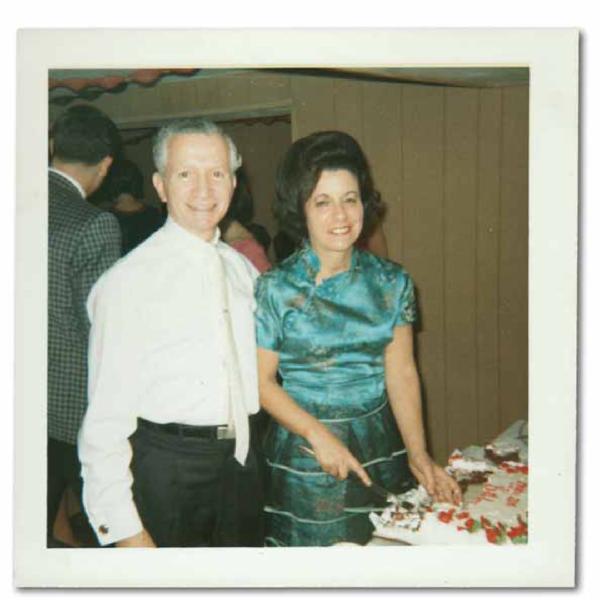
Direct Buying Service, Seattle’s first complete discount house, was started by my parents, Helene and Alan Waldbaum, around 1950, with a retail office in the Arcade Building on Second and Union in Seattle. They sold everything from diapers to new cars, but particularly major brand appliances, TVs, radios, jewelry and gift items, much of it from manufacturers’ catalogs. I still remember as a young boy, going door-to-door in the various office buildings in Seattle’s financial district distributing advertising flyers, and, once I had my driver’s license, picking up merchandise from various wholesale distributors. I even wrote a school paper about one of the store’s more unusual orders, one for a Morris Pollorus, which turned out to be a part of a boat known as a pollorus invented by a Mr. Morris. In keeping with Direct Buying Service’s slogan, “You Name It, We Get It,” the customer got his “Morris Pollorus.”
Those were the days when manufacturers tried to keep retailers from selling at prices below the retail list price. Direct Buying Service helped break such price controls. When Sydney Jaffe considered forming a discount house on a larger scale, which he named JAFCO, he first consulted with my mom and dad. My older brother, Ken Waldbaum, who was an ultimate salesman, went into the business full-time and became an owner. My great-aunt, Tillie Prottas, also worked there. Direct Buying Service was not a big enough “financial pie” to support me too, so I became an attorney. Eventually, our parents’ remaining interest was sold to Julian Cohon. Later Ken bought out Julian and Ken’s son, Ron Waldbaum, became Ken’s business partner. Over the years, the store moved to various street front locations in Seattle’s financial district, keeping the rent down by always being where the next high-rise building was going to be built. Around 1999, when the store was on the southwest corner of 4th and Madison, Ken and Ron sold the business to Jim and Jeff Freedman. Jim was one of Ron’s fraternity brothers and had worked at Direct Buying Service for years. The Freedmans moved the store to 1st Avenue South, just south of Safeco Field, and today it focuses exclusively on selling major appliances. In late 2008, the store’s name was changed to Metropolitan Appliance.
Story from Rodney J. Waldbaum
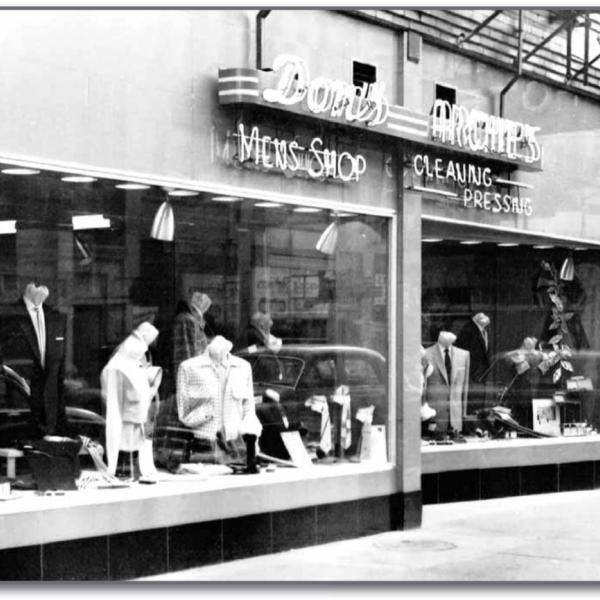
Don’s Men’s Shop
rd 3 Avenue & Seneca Street
My interest in men’s clothing came from my father, Archie Sidel, who with his brother Louie were tailors in the early 1900s. After Louie moved away, my father established a tailoring and cleaning and pressing shop in Downtown Seattle.
When I returned from Army duty in 1946, dad and I joined forces as Don’s Men’s Shop and Archie’s Tailoring, Cleaning and Pressing at our original store on 3rd Avenue near Seneca in Seattle. Post war times were tough and just getting merchandise was difficult. Over the years we gained customers and popularity and soon we were known as “The Blazer Kings” of Seattle. I remember my dad as the consummate salesman.
Among our customers were the Uuniversity of Washington, Seattle University and Seattle Pacific University who bought team traveling wear from us. About 90% of the blazer uniforms for men on the 1962 Seattle World’s Fair grounds were from our store. One of our “famous” customers was Sammy Davis, Jr., who stayed in the old Stratford Hotel across the street from our store and remained a customer for many years.
We continued a fairly brisk retail business until 1981. But the call for logoed clothing became stronger than for men’s clothing. After a short time we quietly closed our men’s store and began Don’s Group Attire. Our first “office” was on Aurora Avenue North at about 77th. Our tiny offices were barely enough space for my wife Marilyn and I to grow our business. In 1998, after my son Alan joined the company, we moved to our current 1st Avenue South building. My other son, Arthur, joined the firm and today we’re among the largest monogrammed uniform firms around.
Story from Don Sidel
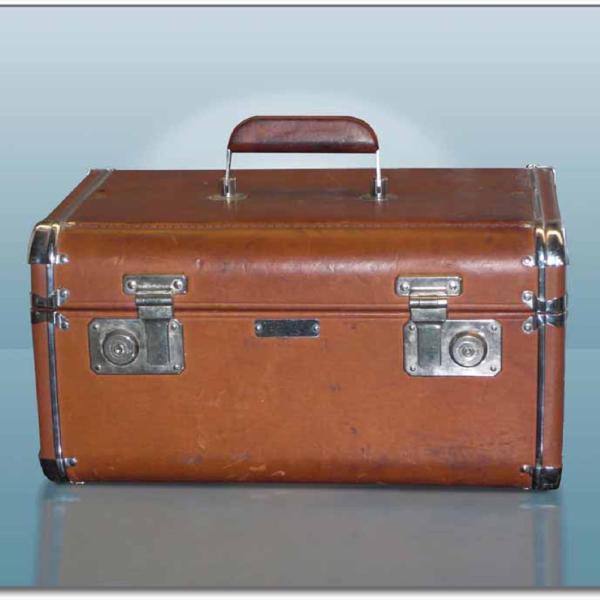
Durabilt Luggage
Durabilt Luggage was started by my grandfather, Albert Rosen, a diminutive man called “the little giant”, by his three sturdy sons, Ben, Allen, and Herb. He was slightly built, perhaps five feet five but could outwork his three six-foot tall “boys.” Working long hours on the factory floor with tie loosened and shirt sleeves rolled to the elbow, he was seldom seen without an unlit cigar clamped between his teeth.
Born in 1877 in Russia, Albert arrived in America before the turn of the century, where he ended up in the luggage business by chance. One day he was walking by the train tracks and saw a huge crowd gathered. When he pushed through to find out why, he saw a man who had a carload of 1,500 cases and people were grabbing them for a dollar apiece. He noticed that travelers carried their belongings in sacks or in boxes tied with rope or string and decided that there was a market for cheap but sturdy suitcases. He took his $300 savings and started making canvas “telescoping” bags for the Alaska gold prospectors. The business became increasingly successful, he began to hire employees, and finally Durabilt Luggage was born.
Mother and I used to visit the factory. A grimy door opened from the office to the factory floor where suitcases and trunks of many sizes were constructed. The foundation of each case was a beautifully made cedar or pine box covered with linen like fabric or leather glued to the wood. The edges of the case were finished with sewn -on leather bindings or with the patented “Dura-Edge,” a metal binding invented by Papa. – Joyce Dickhaut
The unique feature of Durabilt luggage was Albert’s invention of steel reinforcing along all the corners and edges of the suitcases, which at that time were wooden boxes covered with leather or fabric glued to the wood. Cheaper suitcases simply had a strip of leather or fabric binding sewed on to secure the seams at the box edges. Durabilt had the patented “Dura-Edge” with metal strips covered with leather or fabric to match the covering of the cases riveted onto the wood. The luggage was sold up and down the west coast in department and travel stores. The company successfully manufactured many types of luggage through the 1920s and 30s until World War II put an end to civilian tourism. The factory in the Pioneer Square area hired extra help, and ran day and night shifts filling government contracts for items such as ammo containers, officers’ cases army foot lockers.
In the post war years the call for heavy suitcases intended for train travel diminished and what was then called “airplane luggage” was in demand.
Story from Joyce (Rosen) Dickhaut
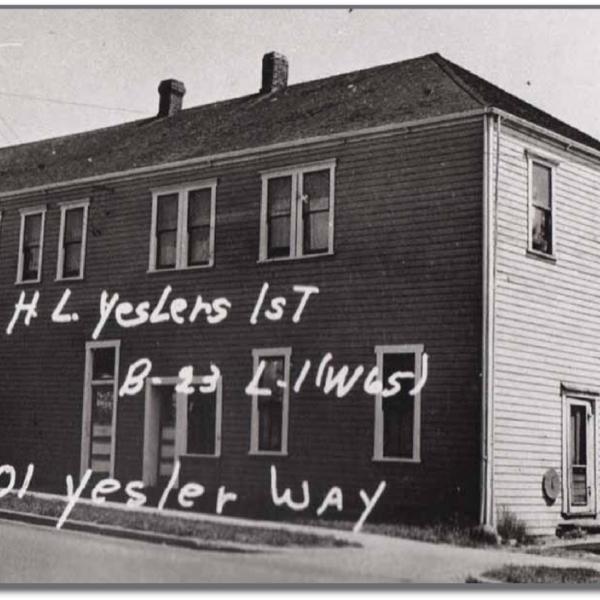
Economy Grocery
2001 Yesler Way
On the southeast side of 20th Avenue and Yesler Way was Al and Rachel Uziel’s Economy Grocery. To family it was “La Botika” and to the community it was Al’s Grocery, which was in the same location from 1931 to 1958. The Uziels were from Tirkidag, Turkey, which was also “the old country” for many of their neighbors.
Near the front of the store was a potbelly stove. In the evenings, Sephardic men would gather around the stove to discuss the important political and economic issues of the day as reported in the morning and evening newspapers. When the potbelly stove was moved to the rear of the store the discussion groups disappeared.
Fruits and vegetables were displayed in the front of the store. Near the entrance there usually hung a very large band of bananas. Bulk goods, like various kinds of pasta, were measured into paper bags, as were dried fruits and freshly ground coffee. There were two grinds of coffee – American (drip) and Kave Turco (ground to a flour consistency). Freshly ground Romano and Parmesan cheeses were an important specialty item.
With the coming of World Was II both the character of the grocery business and the demo- graphics of the neighborhood changed. Many Sephardic families moved to Madrona, Mt. Baker, and Seward Park. Families from the Dakotas, Montana, and the Midwest coming to work at Boeing or the shipyards moved into the area. Most people were working, so grocery bills were paid weekly. This was a marked change from the Depression years, and a relief for Mr. Uziel who always found it difficult to refuse credit to his customers.
All the grocers in the vicinity helped each other; if one ran short of an item another would lend it to him. Mr. Uziel would not carry ice cream because he considered it would be unfair to Mr. Condiotti’s Confectionary.
The Uziel children, Leon, and Rebecca worked in the store when they were in high school. Mr. Uziel also hired Josh Levy, Tessie Castoriano (Sadis) and her cousin Sol Halfon.
Occasionally during Prohibition La Botika might have a milk bottle full of Raki, Turkish liquor similar to ouzo. But, that’s a different story. . . . Story from Leon A. Uziel
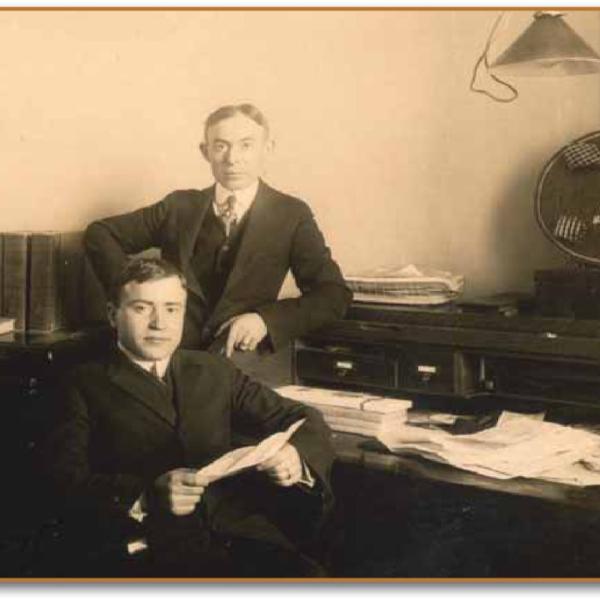
Fashion Craft Ties
Max Schoenfeld and his brothers Theodore and Herman, living at the time in Chicago, read that big things were happening in Seattle. The 48-story Smith Tower was under construction—to be the largest building west of Chicago.
They saw a great opportunity to start a business that would serve the metropolitan area that in 1889 was decimated by fire but by 1906 was a burgeoning metropolis on the country’s West Coast. Being that they worked in the garment industry, they decided that they would make neckties, or cravats, as they were known in the day. All the family moved to Seattle and thus Fashion Craft Cravats was born. “All the family” meant just that: The Schoenfeld men’s immediate families, their sisters and their families, Max’ new bride Edna Reinhart, her parents and a brother, an aunt, and cousins too.
Herman Schoenfeld eventually moved to New York, where he received and inspected fabrics and sent them to Seattle. After WWII two young men, Robert and Otto Schoenfeld, who had escaped the Nazis in Germany, presented themselves to Herman one day. They asked if perhaps they were related, that their father was mayor of their town. Herman concluded that the two men were not related. But he hired them both anyway. They worked for the company their entire lives and were always introduced as “cousins.”
In the 1950s, Max’s son Walter, 50 years his junior, upon returning from the Korean war, entered the firm and soon was CEO of the company. In the next 30, years Fashion Craft Cravats became Fashion Craft Ties, the largest neckwear industry in the U.S., and then Schoenfeld Industries. The latter would incorporate Schoenfeld Industries and Brittania Sportswear Company, which was a leader for the growth of jeans as fashion rather than an item of work clothing. Walter was named “The King of Jeans” by Forbes Magazine.
Max Schoenfeld lived until he was 108, passing away in 1990. He left his mark in many ways, but one of the most gracious acts of this giant of Seattle business was during WWII. When his employees went to war, the company paid their full salaries and commissions to their families. The Fashion Craft Building, located in the “Denny Triangle,” remains a historical monument today after being the company’s headquarters until the 1970s and serves to commemorate the memory of this fine business.
In the 1980s, the company was sold to Levi Strauss Co., and today is owned by VF corporation. Max’s son Walter carries on a tradition of being community minded. Walter has been involved in Jewish Community affairs and also in bringing professional basketball and soccer to Seattle. He is a founding partner in the ownership of the Seattle Mariners Baseball Club.
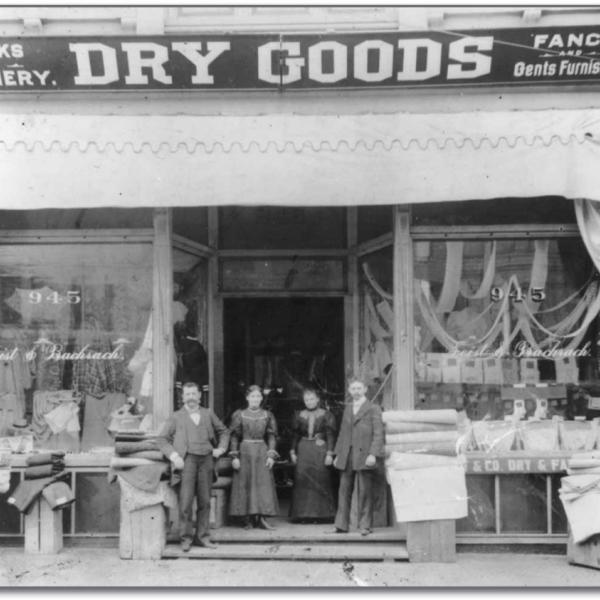
Feist & Bachrach
Tacoma, Wa
Theo Feist arrived in Tacoma with $20 in his pocket on September 19, 1889, just a month before his 16th birthday. He spoke French and German but no English. Theo began working for Jacob Bernhard, manager of the Chester Cleary clothing store, wrapping packages. His first year’s salary was only room and board with his boss. The following year, with a promotion to five dollars a week, he sent back to France for his sisters Irma and Lucie. They immediately found work with Jacob Bernhard as milliners. Big Merry Widow hats and leg o’mutton sleeves were becoming the latest fashion.
Incredibly, by 1895 Theo was able to open the clothing firm of Feist and Company on Tacoma Avenue. His sister Lucie married Joseph Bachrach and the following year the store became known as Feist & Bachrach—a name that would be prominent in Tacoma’s clothing circles for many decades.
In 1900 Theo and Joe purchased 934 Pacific— the same building where Theo had originally worked in 1889. In 1916 the firm moved to 1116-1118 Broadway, where it continued until it was sold to the J.C. Penney Company in the late ‘20s. Joe died in 1930 and Theo opened a small store across the street that he ran for another decade. Theo was president of Tacoma’s Temple Beth Israel for many years.
Five Friedmans Men’s Stores
Tacoma, Wa
Pacific Avenue, 1930’s: Friedman’s Clothes Shop and The Hub are visible on left S amuel I. Friedman’s initial connection to the clothing business after his arrival from Russia was with the garment industry in New York. After a time he decided to relocate and to shift from production into retail. He moved first to Washington, D.C., and then to San Francisco, where he arrived on April 17, 1906, the day before the cataclysmic earthquake that destroyed so much of the city. Understandably, he stayed only briefly in San Francisco before he headed for Tacoma, where other family members had settled.
One of the Friedmans already well established in Tacoma was Adolph, whose arrival in 1885 is believed to have made him the first Jew to settle there. Following the lead of Adolph and of J. Friedman, proprietor of Friedman’s Clothing House, Sam opened a men’s store, laying the groundwork for a series of stores that were established as more family members arrived. The connection among the Friedmans was particularly close, as Sam and his wife, Mary, were cousins — and since Mary was one of 10 children, there was an ample supply of business colleagues within the family.
Among these relatives/partners/owners were Nathan Friedman, Mary’s brother, who traveled from Lithuania to South Africa before settling in Tacoma; Morris, Nathan, and Harry, also Mary’s brothers; and Saul, who was a nephew.
By 1941, five men’s clothing stores, owned by members of the Friedman family, were situated within two blocks of each other (between 11th and 13th) along Pacific Avenue in Tacoma. The stores were The Hub, Stanley’s, Friedman’s, Nathans and Harry’s, all owned by brothers and cousins.
The Hub and Stanley’s sold traditional men’s clothing while Nathan’s, Harry’s, and Friedman’s sold work clothes. With the many longshoremen and fishermen from Tacoma’s waterfront among their patrons these stores were quite successful. Not only were these working men customers of the proprietors, but they also became good friends, and the Friedman brothers and cousins were well supplied with fish during the season! The stores gradually closed with the Hub remaining in business until after World War II when it became Belman’s Hub, owed by still another Friedman, Bernie who was Sam’s nephew and Herb Belmonte, Bernie’s brother-in-law. Those Friedman men sure had a knack for men’s clothing!
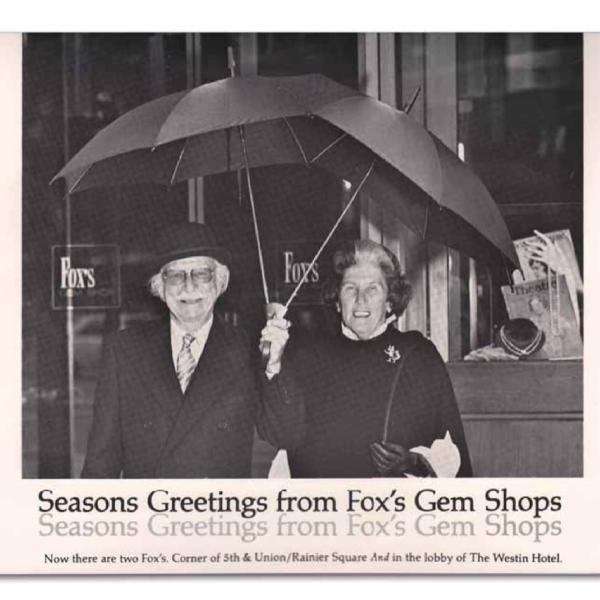
Fox’s Gem Shop
th 5 Avenue & Union Street
For over 60 years, Fox’s Gem Shop has been a family business. Sidney and Berta Thal, who bought it in 1948, kept the name “Fox’s” because they couldn’t afford to repaint the sign on the door. Six weeks passed before they made their first major sale, so they had no money to buy merchandise, either. Berta put out twelve Royal Dalton tea cups they had received as a wedding present. When they sold quickly, the couple scoured every antique shop from Seattle to Victoria. The antiques helped to fill the empty shelves.
One day a couple from New York came into the store. The woman bought a tea cup. Her husband looked around the store, then said to Sid, “You seem like nice people, but you’ll never make it selling tea cups. I’m in the diamond estate business. I’m going to send you some merchandise.” A short while later, a package with $50,000 worth of gems arrived with a note: “Don’t pay until you get the money. Sincerely, Mattie Singer.”
With that kind of support, their own hard work and the attitude that the customer comes first, Fox’s began to prosper. By the end of the ‘60s, their dream of a high end jewelry store became a reality. The Thals’ children, Steve, Cindy and Joy, have all worked in the business. Today, Fox’s is owned by Joy and her husband, Chai Mann. Their daughter, Zoey, continues in the family tradition.
Story from Cynthia Thal Muscatel
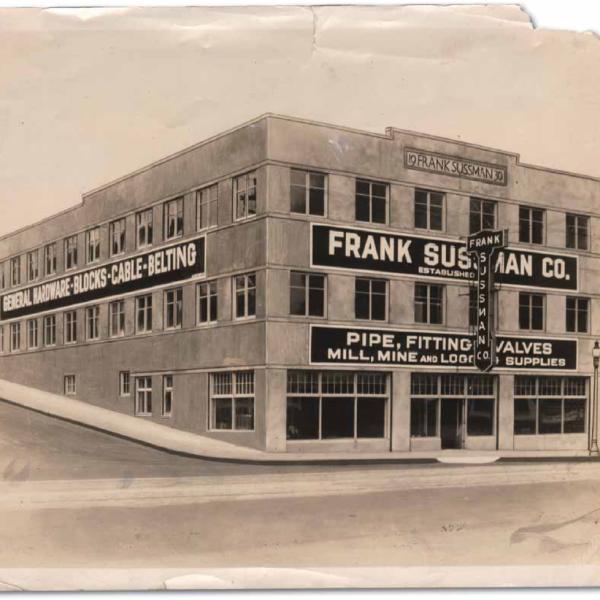
Frank Sussman Co.
Tacoma, Wa
Frank Sussman was one of the earliest Jewish businessmen in the area. He came to the U.S. from Latvia at 16 with the assistance of a married older sister in Bellingham. In turn he assisted in bringing two brothers and three sisters to the states as well as his parents.
He first settled in Seattle selling newspapers and sweeping the floor in a tavern.
Moving to Tacoma, he bought a wagon and began in the scrap business in 1898.
After World War I, Frank distributed surplus government equipment as an addition to his ongoing business of selling motors, cable, fittings, reinforcing steel and other construction equipment and material.
He maintained a yard and fabrication plant at 705 East 11th on Tacoma’s tide flats, and a machine shop and warehouse at South 23rd and Pacific Avenue.
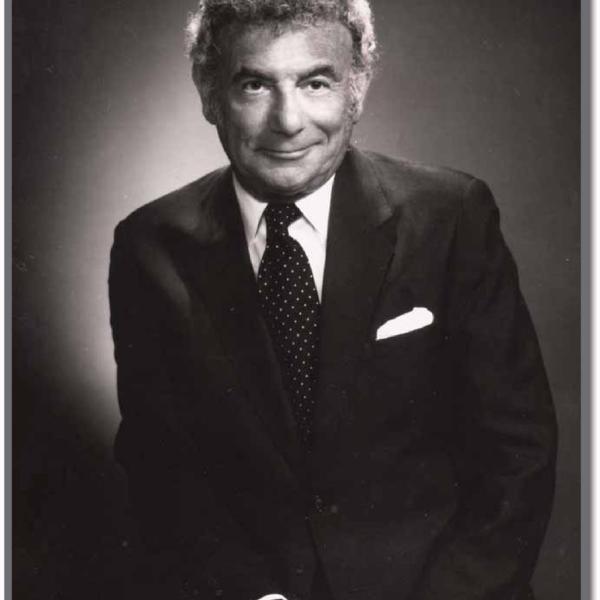
Fred Rogers Company
Fred founded Fred Rogers Company, a ship chandler business, in the late 1940s. He supplied Merchant Marine ships in Seattle, Vancouver, and Portland, with cigarettes (bonded), liquor (bonded), clothes, and other merchandise for ships. Fred Rogers Company was also the supplier for countless fishing boats throughout the area.
Fred Rogers Company was very successful, because of Fred’s hard work in developing and maintaining business relationships with the foreign ships that docked in Seattle, the high level of service he provided, and the fact that Seattle was a bustling port city during much of the second half of the twentieth century.
It was not uncommon for Fred to get a phone call in the middle of the night from the purser of a ship that had just docked in Seattle. Fred would get dressed and go down to the pier where the ship was docked, board the ship, and take an order for the ship’s supplies (called “seastores” or “slop chest”), then drive back home and go back to bed.
Fred worked regularly with U.S. Customs Officers; their presence was required to make deliveries of the bonded cigarettes and liquor. He employed many University of Washington students in the summer (including several notable varsity athletes) to work in his warehouse, drive delivery trucks, and do other tasks.
Originally The Fred Rogers Company was located on 1st Avenue and Lenora. It then moved to 208 South Jackson Street. When the Company left Pioneer Square, the space was taken over by the Linda Ferris Gallery.
The Fred Rogers Company then bought a building on Yale Avenue North (where the Fred
Hutchinson Campus is now located). The last building owned by the Fred Rogers Company was on John and Terry Streets, now part of Paul Allen’s South Lake Union development.
In 1979, Fred sold the Company to Western Marine, a competitor. Within several years, ships stopped buying their seastore supplies in Seattle, and the ship chandler business died out. The Fred Rogers Building was leased to the Seattle Opera after the business was sold, and the Seattle Opera remains the tenant of the Fred Rogers Building today.
Story from Jim Rogers
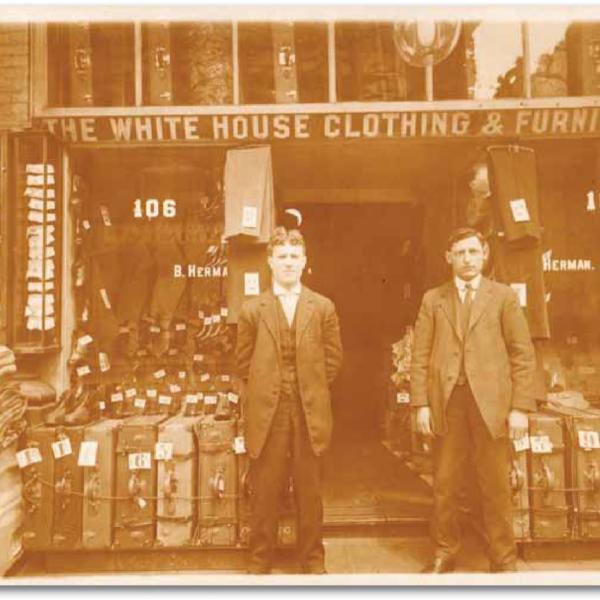
Freeman Optical Company
nd 1210 2 Avenue
Dr. Joseph Freeman, born in Minsk, in 1889, immigrated to the United States in 1905 with only $3 in his pocket. He came to the United States via Bremen, Germany to Ellis Island to Seattle to live with relatives, the Josef Herman Family. The Hermans had purchased his steerage class ship ticket for $34, which proved to be a good expenditure by them as he later saved their son from drowning in Lake Washington.
Dr. Freeman attended Broadway High School and worked in a relative’s general merchandise store on Washington Street in Seattle. He graduated from Broadway High School in 1911 and attended one year at the University of Washington, studying engineering. He did not have enough money to continue a second year of college, so he went to work in a relative’s jewelry store on First Avenue while studying optometry by correspondence from the Northern Illinois College of Ophthalmology and Otology.
After passing the Board of Optometry Licensing Examination in 1915, he established his first optometry and opticianry practice, the Washington Jewelry and Optical Company, at 1010½ 1st Avenue in Seattle. It was customary at that time to have an optometry office within a jewelry store.
In 1923 he moved his practice to 1203 3rd Avenue, renaming it the Royal Jewelry Company. In 1926 he leased the jewelry space to Soderstrom Brothers Jewelers, devoting his time to the practice of optometry.
In 1930 he changed the name of his practice to Freeman Optical Company (Optometrist and Manufacturing Optician) and in 1935 closed the jewelry store to operate an exclusive optometry practice. In 1940 he moved his practice to 1210 Second Avenue in Seattle. In 1944, in compliance with the optometric laws, he changed the name of his practice from Freeman Optical Company to Joseph Freeman, OD, Optometrist. In 1963 he semi-retired and moved his practice to his home at 1957 Boyer Avenue East in Seattle, where he continued to practice until 1978.
In 1977 Dr. Freeman was honored by Governor Dixie Lee Ray and the Washington State Board of Optometry as the longest practicing optometrist in the state. He died in Seattle on May 12, 1978, at age 88, after 63 years of uninterrupted optometric practice.
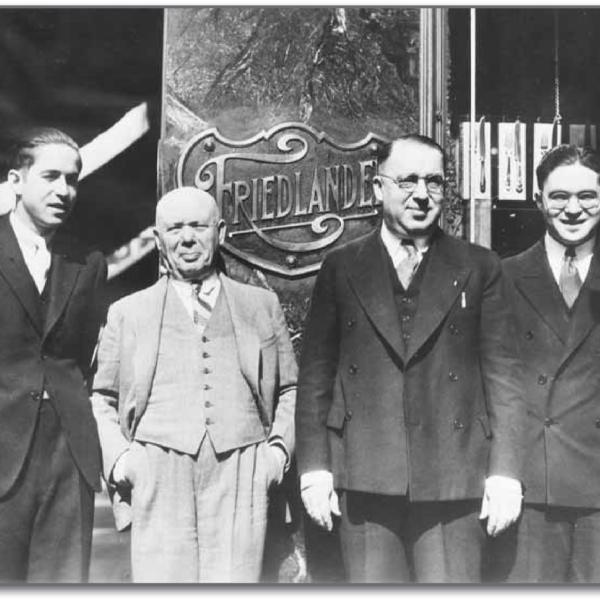
Friedlander & Sons
Samuel Friedlander, born in Eastern Europe in 1865, emigrated with his new bride when he was 22. They ran a successful jewelry business in Columbus, Ohio until 1907.
In Columbus, Samuel met Hugh Harrison. Gold had been discovered in Alaska around 1898, and sometime during this period Harrison talked Sam into staking him to $890 and left for Seattle with the idea of going to Alaska in search of gold.
Then all communication ceased for the next several years. Sam, wanting to see the West, decided to spend a few dollars for a train ticket to Seattle, arriving to find a thriving metropolis of 150,000. Sam asked around town about his old friend Harrison. Someone remembered a Harrison who ran a pawn shop on 1st Avenue. Sam walked down to First, found the shop, peered into the window and there behind the counter stood Harrison.
Sam walked into the store to catch up with his old acquaintance. After some polite banter, Sam inquired about his $890. Harrison told him, “Sam, I have invested it in the shop and I haven’t made it back yet.” Sam promptly took off his coat, hung it on the peg behind the door and said, “Well, my friend Harrison, you just got yourself a partner.”
The original pawnshop was called Hugh Harrison, Collateral Banker. By 1909 the business name changed to Friedlander, Hugh Harrison, Jeweler and Pawnbroker. The business moved that year to 925 1st Avenue. In 1912, Sam bought out Harrison’s interest and renamed the store, S. Friedlander Jeweler and it remained at that address until 1915.
The store continued to expand and move further uptown. Sam retired, and Sam’s son, Louis, took over the running of the business. In 1939 the name changed again to Friedlander & Sons. Louis’ sons, Paul and John, became partners in the business.
In 1986, almost 80 years after its inception, the Friedlander family sold the business to Sterling, a large national jewelry firm out of Ohio.
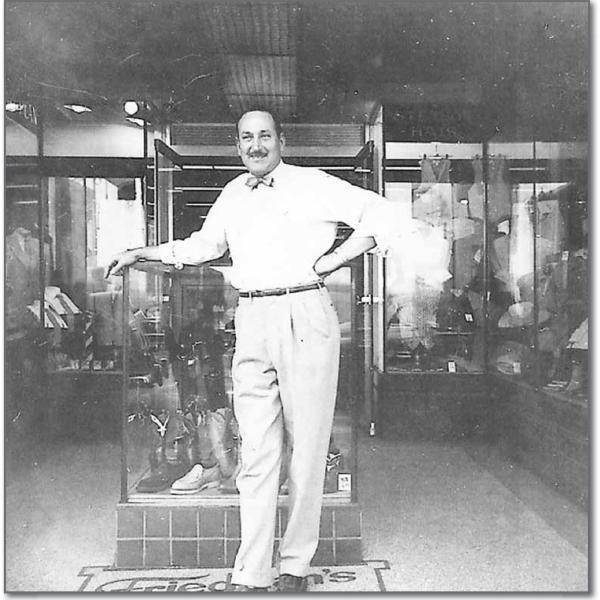
Friedman’s Clothes Shop
Tacoma, Wa
Sieg Friedman in front of Friedman’s Clothes Shop, 1953 T His merchandise changed with the times. At first he sold neck-band shirts with no collars. As the years passed, he carried a complete line of men’s clothing. He always followed the activity, moving up Pacific Avenue five times. In 1927, he moved the business for the last time, to 1124 Pacific. he story of Friedman’s Clothes Shop begins about 1845, when Adolph Friedman, then 19, left Kurland, Latvia, as a crewman on a Scandinavian ship, settled and later died in Tacoma. He is believed to be the first Jew to settle in Washington Territory. Adolph’s brother Zalman remained in Europe, but seven children of Zalman’s sons Jacob and Philip left Latvia to settle in Tacoma. Julius, one of Jacob’s sons, left for Tacoma soon after he turned 18, about 1890. He was erroneously sidetracked in Washington, D.C. (he told immigration he was going to Washington), where he worked as a farrier, finally reaching Tacoma in 1892. Julius Friedman was the leader of the Orthodox Jewish community. He was also active in civic affairs, taking a deep interest in his community. After 45 years on Pacific Avenue, he died in 1937. Saul and Sieg Friedman continued to operate Friedman’s Clothes Shop until 1967, when urban renewal forced the store to close.
Julius Friedman opened his first store in the Flatiron Building on Pacific Avenue at South 17th. In 2008, his youngest son, Siegfried explained, “Dad, like all the other young fellows, started out at the lower end of town where the main activity was. The railroads brought activity to that part of Tacoma.” His early customers were typically day laborers, who respected a merchant with neither social airs nor a sense of “con” about him.
His merchandise changed with the times. At first he sold neck-band shirts with no collars. As the years passed, he carried a complete line of men’s clothing. He always followed the activity, moving up Pacific Avenue five times. In 1927, he moved the business for the last time, to 1124 Pacific.
Julius Friedman was the leader of the Orthodox Jewish community. He was also active in civic affairs, taking a deep interest in his community. After 45 years on Pacific Avenue, he died in 1937. Saul and Sieg Friedman continued to operate Friedman’s Clothes Shop until 1967, when urban renewal forced the store to close.
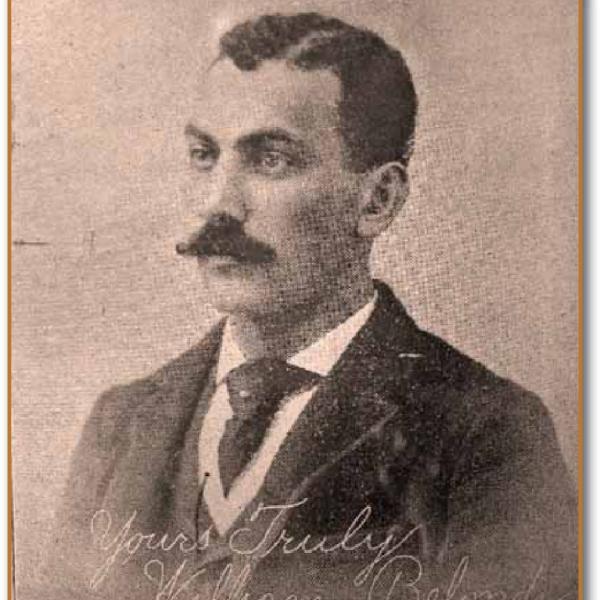
Friend Degginger Liquor Importing Co.
Nathan Degginger was my grandfather. We called him Papu. He came from Milwaukee to Seattle prior to 1890, drawn by the prospect of the liquor importing business.
In partnership with his brother-in-law, Edward Friend, they formed the Friend-Degginger Liquor Importing Co. to wholesale liquors and wines. It grew to eventually include a Seattle saloon famously known as “Billy the Mug” or “The Mug” after the bartender Billy Delond. According to a May 7th 1892 newspaper, Billy the Mug sold more beer in 1891 than any other saloon in the United States – 23,360 barrels (107,520 gallons) of beer at $9.00 a barrel.
The Seattle City Directory in 1894 shows Friend-Degginger had added a brewery to their holdings in Slaughter (later Auburn), Washington. At some later time the following announcement appeared in the newspaper, indicating they had too much to handle:
A RARE CHANCE – WE OFFER FOR SALE either our brewery plant at Slaughter, Wash., known as the Slaughter Malt and Brewing Company, or our saloon business on the corner of South Third and Main Streets, Seattle Wash…..Both enterprises are well established and paying a big margin.
Whether it was good or bad fortune, at some later time headlines in the Post Intelligencer read:
AUBURN BREWERY BURNED Friend-Degginger Company Plant Destroyed – Loss $25,000….It is not known how much insurance is carried but it is ample to cover all losses. The origin of the fire is a mystery.
While most Jewish businessmen sought their fortune during the Gold Rush supplying and outfitting the men heading north for gold, Nathan was the rare Jewish businessman who sought his fortune as a prospector. He headed for Nome in 1897 on the Steamer Cleveland, the “all water” route to the gold fields.
He retuned to Seattle around 1900 and established a Delicatessen at the Public Market. A Market Flyer read: “N. Degginger – Booth 27-Dried, Salted, Smoked and Spiced Fish of all Kinds. Marinated Holland Herring.” I recall my mom telling me how after school her brother Leonard rolled pickle barrels down the steep streets to the market for Papu.
By Lee Micklin, as told by Joe Greengard
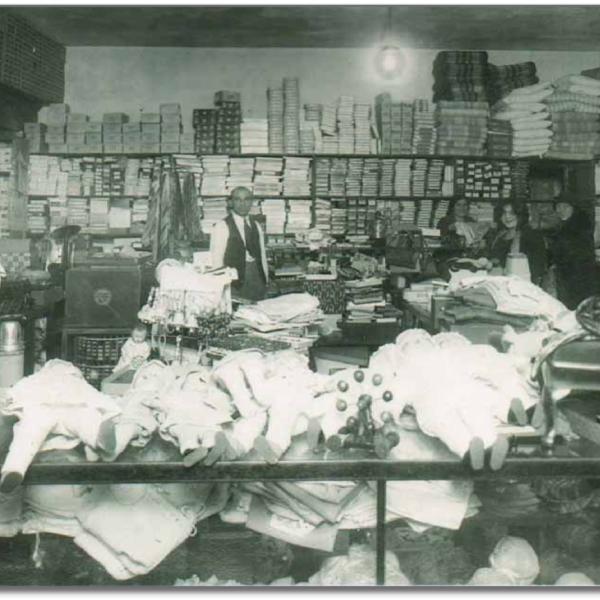
Fuxon’s
2208 Jackson Street
I n 1920, at 2208 Jackson Street, Paul Fuson’s parents built a building with a store in front and living quarters in the back. Mr. Fuxon’s motto was “Everything but the Baby,” and almost everyone in the diverse Jackson Street community called it that or Fuxons.
Customers included Jewish people, Asians, African Americans, and non Jewish Europeans all from a variety of cultures. The store sold an array of dry goods including linens, pillows, blankets, fabrics (yardage), tablecloths, embroidery thread, children’s clothes, notions, shoes, toys and dolls. The Fuxons bought tubing and patterns and stamped pillow cases with the patterns. Customers bought the pillow cases to cross stitch or embroider the patterns.
Credit was extended by putting merchandise on lay-a-way. The customer would pay a deposit, and the amount of the sale and of the deposit was noted on the package. Subsequent payments were subtracted from the balance on the package. When the sale amount was paid in full the customer took the package. This method was used mostly for purchases of embroidered tablecloths, and bed linen sets to be given as gifts.
After World War II, Mr. Fuxon moved to a downtown location and one of his sons, Henry (Froman), who had returned to Seattle after military service, took over the Jackson Street store. After several years he left Seattle, and another brother, Morris, ran the store.
The store closed when urban renewal acquired the property.
Story from Paul Fuson
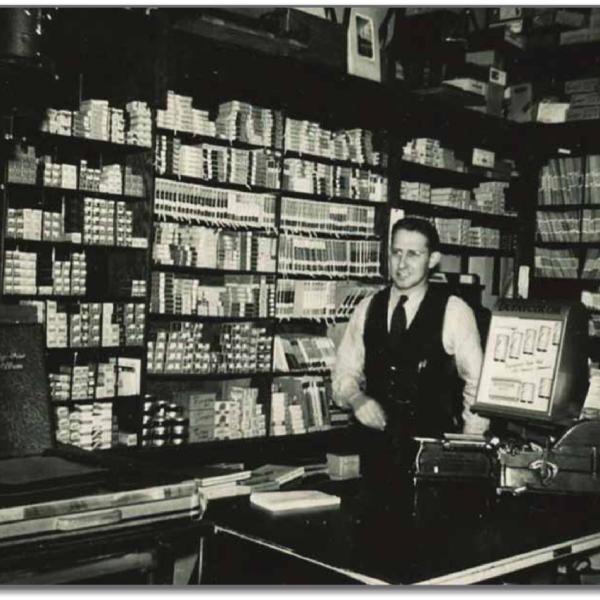
Glazer’s Camera Supply
st 1102 1 Avenue
The year 1935, in the midst of the Great Depression, was a risky time to start a business. But Eddie Glazer had a vision, an artistic eye, a sense of timing, and the belief that photography would soon grow into a hobby for the masses. He worked at Warshal’s Sporting Goods in their fledgling photo, gun, and “everything else” department where the cameras caught his attention. That and his interest in the then new Life, Look, and National Geographic magazines captured both his aesthetic and entrepreneur’s spirit. He and Clyde Levy became business partners, opening a small camera shop just up 1st Avenue from Warshal’s. Clyde kept his “day job” and Eddie manned the store, known as Clyde’s. They struggled to make enough money to cover expenses. They were helped by a consignment of surplus jewelry from Horace Raphael. As Eddie sold off the jewelry, he replaced it with cameras and film to serve the growing number of camera hobbyists. The partnership ended; Levy moved “uptown” and in 1945, in the midst of the World War II, the 1st Avenue store became Glazer’s Camera Supply. Photography was particularly popular with the local Japanese community, many of whom were loyal customers. Sadly, when they were forced into interment camps many came to Ed Glazer to provide safekeeping for their equipment. He gladly held their equipment until their return after the War. It was a hallmark of Ed’s business ethic to treat all his clients with respect, trust, and a strong handshake to “seal the deal” when a handshake really meant something. Glazer’s helped launch the careers of many local professional photographers, and built its reputation on service not only to professionals and media businesses, but also to interested amateurs who sought to capture the major and mundane moments of life with the magic of photography. As the city changed, so did Glazer’s change locations; first to 1923 3rd Avenue in 1967, then to its current location in 1986 to Seattle’s South Lake Union Neighborhood. Ed’s son-in-law Bob Lackman joined the business in 1974 and is now joined by Lackman’s children, Rebecca Kaplan and Ari Glazer Lackman. From humble beginnings Glazer’s, with a staff of forty, is now one of the premier true “camera stores” in the country. Grandpa Ed would be very proud.
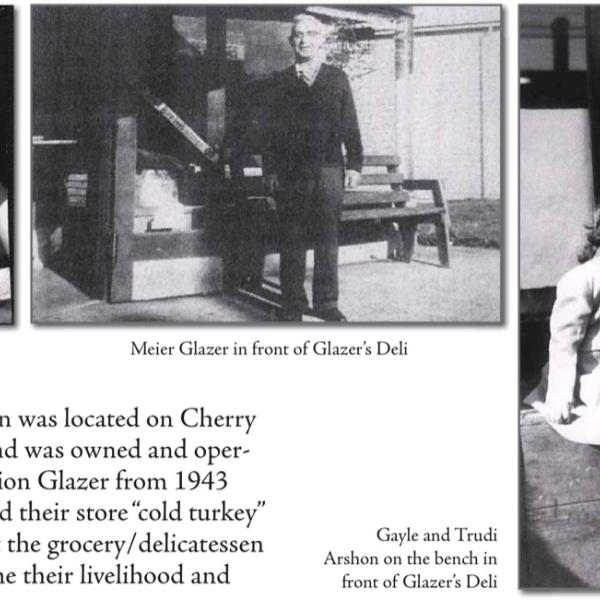
Glazer’s Delicatessen
Glazer’s Delicatessen was located on Cherry Street near 24th and was owned and operated by Meier and Marion Glazer from 1943 until 1965. They opened their store “cold turkey” knowing nothing about the grocery/delicatessen business. Soon it became their livelihood and second home.
“My folks spent 12 hours a day, seven days a week in the store,” said Shirley. “They would close the store for only two weeks each summer. My father was the business manager and mother was the culinary creator. She became famous for her deli foods: Potato salad, blintzes, dill pickles, garlicky corned beef, chopped liver, chopped herring and more.”
Marion banished all cigar smokers from the store yelling “get out my store with your stinky, rotten cigar.” Then they would go out front, sit on the bench that Meier had installed and return when they finished their cigars. The store was located right around the corner from the Talmud Torah and it became a popular hang-out for the students. Sunday was their busiest day with half of Jewish Seattle dropping in for deli foods and good conversation.
Granddaughter Trudi Arshon Rosenbaum says that “Glazer’s is forever etched in my memory bank and heart. It was a huge part of my life.”
“I remember in the back where my grandmother prepared the wonderful deli foods, the recliner next to the kitchen where my grandfather would rest his tired legs, the pickle barrel, the deli case, and my most favorite of all, the candy case. I lived the life that most children dream of, having unlimited access to a candy store. I did pay for it later with a whole lot of cavities.” She also warmly recalls how her grandfather would let her open the cash register and taught her how to count backwards to give the right change.
“When I turned 16 and started driving, I would stop by the store with my friends and we would all enjoy a sandwich and the trimmings. When my grandparents sold the store in 1965 I was both happy and sad: Happy for them to be able to retire and enjoy their freedom but sad for me because it was the end of 20 years of having Glazer’s Delicatessen in my life and the end of an era”.
Story from Shirley Glazer Arshon and Trudi Arshon Rosenbaum
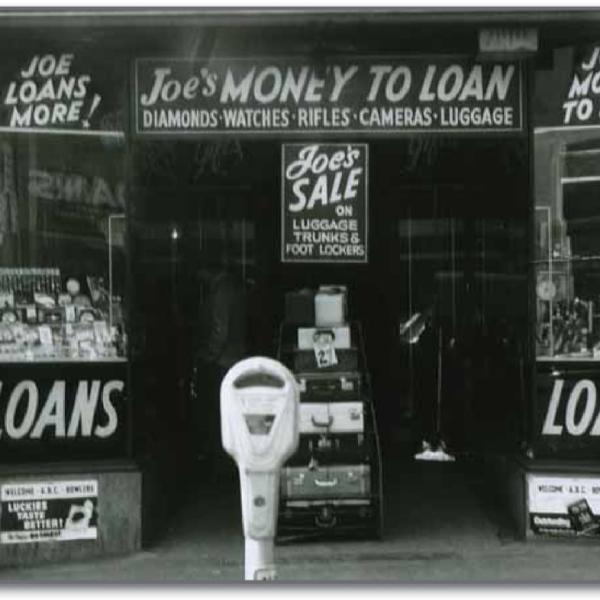
Goldman’s Jewelers
I t was 1947 and I had just gotten out of the US Navy. I came back to marry the beautiful girl I met at a dance for Jewish servicemen which was held at Temple de Hirsch and sponsored by the Jewish Welfare Board. I was working for Seattle First National Bank.
My father-in-law, Joe L. Woolfe, was “peddling” gemstones from Thailand to the local jewelers. He entered Hamilton Jewelers to find the two owners having a terrible fight. It seems they were going broke and Joe offered to buy the store by assuming their debt. Between Joe and myself we had a total of less than $500. There was almost no inventory in the store and the first day’s sales totaled 25¢ . . . that’s twenty five cents!
I realized that it would be impossible for two people to make a living there. I kept my job at the bank and Joe ran the business. Joe had worked at a jewelry store on Rush Street in Chicago and also had managed Ben Tipp’s store at Third and Pine in Seattle. Luckily, because Joe had worked for several Jewish organizations as a volunteer, he was acquainted with many people in the jewelry trade and convinced some, like Indian Arts and Crafts, to give merchandise on consignment.
That put us in business and we struggled for about a year.
After securing a $10,000 loan with the help of a client of Ben Maslan, we modified the business to become more of a loan shop and this set in motion the establishment of Joe’s Money to Loan, Ace Loan, Central Loan and finally Goldman’s Jewelers. Our first slogan was “Need dough? See Joe!”
Another business acquisition became American Loan which my son Jack would operate. The first order of business was to clean the windows – so filthy that nobody could see through. The neighbors thought our windows were “broken;” it was the first time in a while that anybody could see inside.”
Some years later I was asked by Pike Place Market management if I would like to open a pawn shop in the market. I agreed with the stipulation that half the location could be a jewelry store. Thus Goldman’s Jewelers was born. Jack managed it until he passed away at age 41. Thus concluded the evolution of my business interests in Seattle.
Story from Gershon Goldman
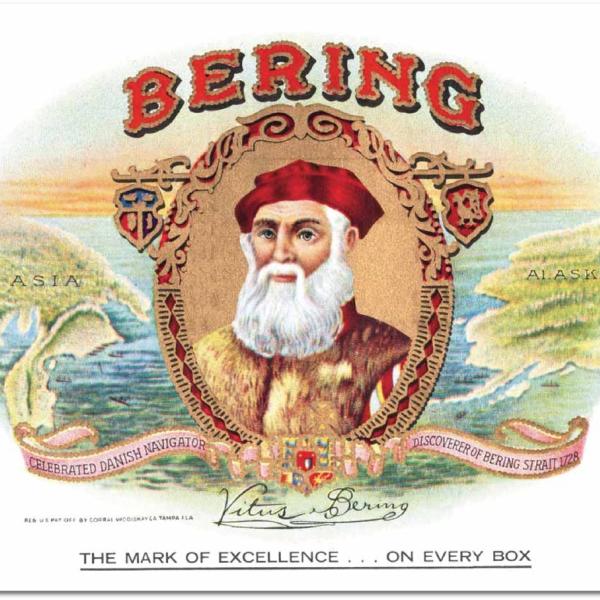
Green’s Cigar Store
rd 3 Avenue & Union Street
I don’t know if it was just our Workmen’s Circle friends in those early days who loved to play cards with small amounts of money changing hands, but it seems that all the men we knew were hooked on card playing (lots of the women were, too). Papa was not an exception and played with us at home whenever we had a free evening. I became an expert at pinochle, poker, and especially, casino. There was lots of opportunity at the Workmen’s Circle Hall and with friends for card playing evenings, but on boring days where there was no work Green’s Cigar Store on 3rd and Union became the answer. (The store building is no more, of course; now Benaroya Hall covers its site.)
Greens’ had two owners: Mr. Irving Green, father of Leonard Green of Seattle, and Mr. Joe Bernbaum, grandfather of Sanford Bernbaum, Jr. of Seattle. Green’s, the hangout for Jewish gamblers, was the place to go for someone in need of a good corned beef or pastrami sandwich, a haircut or manicure, or to place a bet on a ball game, fight, election or horse race. The large room to the rear of the one hundred foot long store was full of tables for card players. No money was seen on the tables. The players bet little celluloid chips, each worth 12½¢ in trade. When not working Papa could usually be found playing casino with regular cronies, taking turns at losing more often than winning. I had the impression that somehow Green’s Cigar Store was doing most of the winning. Incidentally, one could get a good five- or ten-cent cigar, with smoking allowed in all areas of the store.
Story from Harry Glickman with editing by Jeannette Glickman, based on the reminiscence of Esaak Glickman
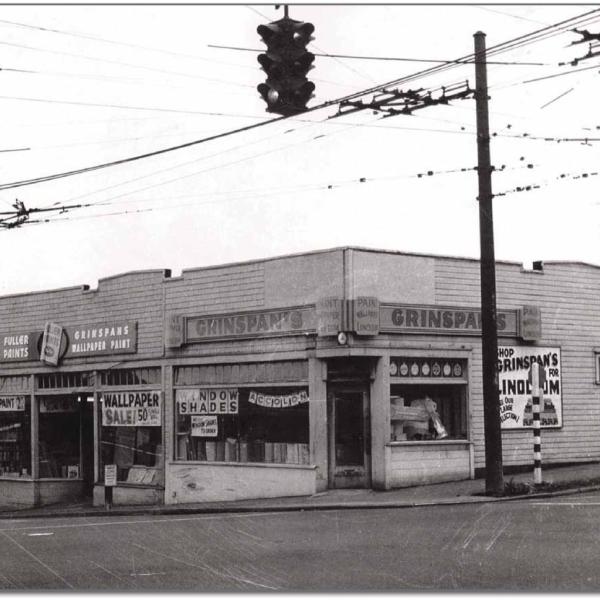
Grinspan’s General Merchandise
rd 23 Avenue & Jackson Street
Ben Grinspan established his store at 23rd Avenue and Jackson Street in about 1928. Several years later he moved the store to 2216 Jackson Street. Traveling the state to buy “job lots” which were closeouts from wholesalers, manufacturers and other retailers, Ben carried practically everything from “soup to nuts” in his store.
His stock would include various types of clothing, shoes, hardware, dishes, giftware, and even men’s suits. Hart Schaffner and Marx suits and Nunn Bush shoes were always available at discounted prices—suits for $15 and shoes for $5 a pair!
After Ben died in 1943, his widow, Celia, liqui- dated the business. Nate, their son, reopened the store in 1947 as a paint and linoleum store. In 1966 the old frame building which housed the store was demolished and replaced with a brick building.
Both stores always attracted a most diverse group of customers, including refugees after World War II, representing many countries of the world and a range of economic levels. And, all business took place with warmth, friendship and fellowship among the customers and merchant. Nate continued the business until 1968.
Story from Nathan Grinspan
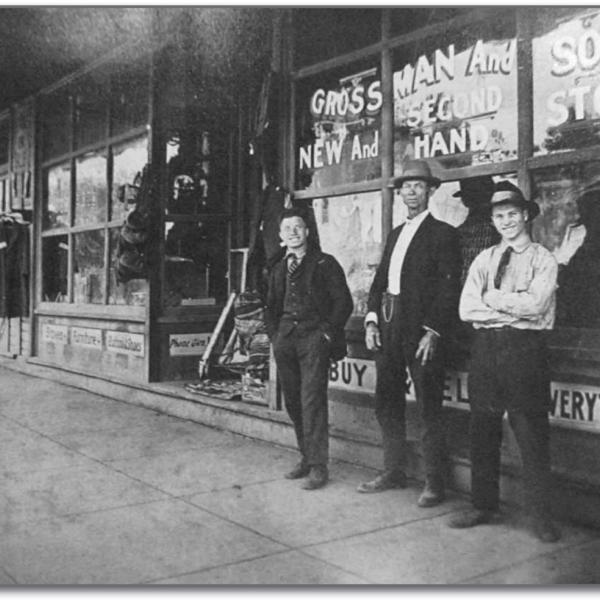
Grossman Brothers Paint Company
Spokane, Wa
A multi-million dollar international Paint and Coatings company located in Greenacres, Washington traces its history back to 1919 in Hillyard (a suburb of Spokane) and the enterprise of two Russian immigrants, Sam (Samuel) and Manny (Manuel) Grossman.
Sam, 16 years old, and Manny, 13 years old, arrived in Spokane from Russia in 1913. They applied themselves and learned English and the ways of American entrepreneurship. They acquired a hardware and paint store in Hillyard. In 1928 they moved to downtown Spokane on 1st Avenue. They represented Benjamin Moore Paints. However, shipment problems from Eastern U.S. and conflicts with sales territory convinced the brothers to manufacture their own brand of paint, which they named Grossman Brothers Paint with a logo on the containers– “Good as a Gold Bond”.
Manny took charge of acquiring knowledge of formulation and manufacture while Sam took responsibility for sales and marketing. They soon outgrew the very modest first factory, and then moved the factory to 1130 East Sprague Avenue. Sam stayed downtown with a retail and sales outlet. The need for paint for military purposes during WWII greatly increased business. Paint manufacturing became a family affair with wife Fannie in sales and book-keeping and sons Nathan (Nate) and Lawrence (Larry), then 12 and 10 helping in the factory. Sam left the company in 1943 and moved his family to Seattle. Manny took responsibility for sales and manufacturing.
In 1948, a much grander four-story concrete building on the site enabled sales and manufacturing to grow. Nate, at 21, left the University of Washington to take charge of sales, while Larry continued his education at the University followed by his study for a Master of Science degree in Polymer Chemistry with an emphasis in paint formulation at North Dakota State University. Larry, at 23, returned to the family business and took responsibility for research and manufacturing. The business grew rapidly with emphasis on high tech coatings. In 1980, a much larger (80,000 square feet) state of the art factory was built East of Spokane in Greenacres. Growth was rapid with national and international sales.
In 1984 Nate and Larry, owners of the company, sold the company known as United Coatings and Paint Inc. Nate retired shortly after, and Larry remained for twenty years as a senior research chemist.
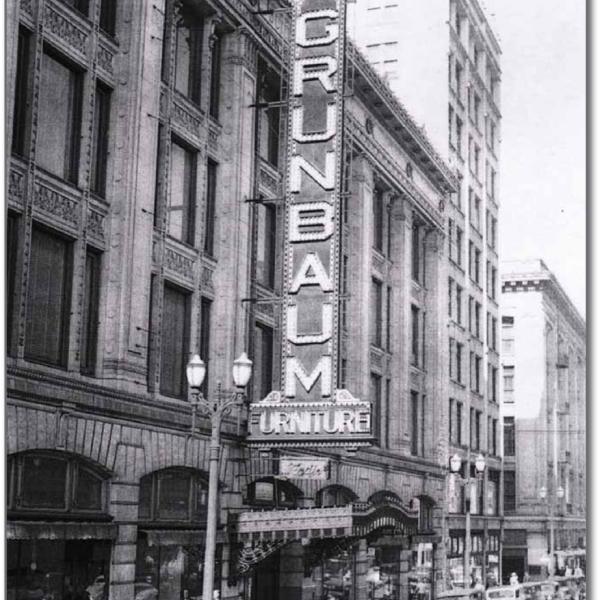
Grunbaum Brothers Furniture
416-424 Pike Street
Grunbaum Brothers Furniture has a rich history. With the rush to the new gold country came the first Jewish settlers, among them Henry Grunbaum who came to Victoria in 1861.
Several moves and businesses over a 25 year period found the family in Seattle in 1889, immediately after the big Seattle fire, where, in 1906, Otto Grunbaum, one of Henry’s sons, opened a furniture business. Later, after several iterations and partners, he was joined by his brothers Maurice and Julius.
The Grunbaum organization was a pioneer in selling on installment. It consistently urged the soundness of deferred payment merchandising as an aid to bringing new and greater comforts to Seattle homes. Otto Grunbaum declared in the Seatte Times, “We believe firmly that wise buying on the installment plan has been a major factor in creating real homes in Seattle. . . . It’s easier to buy and pay out of income than to save for future purchases while undergoing the temptations to spend on things less essential than good furniture in a home.” In 1936 he told the Seattle Times that during its first 25 years, the company distributed $8,000,000 in wages and sold about $20,000,000 worth of furniture.
By 1938 Grunbaum Brothers had grown into one of the Pacific Coast’s largest home furnishing concerns, employing 150 people. In 1922 it moved from 5th and Pike to a new building on 6th Avenue between Pike and Pine. This building, owned by the Clise family, was the Pacific Coast’s second largest building, with the floor area devoted exclusively to home furnishings.
Luba Grunbaum Alexander, Otto’s daughter, said, “There were six floors in the store and a basement. Each floor featured different furniture – living room, dining room. The top floor was used for upholstering and other workmanship.” Luba remembers, as a child, visits to her parents’ store and the fun she had riding up and down on the elevator with the elevator operator. During her high school years she worked in the customer complaints department.
In 1944, the business was sold to Schoenfeld Furniture.
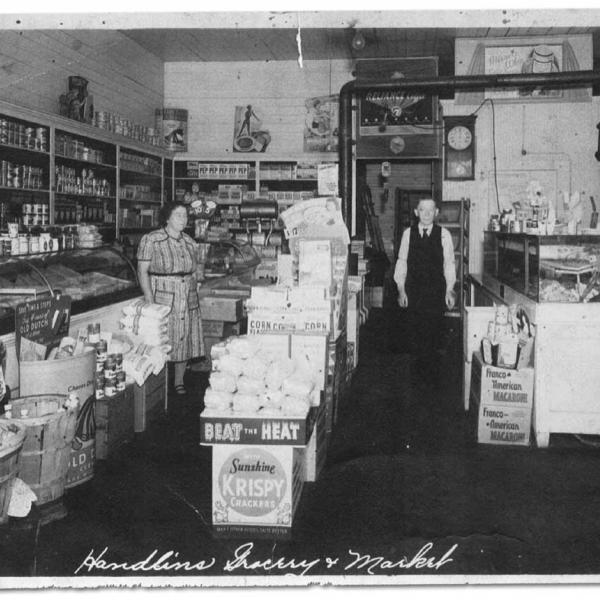
Handlin’s Grocery and Market
rd 23 Avenue & Cherry Street
Chaim Handlin immigrated to Seattle in 1906 with his wife and two children, the younger being a one-year-old daughter, Sybil (Handlin) Baronsky, mother of Frieda (Baronsky) Sion. They joined Chaim’s in-laws, the Abrashens and other relatives already in Seattle. They were later joined by Chaim’s parents and siblings.
Chaim owned Handlin’s Grocery and Market on the northwest side of 23rd Avenue just off the corner of Cherry Street. It was a kosher meat market and grocery store. It weathered the 1930s, and World War II and closed in the early 1950s.
Story from Frieda Sion
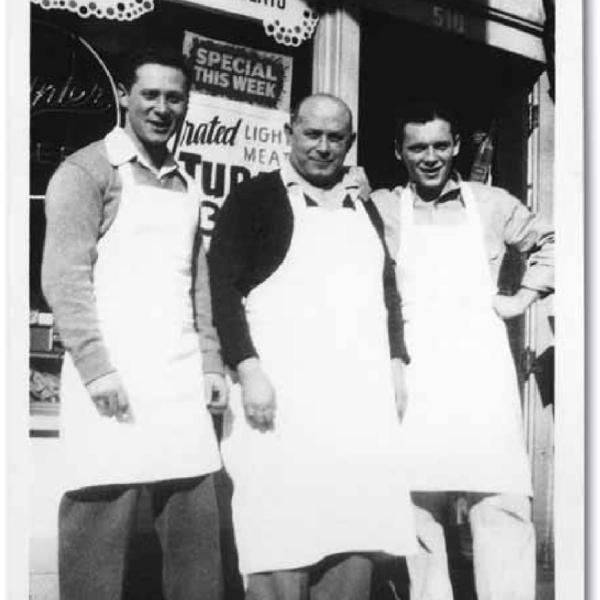
Harry’s Grocery
510 East Pine Street
Left to right: Merle, Harry, and Alvin Erdrich H arry Erdrich started Harry’s Grocery at 510 East Pine Street in 1946 after an injury prevented him from continuing his job as truck driver for Prottas and Levitt Bros. Furniture. Because of failing health he could no longer manage the store on his own so asked his son Merle to help. Merle gave up his civilian job at the Puget Sound Naval Shipyard to work for his dad. With Merle’s gregarious nature and sense of humor, it was a good fit. From time to time, Harry’s other son, Alvin, worked there, too. He had a flair for making the window signs advertising the weekly specials. After Harry’s untimely death in 1952, the store passed to Merle, who made it his career for 41 years. Eventually the store would belong to Merle’s son Harry.
As kids, the younger Harry, along with Merle’s daughters, Roberta and Michele, would help with the annual inventory, counting multitudes of Crescent spices, Ipana toothpaste, Olympia beer, Boraxo soap, and best of all, the bright rainbow of Nesbitt’s soda pop in clear bottles of lime, strawberry, orange, and grape flavors. Though it was not much bigger than today’s convenience stores, fresh produce was always stocked, as was fresh meat for a time. For many years the specialty of the house was Merle’s rotisserie chicken. Passersby would be lured in by the irresistible aromas of roasting chickens abundantly seasoned with Merle’s own concoction of Lowry’s seasoning and other spices. On rare occasions, Merle’s wife, Rae, would give in to the children’s pleas and let them eat one. That was a bit of heaven on earth.
During the lifetime of Harry’s Grocery, customers sometimes struggled to make ends meet. Merle was well known for giving groceries on credit or even sometimes making cash “loans.” He also hired people in the neighborhood for small jobs like sweeping or dusting because they were unable to find other work. His benevolence did not end there. He was just as generous with his advice on life.
Often working seven days a week and morning to night, it wasn’t always an easy life. But, with a father’s heart, a bartender’s ear, and a businessman’s work ethic, Merle made Harry’s Grocery more than a store. For many it was a neighborhood institution.
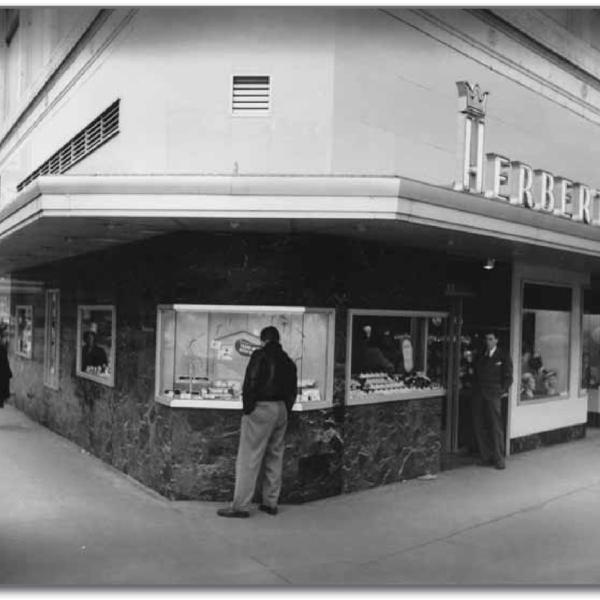
Herbert M. Meltzer, Developer
Left: Herberts Jewelers, 416 Pine Street at Westlake; above: Herb and Fern Meltzer H previously unheard of in the Kent Valley, became routine. erbert M. Meltzer, born in 1913, was endowed with an irresistible charm that won the heart of Fern Rosenfeld and the lifetime friendship of countless people of all ages. In the late 1960s he turned his focus to Pioneer Square acquiring and in some cases redeveloping properties including the Metropole, Grand Central, and New England Buildings.
One of Herb’s first business ventures was in jewelry, having purchased and managed several stores including Fox’s Gem Shop and Herberts.
A few years after retiring from the jewelry business in the early 1950s, Herb acquired and began rehabilitating commercial properties in the Madison Street corridor of central Seattle.
In 1965, with a prophetic vision that enabled Herb to see potential, he began development of the Weiser Industrial Center while the land was still a working dairy farm. Operating as the Melrose Company, Herb pursued and realized his dream of converting pastures into industrial buildings. As a result of his foresight the Weiser Industrial Center became a paradigm for developers in the Kent Valley.
Herb had the self-confidence and innate ability to attract tenants by persuading them to relocate to Weiser without formal leases or long term commitments. Ultimately these arrangements, previously unheard of in the Kent Valley, became routine.
In the late 1960s he turned his focus to Pioneer Square acquiring and in some cases redeveloping properties including the Metropole, Grand Central, and New England Buildings.
Always believing in a strong Jewish community, Herb spent countless hours donating his time and energy. He was instrumental in the purchasing of land and planning construction of Camp Benbow, Temple B’nai Torah, and the Jewish Community Center on Mercer Island. Community recognition included a Camp Benbow Campership and a Seattle Hebrew Academy athletic scholarship
Herb and Fern Meltzer’s three children Bobbie, Eric and Patti and son in law Michel Stern speak with pride and admiration of charismatic “Herbie,” as he was affectionately called. It was impossible to resist his enthusiasm, wit and zest for life. Herb Meltzer…a visionary, ahead of his time.
Stories from Bobbie Stern, Eric Meltzer, and Patti Newby
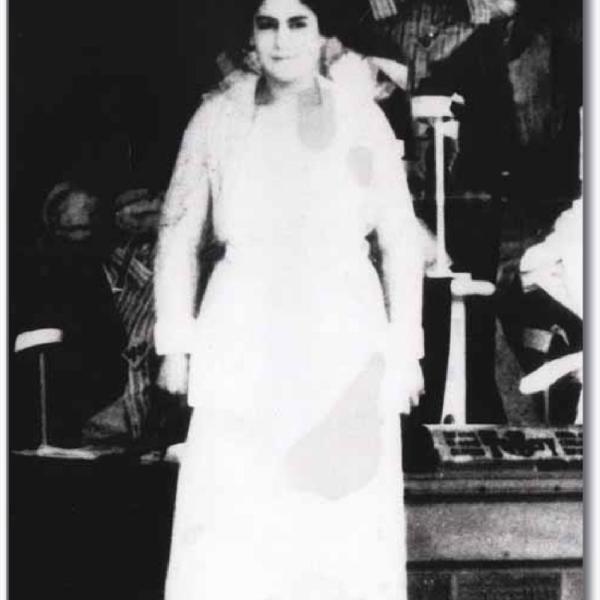
House of Bargains & Jordan’s Dept. Store
Port Orchard, Wa
I n 1909 my mother, Molly Cohen, arrived at Ellis Island with her sister Rose. Their mother Fannie had urged them to leave Dobra in Eastern Europe after she witnessed their father beheaded by the Russian Cossacks. After a short time in New York, Molly went to Seattle in search of better opportunities while Rose settled in Los Angeles.
Molly found a job at MacDougall Southwick Department Store designing millinery. On a Sunday outing to Bremerton, she met Jacob Cohen, one of the city’s first tailors. They were married in 1912 and she managed the tailor shop until he died of pneumonia in 1924 at age 39. Molly was left with four sons, ages 11, 9, 6 and the youngest, Jordan, 7 months.
In 1925 she sold the shop and established The House of Bargains, stocking general merchandise. Located at 2nd and Pacific Avenues, it burned to the ground in 1929. Molly was charged with arson. A lengthy trial ensued which aroused nation- wide interest. Ill-founded rumors spread that a Jewish woman had set the fire for the insurance. She was found not guilty when a sailor admitted setting the fire to cover up a robbery.
Immediately afterwards she restarted her business as Jordan’s Department Store in downtown Port Orchard. During World War I she sold Liberty Bonds and did community service. Her son Maurice was killed during World War II and Jordan served in combat in that war. In 1944, in memory of her fallen son, she established a small city park from landfill in the back of her store so that all could enjoy the wonderful view. That later spearheaded a 500 car parking lot and enlarged city park. The land for the Bremerton synagogue was donated in Maurice’s honor.
Molly continued to operate the store until her fatal stroke in 1977. Jordan carried on until his retirement in 1993.
Story from Jordan Cohen
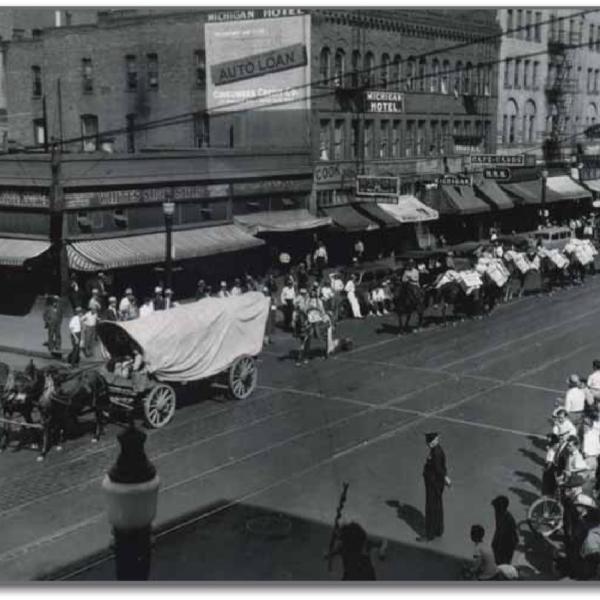
Huppin’s
Spokane, Wa
Founded by Sam Huppin, a Russian immigrant, Huppin’s has been a Spokane fixture since it first opened as a tailor shop in 1908. When Sam died in 1922, his teenage son Abe took over the store. Abe’s younger brother, Sam I. (later to be known as “Big Sam”) helped transition Huppin’s into a pawnbroker, while also selling military uniform insignia during WW II. Through this time, Huppin’s continued to sell stylish men’s clothing, and later in the 1940s, added luggage.
In 1953, a third generation Huppin joined the store. Sam M. (known as “Little Sam”) entered the family business as they began selling cameras. Shortly thereafter, Huppin’s added radios and stereo equipment to their product mix. Throughout the 1970s, Huppin’s got out of the clothing business and pawn-broking altogether to focus on photo and hi-fi .
Murray Huppin, current President and greatgrandson of founder Sam, came back to the family business in 1984. By that time, Murray had finished college and gained valuable experience working for Proctor & Gamble in Los Angeles.
Huppin’s decided to “expand” in the mid-1990s. But instead of opening more stores, in 1994 they launched a mail-order catalog and telephone sales call center named OneCall. One year later, they launched www.onecall.com and began selling online.
2002 saw company growth forcing a move into new corporate offices with a greatly expanded warehouse facility. In 2008 OneCall placed in the Top 20 Consumer Electronics’ retailer web sites as ranked by Internet Retailer.
Huppin’s recently celebrated its 100 year anniversary with a considerable amount of publicity. There are few, if any, local businesses that have a continuity of family ownership for 100 years. Huppin’s is truly a Spokane fixture.
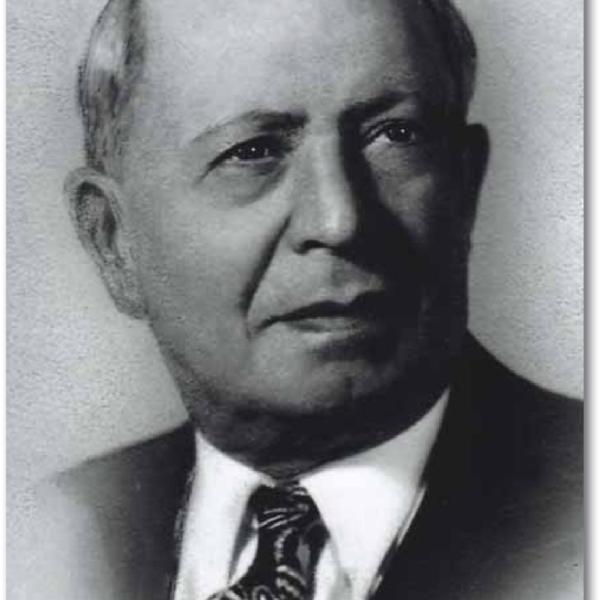
Hy Mandles & Son Men’s Clothiers
Tacoma, Wa
Henry “Hy” Mandles Aaron Mandles H ey in opening his second mens’ ready-to-wear clothing store first known as Mandles Clothes for Men, located at 948 Pacific Avenue, just west of the 11th Street Hill between the Rust building and Calendar’s Grill, right across the street from the Washington Building. enry “Hy” Mandles was born in Kiev, Russia in 1879. In 1887 his family immigrated to Denver, Colorado where Hy’s father became the Chief Rabbi in 1900 and where Hy was working as a Western Union telegraph operator at the exact time of the San Francisco earthquake in 1906. No other telegraph lines from San Francisco were then working, so it was Hy who related that news around the world. In 1905 Hy married Anna Grinspan (1887-1976) from Centerville, Iowa, and together they moved to Chehalis, Washington, to join her sister Ruby, who was married to Morris Burnett. Aaron Mandles (1911-1959), one of Hy Mandles’ sons, joined his father’s business in Tacoma in 1932. In 1935 he married his college sweetheart, Maxine Bennigson from Spokane. Anna and Hy’s wedding gift to the newlyweds was a partnership in the store, which was then renamed Hy Mandles & Son Men’s Clothiers.
Other members of the Burnett family operated retail jewelry shops in Portland, Spokane, Seattle and Tacoma. Soon after arriving in Chehalis, Hy opened a men’s ready-to-wear clothing store that continued in business until the Great Depression of 1929, at which time Hy and Anna relocated to Tacoma in search of economic opportunity and to be near all three of their children (one daughter and two sons) who were then enrolled at the University of Washington.
Soon after arriving in Tacoma, Hy invested everything he had in terms of time, effort and mon- ey in opening his second mens’ ready-to-wear clothing store first known as Mandles Clothes for Men, located at 948 Pacific Avenue, just west of the 11th Street Hill between the Rust building and Calendar’s Grill, right across the street from the Washington Building.
Aaron Mandles (1911-1959), one of Hy Mandles’ sons, joined his father’s business in Tacoma in 1932. In 1935 he married his college sweetheart, Maxine Bennigson from Spokane. Anna and Hy’s wedding gift to the newlyweds was a partnership in the store, which was then renamed Hy Mandles & Son Men’s Clothiers.
The Mandles were among the many, if not mostly, Jewish clothing merchants in Tacoma, including such family names as Andrew, Brodsky, Brotman, Cheim, Friedman, Grenley, Lehrer, Meier, Schwarz, and Spellman.
Following in his father’s footsteps, Aaron was active in the Elks, Kiwanis and Lions clubs, as well as B’nai B’rith and the Masonic Order. He also served as president of Temple Beth Israel, a predecessor to Temple Beth El.
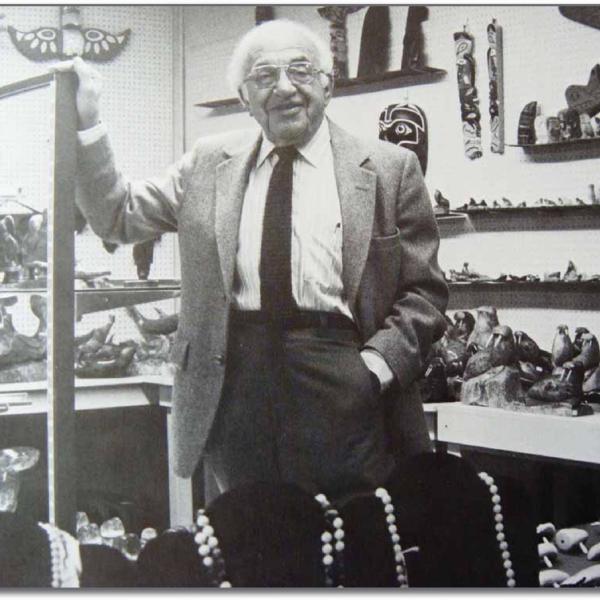
Indian Arts and Crafts
Mercer Street & Fairview Avenue North
My father, Walter Lowen, was the first member of his family to leave Munich, Germany, in 1936, after seeing the bleak future under the political power of the Nazi party. Following an extensive education, he gained a business background working at his family retail millinery business in Munich and in various banking positions.
My father’s sponsor for emigration was located in Seattle and a job at the Alaska Fur Company enabled him to first make contact with Northwest and Alaska native craftsmen. After WWII (1946) he and a partner began Indian Arts and Crafts (IAAC), a wholesale business supplying merchandise to the souvenir and tourist market. They located on 5th Avenue (at the present site of the Westin Hotel). His partner, Bert Mayers, took care of the inside management until his death, while my father took care of the customers by traveling to Alaska and throughout the Pacific Northwest.
In the early days, Alaska had a small population and was very undeveloped. The business grew, and moved to the Terminal Sales Building on First Avenue. The success of the business enabled them in the late 1950s to buy a building at Mercer Street and Fairview Avenue North.
In 1960 the company was awarded the primary contract to supply souvenirs for the 1962 Century 21 Seattle World’s Fair. One of the largest selling items at that time was postcards. Each day during the Fair my father’s company would resupply 50,000 to 75,000 postcards to all the racks at the Seattle Center.
The business continued to grow as the travel and tourism industry prospered in the Pacific Northwest and Alaska. IAAC expanded into direct importing from Asia and imprinted sportswear, but never lost sight of its beginnings supplying totem poles, masks, ivory carvings, soapstone carvings and other native crafts up until the business was sold in the late 1990s after existing for 50 years.
Story from Howard Lowen
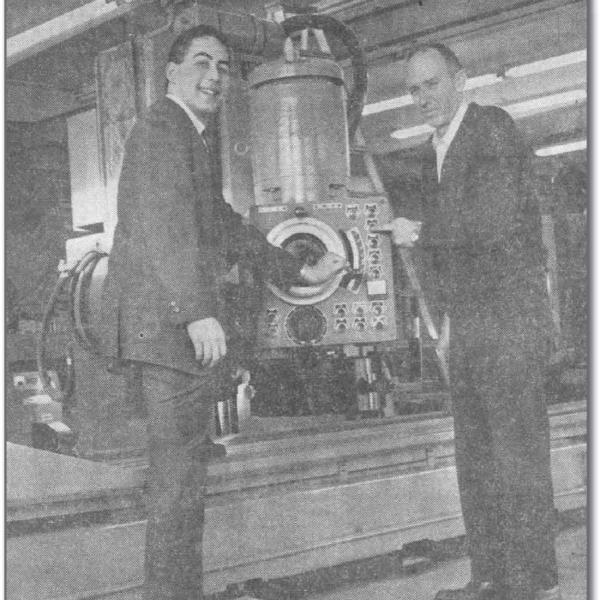
Inland Diesel and Machinery Company
Spokane, Wa
A lbert Abraham Diskin was born in New York in 1909 of Russian immigrant parents. He was taken to Russia at age two by his mother after his father died. Al returned to the United States alone as a teenager to live with relatives in Seattle. There he met Bertha Leskin on a blind date. They were married six months later.
Al had moved to Lewiston, Idaho, where his uncle, Alex Gussman, had a truck and equipment company. By 1939, Al and his uncle realized that Spokane would be a better place to have a business because it was on the main cross-country railroad line. They were willing to take the risk. They had the foresight to move their families and business at the right time.
Like many entrepreneurs of that time, Al Diskin was able to take advantage of WWII ending and the need for farm machinery and heavy-duty equipment. He expanded the business into four thriving divisions: Inland Truck and Diesel, Inland Diesel and Machinery, Inland Truck Rental Services, and Inland Truck and Tractor. They serviced the trucking, logging, mining, and construction markets with sales, renting and leasing, parts and service. The companies grew and included the GMC Truck franchise, Peterbuilt Truck franchise, Hertz Rent-A-Truck franchise, Unit Cranes, and heavy-duty equipment. Al even invented some tools used in the logging industry that bear the Diskin name.
Unfortunately Al Diskin, at only 51, died suddenly in 1961. He had created one of the largest trucking and equipment companies in the Inland Empire region. His son Harold was just 18 when his father died. After graduating from college he expected to take over the family business. But no one wanted to give a 22-year-old a truck franchise in his name.
Like his father before him, Harold saw the need for change and was willing to take the risk of creating a new business on the existing foundation. He took Inland Diesel and Machinery, liquidated the heavy-duty machinery, created a heavy-duty parts business and machine shop and changed the name to Interstate Parts and Equipment. Sadly, Harold died at age 41. But like his father, he left behind a thriving business, built on a willingness to make changes at the right time and to take the necessary risks.
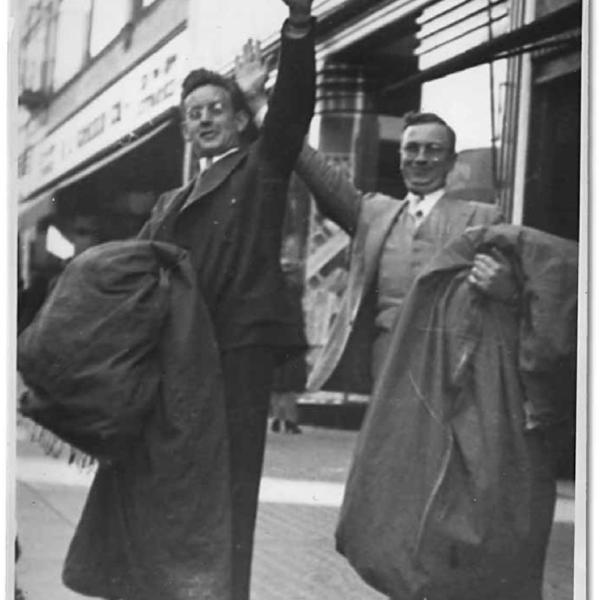
Item House
Tacoma, Wa
“Y ou tell William Hardman Sr. which coats to design each year. He reads the fashion magazines, watching for trends, but it’s the consumer who decides whether he will continue a style or relegate it to the fashion dustbins.”
Born in Seattle in 1914, son of Max and Edith (Levy) Hardman, Bill Hardman began his career in clothing and merchandising early on when he worked for Hugo Lowy.
In the ‘40s and ‘50s, Bill worked for Mercantile Stores as a coat buyer for McDougall’s Department Store, located at 2nd and Pike. He developed a relationship with Harvey Kaufman who was a dress manufacturer. Harvey had started Evergreen Sportswear and was a vendor to McDougall’s. Item House—a women’s coat manufacturer—grew out of the business relationship between Harvey and Bill.
Harvey was the inside man. Bill was the outside man. Although both partners lived in Seattle, they chose Tacoma for their coat factory where the rent was inexpensive, their employees could access the downtown Tacoma location by public transportation, and there was little competition with the more expensive Seattle market.
Bill was known as a brilliant merchandiser with a reputation for his ability to pick winners—a class act. He would see a coat that retailed for $200 at a more upscale store and talk to his merchandisers to see of they’d be interested in the coat if it could be made to retail for $100. Item House was able to produce fairly inexpensive knock-offs.
“Hardman doesn’t lose touch with his coats after they’re purchased. He said if he sees a woman walking down the street in an Item House style, he’ll stop her and ask where she got it, why she purchased it and what she likes about it.”
When they were growing up, Bill’s kids John, Susan, and Buzz periodically asked their father, “Why do you only make women’s coats? Why not dresses and blouses? Why not men’s coats?” His response always was, “Because as bad as the economy ever gets, a woman can always afford one more inexpensive coat.”
Stories from John Hardman, Joe Greengard, and the Seattle P.I. January 6, 1972
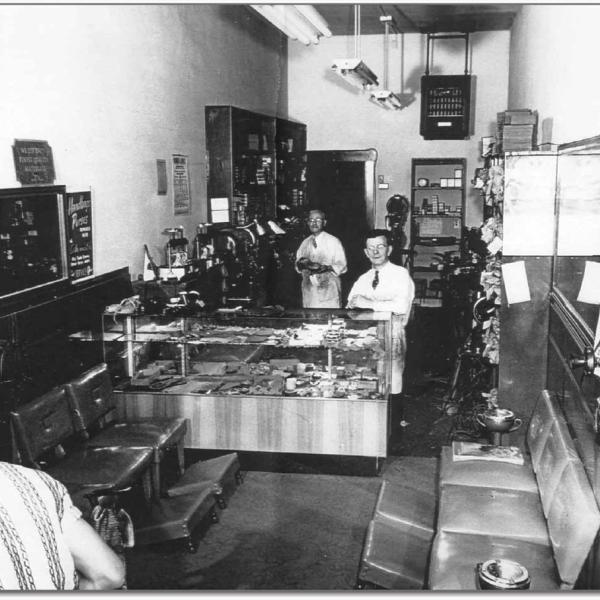
Jack Hanan Shoe Repair
Jack Hanan purchased his first shop, Campus Shoe Repair in the University District, after learning the business and technical skills of shoe maintenance and repair working for others. From 1942 to 1946, he purchased and operated shops in nine other locations. His second store was also in the University District on Northeast 45th Street. There were shops on Madison Street near Swedish Hospital and on 2ndAvenue in the Financial District. The main store and warehouse was located on 3rd Avenue. Jack’s shops offered both shoe repair and shoe shine services.
Adding to his neighborhood presence Jack opened a store in the Renton Shopping Center and another in Auburn. There was one shop in each of the J.C. Penney Stores: on 2nd Avenue, in Northgate Mall and at the Tacoma Mall. Jack successfully operated ten shops/stores and employed 38 people.
He encouraged his three sons Samuel, Solomon (Bob), and Isaac to join him in operating the stores. Jack worked at the Madison Street Store until he retired in 1965.
Story from Esther Hanan Akrish
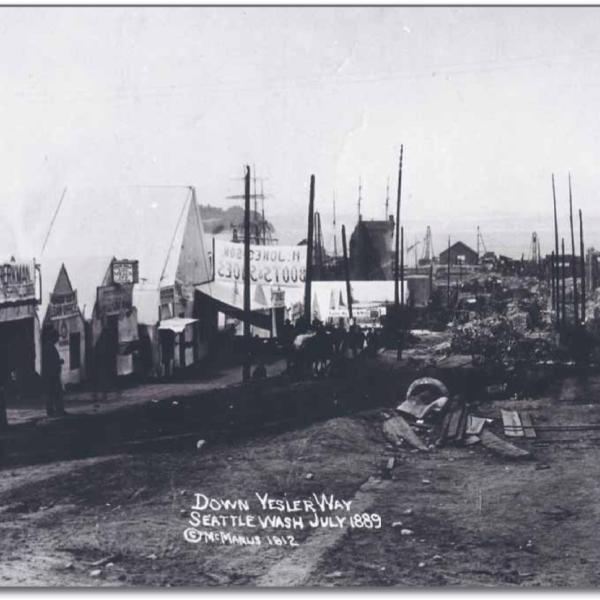
Jake Berkman Clothiers
Our Grandfather, Jacob Berkman, was born February 28, 1862 to Rahel Marcusson Berkman and Avrom Wolfe Berkman in the small village of Pilvisken in what is now Poland, but then known as Prussia. He left at the age of fourteen with the blessing of his family in order to escape from serving in the army.
After spending time in Sweden, Jacob arrived in New York City in 1879 and was greeted by cousins by the name of Berlowitz. They wanted him to stay in New York, but he was more interested in traveling west to the far-off Oregon Territory where other cousins lived in a town called Seattle. So, speaking little English, he started out across America. He was “peddling” whatever he could get and what he hoped the people wanted. From town to town he went, learning how to speak English along the way.
When he finally arrived in Seattle in 1886, he set up a shop that catered to the gold prospectors going off to Alaska and to the Seattle men who needed quality clothing. Within a few years he was successful as a men’s clothier and an Alaskan outfitter. His was one of the businesses destroyed in the devastating Seattle Fire of 1889. For the next few years he sold his clothing out of a tent. When the new streets and stores were built along First Avenue and Yesler Way, Jake Berkman Clothiers was right there. The year of the fire, 1889, was memorable in another way. Jacob met Mina Freudenberger, a twenty-two year old from Germany. She had come to Seattle to visit a distant cousin, Joe Marcusson, who couldn’t wait to introduce her to his first cousin, Jake Berkman. Grandpa Jake must have used all his wiles and a little sign language because Mina spoke very little English and no Yiddish. After much correspondence across the ocean, permission was given and in the Spring of 1890, Mina Freudenberger and Jacob Berman were wed in Seattle, Washington. The clothing shop prospered for many years as did the Berkman family. Now, almost 120 years later, there are 7 generations and dozens of descendants of Jacob and Mina Berkman. Written by grandchildren Carolyn Blumenthal Danz, Mina Lewis Fleisher, and Priscilla Blumenthal Drebin
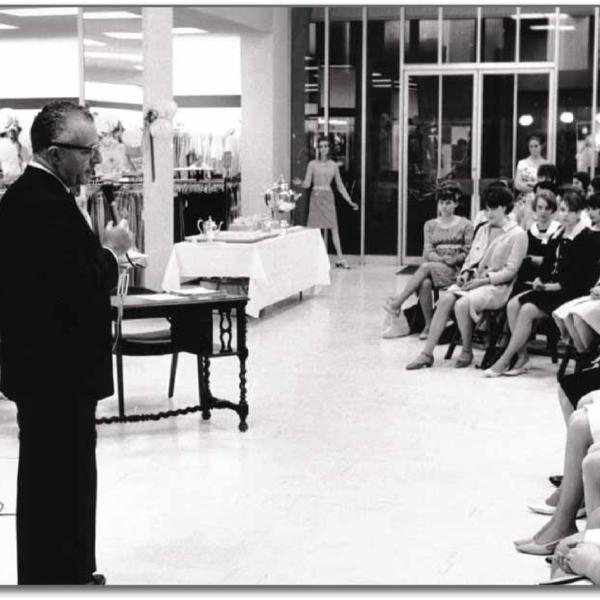
Jay Jacobs
Jay Jacobs was born in Brooklyn and moved to Seattle as a child when his father began working in his uncle’s menswear store, S. Jacobs Furnishings at 4th and Main. Jay’s father taught him the value of making his own money. After graduating from Garfield High School, Jay worked as a bookkeeper to put himself through the University of Washington and the first couple of years of law school.
With money tight, Jay went to work for the Bon Marche selling furs. Thinking he could do better on his own, he bought Coe Brothers, a furrier in downtown Seattle. Sure that his Bon Marche customers would follow him, he changed the name of the store to Jay Jacobs.
Jay was fascinated by and proceeded to buy Bertha Harris, a neighboring costume jewelry and accessory store. When a women’s clothing representative asked Jay to sell some merchandise originally intended for Frederick and Nelson, and when that regular clothing flew out of his fur store, Jay asked himself, “Why am I selling furs when I could be selling clothes. So in 1941, Jay Jacobs, a business that would grow from just one to 289 stores in more than 20 states in the course of 58 years, was established.
The Jay Jacobs store at 5th and Pine sold young women’s fashions, a market that was untapped by any other Seattle specialty store. It took 20 years to grow to three stores. In 1969, Doug Swerland, Jay’s son-in-law, joined the company. By 1974 there were 10 Jay Jacobs stores. In 1978, Doug became president with Jay remaining as Jay Jacobs chairman and CEO.
It was then that the number of stores began to grow exponentially. The advertising jingle repeated over and over again on the radio was, “The swingin’ chicks all go Jay Jacobs.” The result was that these teenage girls proudly carried the hot pink Jay Jacobs shopping bags as proof of their “hipness.” And business exploded!
Until its closure in 1999, Jay Jacobs was enormously successful. It operated a huge private label business which sold goods to stores like I. Magnin, Bloomingdales, and Nordstrom. What was a retailing mainstay in Seattle, growing to 289 stores at its peak, eventually succumbed to the super marketers like the Gap and the Limited. As one of the pioneer and privately owned Jewish businesses in Seattle, Jay Jacobs grew to be a super power in the West and left its mark on retail merchandising.
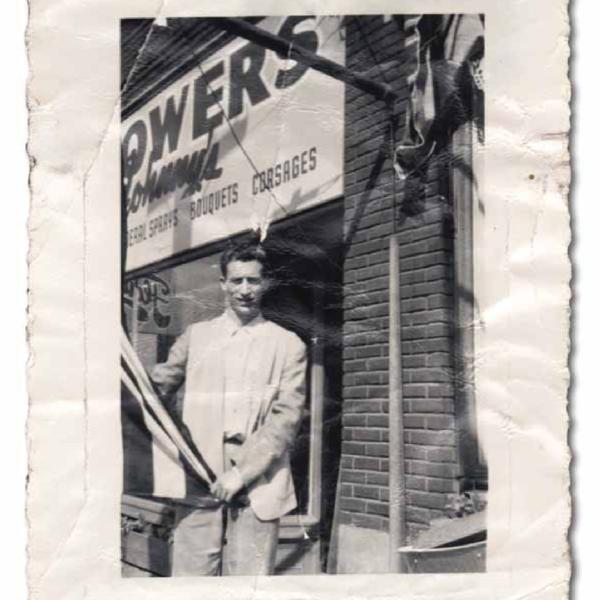
Johnny’s Flowers
nd University Way & N. E. 42 Street
Johnny Cohn founded Johnny’s Flowers in 1948. Always wanting to be a florist, he attended Washington State College for one year, then the University of Washington for a year, studying floriculture and botany. While at the University, he worked for a while at Woodlawn Florist, then started his own floral business out of his parents’ home in Montlake.
In October of 1948, at the age of twenty-one, he opened the doors of Johnny’s Flowers in a small shop at the top of the Montlake hill. Working 12 hour days and seven day weeks, he built the business with the help of two part-time employees. In 1953, he moved the store to the corner of University Way and Northeast 42nd Street in the University District, and there it remains. In 1959, Johnny married Elaine Ordell. She came in the shop to help during busy times for the next ten years as they raised their children to school age. Elaine started working there full time in 1970.
As the business grew, both in sales volume and customer base, the shop became known for creativity of design, quality of product and outstanding customer service. The shop served the entire greater Seattle area. Johnny, an outstanding floral designer, supplied the creative direction to the design staff, did the buying and was the contact person for the corporate accounts. Elaine, with her ability to organize, ran the office. This division of labor and talent helped Johnny’s Flowers to become one of the premier florists in the area.
In 2001, after almost 53 years, the Cohns sold Johnny’s Flowers and retired. Their memories of the shop are many: 53 Christmas seasons, Valentine’s Days, Mothers’ Days, numerous weddings of the children and grandchildren of their original brides and grooms and being a part of the high and low times of so very many families. All of this made owning and operating Johnny’s Flowers more than a business, more than a living. It was their life.
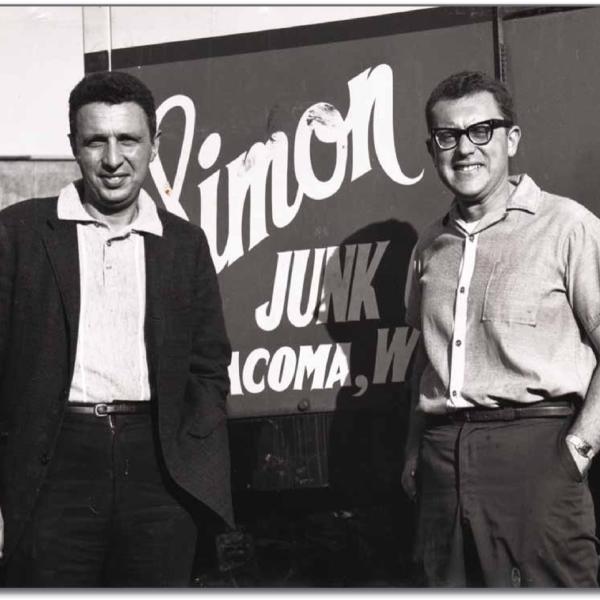
Joseph Simon and Sons
Tacoma, Wa
Joseph Simon emigrated from Lithuania at the age of 13, joining older siblings that had settled in Nova Scotia. He peddled there for over a decade, before leaving for Tacoma. He began by buying and selling rags and bottles in 1923, and established Simon Junk Company in 1925.
He retired in 1965, turning the business over to his three sons, Phil, Norm and Herb. In the ‘80s Herb was bought out and Phil and Norm continued to operate the business until selling in 2008.
In its 83 years of existence, Joseph Simon and Sons earned an enviable, and justly deserved, reputation around the world as one of the preeminent scrap-metal dealers. They won numerous citations for excellence in their industry, and became one of the largest exporters of scrap in the country.
Both through the business and as individuals, the family has made significant contributions to the Jewish community, including Hillel at University of Washington, Tacoma UJA, as well as many others.
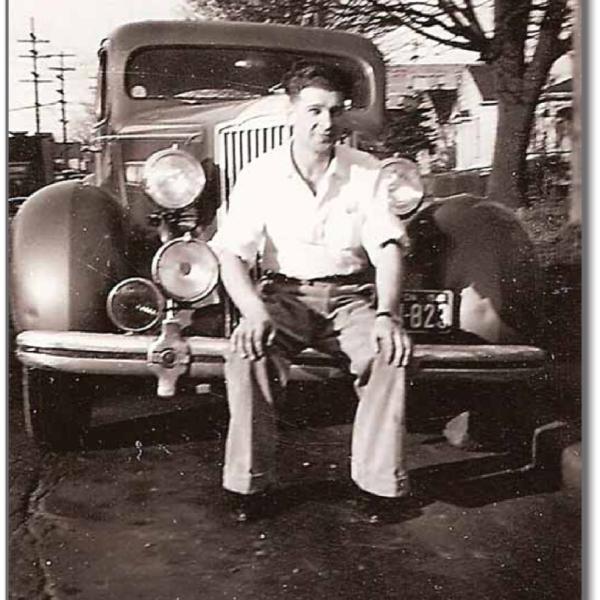
Kaplan & Caplan Family Parking
Brothers Ted Kaplan and Al Caplan opened their first parking lot together in 1939 at 7th and University Street in downtown Seattle. Parking cost 15¢ for 4 hours and 20¢ for all day.
After World War II each brother went into business for himself, operating parking lots throughout downtown. Their father, Isadore Kaplan, helped on Sundays at Rainbow Parking.
Ted could tell what make a car was by listening to the sound of the door closing.
Ted purchased a hilly corner at 4th and Cherry Street (upper right photo) circa 1949 and turned it into a parking lot. In the 1960s the lower part housed the Greek Village Restaurant.
Together Ted and Bruce Caplan (Al’s son) operated other parking lots in Seattle. There are three operated by the family today.
Ted retired at age 75. Al, continued to work until age 89. Dennis continues the business.
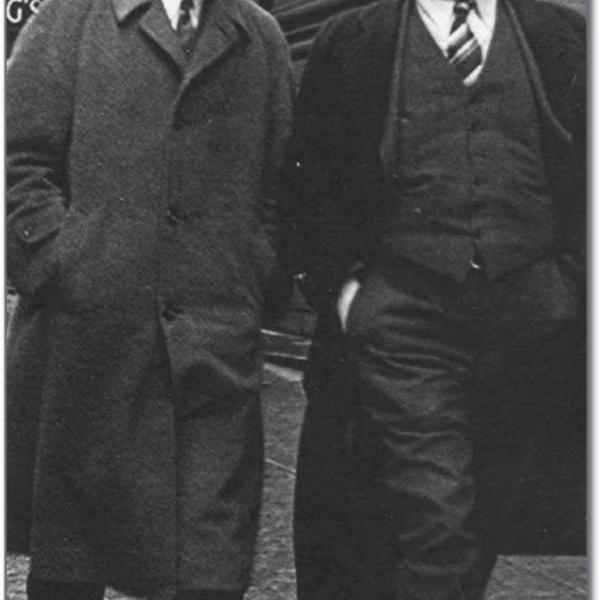
Kaplan Paper Company
st 1 Avenue & Madison Street
acob Kaplan was born in a shtetl in Bialystok, Poland and immigrated to Chicago in 1899, at eleven years old and alone. His adventuresome spirit led him to continue west where he traded his brief experience in a Prussian print shop for an opportunity to open his own print shop at 1st and Madison in Seattle. Kaplan Printing provided “printed material on fine printing papers.” He would return to Bialystok two times to help bring his family to America. J
One day Jake was contacted by another printer with a huge dilemma. A whole railcar load of paper was ordered and shipped to Seattle for a customer who turned down the order due to a dispute over specifications. Jake’s friend had no use for the paper or a place to store it. Jake recognized an opportunity and retrieved the paper, stacked it against posts on 1st Avenue in front of his print shop and swiftly sold every ream to all the print shops and people he knew. He enjoyed the experience of selling and greeting people so much that he made arrangements to purchase another carload of paper and opened Kaplan Paper Company in 1912.
Earlier Jacob had met Celia Sussman, a Tacoma girl with older protective brothers. He managed to gain the acceptance of the three brothers and the family, marrying Celia in 1905. Their four children were born between then and 1925. Sons Philip (Bud) and Leon began working with their father at an early age; it was said that Leon joined the firm as soon as he could count! Leon took a brief tour to Asia in WWII, then back to the UW and after a four year adventure opening his Broadway Music he returned to the paper business.
The family lived near Yesler and 17th, the site of the early Bikur Cholim Orthodox shul. Jacob was very involved in the Jewish community his whole life, chairing the building committees at the Herzl
Congregation and the Seattle Talmud Torah, among many other Jewish causes.
While Jake wanted his grandchildren to carry on the business, Leon recognized the future of the wholesale paper business was losing favor to large nationals and the business was sold in 1974 to Seattle Packaging Corporation. The Kaplan name remained with the business for another 10 years.
Story from Martin Henry Kaplan
Keller Supply Company
Keller Supply office building, 1975 Howard Keller Clockwise rom left: Emil Sedgely, Mel Watson, Bob Smith, and Howard Keller (seated) “C the merchandise he had sold. He also employed a secretary for a half a day. Renton was selected in 1963 as the site for the first branch operation followed by Everett in 1967. 1969 saw a merger with Specialty Plumbing to care for their hardware and chain store customers. Today, the headquarters remain in the Interbay neighborhood of Seattle. aring People . . . Distributing Excellence” is the slogan of Keller Supply Company that was founded by Howard Keller in 1945. Howard grew up in Portland and graduated from Reed College in 1937. He attended Northwestern Graduate School of Commerce until 1939, when he was hired by Interstate Department Stores to work in their management training program. He lived in New York briefly when the company decided to move him to Des Moines, Iowa. Howard and Frances Mesher (a Portland girl whom he met at Reed College) married in Portland in February of 1940. During World War II, he went to work for the war production board allocating metals for the plumbing industry. He stayed in Washington D.C. until 1944. During this time, Frances stayed behind and lived with her parents in Portland. In 1944, with their new baby boy, Jim, Frances moved to join Howard in Seattle where he had started working for a plumbing company. Howard credits the people he worked with and their concern for their customers in those early days for being responsible for the growth of his business. Keller Supply prides itself on its “diversification of products, depth of inventory and decentralized locations.” Keller’s divisions for residential, commercial, heating and cooling, industrial and leisure round off the company’s presence in different market areas. Howard Keller retired in 1983 and their third child, son Nick, runs the business today – a business that grew from one 600 square foot loft to over 55 branches in Washington, Nevada, Utah, Oregon, Montana, Idaho, Alaska, California. Keller Supply has grown over the last 64 years, but still remains a family-owned and managed business ranking amongst the largest privately held companies in Washington State and one of the nation’s largest plumbing supply wholesalers.
In 1945, Howard decided “with minimum capital, but maximum optimism,” to open his own specialty plumbing business. He rented a very small loft in a building on Westlake Avenue. He would load up his car in the morning and visit loyal customers to whom he would sell what merchandise he had. Howard needed some assistance so he hired a laborer to package and ship the merchandise he had sold. He also employed a secretary for a half a day. Renton was selected in 1963 as the site for the first branch operation followed by Everett in 1967. 1969 saw a merger with Specialty Plumbing to care for their hardware and chain store customers. Today, the headquarters remain in the Interbay neighborhood of Seattle.
Howard credits the people he worked with and their concern for their customers in those early days for being responsible for the growth of his business. Keller Supply prides itself on its “diversification of products, depth of inventory and decentralized locations.” Keller’s divisions for residential, commercial, heating and cooling, industrial and leisure round off the company’s presence in different market areas.
Howard Keller retired in 1983 and their third child, son Nick, runs the business today – a business that grew from one 600 square foot loft to over 55 branches in Washington, Nevada, Utah, Oregon, Montana, Idaho, Alaska, California. Keller Supply has grown over the last 64 years, but still remains a family-owned and managed business ranking amongst the largest privately held companies in Washington State and one of the nation’s largest plumbing supply wholesalers.
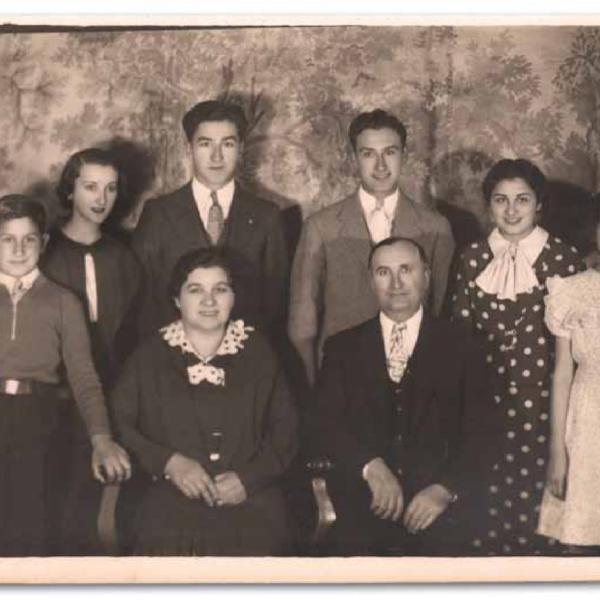
Kremen’s Variety Store
The Jacob Kremen family came to Seattle at various times during the late 1930s. Jake Kremen’s first business venture in Seattle was a variety store in the University District. When the opportunity arose to occupy a better and larger space, he closed the original store and opened a new business, Kremen’s Five and Dime, in Seattle’s White Center neighborhood, a hardworking blue-collar area located between Seattle and Burien.
Leo and Sam, the two oldest Kremen siblings, joined their father in running the business, while the youngest son, Sherwin, still at Roosevelt High School, worked at the store on weekends. Neither of the Kremen daughters, Pearl or Esther, worked at the store. As it prospered, the business evolved into Kremen’s Variety Store. The sons took over more of the day-to-day operations and expanded the kinds of goods the store offered. Then, as happened to many families and businesses, the war put things on hold; Leo went into the Army, Sam into the Coast Guard, and Sherwin into the Air Force.
After the war’s end Leo and Sam returned to the business and Sherwin joined them shortly thereafter. By 1950, Jake and Sonia had bought the building that housed the store, and sold the business to their three sons; they did not want their sons to have the uncertainty of a non-family landlord. When the opportunity arose, Jake and Sonia purchased two adjoining buildings, but the main tenant in White Center was their sons’ business.
Eventually the store’s premises would be enlarged by some 6,000 square feet in the late 1950s and the three brothers ran the business together until 1967, when Leo passed away. Sam and Sherwin then continued to operate the business until they closed it in 1972. The brothers continued to manage the White Center property after the death of Jake in 1972 and Sonia in 1982.
Ken Kremen, Leo’s youngest son who managed the property until it was sold in 2007, said, “During that time many former customers would come up to me and relate their fond memories of shopping at the store, of the ‘boys’ and ‘the folks’ and how much they missed the warm long standing-relationship they had with our family.”
Story from Ken, Brian, and Sherwin Kremen
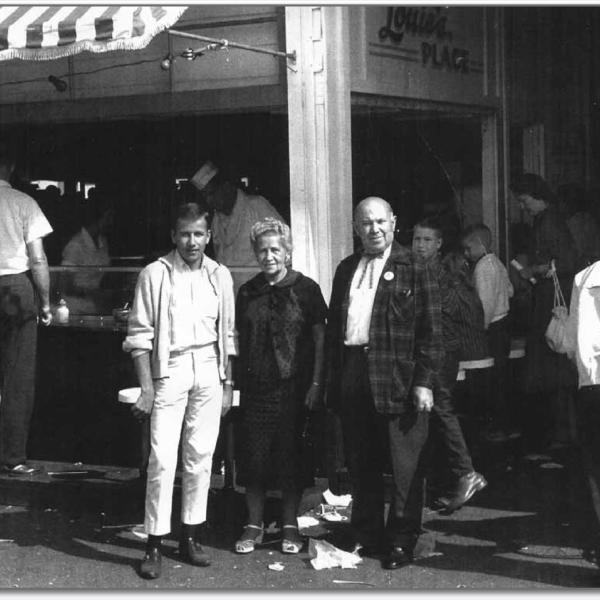
Lamken Concessions
Tacoma, Wa
Louie Lamken started his iconic Western Washington Fair concession, “Louie’s Place,” in 1920. By the time Nick Weinstein, his grandson, sold the business in 2003 there were 10 stands located within the fairgrounds.
Louie emigrated from Riga, alone, when he was 13 years old, and two years later took the train as far west as possible to escape abusive working conditions in New York. He began with a horse and buggy, buying and selling to the mills and factories of the Tacoma area, as well as ice cream and pop outside the fairgrounds in Puyallup. After several years he acquired a lease to operate inside the fairgrounds, growing as it became one of the largest state fairs in the country.
For decades Louie and his wife Lizzie were well known throughout Tacoma as the operators of the Stadium Bowl concession stand when the Bowl was the community meeting site for games, exhibitions, and other outdoor events.
Nick, raised in Portland, began working summers and vacations for his grandfather when he was seven, continuing until Louie’s death in August of 1979. Nick continued on, renaming the business “Weinstein Concessions,” until his retirement in 2003.
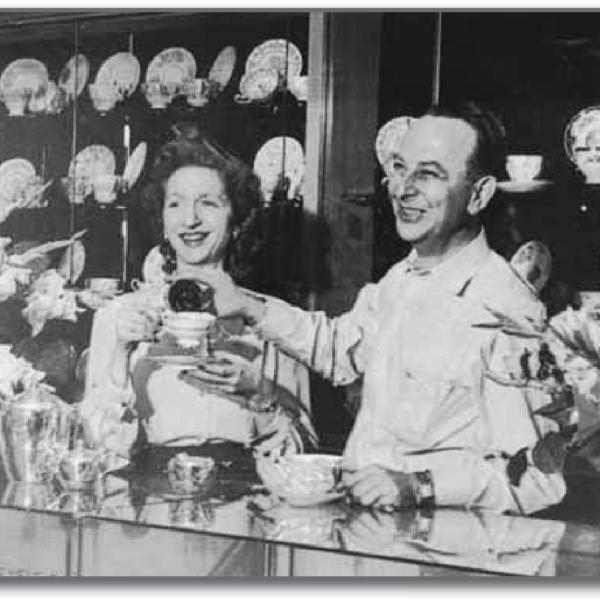
LeRoy Jewelers
Tacoma, Wa
I rving Farber graduated from the University of Washington just in time for the beginning of the Great Depression. He and fellow Tacoman Jack Slotnik set off to find their fortunes wherever they might be.
They headed to tiny Coulee City which had room for Pioneer Jewelers, Farber and Slotnik’s new enterprise. The town was not much to look at. Businesses that did very well were the furniture (run by Izzy and Esther Rogoway, late of Spokane) and the bars which had the concession to sell replacement plate glass for the windows that were broken during weekend brawls, and the jewelry store.
Watches sold well. Gifts for the wives and girlfriends back in the big cities were either expressions of love or guilt offerings by the lonely construction men. By the height of the construction on the dam, the partners had two jewelry stores in Coulee City. Their business went so well that the Corum Watch Company sent their sales manager west to find out if the two were engaged in some kind of scam.
As work on the dam wound down, the two partners decided to move back west. Settling in Tacoma in 1941, they opened LeRoy Jewelers in a storefront of The Fidelity Building on Broadway in the middle of the downtown. At that time there were about a dozen jewelry stores in the downtown, but the two were accomplished promoters. “A Dollar Down Takes It Home” they advertised. “Pay 50¢ a week until it’s all yours!”
The two operated the business jointly until 1949 when Jack Slotnik opened his own business, Garland Jewelers. Farber’s wife Hazel had been working at LeRoy Jewelers when needed but when Irving Farber died in 1965, Hazel took over management of the business. Jewelry store competitors took bets on how long “that dame” would last in a man’s business. However, Hazel was determined to succeed. “I had two boys I had to get through college. There could be no question of quitting,” she said.
LeRoy Jewelers was run most successfully by Hazel Farber through the next four decades. Their younger son, Steph Farber joined the business in 1973 working with his mother until 2005 when she retired. Steph and his wife Phyllis Harrison continue the family tradition as LeRoy Jewelers has celebrated its 67th birthday.
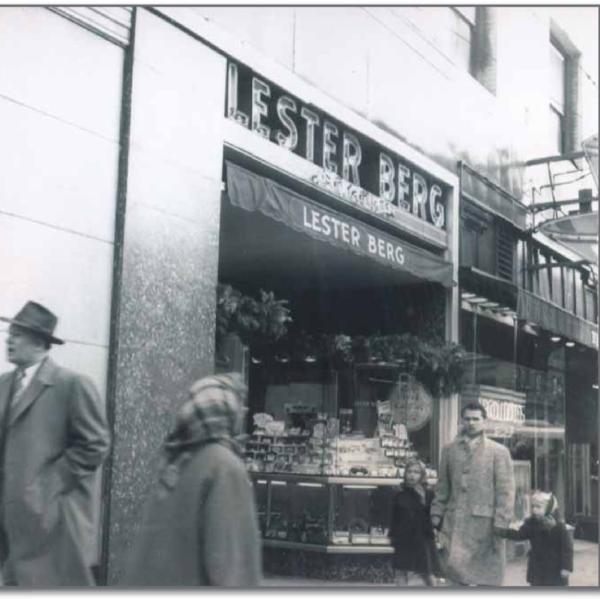
Lester Berg Jeweler
rd 1416 3 Avenue
I n 1936, Dad opened his jewelry store in downtown Seattle at 1416 3rd Avenue, right next door to Woolworths. Eventually, he also had stores in Yakima and Walla Walla. When the Seattle location opened, the landlord didn’t even provide a restroom for the employees. So whenever nature called, Dad and his staff would leave the store and go down the street to the Vance Building, where a public restroom served their needs. Later on, he hired a plumber and a toilet was installed for everyone’s convenience.
Dad became a merchant seaman in 1942 for two years, but even during this time the business stayed open. Whenever his ship returned to
Story from Lou Berg and Jean Oseran Lester Berg
Seattle, he would immediately go to the store to oversee the credit operation. Bill Krivosha was a top salesman at the store. Augusta Rosenblume also worked in sales. Miscellaneous duties and errands were handled by Sol Amon.
Often, Dad would meet with other local jewelers for lunch. The table could include Horace Raphael, Jack Friedlander, Richard Weisfield, Herb and Bob Bridge and others. When the meal was finished, occasionally the gentlemen would roll dice to determine which unlucky jeweler would pay for everyone’s lunch. In addition to the normal jewelry items for sale, televisions, dishes, silverware, tool sets, small appliances and other promotional items were also sold at the store.
Dad was successful and well respected in the Jewish community as well as the jewelry industry. He served as president of the Seattle Jewelers Association and also the Washington State Jewelers Association. As time went on, the Walla Walla store was closed and the Yakima store was sold to the store manager, Max Flax. The Seattle store on 3rd Avenue finally closed in 1962.
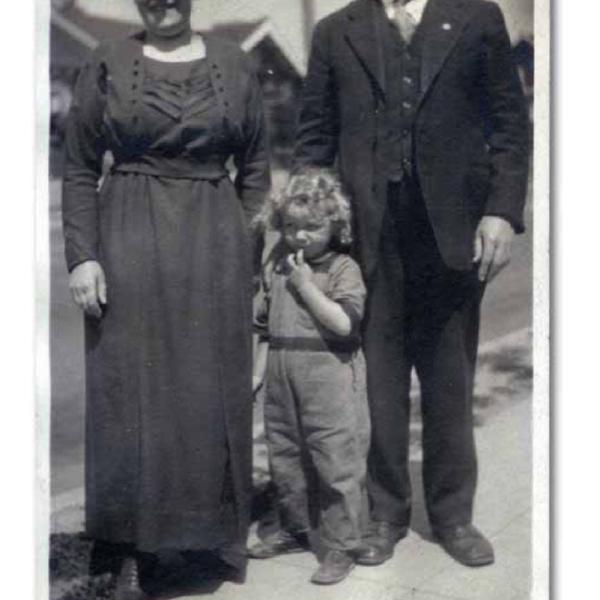
Levinson’s Dry Goods
th 2105 North 45 Street
Our parents, Paul and Lillian Levinson, ran the store under the slogan Our Name, Our Guarantee. The store was home and home was the store. Formally, a door separated the two, but it was usually left open in the event a customer should walk in during the dinner hour. The entrance to the store was our front door. There was another, separate entrance leading directly into the house, but it wasn’t used much. Once we were in the store, we were home.
We younger children didn’t actually work in the store, although once in a rare while, if I was very, very careful and had either Mother or Dad by my side, I would be allowed to push the 5¢ key on the cash register to ring-up the sale of a spool of thread.
Usually, I manned the small table in a nook near the back of the store. On it stood a tall, black, impressively modern Underwood typewriter. My father always gave me, his precious youngest child, permission to hunt for familiar letters engraved in white on those pleasantly round, solid keys. I was proud to be trusted with the responsibility.
Customers would sometimes stop and cluck with delight at the sight of the little girl with luxurious blond curls working so diligently in Mommy and Daddy’s store.
I didn’t pay them much attention, though; I was too busy being a responsible member of the household.
Story from their daughter Irmadine, now age 92
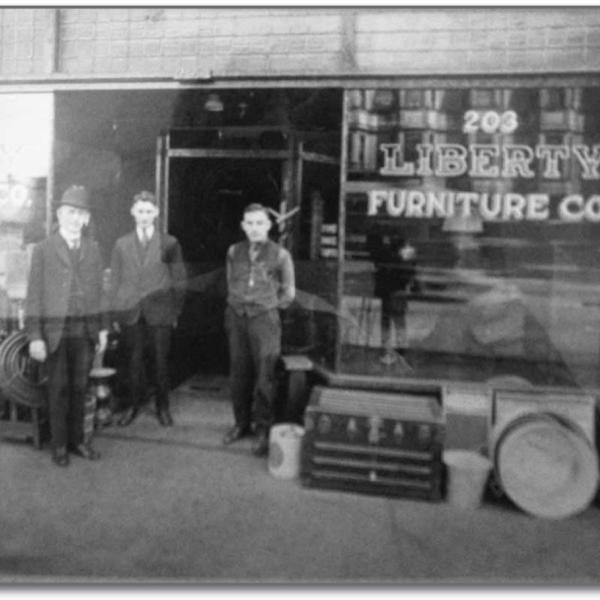
Liberty Furniture
Spokane, Wa
Founded in 1918 by Abe and Meyer Levitch who came to Spokane from the Ukraine in 1903. The business moved to West Riverside, and then in 1943 to a four-story building on Main, formerly the Kemp and Hebert Department Store. The store, known as Liberty Furniture, was operated by David and Harry Levitch, the sons of the original owners, until 1988. Lib- erty Furniture was a prominent supplier of furniture, carpeting and related items to home and commercial throughout the Inland Northwest.
The building, now known as the Liberty Building, is now operated by Aunties Book Store with architectural offices occupying the top floors.
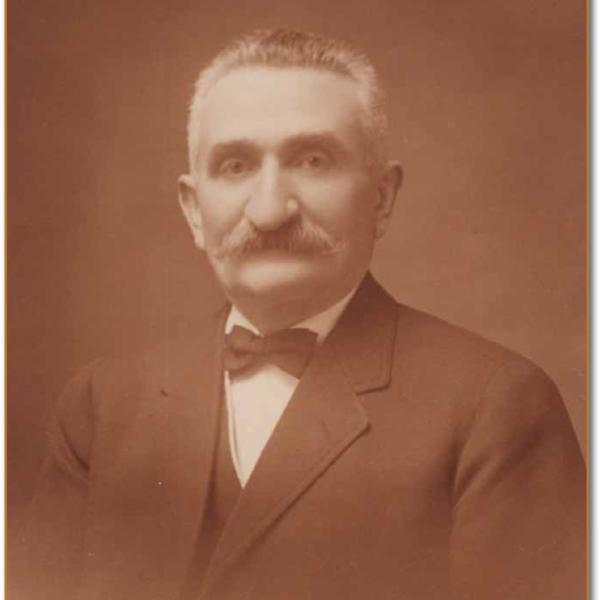
Lippitt Brothers
Colfax, Wa
Born in Charlottenberg, Germany (February 8, 1851), Julius left Germany at age 15 to escape military service in the Prussian Army. His older brother, Phillip, was in business in San Francisco, and was responsible for bringing Julius to the United States. Julius slowly made his way up the west coast, first working in Sacramento and later in Oregon City.
At age 27, traveling on the Snake and Palouse Rivers, Julius decided to establish a mercantile business in Colfax, Whitman County Territory. He opened a general merchandise store in 1878. In both 1881 and 1882, the town was destroyed by fire, but stores quickly rebuilt. His business was also involved in banking, as Julius carried farmers’ accounts until fall when grain and flax crops were harvested. In the early days, patrons came from Spokane, Big Bend County, Stevens County, and as far away as Colville.
Julius was a three term mayor, a member of Odd Fellows and a Mason. In 1880, he participated in a committee of three to convince an engineer to bring the new railroad into Colfax. The Columbia and Palouse Railroad Company was finally completed in Whitman County, and the first train arrived in Colfax in 1883.
A brother, William, entered the business. Even though Colfax was basically a Christian community, two stores, Lippitt Brothers and Aaron Kuhn’s stores closed for all Jewish Holidays. Farmers said, “I’ll keep my business until Jew Lippitt opens his store at sundown.”
In 1905, the old building was torn down, and a new 90 x 100 foot building replaced it at the present site of the Colfax city library. The Lippitt’s gave liberally of their time and money to all projects for the development of the town. The money earned was reinvested in Colfax. Their store was one of the finest in Whitman County. In the winter of 1906, the family moved to Portland, Oregon so their two girls could have a better education; however William Lippitt continued to manage the store until 1918 when the business was sold and his family relocated in Spokane.
Handwritten notes from Julius Lippitt’s daughter, Judith Lippitt Littman (1899-1989); History of Whitman County, State of Washington by W. H. Lever, published 1901, page 250; Colfax 100 Plus by Edith E. Erickson, copyright 1981; Colfax Gazette, May 19, 1911
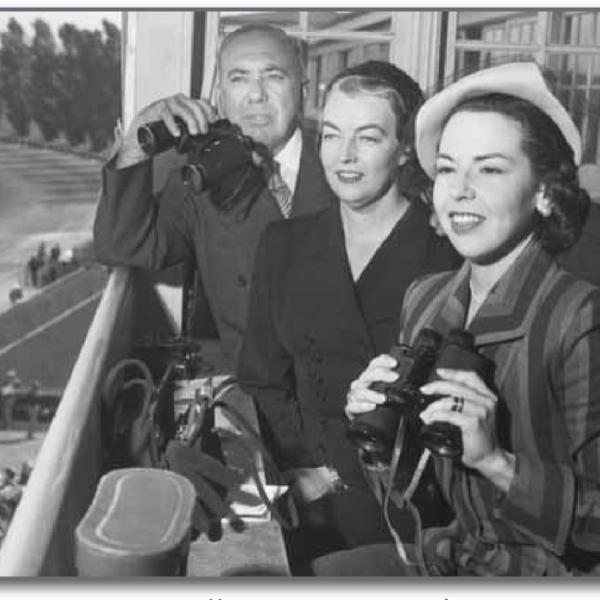
Longacres Racetrack
Renton, WA
The dream of an eight year old boy who got his first thoroughbred horse became a reality when Longacres Racetrack opened in August, 1933. Joe Gottstein was given “Prince Liege” by his father Meyer, a real estate magnate and a shareholder of Seattle’s first racetrack, the Meadows. When the Washington State Legislature banned pari-mutuel gambling in 1909, the Meadows was forced to close its doors. However, Joe Gottstein was determined to revive the sport in Washington, but that would take several years. The dream of an eight year old boy who got his first thoroughbred horse became a reality when Longacres Racetrack opened in August, 1933. Joe Gottstein was given “Prince Liege” by his father Meyer, a real estate magnate and a shareholder of Seattle’s first racetrack, the Meadows. When the Washington State Legislature banned pari-mutuel gambling in 1909, the Meadows was forced to close its doors. However, Joe Gottstein was determined to revive the sport in Washington, but that would take several years. T he dream of an eight year old boy who got his first thoroughbred horse became a reality when Longacres Racetrack opened in August, 1933. Joe Gottstein was given “Prince Liege” by his father Meyer, a real estate magnate and a shareholder of Seattle’s first racetrack, the Meadows. When the Washington State Legislature banned pari-mutuel gambling in 1909, the Meadows was forced to close its doors. However, Joe Gottstein was determined to revive the sport in Washington, but that would take several years. T he dream of an eight year old boy who got his first thoroughbred horse became a reality when Longacres Racetrack opened in August, 1933. Joe Gottstein was given “Prince Liege” by his father Meyer, a real estate magnate and a shareholder of Seattle’s first racetrack, the Meadows. When the Washington State Legislature banned pari-mutuel gambling in 1909, the Meadows was forced to close its doors. However, Joe Gottstein was determined to revive the sport in Washington, but that would take several years. he dream of an eight year old boy who got his first thoroughbred horse became a reality when Longacres Racetrack opened in August, 1933. Joe Gottstein was given “Prince Liege” by his father Meyer, a real estate magnate and a shareholder of Seattle’s first racetrack, the Meadows. When the Washington State Legislature banned pari-mutuel gambling in 1909, the Meadows was forced to close its doors. However, Joe Gottstein was determined to revive the sport in Washington, but that would take several years. he dream of an eight year old boy who got his first thoroughbred horse became a reality when Longacres Racetrack opened in August, 1933. Joe Gottstein was given “Prince Liege” by his father Meyer, a real estate magnate and a shareholder of Seattle’s first racetrack, the Meadows. When the Washington State Legislature banned pari-mutuel gambling in 1909, the Meadows was forced to close its doors. However, Joe Gottstein was determined to revive the sport in Washington, but that would take several years. he dream of an eight year old boy who got his first thoroughbred horse became a reality when Longacres Racetrack opened in August, 1933. Joe Gottstein was given “Prince Liege” by his father Meyer, a real estate magnate and a shareholder of Seattle’s first racetrack, the Meadows. When the Washington State Legislature banned pari-mutuel gambling in 1909, the Meadows was forced to close its doors. However, Joe Gottstein was determined to revive the sport in Washington, but that would take several years. he dream of an eight year old boy who got his first thoroughbred horse became a reality when Longacres Racetrack opened in August, 1933. Joe Gottstein was given “Prince Liege” by his father Meyer, a real estate magnate and a shareholder of Seattle’s first racetrack, the Meadows. When the Washington State Legislature banned pari-mutuel gambling in 1909, the Meadows was forced to close its doors. However, Joe Gottstein was determined to revive the sport in Washington, but that would take several years. he dream of an eight year old boy who got his first thoroughbred horse became a reality when Longacres Racetrack opened in August, 1933. Joe Gottstein was given “Prince Liege” by his father Meyer, a real estate magnate and a shareholder of Seattle’s first racetrack, the Meadows. When the Washington State Legislature banned pari-mutuel gambling in 1909, the Meadows was forced to close its doors. However, Joe Gottstein was determined to revive the sport in Washington, but that would take several years. he dream of an eight year old boy who got his first thoroughbred horse became a reality when Longacres Racetrack opened in August, 1933. Joe Gottstein was given “Prince Liege” by his father Meyer, a real estate magnate and a shareholder of Seattle’s first racetrack, the Meadows. When the Washington State Legislature banned pari-mutuel gambling in 1909, the Meadows was forced to close its doors. However, Joe Gottstein was determined to revive the sport in Washington, but that would take several years. he dream of an eight year old boy who got his first thoroughbred horse became a reality when Longacres Racetrack opened in August, 1933. Joe Gottstein was given “Prince Liege” by his father Meyer, a real estate magnate and a shareholder of Seattle’s first racetrack, the Meadows. When the Washington State Legislature banned pari-mutuel gambling in 1909, the Meadows was forced to close its doors. However, Joe Gottstein was determined to revive the sport in Washington, but that would take several years. Joe Gottstein, Luella Gottstein, and Joan Gottstein Alhadeff at Longacres racetrack, Renton, 1949 he dream of an eight year old boy who got his first thoroughbred horse became a reality when Longacres Racetrack opened in August, 1933. Joe Gottstein was given “Prince Liege” by his father Meyer, a real estate magnate and a shareholder of Seattle’s first racetrack, the Meadows. When the Washington State Legislature banned pari-mutuel gambling in 1909, the Meadows was forced to close its doors. However, Joe Gottstein was determined to revive the sport in Washington, but that would take several years. Joe Gottstein, Luella Gottstein, and Joan Gottstein Alhadeff at Longacres racetrack, Renton, 1949
Joe Gottstein returned home from Brown University and started to buy and sell downtown Seattle real estate. In 1922, he and his friend and business associate, William Edris lobbied Warren Magnuson to aid their efforts to introduce a law to return thoroughbred racing to the state. House Bill 59 was signed into law in March, 1933. Three months later, Joe Gottstein and his partners founded the Washington Jockey Club, and were issued a permit to own and operate a one mile track on the 107-acre Nelson dairy farm in Renton Junction.
They hired Seattle architect, B. Marcus Priteca, who also had designed the Coliseum Theater and Bikur Cholim Synagogue. A crew of 3,000 people worked around the clock to create a grandstand, clubhouse, barns and a one-mile racing oval. Within 28 days, on August 3, 1933 Longacres Racetrack was completed.
The early years of Longacres were a struggle. A little more than two years after opening, the track needed a major race to lure great jockeys, as well as horsemen and breeders, to Washington. Joe Gottstein personally wrote a check for $10,000 to fund the purse for the Longacres Mile, the richest race for that distance in the country. World War II also caused Longacres to struggle. Business was difficult in 1942 and the track could not open in 1943. However, it was granted a license to reopen in 1944.
Through Bill Edris, Joe Gottstein’s only daughter, Joan, was fixed up with Morris Alhadeff, an announcer on KOL radio. They were married in 1942, and in 1947 Joe offered Morrie just a summer job - which lasted for 47 years! When Joe Gottstein died in 1971, Morrie became president of Longacres. In 1988, he turned the operation of the track over to his sons, Ken and Michael.
At the time when gambling competition increased, the popularity of horseracing at Longacres began to wane and the physical plant required a huge capital investment to bring it back to its former beauty. It was then that the Boeing Company made an offer to buy the Longacres site, and it was an offer that could not be refused. The racetrack closed in September, 1992. The Alhadeff family is still involved in horse ownership and breeding. Their tremendous generosity is respected as a model in and for the community.
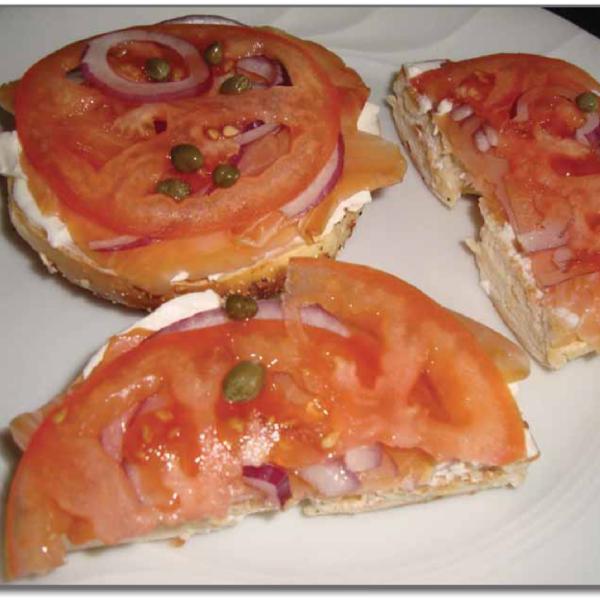
Lox Stock and Bagel
The late ‘70s was an exciting time in the University District. The area was filled with interesting and cosmopolitan people – students, professors, artists, musicians.
We found the perfect location in the old Kazdel’s Deli, a building owned by the Friedman family. The atmosphere was welcoming to those who wanted a “different” experience. Fellows flirted with the waitresses and loved to watch the pretty girls balancing filled glasses and plates on their arms as they delivered orders. Business was brisk on Thursday nights when the shops were open late. The large front windows provided a stage for “entertainment”, not only from passersby, but also from the Hari Krishna who stood in front of those windows until we urged them to move on.
Our desire was to provide a meeting place where people of all denominations and beliefs could meet, enjoy good food, learn about one another and enjoy the experience. All the local houses of worship picked up on this immediately and many had standing reservations for group meals. The menu was extensive. Jewish food was intermingled with American food. People on a “health kick” got what they wanted. We really tried to please everyone. Soups were made daily in huge quantities, as some would have a couple bowls for their meal. An amusing aside was the attitude of Mr. Arnstein, who owned the haberdashery a few doors away. He would come in daily to ask, “What’s the soup?” If it was good (in his opinion), he would alert all the merchants to come for lunch. If it was not to his liking, or the matzah balls were like cannonballs, he would send a negative message.
We also served over 25 kinds of deluxe hamburgers, many kinds of sandwiches, humongous omelets, all made to order, many kinds of salads, various kinds of juice. Desserts were plentiful— cheesecakes, carrot cakes, pies, cake—often whatever we felt like doing. Not to be outdone, Hal made milkshakes so thick they had to be eaten with a spoon.
We were fortunate to be part of such an exciting time on the Ave. We were A Dilly of a Deli! Story from Harold Federman
Lynden Tribune
Lynden, Wa
On Oct. 14, 1914, Sol Harris Lewis arrived in Lynden, Washington, and purchased its newspaper, The Lynden Tribune. The previous publisher, Herman Rosenzweig, dedicated much of the Tribune to national and international news, focusing primarily on political issues. The community was apparently unreceptive to his progressive political agenda, and he put the Tribune up for sale after less than three years. Following a man who attempted to impose cosmopolitan concerns on the small town of Lynden, the arrival of Sol Lewis, journalism teacher at the Universities of Kansas and CaliforniaBerkeley and a veteran reporter for the New York World, raised a few eyebrows. But he had always been drawn to the idea of small-town newspaper publishing, and he quickly embraced the lifestyle and the values of his new community and was likewise welcomed into it.
Once Sol Lewis’ name appeared for the first time on the Lynden Tribune’s editorial page, it became fixed there for nearly 40 years. Sol became known for his trademark wit and grassroots sense of humor, as well as his optimism. He received invitations to edit many leading national magazines, and was even asked to run for Congress in 1944.
Eldest son William R. Lewis became co-publisher of the Lynden Tribune in 1945 when he returned from serving in the Navy during World War II. In 1948, Julian M. Lewis returned to Lynden fresh out of the University of Washington to join his father and brother in the family business.
After Sol Lewis’ death in1953, Bill and Julian sought to preserve the role he established for the
1888 2008 AA<I8EF4EL-E<5HG8
1888 2008 AA<I8EF4EL-E<5HG8
newspaper’s service to the community: the role of an objective news reporter that could simultaneously be proactive in different causes directed toward the improvement of the community it served. Sol’s sons continued his philanthropic efforts in many ways, including the support of Lynden School District levies.
Mike Lewis, the current third-generation publisher of the Tribune, began his tenure as an advertising salesman and manager in 1980. Somehow, although the Lynden Tribune now competes in an era of websites, blogs and online classified advertising, it seems as though community news, in a sense, remains business as usual.
From articles written by David Lewis, published in the October 29, 2008 edition of The Lynden Tribune
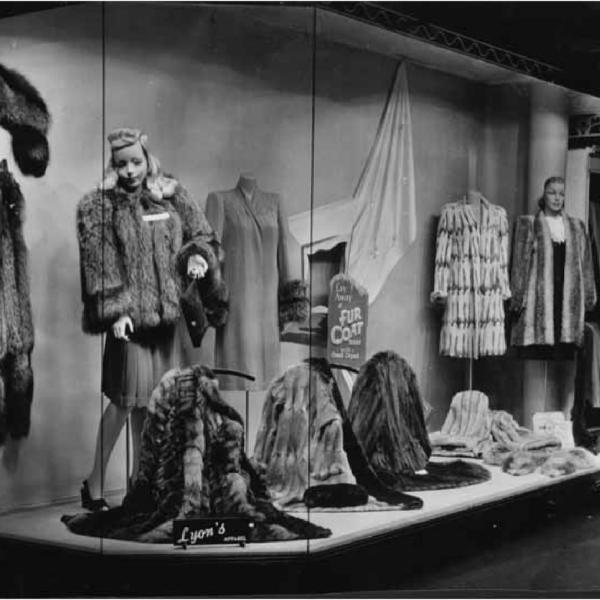
Lyon’s Ladies Apparel
Tacoma, Wa
Lyon’s Ladies Apparel was founded in 1940 by Griselda “Babe” Lyon, a Tacoma native, at age 19 with $350 at 1151 Broadway. After several months in business Babe went on a buying trip to L.A. where she convinced manufacturers to extend credit. Lyon’s Apparel experienced ready growth after that, with innovative sales and displays that were duplicated by stores around the country. Babe married Herman Lehrer after the war and he joined her in the business in 1948. They spent six months rebuilding the store after a 1952 fire. Then in 1954 they moved to 1126 Broadway – the location of her father’s store 20 years earlier. Together they built a chain of 15 stores throughout the Northwest before selling in 1984.
Babe had dropped out of the College (now University) of Puget Sound as a sophomore. While never earning a degree, because of her extraordinary contribution to numerous institutions in Tacoma that included education, health care and the arts, Babe was one of 12 cited as a distinguished alumnus of UPS out of the 40,000 graduates of the school since its founding 120 years earlier. She continues to be highly involved in various community organizations.
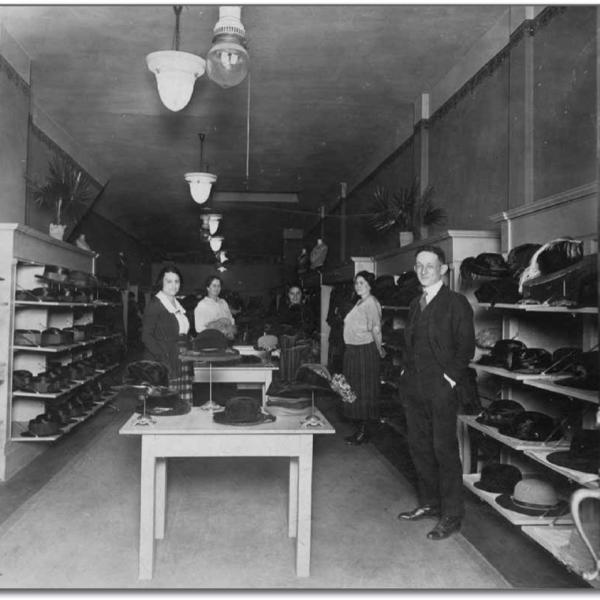
Lyon’s Sample Shop
Tacoma, Wa
Morris J. Lyon came to the States as a Russian immigrant in 1912. He worked as a salesman for the Weinstein Brothers, the New York and Washington Outfitting Co. In 1916, he started a ladies clothing store with Henry Zeidell called “Zeidell and Lyon” at 1126 Broadway. Morris married Rae Levin in Portland in 1917. By 1918 the store was “Lyon’s Sample Shop,” selling a complete line of women’s wear.
Morris and Rae’s two children, Victor and Babe, worked in the store while going to school. However, the Depression and illness forced closure of the store in the late 1930s. Morris passed away in 1942.
After the war, Victor Lyon founded Tacoma Realty. He gained national recognition in the real estate industry, serving as a vice-president of The National Board of Realtors as well as authoring several books and lecturing throughout the country on real estate issues and practices.
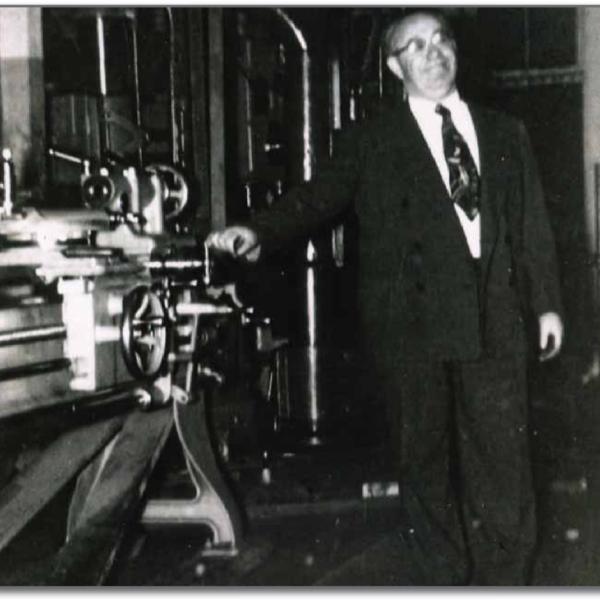
Machinery Exchange Co.
st 2720 l Avenue South
I n the early 1930s, times were tough. Our father, Harry Friedman and his brother-in law Jack Pinchev were roving the northwest in an old truck. They bought scrap metal and then resold it to scrap yards to make some money.
By 1938, they both had young families and had scraped enough money together to start a business in a storefront on 1st Avenue South in Seattle’s industrial district. They would no longer be scrap dealers, but instead would sell reconditioned large machine tools. On November 4th, 1938, they deposited $296 in Sea-First bank. They were now equal partners in the Machinery Exchange Company. Their venture was a success and after renting two different stores on lst Avenue South they bought a building and an empty lot next to it at 2720 lst Avenue South, one block south of the Sears Roebuck store. They bought used machinery from government surplus, industrial plants and private sources. They eventually employed four full-time machinists to recondition the machinery.
They joined the National Machinery Dealers Association and attended many conventions in New York with their wives. During WWII, our father traveled to buy machinery for the business while Jack attended the business at home. In their senior years at Garfield both Dorothy and Leah Friedman worked in the office at the shop. When he was older their brother Buddy Friedman and Harry’s brother Manney Berman also worked in the business. All of our children enjoyed going for a drive to the shop with Grandpa on a Sunday. They would ride the freight elevator up and down to the basement and press the button that moved the hoist along the ceiling from one end of the building to the other. In the late 1960s both partners decided it was time to retire, and they closed the Machinery Exchange. Story from Dorothy Friedman Becker and Leah Friedman Fuller
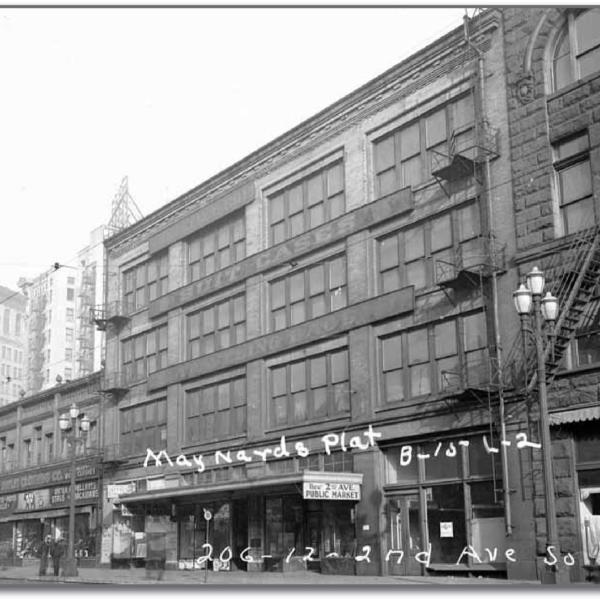
Masins
nd 220 2 Avenue South
Eman Masin emigrated from Riga, Latvia to Seattle in 1922. With little money and no knowledge of the English language, Eman landed a job as a warehouseman for a wholesale grocery company. He saved his money, managed to buy a horse and wagon, and began his own small salvage business. Not afraid of hard work, at the same time Eman worked for his brother in law, M.J. Schain, who owned a dry goods store at 25th and Jackson. When space became available across the street, Masin ventured out and opened his own dry goods store. The business grew enough to open two other locations, but those were forced to close when the Great Depression hit in 1929.
After a chance introduction to a freight claims agent with the Chicago-Milwaukee Railway, Eman pursued an opportunity to purchase new merchandise that had been damaged during shipment. Of all the different types of merchandise he bought, it seemed furniture was the most readily available, easily repairable and offered the best resale potential.
Eman’s son, Ben, returned from naval duty in 1946 and began working for Masins full time.
Soon, there was no longer enough salvageable furniture. Eman and Ben began supplementing repaired pieces with new furniture. Needing more room to grow, in 1953, Masin’s Realty Inc. purchased the building at 2nd and Main, adjacent to the rented space they were in at that time. Eventually, furniture became the mainstay of the Masin family business. When Ben’s son, Bob, joined the company in 1971, he brought with him a strong background in advertising and a desire for Masins to offer the finest furniture in the marketplace.
Masins has had its share of setbacks. In 2001, the Nisqually quake severely damaged the Pioneer Square store and a devastating fire destroyed Masins Bellevue store. Both properties have since reopened and continue to offer high quality furniture.
Bob’s son, David, began working for Masins in 2002 and brings a fresh perspective and modern aesthetic to the company that continues to pride itself on its dedication to quality, customer satisfaction and community service.
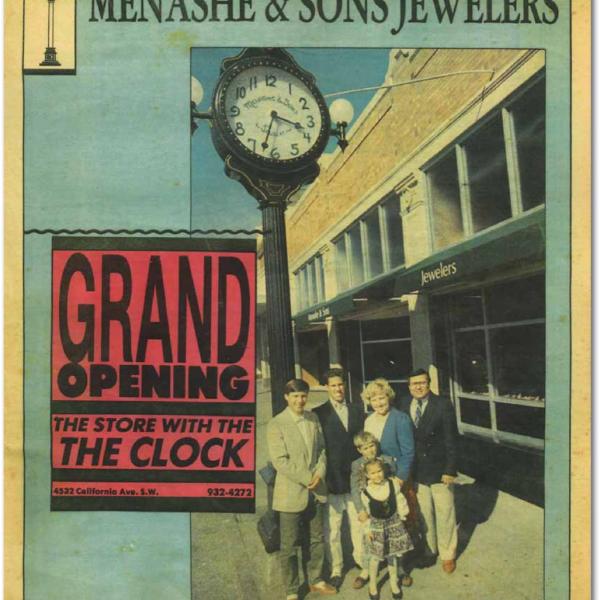
Menashe & Sons Jewelers
4532 California Avenue S.W.
Jack Menashe, son of Victor and Bernice Menashe, married Linda Michelotti June 29, 1971. They met at Weisfield Jewelers, South Center Mall, where Jack started out at 15 as a box boy and soon was trained by his favorite uncle, Mark Rose.
In 1973 Jack and Linda bought Teague Jewelers in West Seattle, a small store with a watch maker on staff. As Jack had children, they soon changed the store’s name to Menashe and Sons Jewelers, known to the community as “The store with the clock.”
Jack and Linda have four grown children, Joshua, Jacob, Jack, Jr. and Joanna.
In 37 years they have remodeled their family store twice. The store is operated with his first son Joshua as a head jeweler along with Joanna and seven other employees.
Jack has felt so blessed to operate an independent jewelry store. “We have beautiful long time customers. We love the community of West Seattle and it has been a special blessing to work with two of my children.”
An article from a 1990 promotional piece for the store said it eloquently: The story of Menashe & Sons Jewelers is about people, progress, time and tradition. It’s a present day chronicle rooted in the best of the past while looking at the future.
Story from Linda Menashe
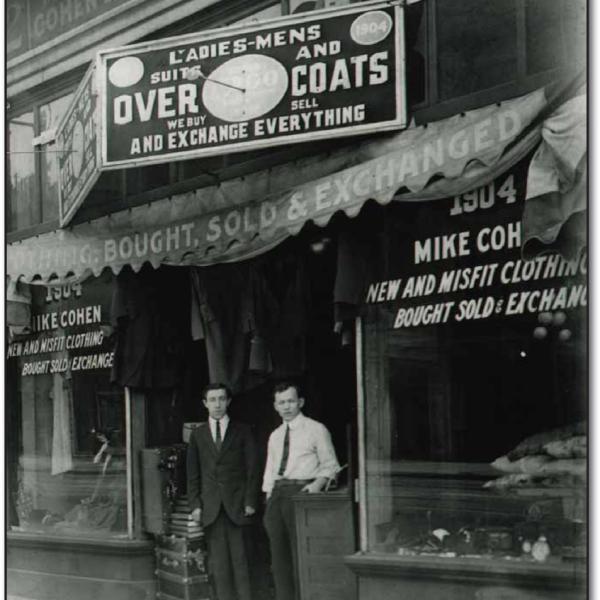
Mike Cohen’s Clothing
I n 1908 Mike Cohen left New York City by train with his brothers Nathan and Ira and settled in Seattle. In April 1909, one hundred years ago, Mike married Dora and together they opened the clothing store pictured here on First Avenue. The two men in front of the store are Mike’s brothers Nathan and Ira.
As the sign suggests, Mike and Dora bought and sold clothing, but ever the entrepreneurs, they would actually buy, sell, or exchange “everything”. A few years after this picture, Mike and Dora moved their store north four blocks to 2313 First Avenue (between Bell and Battery Streets). They devised a new business strategy and sought a new clientele. In addition to their clothing business they bought luggage trunks at wholesale from Skyway Luggage, down the block from their store, and sold the trunks to the emerging affluent class who would go on steamship voyages abroad. Dora always had one condition whenever she sold a trunk. She would say to the well-heeled recipient, “Remember I’m selling this trunk to you only if you return and tell Mike and me all about your travel adventure.” And indeed their customers would do just that. Mike and Dora also began renting tuxedos to their well-todo customers.
Mike and Dora had five children, including a daughter Edith who married Max Patashnik. Mike and Dora gave each of their grandchildren pieces of real estate. In the 1960s Mike and Dora gave the First Avenue building to the Patashnik family, intending it to be the college fund for the offspring of Mike and Dora’s grandchildren Moss, Oren, Ethan, and Eli Patashnik. The four boys helped take care of the building, learning how to paint, plumb, and roof, and it was sold in 1988 to a developer. The proceeds were placed in trusts for the boys’ children, who have now used Mike and Dora’s legacy to attend American University, Willamette University, the University of Washington, Harvard, Yale, and Stanford. Mike and Dora would be elated to know that their penchant for used clothing has given their great grandchildren educations at the nation’s finest universities.
Story from the Patashnik Brothers
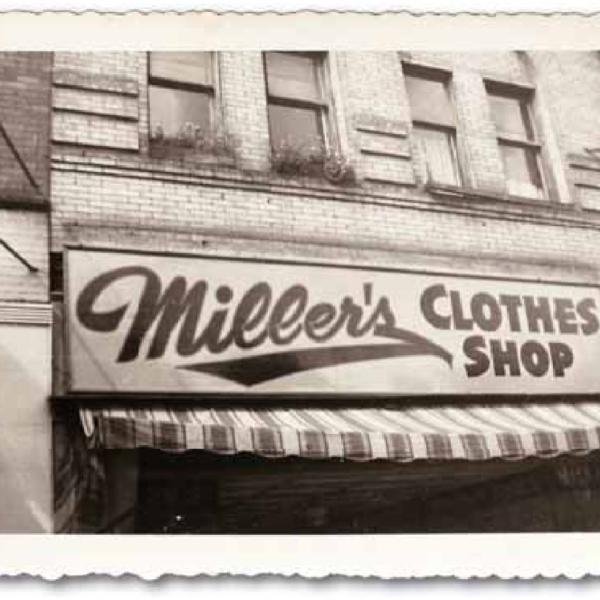
Miller & Hahn’s Menswear
Spokane, Wa
Our parents, Felix & Anne Hahn, were born in Germany and married in 1935 in Bamberg where Felix was a clothing rep. Daily life in Hitler’s Germany became increasingly uncomfortable. Our father lost jobs because he was a Jew. He felt the future did not look good and decided to move our family to America with the help of his two sisters. Felix emigrated first to establish himself. He worked as a busboy and waiter in Brooklyn and learned English by going to the movies after work.
Our family, including uncles and grandmother, moved to Spokane, Washington in 1940 because they heard there was “opportunity out west”. Felix worked for another Jewish pioneer in Spokane, Pete Freeman, in a workingman’s clothing store on Main Street. Our mother became a milliner, making women’s hats.
After a few years, our father purchased Pete Freeman’s store, which became Felix Hahn’s Men’s Shop. It catered to wheat farmers of the Inland Empire, loggers and working class people and successfully competed with J.C. Penney. It was a family operation, with our mother and Uncle Fred working long hours. Later Uncle Fred bought another men’s clothing store a block away, Miller’s Clothes Shop. A few years later the two stores merged and became known as Miller & Hahn Men’s Wear.
Our parents still had time for the Jewish community. Our father became president of Knesseth Israel Synagogue. He had many loyal friends and customers who came back year after year to buy Romeo shoes, cork boots, Mallory and Stetson hats, Filson and Woolrich jackets, Levis and an occasional dress shirt and tie.
After our father’s death in 1967, our mother, Anne ran the store single-handedly and continued to cater to the working class. She began to carry Western Wear including boots, hats, square dance outfits. The store became known as the place to buy Western wear. With our mother’s accent, she pronounced it “Vestern Vear.” She retired in 1979.
During the operation of the store our father hired many people from the community including the Cantor of the synagogue. Our mother was loved by her customers and her help, and she pioneered hiring young women as retail sales clerks in a predominantly workingman’s clothing store. The store was central in our lives and the subject of much conversation at the dinner table. When the store closed, it was featured in The Spokesman-Review as a pioneer and stalwart of the downtown retail community.
Story from Jerry & Janee Hahn
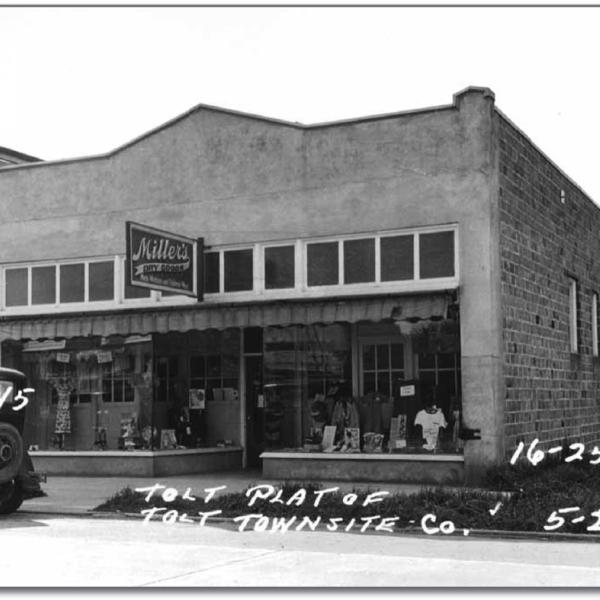
Miller’s Dry Goods
Carnation, Wa
Howard Miller’s store in Carnation, Wa, 1940 M known to open the store after hours to help those who had emergencies such as a fire, or couldn’t make it in during regular business hours. iller’s Dry Goods in Carnation was started by Howard Miller about 1938. Howard’s father, Henry Miller, ran a similar store in Kirkland, which he had hoped that Howard would take over. Howard must have inherited the retail spirit because when he saw an opportunity on Main Street in Carnation he took it. He opened his own store and named it Miller’s Dry Goods and ran the store for close to 50 years. And Howard was always interested in sports. Due to his small stature he didn’t compete, but he actively supported sports in the community. In the Snoqualmie Valley he became known to many young people as he reported on and wrote sports stories about the local high school athletes. The community thanked him by naming a local field at the old Tolt High School “The Howard Miller Athletic Field” and proclaimed “Howard Miller Day” in his honor.
The store became another “Mom and Pop” operation when Howard married Marian Friedman of West Seattle as she joined him in running the store. She even ran the store herself while Howard served in the army. And it became a “family affair” when their two children, Marilyn and Martin, also helped out during the busy times over the years with miscellaneous chores.
Before the war and after returning from duty, Howard became well known in the Carnation community. This was mostly due to his involvement and caring for the people there. He was known to open the store after hours to help those who had emergencies such as a fire, or couldn’t make it in during regular business hours.
And Howard was always interested in sports. Due to his small stature he didn’t compete, but he actively supported sports in the community. In the Snoqualmie Valley he became known to many young people as he reported on and wrote sports stories about the local high school athletes. The community thanked him by naming a local field at the old Tolt High School “The Howard Miller Athletic Field” and proclaimed “Howard Miller Day” in his honor.
The building that was Miller’s Dry Goods is now a community arts center run by Lee Grummand. She hosts art classes, entertainment and receptions there. In honor of Howard’s standing in the community she has maintained the Miller name on the storefront. So although the store closed in 1988, its heritage lives on to reflect the Miller family’s contribution to the Carnation community.
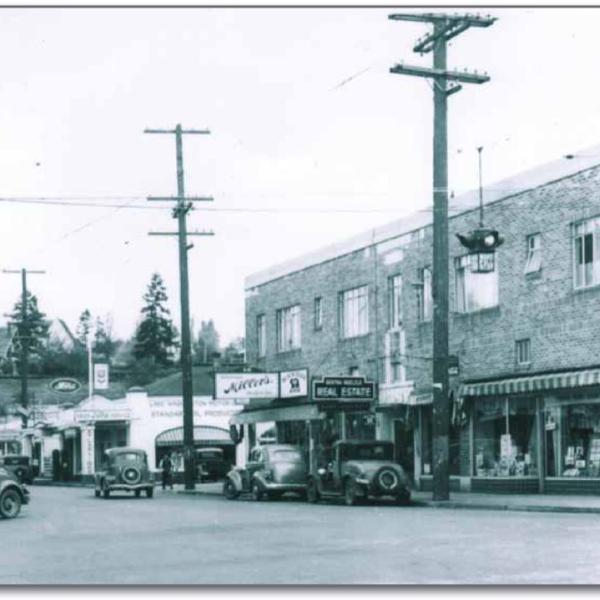
Miller’s Ready To Wear
Kirkland, Wa
Henry and Fannie Miller owned a jewelry store in Kenosha, Wisconsin before moving to Washington. In 1923 they purchased a store in Friday Harbor. It became Miller’s, a dry goods store. Henry and Fannie worked hard, raising four children and spending long hours in the store. They were very successful, but in 1928 Henry became ill, sold the store and traveled to the Mayo Clinic taking his family with him.
In 1934 the family traveled back to Washington and purchased Brown’s Toggery in Kirkland and named it Miller’s Ready-to-Wear. The store was located on Lake Street across from J.C. Penney. The entire family worked in the store. Howard, Phyllis and Lorraine sold merchandise after school. Ralph swept the floor and went home to light the stove and set the table.
The store was always closed for business on Sundays, but one Sunday Henry and Phyllis were working when a man with a baby in his arms knocked on the window. He needed a snowsuit to keep his baby warm. Henry fitted the baby with a snowsuit big enough for him to grow into. The man said, “I will have the money next week.” When the man left Henry turned to Phyllis and said “I don’t look for him to come in and pay, but I can’t let the baby freeze.”
The Miller family was growing. Howard and Ralph enlisted in the service. In 1942 Phyllis married Herbert Danz and Lorraine married Earl Trotsky. Because Henry and Fannie could not run the store without the family’s help, they sold Miller’s Ready-to-Wear and retired.
Henry Miller’s brothers and their families were also active in business in the Seattle area. Older brother Charles Miller owned Miller Manufacturing Company at 1010 First Avenue, in Seattle. They manufactured overalls, midis and shorts. Harry Miller owned and ran Miller’s Family Department Store at 420 15th Avenue on Capitol Hill. Harry’s wife, Ann Miller, took the bus every day from Capitol Hill to Bothell, where she had her own store. The Fashion Apparel Store sold ladies ready to wear dresses, suits and undergarments. Harry Gordon and Ruth Miller Gordon ran a grocery store in Brownsville, Wa. They eventually sold it to the youngest brother, Joel Miller and his wife Frieda, keeping it in the Miller family.
Written by Janice Danz Russ Narrated by Phyllis Miller Danz and Ralph Miller
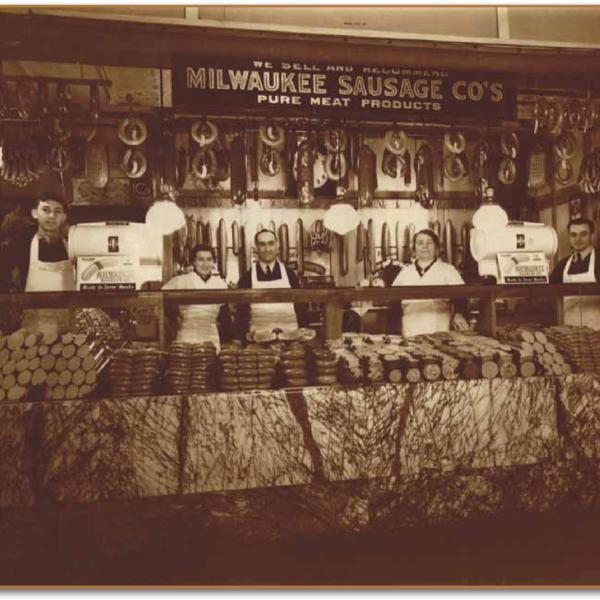
Milwaukee Sausage Company
The Milwaukee Sausage Co. retail store in the Pike Place Market, about 1935. In the middle is my grandfather, Max Rind, and the tall skinny kid on the left side is my father, Martin, about 15 years old I wholesale meat from as far away as Australia and New Zealand. After Martin returned home from the army in 1946, Max slowly began to give him more responsibilities. After Max died in 1958, Martin continued to grow both companies. n the 1890s Max Rind’s uncle, Albert Kohn, discovered that while few men who went to Alaska for the Gold Rush were making much money, the people providing them with the supplies they would need along the way could actually make a decent living. Albert settled in Seattle, peddling notions and began Puget Sound Mercantile. In 1971, competition from manufacturers like Hormel and Oscar Meyer led Martin to the difficult decision to sell Milwaukee Sausage. He still owned Milwaukee Import, and from the mid-70s on the previously smaller company took off and grew into a large, successful business, eventually becoming Rind International. Martin, who became president of his national trade organization, always stressed the importance of building a good reputation and sustaining personal relationships. His sons Bradley and David both worked in the company, and by the mid-1980s David was running the day to day operations. Martin stayed active in the business until 1994.
In 1908 at the age of 16, Max arrived from the village of Hrove in Austria. His sister Tillie married Hugo Jassny, and the brothers-in-law sold sausage casings to butcher shops. Soon they decided they didn’t have to just sell the casings – they could make the sausage themselves. Thus began Milwaukee Sausage Company. Max’s partners Robert and Joseph Siefert provided recipes for all kinds of sausages, frankfurters, salami, bologna and more.
Martin Rind, Max’s son, worked in the business as a youth, driving the delivery truck to homes and businesses during the Depression. During and after WWII, when lean meat was rationed in the US, the business had to reach further and further for the beef needed to manufacture the sausages, so a second company—Milwaukee Import—was created to finance the importing of wholesale meat from as far away as Australia and New Zealand. After Martin returned home from the army in 1946, Max slowly began to give him more responsibilities. After Max died in 1958, Martin continued to grow both companies.
In 1971, competition from manufacturers like Hormel and Oscar Meyer led Martin to the difficult decision to sell Milwaukee Sausage. He still owned Milwaukee Import, and from the mid-70s on the previously smaller company took off and grew into a large, successful business, eventually becoming Rind International. Martin, who became president of his national trade organization, always stressed the importance of building a good reputation and sustaining personal relationships. His sons Bradley and David both worked in the company, and by the mid-1980s David was running the day to day operations. Martin stayed active in the business until 1994.
David recalls his father saying that as he passed the business on to the third generation, the hardest thing for Martin was to allow his son to make mistakes. But Martin believed it was very important because he said that’s how you learn and grow. Under David Rind’s leadership, the business continues to thrive today.
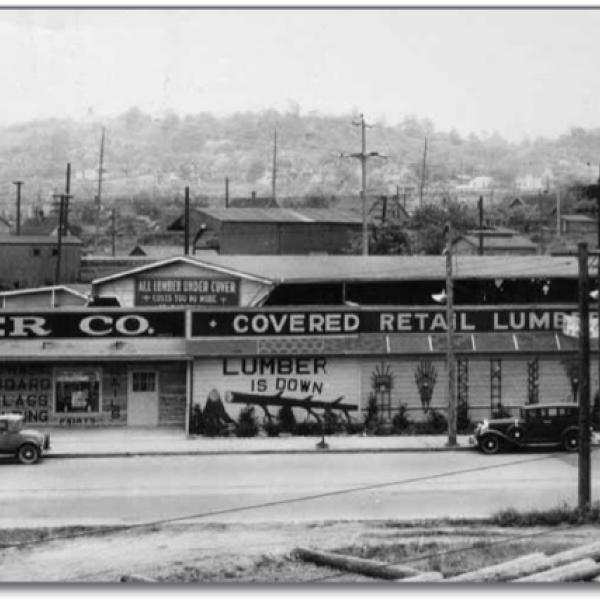
Model Lumber and Hardware Co.
Tacoma, Wa
For the first nine years in North America young Morris Kleiner worked for his Uncle in Calgary. He had come from Poland through Montreal where he stayed briefly before heading west. There he learned the retail lumber business very well. He worked hard, learned English, attended business college, became foreman and finally took charge of the shipping end of the business. Then he began traveling to small towns in Western Canada opening retail lumber yards for his uncle. This soon brought him to Bellingham and Tacoma searching for lumber inventory. In those years, Tacoma was gaining the title of “lumber capital of the world”.
Making friends easily, Morris was well-liked by the owners of the St. Paul and Tacoma Lumber Co. in Tacoma who saw that he had a future in the lumber business. In 1914 they sold him a wood yard that he paid for in monthly installments. Calling it the Liberty Lumber Co., he bought two teams of horses and wagons and he and an employee delivered wood and lumber to homes inTacoma’s South end. He soon owned a couple of trucks and by 1916 he was carrying over $35,000 of inventory which in 2009 dollars was probably well over $200,000! This was 1916, only nine years since leaving Poland, and Morris at 27 owned a business employing six people. And in the next few years he would expand in the region.
In October 1919, Morris married Pauline Weinfield from Montreal. They were married for 66 years until his death in 1985. Pauline was always an important member of the business planning. The first couple of years married, they lived at the Liberty Lumber Co. He told his daughter, Malca: “We had an apartment on top and the office next, and the four horses on the bottom floor. The lumber yard was attached.”
In 1929, Morris opened the Model Lumber and Hardware Co. that was to remain in business until 1986. It was a very successful business and gave Morris an opportunity to innovate. Morris’ son Herman became part of the business in 1946 after returning from the war. Morris became “Mr. Model, Sr.”, Herman became “Mr. Model, Jr.” In the early 1970s, Herman’s son Greg joined his dad and grandfather at the Model, and he became “Mr. Model Jr., Jr.”
Malca has set the tone for the ideal way to save a family’s history. She became an oral historian and in 1974 she did a series of interviews with Morris that resulted in a wonderfully crafted 150 page memoir called Recollections of Morris Kleiner. Some of the material in this story is taken from Malca’s book about her father.
Story from his daughter, Malca
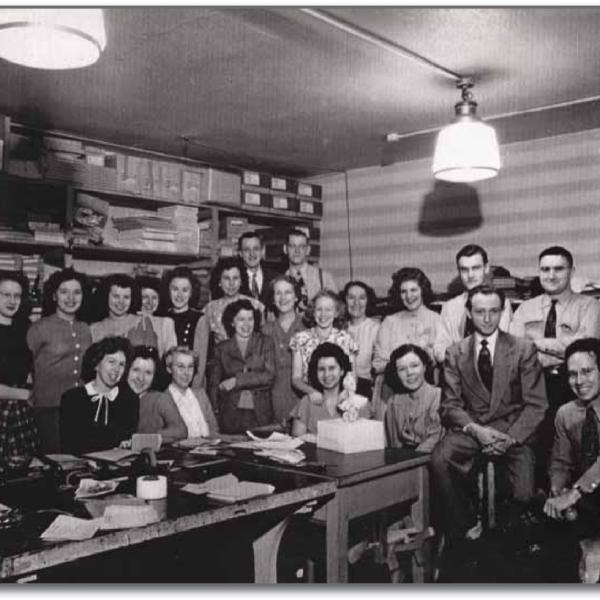
Morley Studios
Tacoma, Wa
Morley Brotman, son of Samuel Brotman, was born in 1907. He became a prominent businessman and civic leader in Tacoma. He owned a photography business and was the official photographer at the Seattle World’s Fair in 1962 and extremely active in all of the World’s Fairs from then until 1980 when he died.
Morley was an avid sports enthusiast and involved in civic causes, including the building of Cheney Stadium and the renovation of Stadium Bowl. He was the prime mover in the many campaigns to build a domed stadium in Tacoma.
He was a two-time President of the Tacoma Athletic Commission and Vice President and Director of Baseball Tacoma. Long a fan of boxing, Morley tried to promote the first Muhammed Ali versus Joe Frazier title fight in Washington State. When he was unable to obtain a license for Ali due to Ali’s refusal to serve in the military during the Vietnam era, Morley and the boxers worked to stage the fight on a Boeing 747 flying across America, without the need for a state’s license. It nearly happened and his determination gained him the close friendship of both Ali and Smokin’ Joe.
Story from family and a memorial tribute.
Morris Cohen the Cleaner
The year was 1914 when Morris Cohen, age 14, sailed from Patras, Greece on the S.S. Kaiser Franz Josef to New York’s Ellis Island, then by train to Seattle with his aunt Leah Alhadeff. Morris left behind his mother, father, three sisters and one brother. During his youth in Rhodes he learned tailoring from his father.
Morris’ early years in America found him doing what he knew best, that being tailoring. A few years later he decided to go into the dry cleaning business. Morris’ cleaning shops were one–man operations. He did the pressing, tailoring, repairs and alterations.
In the 1940s-‘50s he owned Hawthorne Cleaners, located near 55th and Phinney. It was extremely small in size, approximately 500 square feet.
In 1954 Morris left Hawthorne Cleaners behind and purchased a well-established cleaning shop in the Mount Baker district, named Elaine Marie Cleaners, it was three times larger. The customers at Elaine Marie Cleaners were accustomed to home deliveries. The cleaning shop became a family affair where wife Victoria, daughter Muriel and son Albert worked part-time doing over the counter work and home deliveries.
Every person has three names: one his father and mother gave him, one others call him, and one he acquires himself.
Morris was well known in the Jewish community, especially in the Sephardic Jewish Community. His work was known for its quality. If a hole existed in a pants pocket, he sewed it. If a hem needed a stitch or two, he did it. Customers did not have to make special requests because they knew Morris would handle it. Also, Morris did charitable work for his Ezra Bessaroth synagogue. He regularly took care of cleaning needs of the Rabbi, the choir robes and other cleaning needs associated with the interior decor of the synagogue.
Morris was known as a gentle and kind man. This made it especially difficult to understand why he was robbed and beaten by thugs for a few dollars. Being a sole proprietor made him vulnerable to such attacks.
During the 1968 demonstrations, the cleaning shop was fire bombed and all contents of the shop were lost. Morris cried that night not for himself or the shop, but for the customers whose clothes were lost. Elaine Marie Cleaners was rebuilt and went on for a few more years.
Years after Morris Cohen passed away, people would say that he was a kind and caring man. That’s the kind of success you just can’t buy.
(Ecclesiastes Rabbah 7:13)
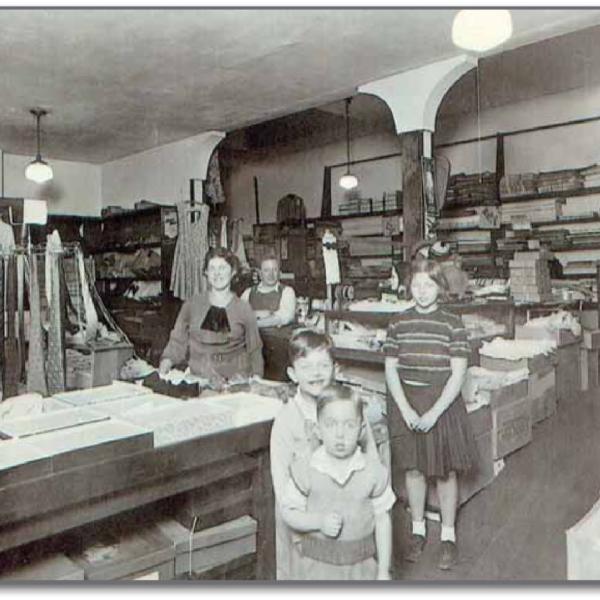
Mount Baker Variety
2519 Jackson Street
Moshe Schain, born in Vitebsk, Russia, opened up the Mount Baker Variety store at 2519 Jackson Street in 1924. It was a dry goods store, carrying clothing, shoes and household items. He and his wife Ada operated the store until 1946 when it was moved to a larger building at 2409 Jackson Street. He closed in 1968 due to the racial tensions following Martin Luther King’s assassination, after having served the community for over 45 years.
The oldest son, Norman, learned the watch-making trade at Edison Technical School after his return from military service following World War II. Norm set up a “bench” in the store to repair watches, and stocked and sold the then popular Benrus brand watches.
When they were younger, the daughters Belle and Sylvia became adept at making artificial flowers that were sold in the store (with materials from the store next door).
The Christmas Eve Heist Attempt (1949) Moshe and Ada were in the store, along with Belle, Norman and Sid, fielding the last minute Christmas rush. A young black man, Johnny Lee Dean, walked in, and when Moshe asked to help him, produced an automatic and demanded “give me your money.” Moshe offered him the alternative of going to hell. Johnny responded by firing a shot into the floor at Moshe’s feet, saying, “I’m not kidding.”
Norm was up front, and Sid, to the rear of the robber, picked up a metal toy truck hitting Johnny on the back of his neck. Norm grabbed for the gun and tossed it to the rear. Belle tried to restrain him, but he bit her on the wrist. Johnny headed for the front door, but Norm reached it first, locking the bolt. During the ensuing struggle, Johnny pulled the heavy brass door handle off the door. Norm picked it up and started beating him on the head with it. Sid tackled him, and the now groggy Johnny was dragged back and rolled over on his back. Sid had him by one leg, with his left foot firmly on his crotch, with Moshe sitting on Johnny’s chest, pounding his head into the wooden floor. Belle had called the police who then arrived.
There were two other robbery attempts. In one, Moshe alone defeated a would-be robber. In the second, Norm had followed a trail of blood from a burglar’s cut hand (from when he had broken a store window), to his home where he was arrested.
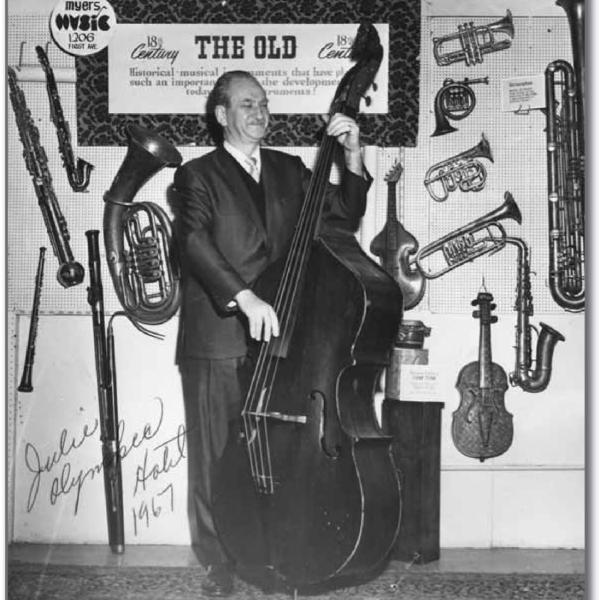
Myers Music
st 1206 1 Avenue
My father Julius “Moscovici” Myers arrived in the U.S. from Romania in 1922 at the age of 16, and settled with a cousin in Toppenish, Wa. Julius already knew five European languages, but English was a major challenge. He went to high school in Toppenish but knew that if he was going to find any Jewish culture he would have to move to Seattle. In this growing town he met the love of his life, Florence. They married and Julius borrowed $300 from Wolfe Warshal, his fatherin-law, so he could open a store on 1st Avenue. It was originally a pawn shop, but later became Myers Music.
Julius Myers inspired a history of musical legends. Dubbed the “Mayor of First Avenue,” he knew everyone up and down the street. During the Depression, dad’s love of music combated the feeling of gloom that was hanging over the country. Arnie Robbins and Lou Lavinthal both worked at the store. As soon as I learned to count, I worked there, too. From age three, all of us children went to work stringing tags for the inventory. My sister Deana was the musical one, and Gordy also played. I was terrible at the accordion, but when a demonstration was needed, we all did what was necessary. Dad could pick up and play any instrument, but his favorite was the mandolin.
Over the years an array of professionals and amateurs wandered into the store looking to learn and benefit from the experience of “Mr. Music.” When Fred Waring brought his Pennsylvanians to town, Myers Music was where he came to borrow instruments. Quincy Jones bought his first trumpet as a small boy at Myers Music. Jimi Hendrix took home his first guitar from the store. As Emmett Watson wrote in the Seattle Times when the store closed in 1984, Myers Music “became nationally famous as a center where you could find anything that produces notes.”
Story from Esther Druxman with Gordon Myers
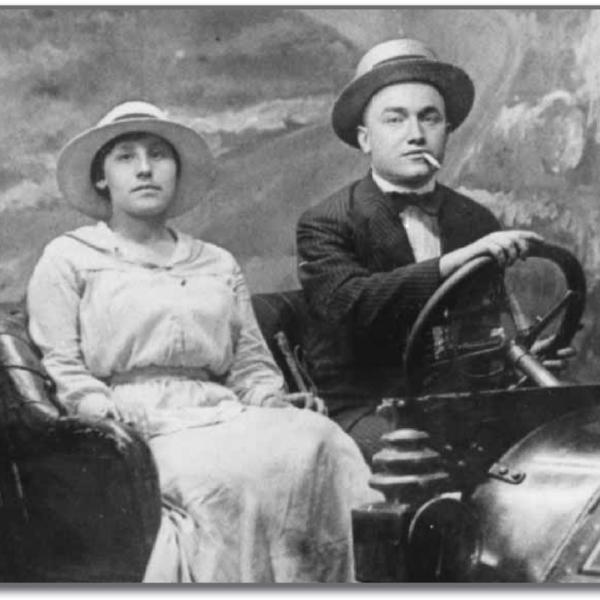
N. Wendrow Manufacturing Jeweler
Everett, Wa
Nathaniel Wendrow, an apprentice diamond setter, left Russia for the United States around 1913. He settled in New York and found work in his field in the New York diamond district. Ethel Sublitsky, an apprentice seamstress from the same Russian town as Nathaniel, had also immigrated to New York, and then to Seattle, where her sister was married to Abe Kotkins. She worked in Seattle until around 1914, when she returned to New York. In New York, she was recognized as an expert seamstress, and worked in the highly skilled position of ladies’ silk shirt finisher. Nathaniel and Ethel met again in New York, where they were married in 1917, and had two children, Lucille and Bernard.
Around 1921, Ethel’s Seattle relatives contacted Nathaniel to let him know that there was an opening for a diamond setter at Mayer Brothers Jewelers. Nathaniel moved to Seattle alone to see what the job and the city were like, and immediately fell in love with the Pacific Northwest. He was so taken with the area that he never went back to New York—his telephoned instructions to Ethel were to pack up and bring the kids, which she did, spending four days traveling by train with two small children and nobody to help keep an eye on them except the very friendly and accommodating train crew.
Nathaniel worked for Mayer Brothers until around 1927, when he bought an existing business in Everett, and established N. Wendrow Manufacturing Jeweler. The business provided retail jewelers (and some walk-in customers) with services such as setting stones, sizing rings and repairing jewelry. They also strung beads, but Nathaniel felt that this aspect of the trade was somewhat beneath him, so he delegated the bead stringing duties to Ethel. The family lived in Everett, but maintained ties with the Seattle community, and moved back when Lucy graduated from high school in the 1930s. Mr. Wendrow then commuted to Everett until 1948, when he and Ethel sold the business and retired in Seattle.
Story from Lucy Wendrow Friedman and Marcie Stone
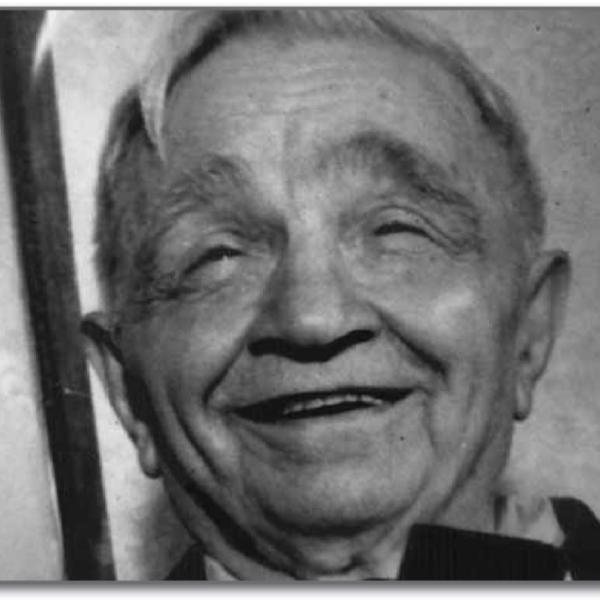
Northwest Poultry
Grandpa Pinch was a butcher in Odessa where the family home was behind the butcher shop. He was a learned man and knew how to speak English. Grandma Pinch, Nina, helped out in the butcher shop. After the butcher shop he opened a French pastry shop and was later joined by a pharmacist.
My mother, Lil, remembered being hidden in the hoyft (loft) during a pogrom and that her parents “paid gentiles to protect the family.” In 1905, Odessa experienced a horrific pogrom— the Jewish grocery store next door was “smashed to smithereens.” In 1906, our family emigrated. With the help of L. Gross, a brother-in-law already living in Seattle, Grandpa Joe, his wife Nina, and their (then) five children left Russia with Nina’s parents and her brother, arriving in the United States on the first night of Passover.
In Seattle Grandpa Pinch used his skills as a butcher to begin his own business on 17th and Yesler—that included take out chickens, turkeys and delicatessen type food. Over the years he had several other businesses as well, including a taxi cab business that went from Seattle to Tacoma with stops in between.
I particularly remember that Grandpa had a poultry shop on 12th Avenue between Terrace & Alder, on the west side of the street. My twin brother Johnny worked there when he was 12 or 13 years old. Grandpa kept the chickens in coops. He brought in little chicks, fed them, and raised them. At some point in the process, the chickens were hung in a row by their feet. It was Johnny’s job to go down the row of live chickens and cut their throats.
On Fridays Grandpa Pinch would bring in a Rabbi to make sure the chickens were kosher for use on the weekend. Grandpa retired in about 1945.
Story from Jerry and Johnny Cohn, and of their mother, Lil Cohn, from a 1982 interview
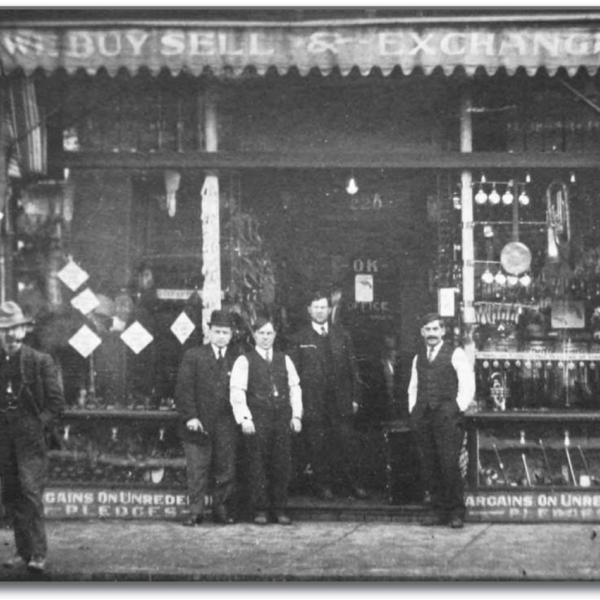
OK Loan Office / Inland Loan Office
Spokane, Wa
I n May, 1899, Marku Schoss stepped onto Ellis Island completing his trip from Roumania. His first destination was Helena, Montana, where his brother Joseph Soss was building the state capitol building. Mark traveled back to New York and took English lessons and while in night school met his bride to be, Jennie Abrahams.
After the birth of their first child, Louis, in 1904, Mark set out for the West again, this time with a trunk of clothing. Exactly why he stopped in Spokane is not known. He found a location to sell these clothes and continued to buy and sell second hand clothing. The first store front he opened was the OK Loan Office at 220 Main.
In the early 1900s Spokane was a very busy town. The silver mines were active in northern Idaho, the local electric company was building dams on the Spokane River, and Spokane was the railroad center for the inland northwest. Also, Spokane was rebuilding from the 1889 fire that destroyed most of the wooden structures in the city.
Soon Jennie and Louis, accompanied by her brother, David Abrams, traveled from NY to Spokane to join her husband. Mark was already successful in the “second hand” clothing business. He owned a home at 5th and Walnut.
By 1918 Mark was able to purchase the Bodie Block, a red brick building, built in 1889 after the fire. The name of the building was changed to the Mark Soss Block at 417 Main. His business name became the Inland Loan Office and his inventory became more diverse including men’s clothing, Indian wear, knives, jewelry, and other interesting items. Eventually it became a pawn store too. Above the store, the Persson Hotel occupied the top two floors which in 1943 became the Ardis Apartments.
Because of his success, Mark was able to bring other family members to Spokane as well as Jennie’s parents and siblings. Mark was interested in new inventions and invested in some. He also owned property on Sprague Avenue between Lincoln and Monroe.
Following World War II, Mark sent money to relatives still living in Romania. There is no confirmation that the money was received or of the fate of those people. After the passing of Mark and Jennie, the building was bought and sold a few times and eventually was renamed the “1889 Building”.
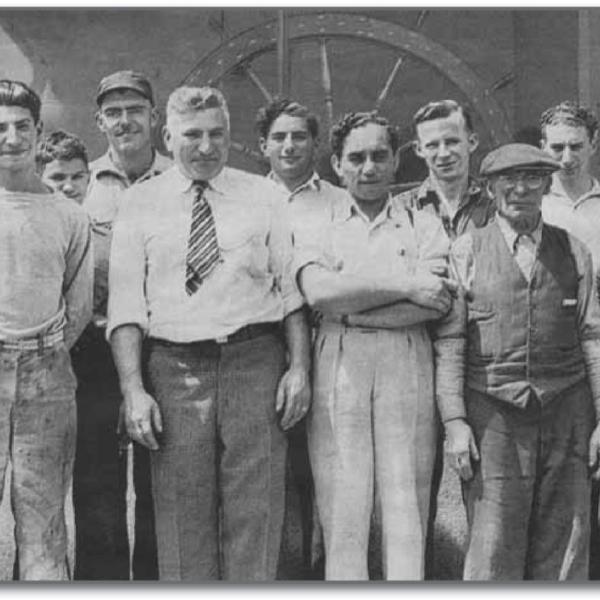
Olympia Supply Co.
Olympia, Wa
You’d never know it by its popular red awning, but the True Value Hardware store at 204 Pear Street NE in Olympia, also known as Olympia Supply Company, was one of the earliest businesses of its kind in that community.
The business, founded in 1903 by Earl Bean, was originally called Olympia Junk Company. It underwent several changes during its early years, but the most significant was when Earl’s three sons, Percy, Milton, and Ben joined him in the operation. It was the heyday of logging, so as an industrial logging and sawmill supplier it remained a steadfast “partner” to the myriad of mills in the area which were operating 24 hours a day. They even let their bigger customers have keys to the store in order to maintain their successful relationships. These customers wrote up their own bills and left them on the counter to be processed the next morning by the store staff.
As the economy was on its usual roller coaster, Olympia Junk Company salvaged equipment from some of the mills which could not survive the Great Depression. Earl’s motto, “We have it,” is still seen on the walls of the present day store.
Currently operated by the third generation, Jeff Bean, Earl’s grandson, the store is now a mixture of retail and industrial using the True Value name to market to the masses. What was once a 20% walk-in business and 80% commercial is now 60% walk-in. It’s a sign of the times, but the Bean family has learned how to cater to the Olympia community.
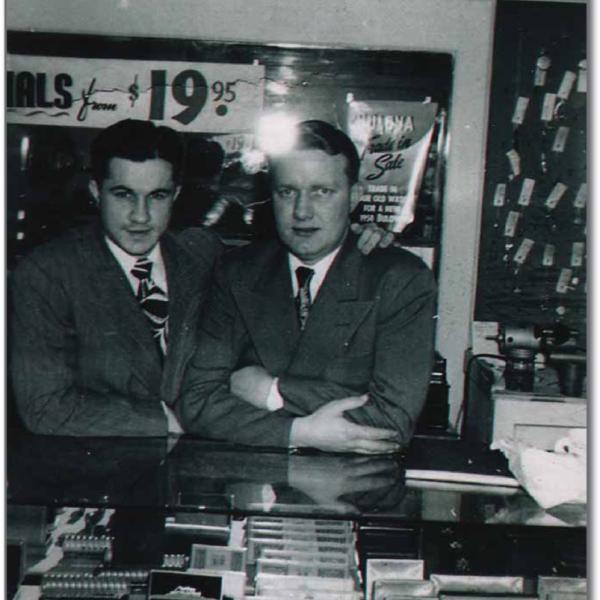
Ovadia Jewelers
Mike Ovadia’s business exemplified many post-war businesses in Seattle. There was more to business than just selling something to someone. Mike bought the store from Sam Caplan in 1948 and quickly personalized it to meet the needs of the day.
On any given day you could walk into Mike Ovadia Jewelers to borrow money for bus fair, obtain honest advice about any particular problem or purchase a beautiful piece of jewelry at a fair price.
Mike, along with watchmaker Carl Johnson, worked together for 40 years. The highlight of their careers was working the 1962 Seattle World’s Fair. Mike took a chance early on, purchasing souvenirs when they were first available. That became the focus of his business for three years following the Fair’s end.
Mike used two types of advertising to draw people into his store. He relied on his own personality and creativity to get the word out, proving that it wasn’t the amount of money you spent on advertising that guaranteed the ultimate results.
His reputation spread by word of mouth in the Jewish community and by the employees of the surrounding stores, including Frederick & Nelson. Mike’s other advertising method was the lucky penny. He and Carl would carefully glue two pennies together, back to back, to create a two headed penny which entitled the customer to a discount on any purchase of jewelry or watch repair.
The store closed in 1986 to make way for the upscale Westlake Center that replaced many small but long-term businesses, all in the name of progress. It’s the ultimate truism that “they don’t make businesses like Mike Ovadia’s any more.”
Story from Estelle Ovadia
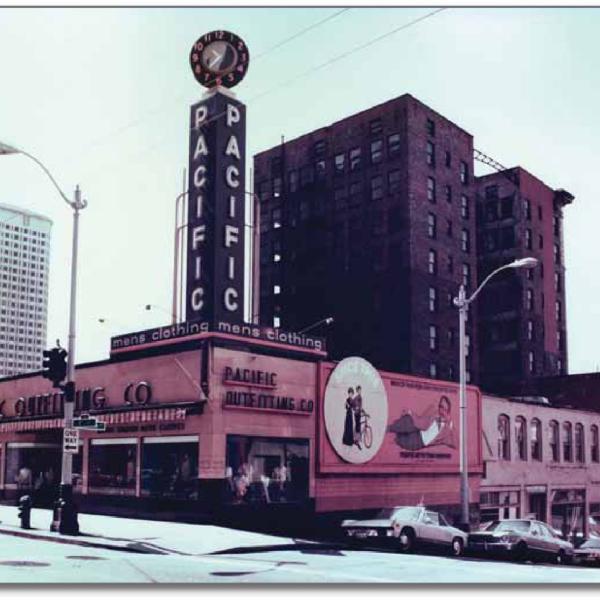
Pacific Big & Tall
Pacific Big and Tall Shop, owned by Herb Lipman and Buck Myers, had its beginnings in 1964 on the balcony of Pacific Outfitting Company with the slogan “Where Credit Makes it Easy To Be Well Dressed.”
The store that served big and tall people has a long history. Pacific Big and Tall evolved from the growing success of the Eastern Outfitting Company, founded by Alfred Shemanski. The Shemanski family developed a chain of stores up and down the coast, known as Eastern-Columbia-Pacific Outfitting. Over an 80-year period, with changing world events and astute business decisions (such as offering credit), the history of Pacific Big and Tall began with the bedspreads and curtains that Shemanski sold door to door in the 1890s, and ended with a store catering to large men that sold pants up to size 68. The partnership of Buck and Herb proved to be most successful, and the business prospered. The direction and merchandising concept of the store was adapted to the changing conditions in the downtown area, and the staid conservative approach that had been successful in the past was blended with a fashion image required to do business in the present.
In 1964 Buck and Herb began to realize that the hard-to-find larger sizes were the first to sell.
The store had always carried some of these sizes, but their full potential was not realized. Encouraged by reports from other areas of the country about Big and Tall stores and departments, the Pacific Outfitting balcony was enlarged and remodeled, and a Big and Tall Department was inaugurated.
The balcony shop soon dominated sales and quickly became a problem because of lack of space. So, in 1970 they leased a store across the street and moved the Big and Tall Department into its own store with its own separate identity.
Pacific Big and Tall carried sizes that began where sizes at regular stores usually end. Dress shirts in “Bigs” start at 17 ½ and go to 22. “Talls” are available in sizes 15 to 18 ½ with sleeve lengths of 36, 37, and 38. Suits and sports coats are available in sizes to 60 in regulars, longs, extra longs, and stouts.
How many people would think of shopping at a specialized store when purchasing a necktie? But consider where the regular tie would end if worn by a 6-foot-7inch man with a larger than average neck. (Seattle Times, February 11, 1981)
From The History of Pacific Outfitting Company by Herb Lipman
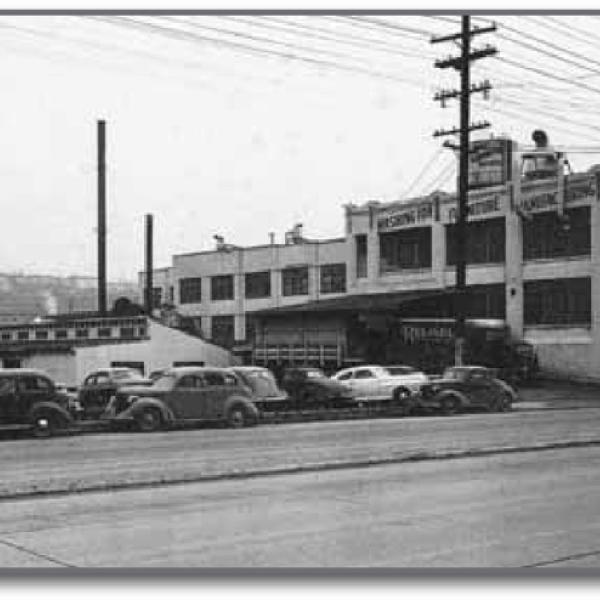
Pacific Coast Feather Company
The Pacific Coast Feather Company is the nation’s leader in down and feather bedding. Widely recognized for its exceptional commitment to quality, the company has been in business for nearly 120 years. Founded in 1884 by Joseph Hanauer as The Cannstatter Bed Feather Company of Stuttgart, Germany, the company relocated to Seattle in 1939. Fourth Avenue South building as it looked in the 1940s The company also has numerous production and storage facilities in North America. Company products are marketed through virtually all national retailers, such as Macy’s, Bed Bath and Beyond, JC Penney, and Costco, among other leading department stores, and are consistently rated as the highest quality brand. Annual sales currently total in excess of $300 million, with over 2000 employees nationwide. The company’s corporate headquarters are located in Seattle. The 2807 Third Avenue building was the Seattle home of Pacific Coast Feather until 1949, when room for expansion was needed. The leadership of Pacific Coast Feather presently includes Chairman Nicolas Hanauer, a greatgrandson of the firm’s founder, CEO and President Eric Moen, and CFO Joseph Crawford. In that year, Fritz and Sigmund Hanauer, Joseph Hanauer’s sons, acquired a Seattle firm that was a local supplier of down and feather products. Under their guidance, the Pacific Coast Feather Company was transformed into a regional brand. By 1940, the company had introduced down pillows; in the 1950s it partnered with Eddie Bauer to produce down sleeping bags. In the 1960s, Pacific Coast Feather contributed to Seattle’s growing reputation for the manufacture of down garments and sleeping bags. From the 1970s through the 1990s, under the leadership of Joseph’s grandson, Jerry Hanauer, Pacific Coast Feather became the premier brand in down comforters, pillows, and featherbeds.
In that year, Fritz and Sigmund Hanauer, Joseph Hanauer’s sons, acquired a Seattle firm that was a local supplier of down and feather products. Under their guidance, the Pacific Coast Feather Company was transformed into a regional brand. By 1940, the company had introduced down pillows; in the 1950s it partnered with Eddie Bauer to produce down sleeping bags. In the 1960s, Pacific Coast Feather contributed to Seattle’s growing reputation for the manufacture of down garments and sleeping bags. From the 1970s through the 1990s, under the leadership of Joseph’s grandson, Jerry Hanauer, Pacific Coast Feather became the premier brand in down comforters, pillows, and featherbeds. The Pacific Coast Feather Company’s business is international in scope. It imports the finest feathers and down from Europe and China. Recently the company has diversified into the international hospitality industry, for which it now has three offices in China and an office in London.
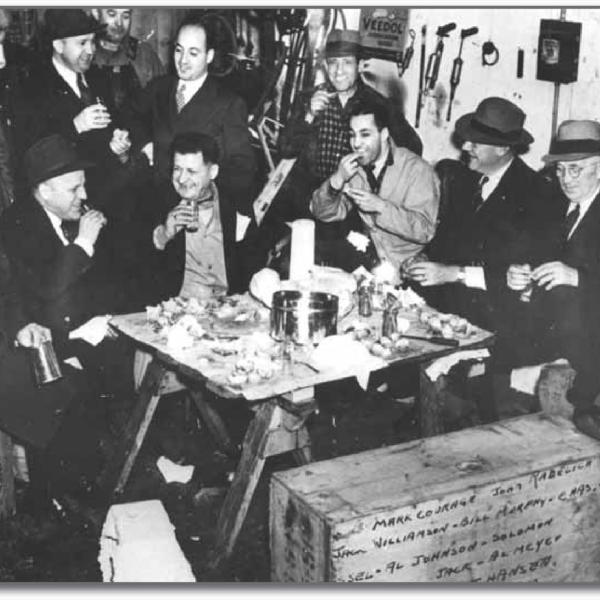
Pacific Fish
I n the early 1900s Grandpa Nessim Alhadeff started his first fish market next to the Palace Meat Market, and that is where the name Palace Fish came from. There were no supermarkets then and little refrigeration. Palace sold to restaurants, and on Thursdays and Fridays to corner grocery stores whose fish customers were mostly Catholics.
About 1930, Nessim’s oldest son Charlie started Whiz Fish Products Co., buying directly from fishermen, and unloading boats of smelt, oysters, salmon, halibut, and bottom fish. Both Whiz and Palace continued to grow, and at the end of WWII, Nessim and his brothers were able to retire.
Youngest son Ike returned to Seattle following his internment in a German prison camp, and the three brothers, Charlie, Jack and Ike, made some changes. Palace and Whiz were sold, and the family office was moved across the street to their cold storage facilities. The retail store at Colman Dock was now called Pacific Fish, and two of Nessim’s younger brothers, Albert and George, took it over. Charlie, Jack and Ike started nationwide distribution of salmon and halibut, and created buying stations at seaport towns throughout the state of Washington. They operated salmon canneries in Puget Sound and Alaska.
In 1962, the three brothers sold everything except the original Pacific Fish retail store to the New England Fish Company. Ike retired to manage family investments, and Charlie and Jack became executives at New England Fish. In 1965 Charlie’s oldest son Jerry took over the management of Pacific Fish and consolidated with seven employees and two uncles. In 1970 Pacific merged with competitor Waterfront Fish (Calvo family), and shortly thereafter merged with West Coast Seafoods (Irving Hirsch, an original Palace employee).
In 1982, Booth Fisheries, a division of Sara Lee Corporation, acquired Pacific Fish and its 150 employees from the Alhadeffs. Jerry stayed to manage the operation for four more years, long enough to demonstrate the wisdom of doing business the small business way – quickly paid bills and no sales pitches. Pacific Fish is now part of Pacific Seafoods, a family owned and operated distributorship out of Portland, Oregon, with many branches and a few Pacific employees who haven’t retired and have continued the traditions instituted by the Alhadeff ’s from the very beginnings of the company.
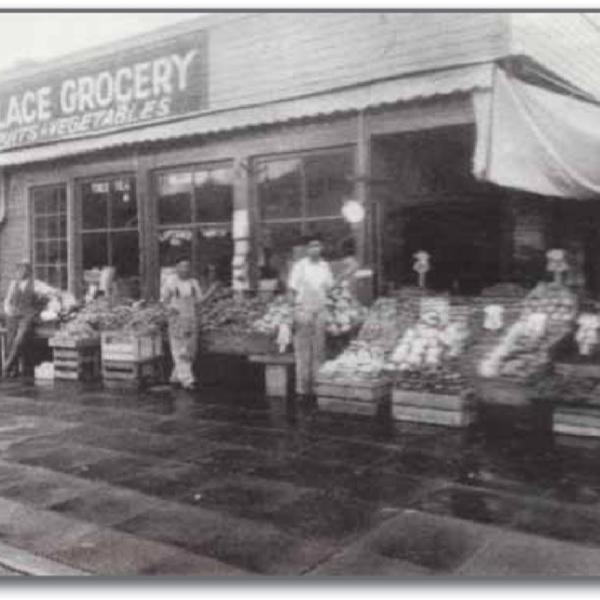
Palace Grocery
th 14 Avenue & East Spruce Street
The Palace Grocery included an “open air” fruit and produce stand built by Israel Fis and Bohor Halfon, a Sephardic carpenter. The stand connected to the Fis family home on the southwest corner of 14th Avenue and East Spruce Street. Israel Fis, from the Island of Rhodes, immigrated to New York in 1908. In 1912 he sent for Esther Cohen and they married in New York. They came to Seattle with their 3 month old daughter Molly (Hara) in 1914 and purchased the house and lot in 1922.
Israel first worked for a Sephardic merchant selling fruit and produce at the Pike Place Market. He began his own grocery business in their first family home at 1307 East Terrace (now the site of the Juvenile Court and Youth Service Center).
The entire Sephardic community patronized the Palace Grocery which became an informal gathering place. Mr. Fis provided free delivery service, and many people would wait until the delivery truck was leaving, catching a free ride home with their purchases. He was the first Sephardic merchant to import ethnic foods common to his community. He extended credit to his customers and generously assisted needy community members.
Active members of Ezra Bessaroth, Mr. and Mrs. Fis, and their family, Solomon, born 1916; David, born 1918; and Becky (Sidis), born 1922, offered hospitality to the congregation on Shabbat, and various holidays, including hosting Kiddush on Succos in a large and beautifully decorated Succah.
Born in 1889, Mr. Fis died in 1933 at the age of 44. His family continued his traditions several more years.
Stories from Becky Sidis and Seattle Sephardic Heritage Committee Newsletter, June 1988
Perry’s Furniture and Sleepers
4747 California Avenue
I n 1954 Perry Frumkin began his furniture career at Grand Furniture in downtown Seattle. Ten years later, he decided to strike out on his own and established Perry’s Furniture in West Seattle, right across from the Post Office. In 1966, a larger location, in the heart of the West Seattle Junction, became available when the Wigwam store moved out. Perry insisted on large display windows, and when the renovations were completed, he moved in. Perry loved the furniture business and was very active in the Junction Merchants’ Association, often hosting the executive board meetings in his store. Perry’s Furniture featured well-respected furniture from manufacturers such as La-Z-Boy, Broyhill and Magnuson. His secret to success was “selling good merchandise, pricing it right and taking care of customers”.
In the late 1980s, Perry hoped to retire, but his children were involved in careers and not interested in running a furniture store. At his daughter Ann’s wedding, he met Reuben Solon- sky, whose daughter and son-in-law were living in Spain, and hoped to move back to the Pacific Northwest and purchase a business. Neither of them had any retail experience. Still, both families were so enthusiastic about the idea of their taking over the store that they convinced Meryl and Carlos Alcabes to move to Seattle in 1991 and assume ownership of Perry’s Furniture sight unseen. They renamed the business Also Furniture and managed it as a general furniture store for nine years.
In 2000, they changed the focus of the store to specialize in sleeper sofas, and renamed it Sleepers In Seattle. They initiated a radio advertising campaign, featuring popular talk show hosts that attracted customers from all over Puget Sound. Meryl and Carlos still manage Sleepers In Seattle with the help of their son, Max, who has expanded the business nationwide. Sleepers In Seattle now ships sleeper sofas to all 50 states, while remaining a vital member of the West Seattle Junction’s retail core.
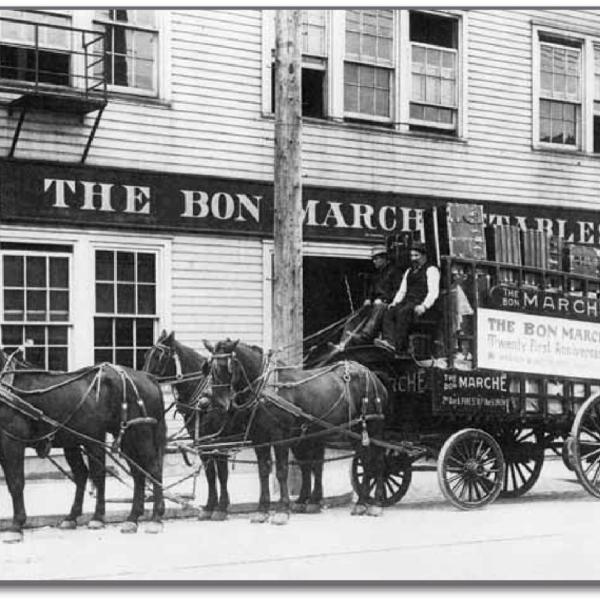
Peter Thomas & Co.
1320 East Main Street
Peter Thomas & Company, originally a blacksmith shop as well as a wagon and carriage builder, was the premier wagon and carriage builder in the early 20th century. The company had as many as 115 employees, many from the Jewish Community. In the beginning of the auto and truck era, it manufactured city trolleys, school busses, fire engines, early semi-trailers, logging equipment and the first Kenworth Truck Corporation’s cabs and frames. Peter Thomas and his son Samuel were true craftsmen. They had plants in Seattle, Tacoma, and San Leandro, California. They were in business from 1905 until 1959.
Among their clients were most of the merchants who used trucks, including the United Parcel Service (UPS), Frederick & Nelson, and The Bon Marche (currently Macy’s). They designed and built the first Bookmobile for the library sys- tem, Semi Trailers for the Boeing Company, and Trailers for all the major freight companies. They also produced Logging trailers for Weyerhauser, Simpson Timber, and all the major lumber companies. They produced school busses for the early school districts such as Black Diamond, Kent, and the surrounding areas. And they built early fire engines for Bothell, Kent, Spokane, Great Falls, Montana, and other communities.
Peter Thomas & Company worked with many pioneer Jewish families, including Schoenfeld’s Furniture and Schwabachers (Olympia Beer Distributors) to design and build delivery trucks. They also built canopies for many of the fish distributors, including the Alhadeff family, and they built trucks for many early Pike Place Market vendors.
Story from Herb Thomas and Natalie Malin
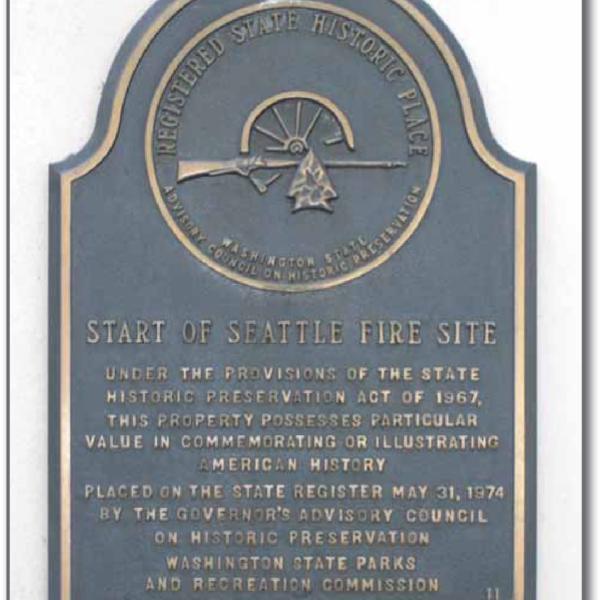
Pioneer Office Equipment
I n “old Seattle” Jewish businesses were aplenty in what we now call Pioneer Square. Those were the early days when all the Jewish pioneers struggled to make it as first generation immigrants to America. Seattle seemed to be a magnet for many and included were the brothers, Morris and Louis Pearl.
Luetta and Joanne, granddaughters of the Pearl brothers, have sketchy memories of their elders. It is believed that they owned a men’s clothing store in the 1880s on what is now 1st Avenue. In those days it was in the Pontius building at the corner of Front and Washington where, in 1889 in its basement, the Great Seattle Fire started which would decimate the young city. Of course the clothing store was no more. Rumor has it that they had several other locations, though, and persevered through what was to become a period of incredible growth in Seattle. Instead of being the end of many dreams, city fathers and business leaders quickly organized to re-establish Seattle which was to become the Emerald City, largest metropolis in the Pacific Northwest.
Luetta and Joanne were told that their grandfathers were responsible for bringing many of the Pearl relatives to Seattle from Lithuania, find- ing them employment and places to stay. And of course they had their own families, among the offspring being Jerry and Davie Pearl who owned Pioneer Office Equipment store on 1st and Cherry.
Pioneer was located in one of the buildings which resulted from the 1889 fire, a brick building not out of the ordinary with the exception of its basement. “After you came downstairs you went through a very wide and high brick archway that led to the downstairs rooms. This was the site of what is now the Old Seattle Underground and a part of a popular tour in Pioneer Square. It carried everything for the office and,” Luetta says, “Menashe Israel was in charge of the stationery department.”
Luetta said that “Orly, Paul and Marsha Solomon’s father owned a men’s store adjacent to Pioneer called The Hub. And across the street was a pawn shop owned by Ray Dias.”
Seattle’s Jewish community was indeed integrally involved in the city’s commerce and growth.
Story from Luetta Jermulowske and Joanne Wolfe Sobel
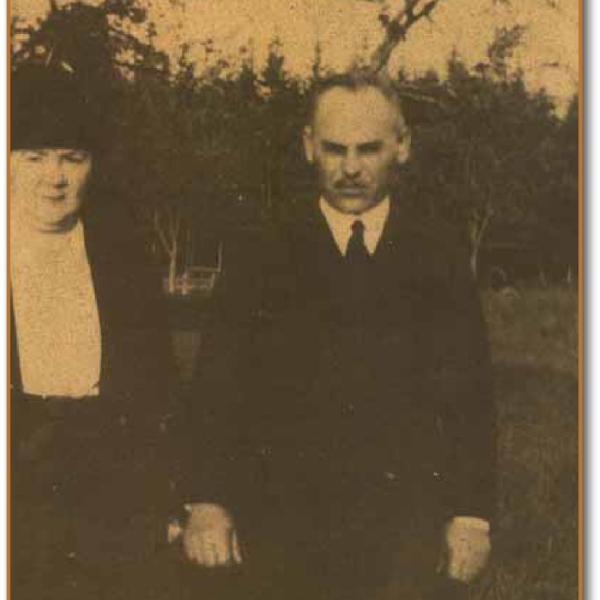
Prottas and Levitt Brothers
The hallmark of the Prottas and Levitt families may have been their very successful furniture store, founded in 1902 and lasting until 1966. But to members of the local Jewish community, Sol Prottas and then his sons, Samuel and George, were very active in community affairs, particularly education.
Sol Prottas was born in Russia in 1880 and came to America first to New York, then migrating to New London, Connecticut. Solomon attended schools in Russia and became quite interested in Jewish and Russian history. As a teacher he was employed in his native land, but also was able to parlay that knowledge in America and that may have served as the basis of his success in this country.
He arrived in Seattle in 1902 and immediately began teaching as well as acquiring the skills of a mohel. Quickly he turned his interests to commerce and initially founded a small, 10 x 20 foot used furniture store which doubled as the family’s residence for a time. He had married Jennie Levitt and became partners with her brothers in the store as it developed into the well-known Prottas and Levitt Brothers.
Many of Sol’s five children became involved in the store’s operation. Most prominent was Samuel Prottas who, with George Prottas, carried on their father’s interest in and dedication to Jewish communal affairs as well as operating the business successfully until it was sold in 1966. Much history of the Talmud Torah and of Bikur Cholim-Machzikay Hadath, as well as Seattle’s efforts and achievements for Zionism, can be attributed to this family.
Dorothy (Prottas) Lederman says “My earliest and fondest memories of going to my father’s (Samuel) store, Prottas and Levitt included coming downtown on the bus and going out to lunch with my dad. I also got to watch many Samuel Prottas of the Seattle parades from my Uncle Sam Levitt’s second story office. My grandmother, Jennie Prottas, used to sit in a nice chair and oversee the daily events. I still hear people say they bought their first sofa from Prottas and Levitt.”
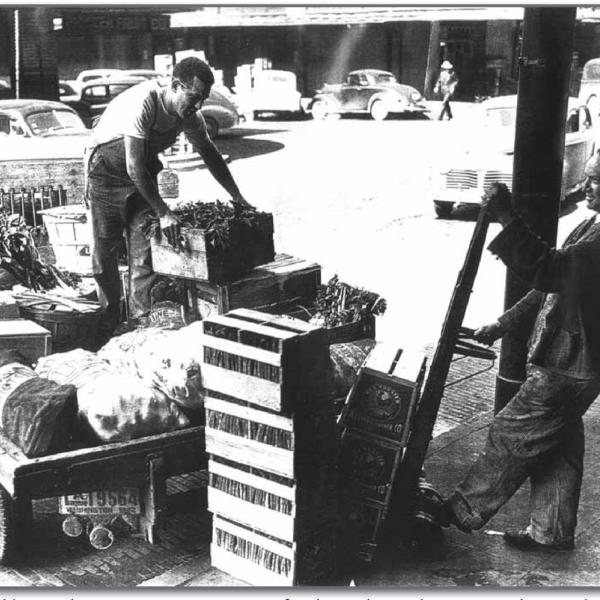
Publix Fruit and Produce Company
John Calderon arrived in Seattle in 1914. He, like many other young men, left his home in Monistier, Turkey in order to avoid conscription into the Turkish army. During WW1 he worked in the shipyards, and then became produce buyer for the Piggly-Wiggly and Skaggs chain stores.
In 1931, with limited capital, he opened his own fruit and vegetable market in the basement level of the McDowell Building on 3rd and Union, next to the Embassy Theater. His sons Vic and Jack helped out in the afternoons. Vic was responsible for contacting restaurants, and when they began to sell directly to those establishments, their small retail business grew to include a wholesale operation as well.
It was time to expand, and to move to a new location, but money was in short supply. John’s wife Mathilda provided the seed money for growth from her household allowance savings. They were soon on Produce Row on Western Avenue, and became a major restaurant supplier. The onetruck business which began on Union Street was on its way to becoming the 30-truck primary produce wholesaler in the city, selling to almost every big restaurant in town, as well as hotels, ships and even hospitals when it was sold to Sysco in 1983. During its peak years Publix trucks were a daily visitor to many of the eateries at the 1962 Seattle World’s Fair.
Before grandchildren arrived, Vic’s wife Lillian and Jack’s wife Rita worked in the office. Later, whenever extra help was needed, the two women returned to the business.
John set an example in the community. He was active in the Sephardic Bikur Holim synagogue, serving as its president in 1929, and he actually went door to door collecting money to secure the site at 20th and Fir. There were many Jewish employees at Publix, and young Jewish boys were hired in the summer to help with deliveries.
Until he died in 1967, John Calderon put in a daily appearance at the Publix warehouse in South Seattle. The man who had devoted his life to family, business and community finally found, at age 60, time to take up golf.
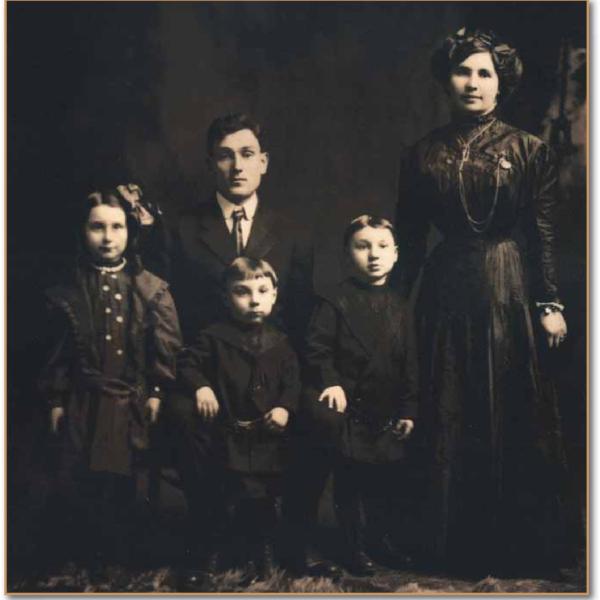
Puget Sound Manufacturing Company
Tacoma, Wa
Harris Warnick was recruited in 1907 from a position in the wood industry in Montreal by the Wheeler-Osgood Co. of Tacoma, at that time the largest door manufacturer in the world. W-O needed a knowledgeable woodworker to take a position in Portland with what was the first plywood manufacturer in the country. The need was to learn the process and apply it in manufacturing doors.
Harris had begun working as a nine-year- old apprentice cabinetmaker in a Russian shtetl near Kiev. He fled from the Czar and his army when he was seventeen. In the ten years until arriving in Tacoma, he divided his time between Glasgow and Montreal, married Fanny Weinstone and had three children, Betty, Jack, and Bob.
Harris brought both knowledge and experience that was instrumental in plant layout as well as designing new machinery to W-O. He was named superintendent of what became the nation’s second plywood plant, a position held for ten years. In 1920 he founded Puget Sound Manufacturing Company, and in the following years earned a reputation for honesty, integrity and quality.
He took great pride in the contributions he made to both the Jewish and the general communities. I remember as a young boy his conveying the importance and significance of the letter he showed me, signed by President Franklin D. Roosevelt as Honorary President of the Boy Scouts of America, thanking him for his efforts in establishing the local Boy Scout Council and being honored with the Silver Beaver Award, Scoutings’ highest honor for outstanding adult leadership.
Located at 1123 St. Paul Avenue, at the east end of the 11th Street Bridge, the company remained family owned until closing in 2007. The original 5,000 square feet expanded to over an acre, with ninety employees at its peak. Bob Warnick, Harris’ son, assumed the presidency in 1940, and Bob’s two sons, Al and Jack, became co-presidents in 1965. Jack remained in that position until closing.
Throughout its 87 years, Puget Sound Manufacturing Company furnished detail millwork to contractors and suppliers for commercial and residential builders throughout the country – principally in the Puget Sound area - as well as Canada, Alaska and Hawaii. Its products can be found in schools and colleges, hospitals and clinics, office buildings, hotels, restaurants, military installations, churches and synagogues, as well as single and multi-family housing.
Story from Jack Warnick
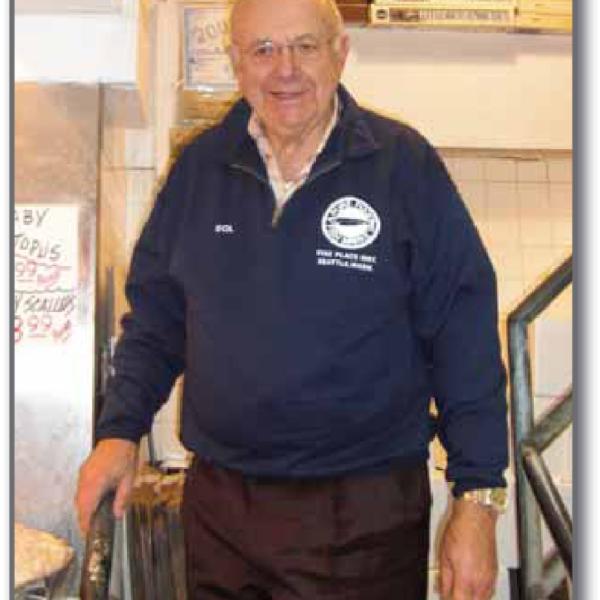
Pure Food Fish Market
Pike Place Market
When we think of historic Seattle, we are reminded of the iconic Pike Place Market where a whisper of nostalgic old time takes over as we take a step back in time. Walking down the long aisle of shops with the hustle and bustle of music, footsteps and shoppers whizzing around us, we wonder which store has been there the longest. That store is Pure Food Fish Market.
The year was 1911 when Jack Amon made a bold decision to move his family from Turkey to the states. Shortly after arriving in Seattle Jack opened up shop in the Pike Place Market with the goal of offering customers the finest seafood found in the sound.
Pure Food Fish Market became a staple to Seattle residents and as the business grew, Jack employed more and more help including his own son Sol who climbed on board in 1947. In 1959, Jack retired and Sol became the helm of operations taking on all responsibilities from selecting the day’s freshest catch to offer customers, opening up shop each day to managing his team.
Nowadays, Sol is known as the “Cod Father,” and was named King of the Market in 2003. The Pike Place Foundation believes Sol is as important an icon to the Pike Place Market as the Pike Place Market is to Seattle. The Pike Place Market has even GHVLJ Sol Amon QDWHG$SULODV6RO $PRQ'D\DQGHDFK\HDUDFHOHEUDWLRQWDNHV SODFH:LWKWKHRQVHWRIWKHZRUOGZLGHZHE 3XUH)RRG)LVK0DUNHW·VEXVLQHVVKDVVN\ URFNHWHG6ROQRZVHOOVPRUHVHDIRRGWKDQKLV IDWKHUHYHULPDJLQHGSRVVLEOH
7RWKLVGD\6ROFDQEHIRXQGDWKLVVKRSVHDWHG LQDWLQ\XSVWDLUVURRPQH[WWRDQRLV\UDGLD WRU ZKLFKKHFRQVLGHUVPXVLFWRKLVHDUV VLSSLQJFRIIHHDQGUHHOLQJLQPRUHDQGPRUH VDOHV7KHQH[WWLPH\RXVWRSE\3XUH)RRG )LVK0DUNHWEHVXUHWRVWRSLQDQGVD\KHOOR WR6RORURUGHUIURPWKHLUZHEVLWHZZZ)UHVK 6HDIRRGFRP
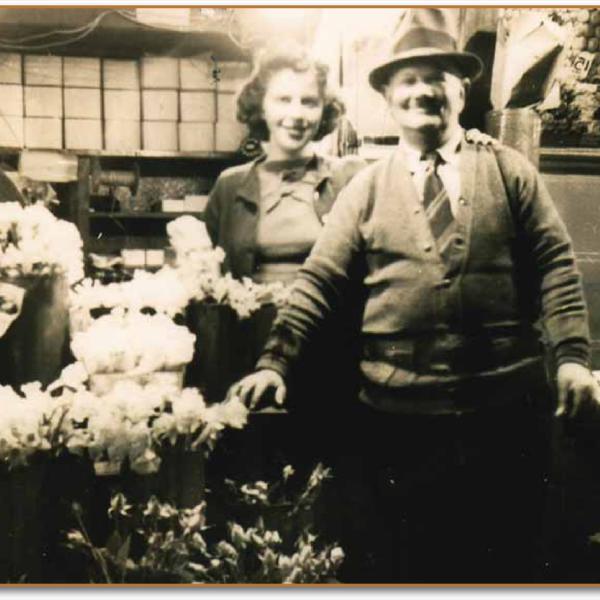
Queen City Market Florist
Like so many others, my father, Samuel Nahmias, came to this great country with hope on his mind and in his heart. Surely he’d find work. In Constantinople, he could always make a buck. But here he would encounter obstacles. He couldn’t read, write, or speak the language.
In the Twenties Papa had a tiny shop next to the Wintergarden Theater where he sold brightly colored waxed flowers. In the Thirties, he opened a shoeshine/hat blocking shop on Pine Street. Under hats I’d seen bottles of whiskey. He must have sold them because he never drank any. Out front a clapboard read: “Shoeshine 5¢ . . . one shoe.” After all, it was Depression time.
The mid-Thirties looked brighter. Papa opened a flower shop in the Queen City Market on 4th Avenue. As our country crept out from under the dark cloud of the Depression Papa, with a positive, optimistic attitude, and determination, built a thriving business. Weather permitting, he sat under the lamppost in front of the market calling out “Gardenia’s 25¢”, or “Daffodils 10¢ a dozen,” with his teasing grin and his 5¢ White Owl cigar at the ready. “Poody mamma,” he’d call to the ladies. “Hello, Fin Flicka,” to one who looked Scandinavian. Or a free bouquet to one who couldn’t afford it.
Wholesalers marveled at his smarts. After most florists had done their early morning buying, Papa sauntered in at about 9 o’clock. At each of the three wholesalers he’d make his grand entrance. Following lots of “Hi, Frenchy,” and laughs, business was in order. Off to the big box of flowers. “Johnny, how much box?” regarding all of the contents. A price was established! “Good. Deliver.” He sold fresh flowers – reasonably. Some florists sent him customers who couldn’t afford their prices. Papa sent them customers who wanted designer arrangements, or to send F.T.D. orders.
Saturday was a sixteen hour work day. His ten digit cash register might show an $8 to $12 take. He’d put the money into a corsage box and we’d hop a streetcar home at about midnight. The Forties were different. Same hours, $300 to $600 went into the corsage box, then home in a cab!
Business took a strong hold. Papa’s buying and selling style gained him a good reputation. His passion for work and his deep desire to succeed had been realized. He made it!
Story from daughter Margie Angel
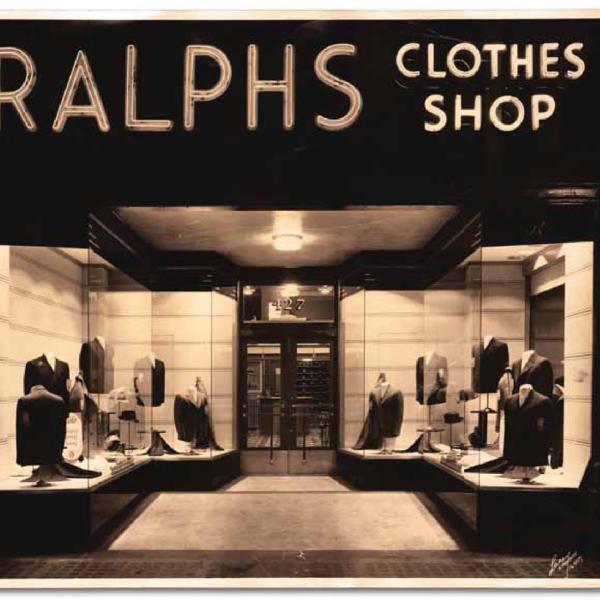
Ralph’s Clothes Shop
Spokane, Wa
My father, Ralph Mackoff, arrived in Minnesota from the Ukraine in 1900 after swimming a river, making it to Hamburg, and surviving steerage to Montreal. He took the train to mid Canada and walked into Minnesota.
His first job was news agent on the Great Northern Railroad where he learned to read while selling newspapers. He worked on many trains and took a liking to Spokane, Washington where a cousin had briefly lived. He first had quasi tailor shops in San Francisco and Nevada as a self taught tailor and presser, but when he married in St. Paul and moved to Spokane in 1911 he started a tailor shop.
Then he tried the mail order tire business, but eventually returned to the clothing business. He parlayed the tailor press shop into a men’s clothing store on Main Avenue in Spokane. But he always hankered for a Riverside Avenue business.
He advertised heavily and became known as “Two Pants Ralph.” Early in his career he included two pairs of pants with each suit and my mothers greatest embarrassment came when Dr. David Cowen, the state legislator, referred to her as “Mrs. Two Pants.” Eventually the business prospered and he did move to Riverside Avenue and later to the prime Paulson building location.
The store, in its last incarnation, was on the corner of Howard and Riverside. My dad had ups and downs and almost went under in 1937, then had little to sell during the war years. But all in all Ralph’s Clothes Shop prospered. Although never wealthy, he supported us all in fine style and saw me through my education. He retired when I was finally able to make a living and then worked as a salesman at the Crescent department store for a few years. I have always been grateful that my father was born before me as I am sure I could never have done what he did.
Story from Dr. Leslie Mackoff

Reiner’s
Aberdeen, Olympia and Tacoma, Wa
What today has evolved into Olympia & Tacoma’s South Sound Honda was founded as a jewelry business by Ed Reiner, who apprenticed as a watchmaker’s apprenticeship in Viteps Russia in the early 1900s, before immigrating with his mother, Goldie Shustarovich, to Chicago in 1910 where he worked in the jewelry trades.
Ed’s sister Anna Blom was in Salem, Ore, so they moved west and ended up in Portland where he open Reiner’s Jewelry in 1916. He prospered there and proudly drove the first car in their social circle. After World War I, he married Esther Freedman and moved to Aberdeen, Washington, in 1920.
Aberdeen was a booming lumber community. Many of the town merchants were Jewish, among them the Goldberg and Nudelman families had furniture stores, the Wolf, Weinstein and Gottschalk families had department & clothing stores, the Rosenkrantz, Levinson, Goldstein and Ringold families had scrap, steel and mill supply businesses, the Bensussans & Rodriques were in the fish business. Other early Aberdeen area Jewish families included Katz, Weiner, Metzkind, Osheroff, Fineson, Michaelson, Abrahamson, Martin, Bendetson, Bloch and others.
In the early years the town had three Jewish congregations, the German Jews met at the Elks Club, the Russians at the business college and the Sephardics at the Eagles! By 1929 they combined to build a synagogue.
Ed’s sister Anna also moved to Aberdeen where she opened the town’s first bookstore, later moving to Olympia and for many years ran the only bookstore in Olympia, Anna Blom’s Bookshop into her late 80s.
Through the Roaring 20s Ed was a prosperous jeweler. During the Depression he expanded to
Reiner’s Jewelry and Loan. After WWII he added sporting goods, selling hunting, fishing and camping gear.
Esther and Ed had three sons, Jacob, Marvin & Robert. Jacob died young, Robert became a rabbi (now retired in Cincinnati), and in 1950, Marvin, after naval service, and graduating from the University of Washington and the University of Chicago (MBA), came home to help in the business.
When Ed died in 1952, Marvin took over, changed the name to Reiner’s Sporting Goods and then became one of the first Honda motorcycles dealers in 1962, still in Aberdeen.
Through the years all of his children worked in the business, Cathy, Cynthia, Wendy and Jeff.
The girls moved on to other careers, Jeff came home from the UW to take over in 1983 and changed the focus of the business to strictly Honda motorcycle and watersport products.
In 1996 Jeff moved the business to Olympia’s Auto Mall and became the largest exclusively Honda motorcycle dealership in the Northwest. Today there are two stores, South Sound Honda in Olympia and South Bound Honda, in Lakewood near Tacoma.
Richlen’s Market
rd 23 Avenue & East Union Street
Sometimes it’s not a business that becomes our focus but rather a particular individual. In this case it’s Jack Richlen whose rich history has been written about over the years. Perhaps the most revealing words were from a clipping which Jack had in his scrapbook. Unfortunately there’s no attribution for these words but they are worth repeating:
“… Jack had had his own oil business as a 17-year-old collecting old crankcase oil [in Seattle’s Central District near Garfield High] after school. [Over his life] he had become a practitioner in the art of sausage making, he’d learned in the meat and grocery business. He had been an organizer and director of a bank in the community and he had become involved with real estate.”
And all this before he opened a new “concept”: A self-service gas station in conjunction with a “super-mini,” a complete store offering fresh meats, produce and fast foods, catering once again to everyone’s needs, not overlooking the special desires of his customers in the immediate vicinity. Thus began his most famous enterprise, Richlen’s Market at the corner of 23rd and Union. It was to be a cornerstone for the neighborhood for many years.
His basic work ethic came early, Jack recalls. “I got a job at McIntosh’s meat market as a clean-up boy.
I went in early to learn how to pickle meats – corned beef, tongues, spare ribs. Later I went down even earlier to learn how to make the brine to prepare meats to put in the pickle barrels.” He convinced his boss to let him put special spices in the brisket to make “kosher-style corned beef ”, a recipe he learned from his mother, Reva Richlen. His dad, Ben Richlen lent him $7,000 in 1945 to buy a building where he opened his first store.
All of Jack Richlen’s stores were “Mom and Pop” style. His beloved wife, Pearl, said when they got engaged “Jack, if you give me a diamond I’ll give you a Pearl.” His beloved Pearl, who passed away recently, was at his side more often than not. As Jack says, “Pearl was the Boss. I was just the manager.” We’d guess that if you looked up “mom and pop groceries” in the dictionary the definition would start with “Richlen’s Grocery, Seattle, Washington.” What a legacy!
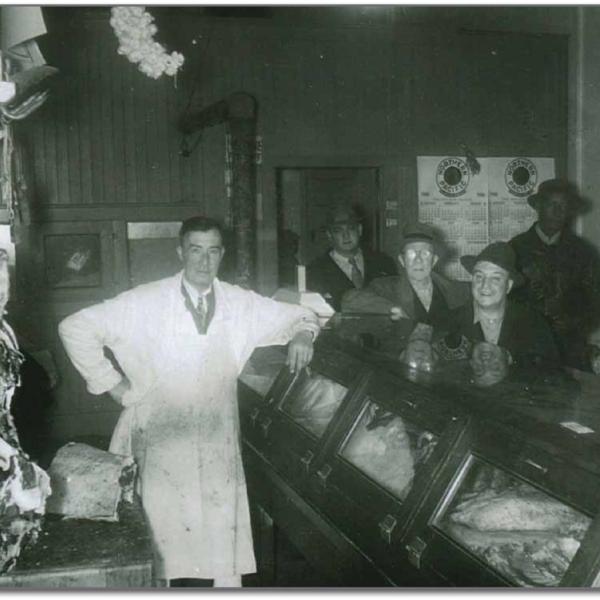
Romey’s American Kosher Meat Market
2405 Yesler Way
Joseph Romey’s American Kosher Meat Market was located at 129 16th Avenue from 1925 to 1931. Mr. and Mrs. Romey lived next door. The butcher shop moved to 2405 Yesler Way in 1932. In 1940, the Romey’s son-in-law, Isaac Cornell, took over the store after Mr. Romey lost a leg as a result of his having diabetes.
Store hours were 8:30 a.m. to 5 p.m. every day except Fridays, Saturdays, and holidays. On Fridays Mr. Romey closed his butcher shop at noon. It remained closed on Saturdays and holidays.
The shop had a walk-in freezer, showcases and hooks from which sausages and chickens could hang – the chickens by the feet with their heads down. The floor was covered with sawdust.
In addition to chickens and sausages Mr. Romey, a butcher, sold lamb and lamb heads and beef.
He always wore a white apron, and a felt or straw hat. In the mid-1920s he bought an old Nash for his son, Shaya, to use for making deliveries. The sausages were made by his wife, Estrella at their home, at 125 16th Avenue. She washed and dried cow gut and then stuffed the gut with sausage. The sausages were then hung under the ceiling of the porch to dry. From there they went to the store to be sold.
On Thursdays, Mr. Romey received a load of chickens fresh killed by the shohet. His 10-yearold granddaughter, Lucille Cornell Michaels helped her aunt, Colleen, pluck the feathers and get the chickens ready for sale. Thursday was the big day for chicken sales so that people could prepare the chickens for Friday’s Shabbat dinner.
Story from Shaya Romey and Lucille Cornell Michaels
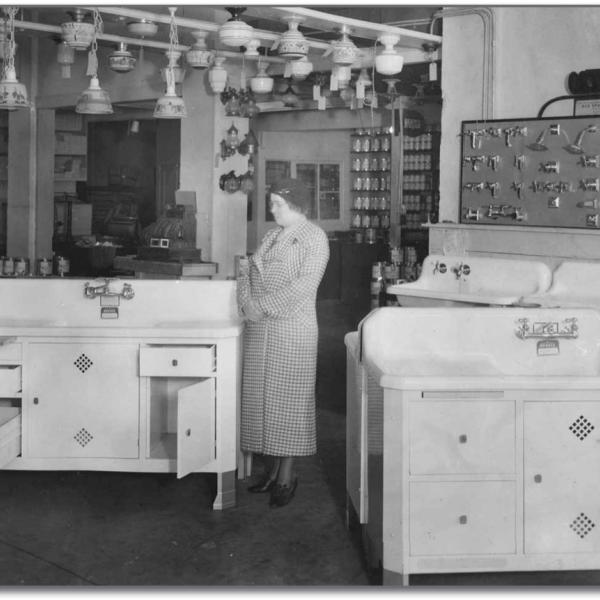
Rosen Supply Company
Tacoma, Wa
The following are words that I believe my grandfather, N.B. Mesher would be saying if he were alive today:
Who would have ever thought that from the days of me traveling from farm to farm in the early 1900s with a horse and wagon, getting used pipe and things like bath tubs from abandoned homes that may have been burnt to the ground, we would become a plumbing supply company that is in its fourth generation and heading into a possible fifth, just around the corner?
When Max and Sara Rosen purchased my interest in July of 1936, Max had already worked with me and my son Norman in Tacoma. Once my daughter Sara and son-in-law Max purchased what was then Modern Supply, the name was changed to Rosen Supply Company. It certainly was and is a true family business.
Max and Sara worked most everyday until their passing – both in their 90s. Continuing the business was important to them. They had three children. Their son Byron, who has been gone now for almost thirty years, has three boys actively working at Rosen Supply—Adam is Purchasing Manager, David is General Manager and Mat- thew is Branch Manager. Daughter Dianne is still actively working in administration and now Dianne’s son Joel is with Rosen heading up warehouse logistics.
Son Harvey took the responsibility for managing Rosen at the passing of his brother. Harvey has three children. Devin is in charge of the “Water Concepts,” Rosen Supply’s show rooms. Raquel works in the showrooms selling to the contractor or home owner who is looking for “hard to find” special plumbing items. Lastly, Aaron has opened a complimentary business to Rosen Supply “Building Material Outlet” located in three different locations throughout Washington State. The best way to describe Building Material Outlet is to say that it is the Nordstrom Rack of building supplies.
Today Rosen is located throughout Western Washington, servicing the plumbing and mechanical contractor.
As a look back on what I started from a horse and wagon, “Who would have ever thought?”
Story from Harvey D. Rosen
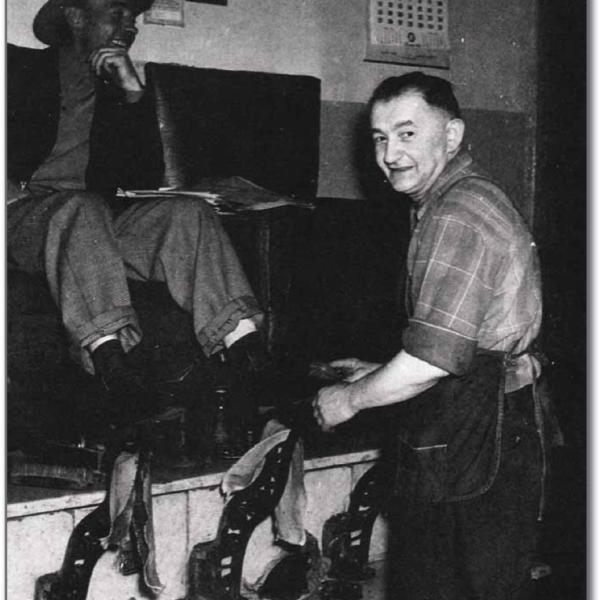
Sam Schneider, Shoe Shiner
211 Union Street
Sometimes even the smallest businesses make the biggest stories. Known to his friends as “Sammy,” Sam Schneider was born in Russia in 1898 and came to America with his family in 1910. Deaf and mute from age 18 months, Sammy never let his disability get him down.
Seattle Times feature columnist Don Duncan, writing nearly a half page story following Sammy’s death in 1965, said that Sammy was only 13 when he began shining shoes around town. “He always gave even the dirtiest pair that extra special effort that made customers want to return.”
“If the odds against his father had been long,” Duncan wrote, “they were much longer for Sammy. It took years of work . . . but finally during the Second World War Sammy took the citizenship test with his sister at his side to interpret. Sammy cried when he made it and wore an earto-ear grin for weeks.”
“At the beginning of the Second World War, Sammy went to Bremerton to shine shoes and became an immediate hit with the shoeshineconscious sailors,” Duncan wrote. “In late 1941, he returned to Seattle and was given space at 211 Union Street, an upstairs card room-restauranttavern. Although he resided in a small downtown room, he ate all of his meals where he worked.” It sounds as if he was a character right out of a “rags to riches” movie. But Sammy’s riches came from his dedication to work and the love shared between him and his customers.
Throughout the years Sammy Schneider toiled diligently. As Duncan put it, “Word of Sammy’s prowess with polish and rag spread.” Duncan wrote that customers came from miles around, sometimes with half a dozen pairs of shoes to be shined. And understandably he was a hit with the motorcycle policemen who prided themselves with their shiny boots from the little man at the shoeshine stand.
It’s hard today to appreciate the little community of Sammy Schneider. But according to Don Duncan, who wrote this beautiful piece on Sammy, this was one amazing individual who through grit and determination carved a life out for himself that was fulfilling to him and had a wonderful effect on his customers and friends.
Story from Don Duncan, The Seattle Times, January 6, 1965
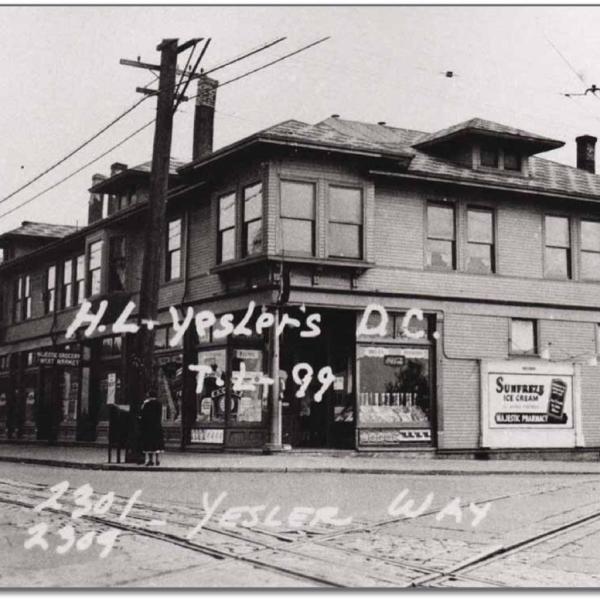
Sam’s Bakery
2307 Yesler Way
From 1931 to 1941, Nessim Morris Sam Alhadeff owned a kosher bakery at 2307 Yesler Way. There he baked and sold French bread, Challah, sweet roscas (raised sugar doughnuts), cinnamon rolls, and ring shaped coffee cakes. Sam’s wife, Esther, and three of their five daughters worked with him.
Everything was baked in a brick oven. This was heated by long logs which were burned until there were just ashes. Those were swept up and the breads were then baked in the oven on large paddles.
There were also sliced sandwiches and a candy counter stocking “penny candy.” Special favorites were “Lucky Bites” – little cream filled round disks costing a penny each. The centers were usually filled with white cream but occasionally there would be a pink center which would win the purchaser a nickel candy bar, frequently a Hershey bar.
Story from Raye Alhadeff Policar, daughter
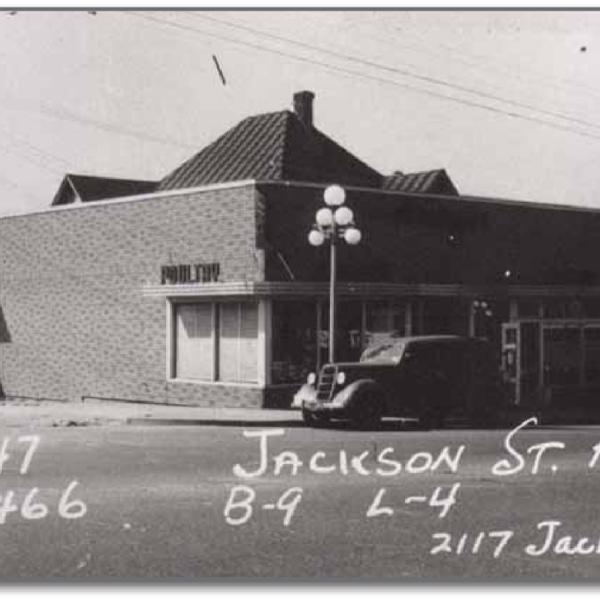
Scharhon’s Poultry & Grocery
2117 Jackson Street
Rev. Morris Scharhon, like many religious leaders in the past, had a separate job or business to sustain his family. He was a certified shochet and sold chickens initially in the back of his home. He then opened a poultry and grocery store on the corner of 22nd and Jackson in 1941 with the help of his sons, Lazar and Azaria (Azzie), that expanded his sale of fresh chickens. Azzie served in the Navy in World War II then returned to help with the business.
After Rev. Scharhon passed away in 1950, the three brothers each ran their section of the store in a joint fashion. By 1962, as members of the Jewish community were moving out of the Central Area, the store closed and the building was sold. Azzie and Lazar began working for the major Seattle meat firm, Petschl’s Meats; Lazar left after a year, joining Jafco Co. the catalog showroom retail store. Victor re-established his Printing shop on Rainier Avenue. L S h h Lazar Scharhon Victor Scharhon Rev. M R Morris i S Scharhon h h Lazar, in addition to the operation of the grocery store, served as a Northwest distributor for several national Kosher companies bringing in products for the local Orthodox community to enjoy. He, also, introduced the sale of barbecued chickens hot from the rotisserie for Sabbath meals.
After returning from the war, Azzie went on to learn the skills of being a butcher. At this point the business was then expanded to include an excellent kosher butcher shop.
Victor, the other brother who also served in WWII, had fine artistic skills that he channeled into the profession of a printer. A separate part of the store building was set up to serve as Victor’s print shop with access from the street and from inside the store. He apprenticed for a time with the established Sephardic printer, Joseph Souriano, then ventured out on his own. In addition to that he was, also, an excellent sofer (Hebrew scribe) serving the Seattle Jewish Community in many ways (e.g., correcting sefer Torahs).
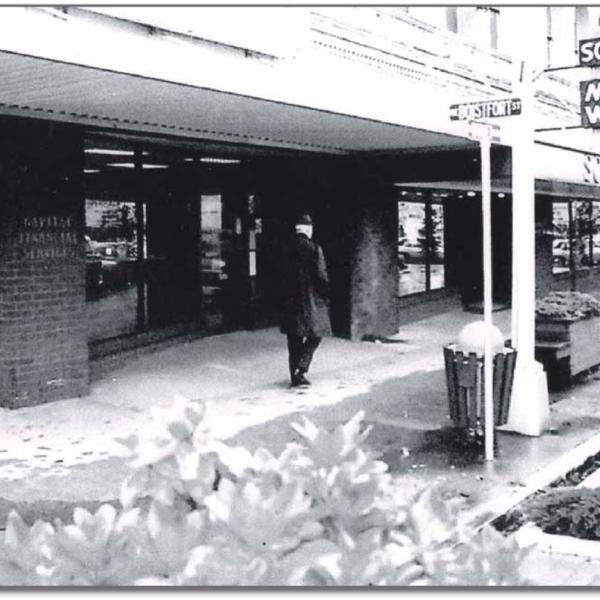
Schwartz Men’s Wear Store
Chehalis, Wa
Nathan Schwartz, who was born in Poland and migrated to Portland, Oregon with his family, arrived in Chehalis, Washington on November 28, 1928. Nathan, his brother Sam Schwartz and his partner, Louis Neusihin bought Mandles, a twenty year old men’s clothing story located in Chehalis. Becoming associated with the local Jewish community, his future brother and sister-in-law told Nathan, ‘We have a girl for you!” Indeed they did and on June 7, 1931, Nathan married Esther Topp. They had three children: Ken, Gloria and Harold. During the Depression era, all businesses suffered. Being very thrifty, Nathan and Esther were still able to put together a successful business. Nathan was also one of the founders of Temple Adath Israel in Centralia, Washington. He and Esther enjoyed traveling, especially to Hong Kong. His trademark became small folding scissors that he gave, by the dozens, to customers and friends. In 1979, Nathan was given the keys to the City of Chehalis in honor of being in business for Fifty Years, with the day being proclaimed by Mayor Vivian Roewe as “Nathan Schwartz Day!”
In 1942 at the age of ten, Ken began his “career” in retail. Working after school at Schwartz Men’s
Wear, he swept the floors, washed the windows and countertops and on a daily basis jumped in front of his Dad to be of service to customers. Ken fondly remembers his Dad’s reccurring statement to him, “Remember T.O. before you say NO!” T.O. stands for Turn Over.
Ken graduated from Chehalis High School in 1950 and attended the University of Washington. He fell in love with Selma Golombeck, daughter of Joe and Sarah Golombeck of Seattle. Ken and Selma have three children; Debra Schwartz of Seattle, Gail (Bob Alexander) of Bellevue and Steve (Pam Mayo) of Seattle. In 1962, Ken purchased Schwartz Men’s Wear from his father. The business was closed in 1994 due to Selma’s illness.
Story from Kenneth J. Schwartz
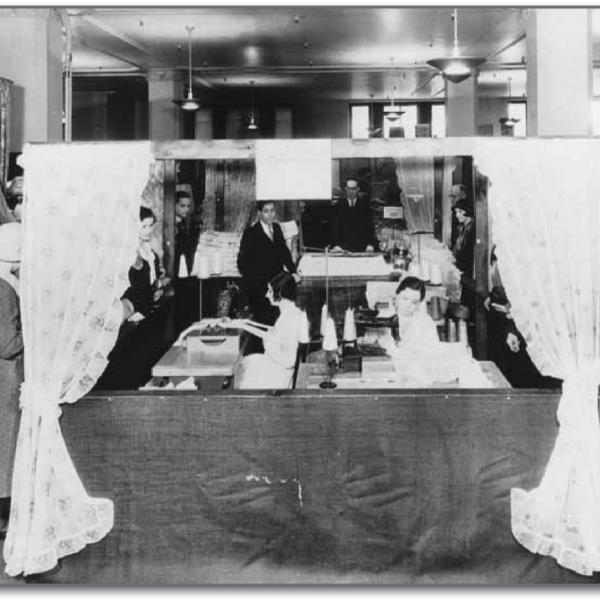
Seattle Curtain Manufacturing Company
th 12 Avenue & Yesler Way
Some businesses are the grand ideas of the very clever. Others relied on the determination and elbow grease of their founders. In the case of Seattle Curtain Manufacturing Company, “necessity was definitely the mother of invention”!
Ralph Capeluto arrived from the Island of Rhodes in 1920 in New York with virtually no job, his savings stolen and few prospects for work. His first job was washing windows for a clothing manufacturer. He became interested in a mechanic who worked at repairing the various sewing machines who soon asked Ralph to join him. His intuition told him he could make more money if he went out on his own.
Tempted to return to Rhodes to visit his parents, he instead went to see his sister Jamila in Seattle. Someone introduced him to his soon-to-be bride, Rachel. She asked Ralph how he intended to support her. He said that he would open a candy store. She said, “Why not try something you know?” and they quickly decided to make curtains. The fledgling business began with Ralph maintaining the equipment and Rachel finding prospective customers and selling their wares.
At the time curtains and draperies were only available from the East. By offering a local supply of these products, the big department stores here all became regular customers. The newlyweds went to New York on their honeymoon to purchase equipment and fabric and establish relations with fabric suppliers there. This was right in the heart of the Great Depression and timing was everything.
The business became wholly family-owned in 1956. The first 30 years it was in the Prefontaine Building on 3rd and Yesler. The current site at 12th and Yesler was originally a baseball field, then built out as a roller rink. The rink’s hardwood floors remain today.
Active in the business today are Ralph’s son Morrie and wife Jewel, as well as grandson Ralph. Over the years their dedication to their business involved a commitment to the community as well, often hiring Jewish immigrants to work for the company.
Story from Morrie Capeluto
Seattle Fur Service/LeatherCare, Inc.
316 Boren Avenue North
Our company started in 1946 as Al Ritt’s odyssey from Pittsburgh, PA, through Los Angeles and finally to Seattle. In April 1957, my dad ventured here to start a wholesale fur servicing company aptly named Seattle Fur Service. For several months in 1957, as he labored intensely in Seattle, my mother Rhea and I waited patiently in Los Angeles.
Dad found a location on Boren Avenue adjacent to the Seattle Times building. The primary business was cleaning, storage and repair of fur garments for the vibrant downtown department stores and retail furriers. For three months he worked 16-hour days and “crashed” in a hotel/ apartment until he moved my mother, Rhea and me here.
In 1960, LeatherCare, Inc. was officially established and supplemented the growing fur business. A salesman was hired and routes were established to pick up garments from dry cleaners. A small retail counter was established at the
Boren Avenue plant, and in 1979 the company relocated its retail store to a larger facility on Fairview.
I had graduated from the University of Washington in 1966 to pursue a career with Shell Oil. Every week my Dad would write and in his loving, fatherly way hint that I should join him in the family business. I remember the very first day I came to work, finding my Dad radiantly smiling and welcoming me into the firm. I have to say that working with my Dad was as big a treat as being his son: Every day was challenging and fun. The epitome of our “partnership” was our move to the current facility on Elliott Avenue West.
Today, LeatherCare, with thirty-eight employees, services dry cleaners in Washington and Oregon, is a leader in the preservation of wedding gowns and has a vibrant textile restoration division serving Western Washington.
Story from Steven Ritt
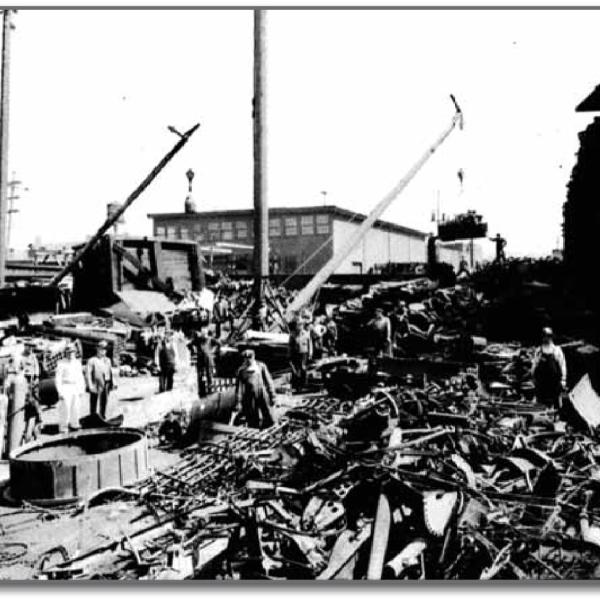
Seattle Iron & Metals Corporation
Seattle Iron & Metals Corporation was started in the early 1900s by Sam Henderson and his soon to be son-in-law, Max Sidell. They had a beautiful white horse and buggy, and would go house to house collecting rags, bottles, and scrap metal. Sam Henderson was a flamboyant and well-known character in these early years, who insisted they wear white shirts and ties or tuxedos so they would not look like dirty, grubby junkman. Sam Henderson could neither read nor write, but his colorful personality got him into major industries.
The company was incorporated in 1927 with Max Sidell as president. They first rented a barn and then opened their first scrap yard near Sears Roebuck. The company moved from one location to another as it grew larger. Around 1939, Sam Henderson asked his son-in-law, Max Sidell, to “buy him out.”
Around 1930 Max’s son, David Sidell, started working during the summers. He started full time when Max bought out Sam. They consolidated their operations into one plant of six and one half acres in 1950 on Harbor Island near their two biggest accounts, Puget Sound Bridge & Dredge (Lockheed) and Todd Shipyard. They also bought from peddlers who later were called haulers. Another plant was started in 1972 called American Recycling Corporation in Spokane, with an automobile shredder.
In the early days, a horse and buggy was all that was needed. Then, to mechanize, they bought an alligator shear to cut metal into smaller pieces. They purchased a crane with a magnet to load metal into railroad cars. Equipment became more sophisticated, from a bailing press that compacts a car into a cube to a state of the art shredder that can shred a whole automobile in seconds.
Max and David Sidell employed many family members throughout the years. In the family tradition, Alan and Marc Sidell, David’s sons, joined the business when they graduated from the University of Washington in the 1970s. Alan became president in 2007 and Marc serves as vice-president. They still wear shirts and ties to work every day, just like Sam Henderson did almost 90 years earlier.
In August, 1999, when the Port of Seattle took over Harbor Island, the Company moved to South Myrtle Street on the Duwamish River. This new state of the art plant follows government rules and regulations never imagined in the early white horse and buggy days.
In the early 1900s, Jews arriving in Seattle could not speak English but earned a living peddling. Now they are providing the same services, only on a much larger scale – as recyclers.
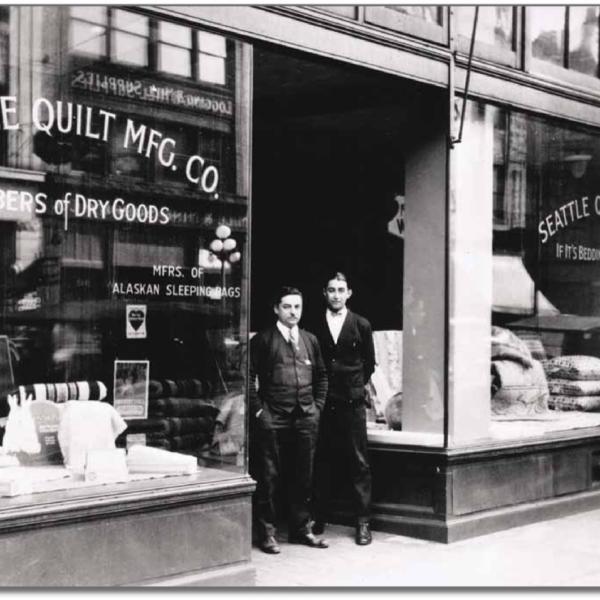
Seattle Quilt
st 310 1 Avenue South
The Seattle Quilt Company was born out of a smaller establishment called Miller’s Dry Goods Company. Its early beginnings were the result of the industry of Charles Miller’s father, I. Miller, in Philadelphia. Already 10 years old, the business moved to Seattle in 1915, combining the two firms in one building. Originally in the Globe Building, the company moved into the new and then modern Seattle Quilt Building in the Pioneer Square District in Seattle.
The slogan selected and seen around the offices and plant in the early days was: “If it’s bedding, we have it.” According to the granddaughters, their fondest recollections were when visiting their grandfather at the “factory.” “We got on the old freight elevator with Grandpa to go and visit the seamstresses and sewers that were making the quilts and later, the ‘comfy’ sleeping bags. The ride up was very scary and long even though it was only two floors. The ladies operating the sewing machines always made a big fuss about us. We got to sit on their laps and pretend to sew. This was a wonderful visit and special treat.”
Another memory was the factory family picnic at
Woodland Park. “Everyone from the factory and our family members were invited.”
The Seattle Quilt Building still stands at 310 1st Avenue South with its gilded sign over the first floor retail spaces and is a wonderful reminder of the “golden age” of Seattle business managed over the years by the Miller family.
Story from Charles Miller’s grandchildren Diane, Dorothy and Bette
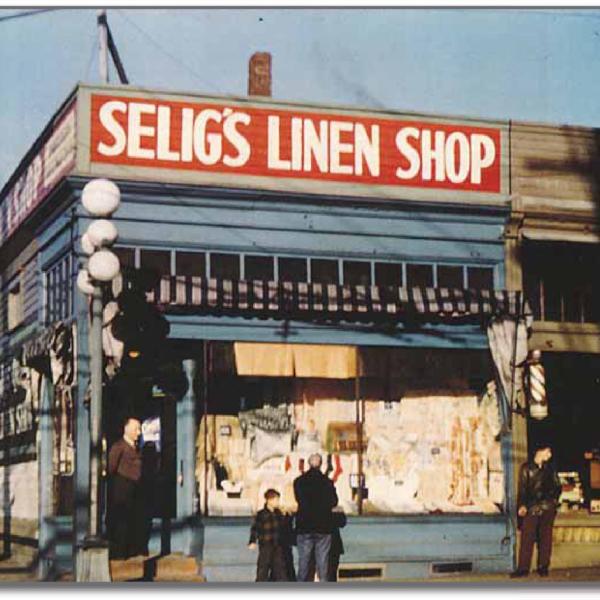
Selig’s Linen Shop
rd 23 Avenue and Jackson Street
A ccording to Seattle developer Martin Selig, “My parents’ destination was San Francisco. They never made it. They stopped in Seattle on October 14, 1940, and it was a nice sunny day, and they said: ‘Let’s get off this ship.’ They liked the city.”
Months earlier, in 1939, a neighbor in Arnstein, Germany had informed Manfred Selig that the Nazis had labeled Manfred “undesirable,” a term applied to Jews, political dissidents and other minorities whom the Nazis considered inferior to the Aryan “race.” Manfred, his wife Laura, daughter Bertelle and son Martin left their home immediately. The following day, the Nazis converged on the Selig home and the small department store Manfred ran with his father-in-law, and confiscated everything.
“They brought nothing with them,” says Martin, who was four at the time. “Their luggage was shipped out through Holland, but it was confiscated. My father came to America with only a few gold coins in the hollowed-out heels of his shoes.”
Manfred was born in Buchen, Germany in 1902, his father a horse-trader. After graduating from high school he ventured into the textile business and for his first job sold fabric for a textile factory outlet. After disembarking in Seattle, Manfred used what he knew—his skills and experience in the merchandising business—to make ends meet. Both he and his wife began selling pillow cases and table cloths door-to-door. After a short time, they were able to open a shop on 23rd and Jackson, named Selig’s Linen Shop. They offered fine, high quality linens and operated the business for eight years.
Next, Manfred went into the children’s clothing business, distributing Empire Children’s Wear throughout the Northwest until he retired in 1965.
While becoming a successful businessman, Manfred also turned into an avid art collector. He acquired a prized collection of European prints and drawings, many of which were featured in local galleries and museums. He especially favored Northwest artists such as Paul Horiuchi. Horiuchi’s wife and son recalled that Manfred walked into his studio one day and asked how much for everything there. Horiuchi refused, saying he wasn’t a wholesaler. For a while, Selig bought a painting from him each week; then later, one a month.
Story from Martin Selig, The Seattle Times, July 27, 1992, and www.historylink.org
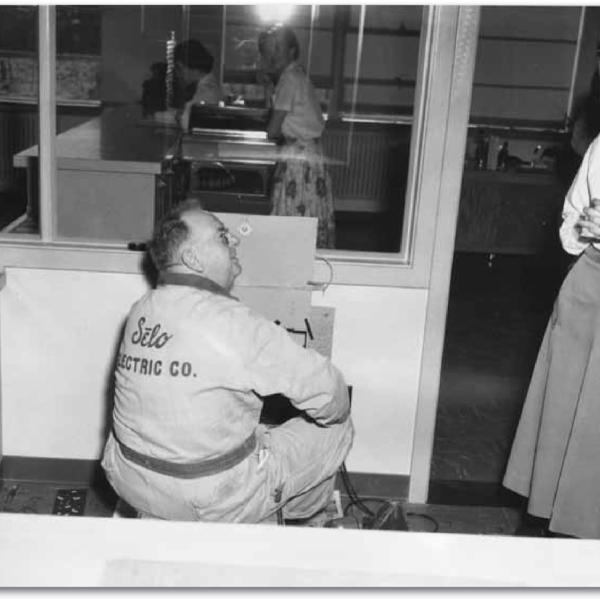
Selo Electric
Selo Electric was created following the end of WWII in October 1945, by Boeing Company engineers Arthur Siegal and Gordon Lowe who joined Boeing in June, 1941 following their university graduation. Experiencing a crushing wartime schedule, when the war ended there was expectation of severe reductions in the Boeing work force and many employees began considering other means of employment. Arthur and Gordon chose to form an electric construction business. The name Selo is an acronym of the two last names.
The company started in the University District of Seattle. There was a steep learning curve entering the construction business, far removed from airplanes. Competing firms were owned by men who had worked their way through the trade, but without formal education. The pent-up post-war demand resulted in opportunities for contracts and forced on-the-job learning which they did. Selo decided to confine its business to commercial and industrial projects.
As the business grew the engineers were able to explore opportunities beyond construction. They progressed into communication, signaling and alarm systems. These also required different skills than a construction electrician would have. It took advantage of Gordon’s majoring in electronics in college. The business experienced a doublepronged growth.
Exponential growth came from a number of opportunities which saw work at several Pacific Rim locations including Great Falls, Montana, Johnson Island in the Pacific Ocean and Mt. Haleakala on the Maui Island in Hawaii as well as Hanford in the Tri-Cities area. With the breakup of AT&T, opportunities were available in telephone equipment for those with a technical know-how. Franchise arrangements were obtained with telephone equipment manufacturers and the effort expanded. This segment of Selo’s business continued to grow.
Showing their incredible diverse capabilities Selo combined with a construction company to install a system for the underwater tracking of torpedoes on the Island of St. Croix. Prior to the installation of this system there was no way of knowing where a torpedo went after it went out of the launching port, unless it hit the target. The construction portion of the enterprise progressed over time and provided a steady flow of business.
After about ten years Gordon decided to return to Boeing, where he completed his career. Arthur continued the business until 1974, when he sold it to a larger firm.
Story from Art Siegal
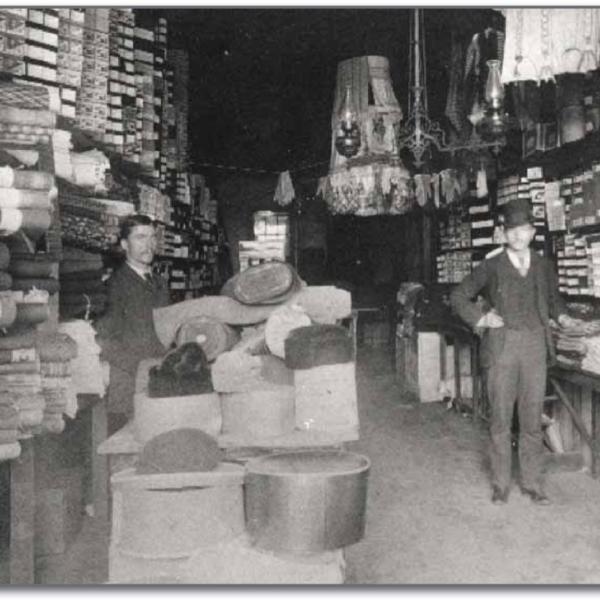
Shafer Brothers Land Company
th 6 Avenue & Pine Street
Julius Shafer was a dreamer and a builder. In 1884, at the age of 12, he left Lithuania with his younger brother Isidor (Issie) to live with an uncle in Kansas. 18 years old and dreaming of the opportunity to grow up with a young city on the road to prosperity, he arrived in Seattle with Issie in 1890, one year after the Great Fire.
With $700 in his pocket, Julius opened several small businesses. By 1906, seeing the trend of business developing north of the main commercial district, he leased a large store in the Arcade Building on 2nd & University. Shafer Brothers thrived until its sale in 1921, providing men’s clothing and supplies for the Alaska Yukon Gold Rush.
Remaining confident in the city’s growth, the brothers shifted from retail to real estate. In 1915 the Shafer Brothers Land Company purchased the 6-floor Mutual Life Building on 1st & Yesler. In 1917 Julius bought land on the corner of 6th & Pine, then known as Denny’s cow pasture. It would soon become the heart of the city. By 1924, the 10-story Shafer Building was erected, a “modern” medical building with sinks and gas in every room. A wide variety of professionals leased office space. During the Depression, the brothers extended free rent to those in need.
With all of his business foresight and real estate success, Julius never forgot his Jewish roots and responsibilities. He was an active leader in Seattle’s Jewish community and National Vice President of the Hebrew Immigrant Aid Society. Remembering his youthful journey to America, he personally met many ships that arrived from Asian ports during the 1930’s, making sure all Jewish passengers disembarked with $5 in their pockets, enough for a week’s shelter.
After the Shafer brothers died in the early 1950’s, Julius’s wife, Rebecca Betty (Goodglick) Shafer, managed the business. All of their 13 grandchildren remember standing at the entrance to Frederick & Nelson department store and looking up to see their grandma’s well-coifed white hair through her office window several stories up in the Shafer Building across the street.
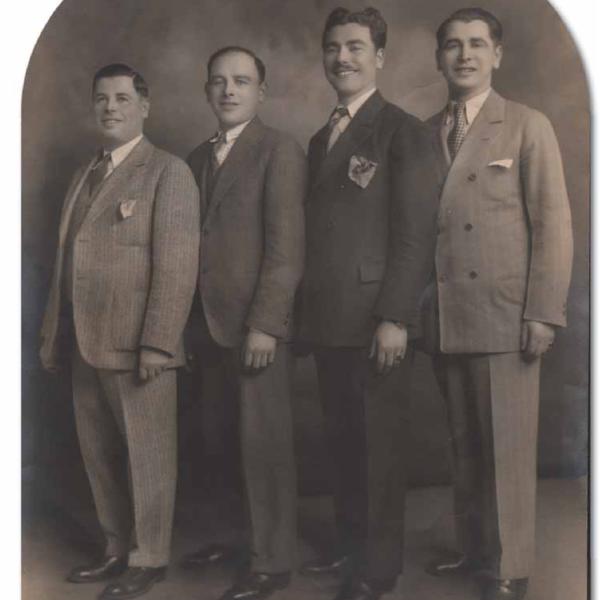
Sherman Supply Company
I n the early 1900s, Abe Sherman, age 16, left Russia for America via Paris to avoid service in the Russian Army. After working in both Paris and New York City as a buggy driver, Abe earned enough to go to Seattle in the height of the Alaskan Gold Rush. He supplied tools to the prospectors. After the Gold Rush he turned his attention to the salvaging and recycling of building materials.
At the conclusion of WWII Abe purchased a building on First Avenue South which remained a company location for nearly 60 years. His nephew, Marvin Federman, joined him and, because of Marvin’s veteran status, the company was able to procure government war surplus items. With the construction of the Alaska Pipeline, hose and pipe fittings were added to their inventory. About this time Abe left the business for other interests.
Marvin’s son, Murray, joined the business in 1979 and they soon expanded to bathroom and kitchen fixtures. As the business was reaching its peak in 2004 and because of the Seattle Monorail Project, they were forced to relocate to Georgetown where their expanded modern showroom exists today.
One relic of the past remains, though, a new use for Navy surplus. As part of the building materials recycling activity, Abe supervised the dismantling of a Navy barracks from Fort Farragat Naval Training Station in Farragut, Idaho, and reconstructed it at the corner of 7th Avenue South and South Lander Streets. Now you know about the strange structure that exists at that corner and who brought it to Seattle.
Story from Dorothy Lederman
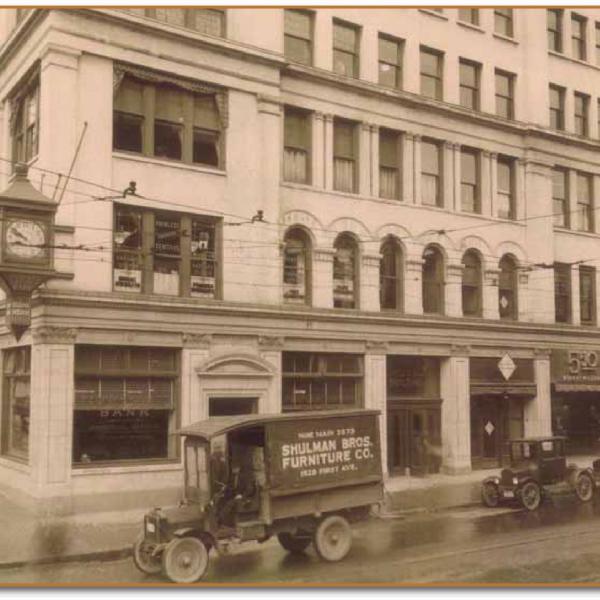
Shulman Brothers Furniture Company
st 1528 1 Avenue
A be Shulman arrived in New York from Chereya, Russia on March 2, 1906. He was 20, and was headed for the home of his Uncle Louis on the Lower Eastside of Manhattan.
While waiting for his Russian girlfriend Minnie Goldfine to join him, he worked as a paper hanger and also as a cigar maker. Abe and Minnie were married in 1909, and then took a train to Seattle to start their married life in the city where Abe’s brother Lipa had settled. In those early years Abe peddled junk, which he hauled with his horse-drawn wagon.
In 1914, Abe, his brother Lipa, and Morris Aronin founded Aronin and Shulman Brothers on 22nd Avenue. Two years later Abe and Lipa opened Shulman Brothers Furniture Co. on 1st and Pine. They sold new and second-hand furniture, carpets, stoves, linoleum and other assorted household items. By 1918 they had added two more stores, the American Furniture Co. on Pike Street, and a second-hand furniture store on 1st Avenue. Lipa ran the American store, and Abe operated Shulman Brothers Furniture. Abe’s son Alex worked in his father’s store while he attended college and for several years following his graduation. Lipa’s son Leo worked at American Furniture Co. The two brothers, Abe and Lipa, were business partners until the mid-1930s.
Following a brief career as head office man for the Port Angeles branch of Benjamin Franklin Thrift Store, Abe’s son Sam joined his father in the store on 1st and Pine in 1935. That was Sam’s entry into the furniture business, and it coincided with the depths of the Depression. He worked there for twenty years.
By the 1950s, there were ten furniture stores in downtown Seattle, six within a single block of Pine Street, and nine of them operated by Jewish families. The proliferation of furniture establishments was just one of the offshoots of earlier days when immigrants arrived and made a living peddling whatever they were able to find. The rag business and metal industry had similar beginnings.
Shulman Brothers Furniture went out of business in 1956, coinciding with the opening of Gov-Mart, one of entrepreneur Alex Shulman’s many successful commercial endeavors. Chuck Abrams, married to Abe’s daughter Betty, had joined Sam and Abe in the furniture business, and he and Sam became concessionaires in the new Gov-Mart. This was the very first true discount operation in Seattle.
Sam celebrated his 95th birthday on September 3, 2008, pleased that his renewed driver’s license would be valid for another five years.
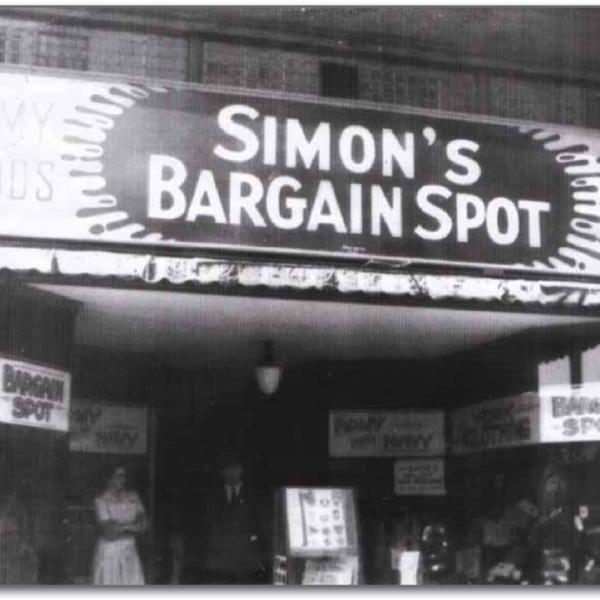
Simon’s Tack ‘n Togs
Tacoma, Wa
2017
I saac “Ike” Simon began his career with a successful Army-Navy store during World War I in Spokane. But, when the Depression hit and the spending habits of customers dramatically changed, so did Simon who then became a jobber, and eventually opened Simon’s Bargain Spot, a men’s and women’s clothing store on Market Street in Tacoma.
In 1942, The Bargain Spot moved to Pacific Avenue in downtown Tacoma and evolved into Simon’s Men’s Store, selling clothing and military items. Ike’s daughter May moved back home from San Francisco to help out since brothers Lou and Bernie were in the service.
One of the hallmarks of the Simon business ventures was the litany of stories which accompanied their operation. As May told it, Ike purchased a lot of “circumcised shoes” (meaning shoes with the toe areas cut out) and successfully marketed them to another retailer who eventually sold them to unsuspecting customers. In another story, our Aunt May (Blau) remembered those embroidered pillows from the war which proclaimed “To My Sweetheart”; she recalls that most soldiers bought five or more!
After World War II, Bernie joined Ike in the business. Due to the troubled post-WWII times, the company underwent several name and location changes eventually becoming Simon’s Tack ‘n Togs. Ike Simon retired in 1965, and Bernie moved the store to its new building on South Tacoma Way.
Owing to Bernie’s energy and enthusiasm, as well as the lessons learned from his father, Simon’s Tack ‘n Togs enjoyed a reputation as one of the largest volume non-chain western wear stores in the state. Tom and Stacey, Bernie’s son-in-law and daughter, purchased the store in 1978, and ran it until 1998.
The result of three generations of Simons plus a Brody was a store that served Tacoma’s residents, and those in surrounding cities, for over 50 years. An article by Art Popham in the Tacoma News Tribune dated July 25, 1991, proclaimed “Tacoma should hope to leave its future generations to so solid and rich a legacy.”
Story from Tom and Stacey Simon Brody
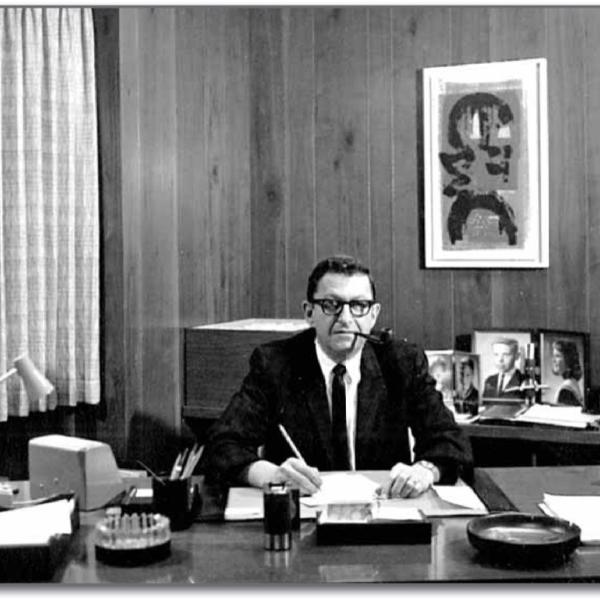
Skipper’s Fish & Chips
A s a long-time pillar of Seattle’s business scene, Herb Rosen parlayed what his Seattle P-I obituary termed a “Midas Touch” into a variety of businesses which were successful. But his involvement also stretched into civic and Jewish community affairs as well.
Herb had an entrepreneurial spirit which, coupled with business acumen, generated a series of impressive business ventures. As with many of his fellow “children of the depression,” necessity became the mother of invention: It was all hard work.
Herb’s entry point into a long career was in the family business. Learning by example, Herb witnessed how his father’s small taxi service evolved into Durabilt Luggage, which became a national company. The elder Rosen saw opportunity in the shoddy bags of his immigrant taxi fares that would arrive in Seattle by train and be taken to their new homes by the Rosen taxi.
Herb’s experience at the Valu Mart discount store included several concessions at its Georgetown location. And true to his lifetime of hard work, Herb could be seen actually manning registers during the heavy Christmas rush—he never ate lunch and was so busy he never looked up!
Next came his involvement in Consolidated Distributors, Inc. This business took advantage of the explosive record business in the 1950s and ‘60s and eventually sold out to ABC Records in 1965. A new inventory control system used IBM punch cards to keep track of hundreds of thousands of the popular black disks.
But Herb’s love of fish and chips was what sparked his idea for Skipper’s, ultimately the most visible and popular of his businesses. It became the fourth largest seafood chain in the country with 220 outlets. The company was sold in 1989 to National Pizza which was a huge Pizza Hut and Burger King franchisee. That such a superpower would be interested in a regional seafood restaurant is testimony to the vision of Herb Rosen.
Herb’s greatest satisfaction may have come from his involvement in the community. His and wife Rita’s contributions to the major and minor Jewish institutions locally were a way to give back. The couple was also instrumental in the growth of the Bellevue Art Museum. To say Herb Rosen, who passed away in 2001, was an involved person would be a gross understatement. Everything he did represented herculean dedication and effort.
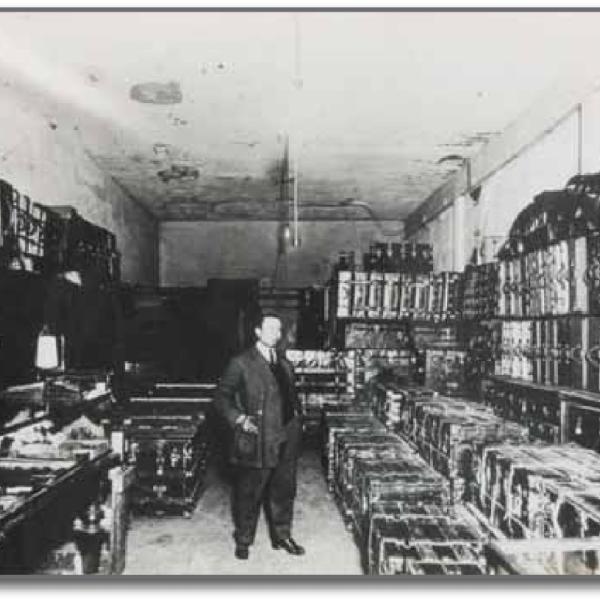
Skyway Luggage
My dad never expected to be in the luggage business. But when his father dropped dead of a heart attack in 1936 leaving his wife and daughter and no will, Henry Kotkins had no choice. One year out of law school, Henry took over what little was left of what had been a thriving business before the Depression, and built it up to far more than his own father had ever imagined.
Abe Jacob (Mr. A.J. as he was affectionately known) Kotkins, was brought to Seattle in the early 1900s as a teenager by his uncle, Rabbi Hirsch Genss. A.J. learned English helping out in the Rabbi’s grocery store, and quickly showed his entrepreneurial side. In 1910, at the age of 23, he bought some machinery and equipment from a defunct bag maker in Olympia, and opened Seattle Suitcase Trunk and Bag Manufacturing Company. A classic “make it in the back room, sell it in the front room” operation, it quickly expanded and even exported . . . to far away Montana!
My grandfather was a successful and generous man who had loaned money to many immigrant newcomers. When the crash of 1929 happened, his bank called his loan, and when he went to collect from those who owed him, there was no money to be paid back. He went bankrupt, lost the company, and with the help of several families in the Jewish community, was able to buy it back at the sheriff ’s sale. He literally worked himself to death for the next six years.
Henry saw air travel as the future, partly because he grew up living next to P. G. Johnson, then President of the Boeing Company. He made the tough decision to abandon the heavy trunks that were the mainstay of the business, and concentrate on what was then called “hand luggage.” The company became Skyway to capitalize on this new form of transportation. Being far away from the center of the industry in New York, Henry had to be an innovator to stay competitive, and pioneered many of the most forward thinking inventions in the luggage business. From 1910 to 1998, the company manufactured continuously in Seattle, and is still a manufacturer today, but now in China. I started working for the company during summers and vacations in high school, became president of the company in 1980 and serve as its chairman today.
Story from Skip Kotkins
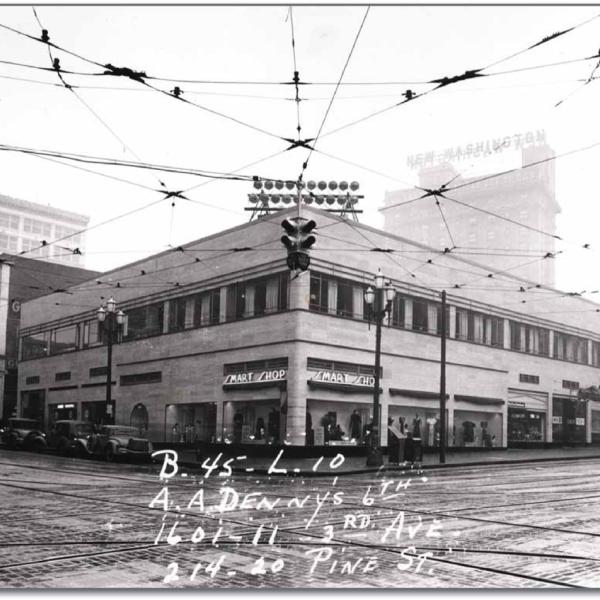
Smart Shop
rd 3 Avenue & Pine Street
No sooner had Jack Tobin launched a clothing store than another clothing store opened across the street. He wrote home to his father in Boston asking for advice. “Don’t worry, son,” his father wrote back, “God will provide enough customers for you and your competition.” The Smart Shop, Ladies Retail Clothing on the northwest corner of 3rd and Pine was the business of Jack Tobin, father of Beatrice Wolf, Stanley Tobin, Madeline Caplan, and Lila Greengard. “Daddy acquired the store at a terrible time,” said Beatrice. “I wasn’t very old but I could sense that things were tough.” It was 1929 when Jack Tobin bought the store from Dave Himmelhoch.
About 1937, the Smart Shop underwent an Art Deco remodel that was “very elegant” for its day. Jennie, Jack’s wife, was in the store daily; her good taste was an asset as the store’s buyer. Madeline and Bea helped at the Smart Shop, too. The store had a balcony where the stock was kept. Madeline remembers making price tickets for the garments. “We had a code: ‘GERMAN SILK’; the letters stood for 1-2-3 . . . 10. That was the wholesale price that was paid. It was also a code that told which wholesaler provided the garments.” Stanley was less frequently seen in the store. After working with a difficult customer, he concluded this was not the business for him.
In 1959, The Smart Shop scaled down and relocated to Westlake when the building was torn down to make way for the Bon Marche’s parking garage and the Old National Bank.
The Smart Shop closed in 1964, but Jack didn’t retire completely. Along with his good friend, Felix Stasny, he worked tirelessly and with great pleasure as a volunteer for the Jewish Federation of Seattle. Just as his warm and genuine personality gained a loyal clientele at the Smart Shop, it also explained his success as fundraiser for the Jewish community. He kept pledge cards in his pocket. When people saw Jack Tobin coming they got out their checkbooks.
Story from granddaughter Lee Micklin
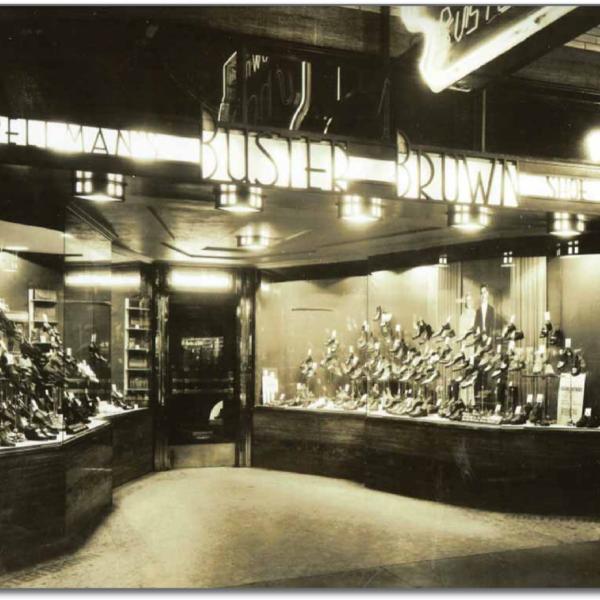
Spellman Shoes
Tacoma, Wa
A braham and Clara Spellman were the parents of six children. Sarah, Joe, Jack, Bill and Tillie Spellman were born in Perry, Iowa in the 1890s. The youngest, Lea, was born in Hastings, Nebraska in 1908. The family eventually moved to Portland, Oregon.
Abraham sold junk and scrap metal, but by the early’20s his sons found their calling selling shoes. Bill started his shoe store in the early ‘20s and was soon joined by Jack and Joe as partners. The brothers had several locations, mostly in the Vancouver area.
William Spellman bought the Tacoma Buster Brown Shoe store in the early ‘30s. At that time the store was located at 1122 Broadway, in the heart of Tacoma’s retail clothing district. Tacoma became the flagship of a chain that included stores in South Tacoma, Olympia and Bremerton, as well as several stores in Oregon.
The brothers retired after World War II and divided the business. Joseph’s son Jerry Spell- man and son-in-law Gene Pease retained the Washington State locations. Jerry’s daughter Lin Spellman remembers that as a child her foot was photographed for use in the store ads.
Changing retail patterns caused the relocation to the Renton Shopping Center and the addition of men’s and women’s clothing. The business was sold in the 1980s.
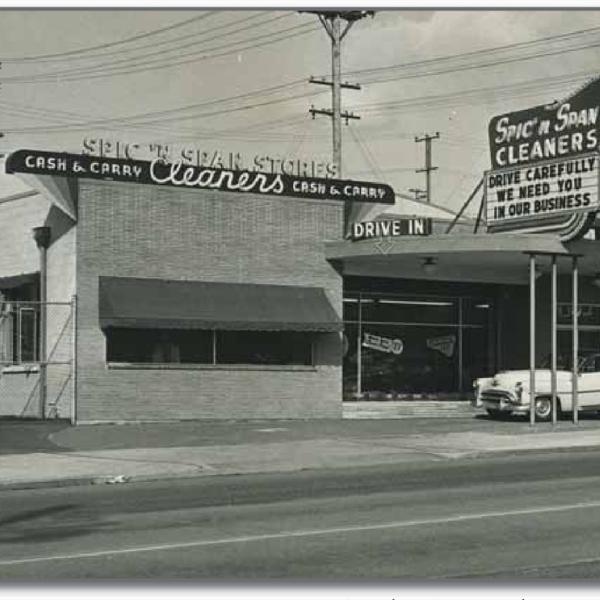
Spic’n Span Cleaners
Zaide’s family emigrated from a shtetl outside of Kiev to homestead in Republic, Washington. Our father, Louis Ostroff, was born there in 1908. Like most of the other Jews who settled in Republic, our family couldn’t make a living there and moved to Seattle.
Zaide (Baruch Ostroff ) was a peddler. He knew little about work—he was a melamed, a man who studied. Bubbie sewed shrouds for the Chevre Kadisha and rented out rooms in their home.
When he was old enough to drive, dad became a truck driver for a laundry. But he always wanted to go into business for himself. At some point, the owners of the laundry decided to upgrade their equipment. As they bought new equipment, dad and two friends bought their boss’ old equipment, behind his back, and had it delivered to a nearby building. Dad was fired and it was at that time that he, with a loan from Alex Shulman, started Spic’n Span Cleaners.
Spic’n Span Cleaners opened on April 8, 1941, on Dearborn between Poplar and Rainier. Dad had a rigid schedule. Every morning at 4:30 a.m. we heard him pull his truck out of the alley behind our house. That’s when he drove to “the plant” to rev up the boiler and prepare the pressing and cleaning machines for the day. Every evening he left the plant at 6:00, went to visit his parents and was home by 6:30.
Over the years, Spic’n Span became very successful, opening its first branch in 1950. At its height in the ‘70s, there were 16 Spic’n Span branches throughout the city. The family sold the business in 2002. From the first day he opened the business to the day the business closed, Spic’n Span cleaned tallitot ( Jewish prayer shawls) for free. Dad honored his parents and he honored his tradition.
Failure in Republic led to hard work, perseverance, and success in Seattle.
Story from Gerry Ostroff and Marilyn Ostroff Brody
Spokane Stove & Furnace Repair Works
Spokane, Wa
The Spokane Stove & Furnace Repair Works, Inc. began in 1905 when its founder Max Rubens came to Spokane from Los Angeles, California in search of a cold climate to use his skills learned in St. Paul, Minnesota as a Journeyman Stove Mechanic.
Max set up shop in the corner of a friend’s business at 914 West 1st Avenue. The business flourished as a unique manufacturer of stove and furnace parts serving the Pacific Northwest. Their production of replacement parts exceeded all competition in the western United States.
Upon the death of Max Rubens, his two sons, Joe and Maurice, were called home from college to take over the business full time in 1923. The business growth required a much larger facility that had been built in 1919 at 1027 East Marietta Avenue where the combination of buildings (a pattern shop, iron foundry and machine shop) occupied a whole city block. By 1930 the factory produced 300 tons of cast iron stove parts in addition to other related fireplace fixtures and novelties.
In 1935 the company added the trade name of Metallic Arts to use in the diversification of product lines into the manufacture of residential and commercial lighting fixtures.
At the outset of World War II the U.S. Navy called upon the Rubens’ boys to manufacture large bronze valves for naval vessels along with pressed steel perforated hand wheels for these valves to prevent sailors from burning their hands in battle when in use.
Joe had two sons, Marvin, a mechanical engineer and Richard, an industrial manager who were brought into the business in 1948 and 1954, respectively. Upon Joe’s death in 1965 the two boys took over and expanded the business to produce architectural metal graphics (metal letters, seals, and plaques of brass, bronze and aluminum) along with concrete testing equipment developed on the construction of Grand Coulee Dam. These latter products were sold worldwide.
In the year 2000, the business was sold to an outside company. Marvin and Richard still work part-time managing the buildings on their Marietta Avenue property that are now rented to a variety of clients.
Spring Wholesale Cigar Co. Inc.
th 2024 5 Avenue
For many years throughout Washington State, cigars and Solly Spring were synonymous.
Solly Spring got his first taste of entrepreneurism as a youth in Alaska, just before the turn of the century, selling newspapers and oranges – at a “buck a throw,” first in Fairbanks, then in Dawson. With the money earned in Alaska he bought five cigar stores along 1st Avenue where his father, Abe Spring’s law office was located. In 1918, Sol Glass Spring, opened the Spring Cigar Company, a large wholesale cigar and candy concern. Eventually the business became Spring Wholesale Cigar Co. Inc., located at 2024 5th Avenue, now part of the Westin’s parking facility.
Spring Wholesale had the franchise for El Producto Cigars, which paid for a large sign on the store. The monorail, built for the 1962 World’s Fair, went right by the store. In the movie “It Happened At The World’s Fair,” Elvis is singing as the train goes by that long El Producto sign.
Spring Wholesale became a family business. Solly’s wife Coral worked in the office, as did his son Myron. Daughter Hannahbeth worked upstairs in the Pig and the Poke, wrapping gift packages with prizes for the punchboards that were used by gambling establishments, and taverns. Younger son, Rudy was a traveling salesman for the store, eventually supervising the warehouse. Son-in-law Iz Stern became a salesman. All five of Sol’s grandsons – Myron’s sons Jerry, Ed and Ron and Rudy’s sons Perry and Harley worked at the store starting at age five. Whether they actually worked or were just being baby-sat is unclear. Sometimes they took out the garbage or stocked shelves. But the most fun was using the “little machine” that put the State Tax Stamp on the bottom of each package of cigarettes.
The “Spring boys” – Grandpa Sol’s grandsons – recall the little office just inside the entrance to the store, where Solly sat in his chair greeting customers, overseeing the store’s operations, and in later years sometimes napping. My image of my jovial father-in-law, Solly Spring, is that he always had a cigar in his mouth.
The Spring Wholesale Cigar Co. closed its doors in the fall of 1970. Solly lived to the age of 94 and passed away at the Kline Galland Home.
Story from Lucille “Lucy” Almeleh Spring
Stack’s Store for Men
I n 1944, Stanley (Stack) Friedman left Tacoma and opened Northern Tailors, a shop on 1st Avenue in Seattle, which catered to returning military personnel who wanted their uniforms tailored to their measurements before returning to their families. A year or two later, he moved to Third Avenue, to the block between Union and University Streets, where there were several other Jewish-owned businesses. Among them were The Store for Men, owned by George and Irving Jaffe; Stack Friedman’s Stack’s Store for Men; Don’s Men’s Shop, owned by Archie and Don Sidel; Jarman Shoes, owned by Jack Rogel; and Samuel’s Jewelers, owned by Ike Ovadia. Across the street, in the Palomar Building, artist/cartoonist Irwin Caplan had his studio, and once used Stack’s store as a model for a magazine cartoon. The block, once home to small businesses, is now occupied by Benaroya Hall.
In 1958, Stack Friedman, together with his brother, Bernard Friedman and their brotherin-law, Herbert Belmonte, began to operate men’s department stores in a new concept, the membership discount house. In this case, the discounter was known as Valu-Mart, owned by the Weisfield family. The Friedmans’ participation would ultimately expand to twenty-two locations throughout the West until 1969, when their interest was purchased by the Weisfields. Story from Patty Friedman
Standard Auto Parts
Tacoma, Wa
Leo Dobry, a Russian immigrant born in Pinsk, Russia in 1902, put the City of Tacoma center stage as the “Greatest Spectacle in Racing.”
Leo owned Standard Auto Parts and was a successful sprint car owner in the Puget Sound before World War II. His cars were well known throughout West Coast racing circles. When wartime restrictions ended, Leo continued with the sprint cars, but he harbored a bigger dream— to qualify a car for the Indianapolis 500.
Leo purchased the first of Frank Kurtis’ 2000 Series Championship Cars and prepared to fulfill that dream by entering the 1948 Indianapolis 500.
While the car was built in the California shop of driver Hal Cole, the crew consisted of Tacomans—crew chief Ralph Taylor was assisted by Tom Carstens and Joe Henderson. After quali- fying in the 14th starting spot, the unheralded “City of Tacoma Special” moved through the field, cracking the top 10 at the 350-mile mark and posting a solid sixth-place finish. Leo had become a credible Indy car owner.
The following year, a Spokane group offered Leo a $5,000 sponsorship for the race, but a Tacoma group led by Dave Fogg pulled together enough support to maintain the car’s Tacoma ties. Driver Jack McGrath qualified the car on the outside of the front row, but mechanical problems ended Leo’s dreams of Indy glory on the 39th lap.
In 1952, George Hammond, a part-time racer and full-time tour bus driver, drove that same car to victory in the Pikes Peak Hill Climb, which was part of the national championship at the time. The car continued to campaign regionally in championship events until Leo sold it in the late 1950s.
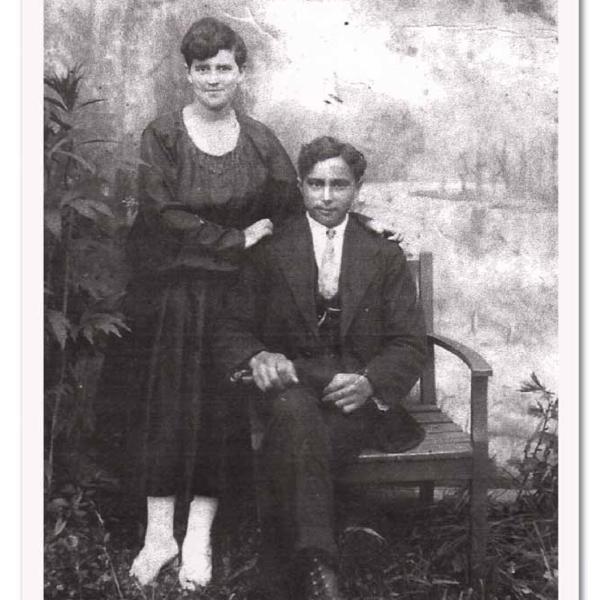
Standard Metals Company
Bellingham, Wa
I n 1937 Ariel and Mary Thal moved to Bellingham from Vancouver B.C. with their five children, Nathan, Sam, Sidney, Ben, and Lilly (Warnick). They had spent the prior ten years waiting for quota entry into the U.S. while Ariel worked as a butcher for the Pat Burns Company. In Bellingham they joined Ariel’s seven older siblings who, like him, had emigrated from Lithuania.
Ariel started working as a peddler, and stored his collectibles in the backyard of the family home, a rented house at 2211 I Street. With limited English reading and writing skills, he learned to drive and obtained a driver’s license, to recognize all the different metals and their values, and, of course, the basics of running a small business.
Later, he purchased a truck and small shop on the corner of Holly and F Streets that he named The Standard Junk Company. When the building across the street, formerly the Polar Cold Storage Company, vacated, he moved to the new and larger location at 909 West Holly, and renamed it Standard Metals.
Here, as at Standard Junk, he bought and sold scrap metal, as well as new and used machinery and tools. The scrap was collected until there was enough to sell it to a larger company in Seattle, such as Buffalo Steel and Sternoff Metals, and in Tacoma to General Metals ( Joe and Leslie Sussman) and to Simon Junk. It was not unusual for Ariel to load the truck by himself, drive to and back from Seattle, reload and make a second trip, within the same day. Ariel liquidated his inventory, and sold the building in 1966 to The Lighthouse Mission, a religious organization. Shortly after his retirement, while on a vacation in Palm Springs, California, he passed away at age 68.
On occasion, Ariel hired some hourly helpers, but his greatest support came from his eldest sons who took early dismissal from school to help in the shop. Never promoting the business to any of the four sons, he was especially proud that three of them became medical doctors.
Story from Lilly Warnick
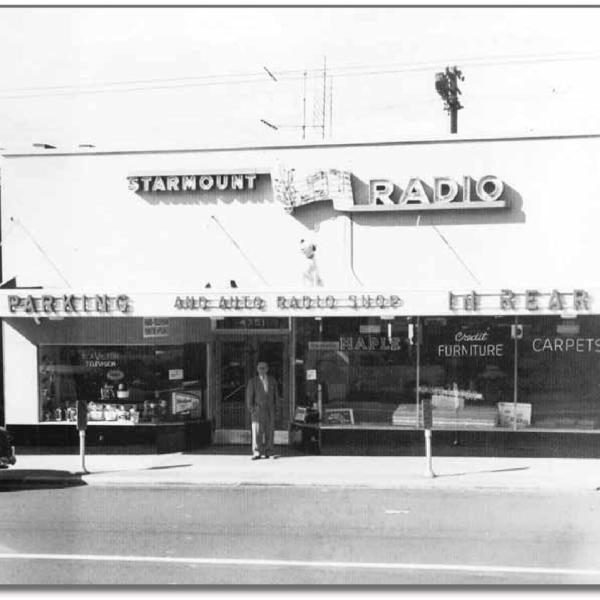
Starmount Furniture
4751 University Way
My father, Emil, and his brother, Bernard, started a small radio shop in Pelham, New York called Starmount Radio. Starmount was the English translation of our name.
In 1941, the family and the radio shop moved to Seattle. My father opened a store on 45th at Roosevelt in about 1941 called Starmount Radio. He worked at the Naval Shipyard in Bremerton during the day and repaired radios at night. My uncles, Bernard and Louis, opened Herald TV in the Greenlake area about the same time.
Soon my father moved to a larger store at the corner of 4th and 11th, and added appliances. In the late 1940s and early 1950s he added televi- sions. By the mid-1950s he outgrew his corner store and moved up to The Ave. He added furniture and opened Starmount Furniture at 4751 University Way. He sold and repaired radios and TVs and carried a full line of furniture, furnishings and appliances.
Mark Tobey, the famous Northwest artist, lived in the Wilsonian Hotel down the street. He often came to my father’s store and offered to show his art along with the art my father sold. Tobey said no one would know the difference! I bet they would.
Story from Craig Sternberg
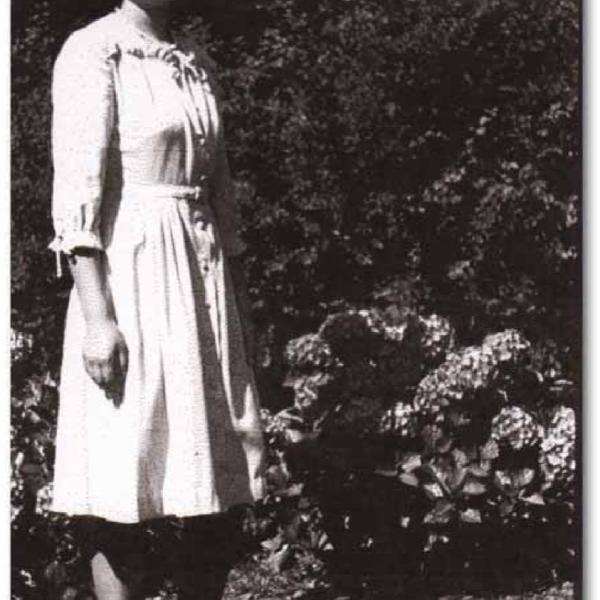
Steinberg’s Grocery Store
1814 Yesler Way
Steinberg Grocery was located at 1814 Yesler Way in Seattle. And it must have been quite a gathering place according to Riva Twersky, niece of Mara Steinberg, the owner. Her Aunt Mara was one of very few women business owners, probably even more rare in our Jewish community.
”My first memory, about 1930, was that the store had always been there! People who couldn’t get there would call in their orders and as a young teenager I remember hand carrying groceries to homes nearby.”
Indeed it must have been quite a tight knit community. The front room of our home was used as the “sales floor” for the grocery. Directly across the street were Levi’s Fish Store and Brenner Brothers Bakery. And then there was Jaffe’s Bar- ber Shop next door. Riva laments that all these stores are gone now, but in fact there still remains a small grocery at the corner of 18th and Yesler!
How characteristic of early Jewish Seattle were Othodox housewives congregating at the store, speaking only Yiddish! I remember my Aunt Mara taking orders in Yiddish, especially during Passover. Because hardly anybody had transportation, the orders for matzot were delivered by my father who had a truck. Even then Passover was a very hectic time in the community.
And talk about customer service! “If a product was not available I remember taking the Yesler cable car to Schwabacher’s on 1st and Jackson to pick up the items.”
Story from Riva Twersky
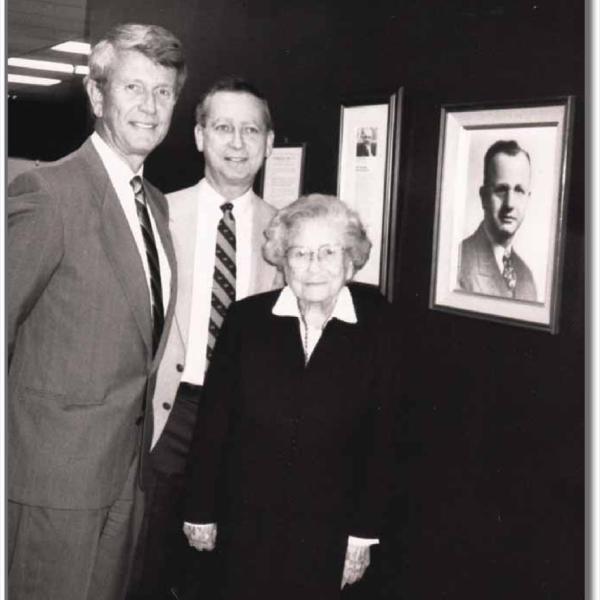
Stusser Electric
By the time Stusser Electric Company was sold to Consolidated Electrical Distributors in 1991, it had become a regional distributor of electrical products employing over 200 people with 13 locations serving the Pacific Northwest and Alaska.
Founded in Seattle in 1919 by Leslie Stusser, with financial support from his brother Dr. Samuel Stusser, the firm originally sold electrical parts to radio and hardware stores. In the 1930s and ‘40s electrical contractors and government agencies became its primary customers. Small appliances, televisions and radios were added to the product lines after WWII (and discontinued in the ‘70s). Leslie’s sons Herbert and Leslie, Jr. (Pat) joined the business in the early ‘50s. The firm moved its headquarters several times, beginning in 1921 at 3rd and Madison in downtown Seattle and winding up in 1960 at its present location on South Andover Street in the industrial area of the city.
Expansion took the form of opening branch warehouses from Salem, Oregon to Anchorage, Alaska. Supplying electrical materials for construction of the Alaska pipeline in the ‘70s was a huge challenge and provided the largest contracts in the company’s history.
When he retired Herb wrote, “Some of my earliest business memories are of joining Stusser Electric in 1954. I had just gotten out of the Army and was soon to be married to Isabel. We had recently opened our first branch in Yakima, my father was president of the company and Pat was still in the Air Force. We were in the TV and appliance business as well as electrical supplies and the company had 20 employees. I seem to recall that my business life was a lot simpler in those days.”
Several Stusser family members were active in the business at various times. While the firm continues to operate under the name Stusser Electric, there are no longer any Stussers involved with the company.
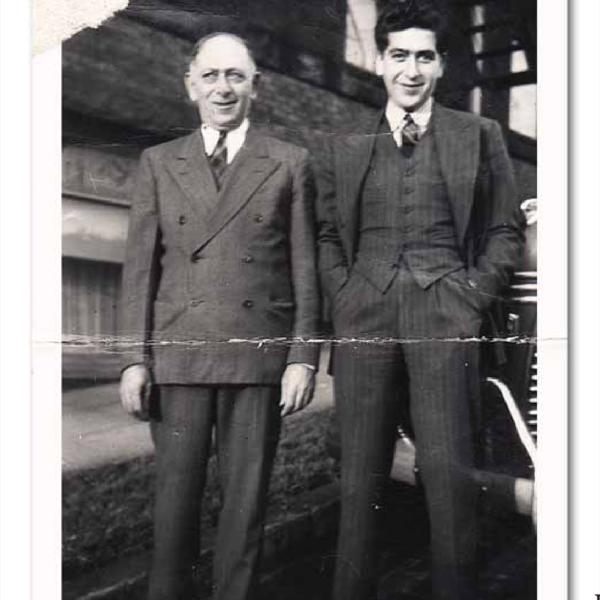
Superior Cleaning and Restoration
Jacob and Marshall Saran, 1938 T As the war ended they began raising their family. Marshall had the itch of window cleaning and with the help of his brother-in-law bought Lake City Window Cleaners. That business prospered and soon Marshall enlisted the help of another brother-in-law to diversify his operation with the addition of a rug cleaning company. “My brother-in-law had made quite a bit of money during the war,” Marshall recalled. “He mailed $5,000 in $100 bills to us—wrapped securely in a shoebox.” he roots of Superior Cleaning and Restoration originated with Jacob Saran who made his living as a window washer and lived in Minneapolis with his wife and two young sons. Jacob was the kind of man who was always looking for greener pastures so he moved from place to place with stops in Duluth, Kansas City and San Francisco. In the Bay Area, a fellow window washer told Jacob of the better prospects in Seattle and that it was a beautiful place to live. It was 1929 when they moved to what would be their lifelong home.
In 1935, Jacob had earned enough to invest in and purchase United Building Maintenance, a window washing company. His route of business clients were mostly along 1st, 2nd and 3rd Avenues in downtown Seattle. It wasn’t too long before his young son, Marshall, who was 15 and a student at Garfield High School, began working with his father in this business.
Marshall served in WWII in combat in Europe shortly after marrying his wife, Dorothy Konick.
As the war ended they began raising their family. Marshall had the itch of window cleaning and with the help of his brother-in-law bought Lake City Window Cleaners. That business prospered and soon Marshall enlisted the help of another brother-in-law to diversify his operation with the addition of a rug cleaning company. “My brother-in-law had made quite a bit of money during the war,” Marshall recalled. “He mailed $5,000 in $100 bills to us—wrapped securely in a shoebox.”
These combined operations eventually became Superior Cleaning and Restoration. It would be managed by the Saran family, in the later years by sons Michael and Craig, until its sale in 1990. Superior was the prototype of today’s household contents cleaners who provide services to homeowners and businesses whose property was damaged by fire or water. Their insurance company clients valued their enterprise and quality approach to their trade.
Story from Craig Saran
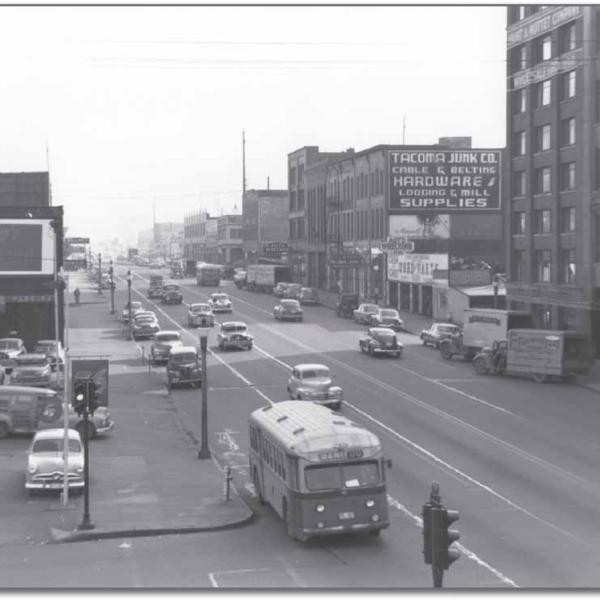
Tacoma Junk Company
Tacoma, Wa
A round the turn of the century (1900s), Joseph Aaron Sussman immigrated to the United States from the town of Sassmaken, Latvia. He arrived first in Bellingham to join his older sister and brother-in-law, Rebecca and Pete Olswang. Coming around the same time were his parents, two brothers, Frank and Charlie, as well as three other sisters, Celia (Kaplan), Jenny (Rome) and Mollie (Gross).
Frank and Joe moved to Tacoma and started the Sussman Brothers Horse Market where they bought, sold and exchanged horses. Eventually that turned into a different business: pushing a cart peddling rags and household goods and finally Sussman Junk Company. In 1913 Joe married Minnie Benson from Detroit and brought her to Tacoma. They raised four children, Leslie, Rhoda, Beatrice (Beady), and Joanne.
At some point the two partners split up and Joe founded Tacoma Junk Company. Frank set up his own scrap metal business. Both establishments were on Pacific Avenue, a few blocks from each other.
Eventually Les, Joe’s son, became a partner with his father, and the business evolved into Tacoma Steel, Tacoma Metals, Tacoma General Metals, and Jet Equipment, a major international corporation. After Joe’s death, in order to honor his father’s memory, Les put up a new sign in front of the main store that read J.A. Sussman and Son.
Tacoma Junk, a city landmark, was in business for 85 years. It was sold to a Swiss industrial corporation in 1988.
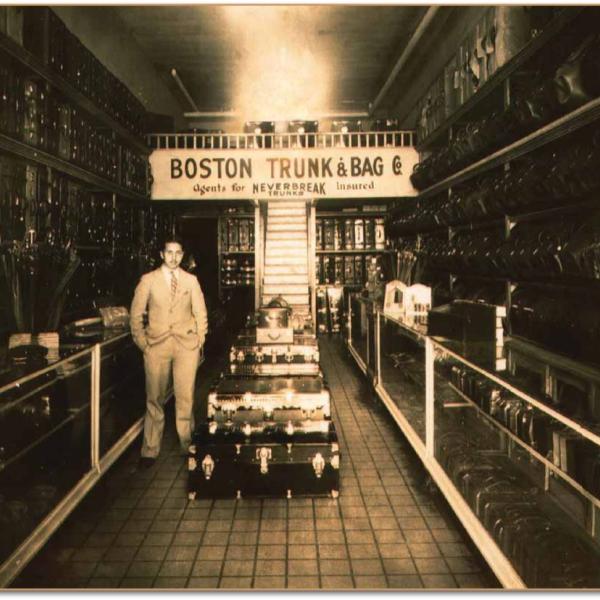
Tall’s Camera Supply
th 1409 5 Avenue
The first Litvak families that came to Bellingham arrived in 1899. Some of these early families came from a town in Lithuania known in Yiddish as Skopishok. The Talls/Thals came from that shtetl, joining more than 25 Jewish families from that area of Lithuania. Later Harry Tall moved to Seattle and was joined by brothers David, Morris and George.
When it came to business, George Tall said that “it was a way of life – you took care of your brothers and sisters.” In 1917, when George was 21, the family founded Tall and King at 1124 1st Avenue where they sold luggage. Tall and King became the Boston Luggage Co.
In 1918 the business became Tall’s Travel Shop – owned by Harry and brothers Morrie and
George. Tall’s Travel Shop manufactured luggage on the second floor of the Vance Building where they had a “long narrow window – hard to find, but worth it.”
After WWII, Harry’s son Leonard returned from the Navy. When his father asked him what he wanted to do, Leonard said, “he wanted no part of the luggage business.” That was the beginning of Tall’s Camera Supply at 1409 5th Avenue.
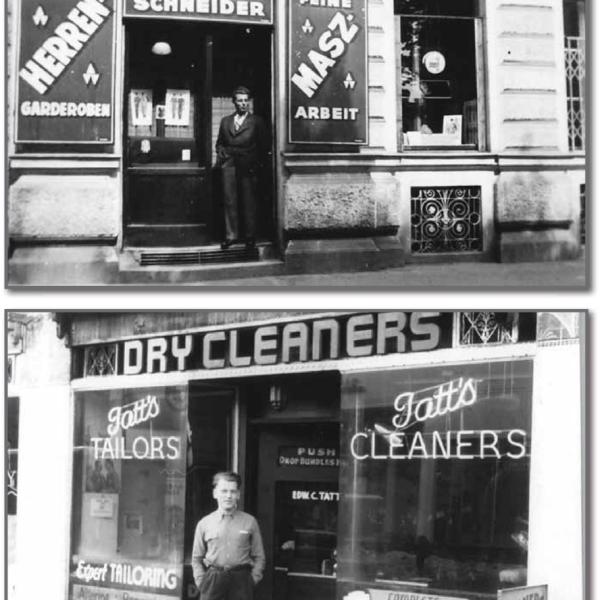
Tatt’s For Men
Spokane, Wa
Edward Tatt’s career spanned nearly sixty years. Fortunately for Spokane, the bulk of them were spent in the Inland Empire. But initially, as with others, Edi, as he was known to his friends, was fortunate enough to escape from Austria in 1938 through Switzerland to New York. He had to leave behind his successful tailoring operation. His wife to-be, Greta, followed shortly thereafter and they were married in May, 1940. Two months later, with the help of the Jewish Agency, the young couple went west. When they stopped in Spokane on the westward bound bus they immediately were taken with the city which would become their lifelong home.
Young Edi was thrown into tailoring at a very early age. He quickly became a master tailor, the youngest in Vienna’s history. That training and his skills served him throughout his career. He never had trouble finding a job. After arriving in the U.S., his entire career centered around tailoring and men’s clothing with the exception of his work in the war effort.
His American career was set in motion in Spokane when he bought a dry cleaning shop. There his tailoring expertise came in handy. But that was only the beginning. Next for the “new” American was the purchase of The Hub, a military goods and clothing store that he converted into Tatt’s for Men. He developed new merchandising skills and immediately began upgrading the merchandise. Quickly successful, the store was moved and expanded several times, drawing customers from all sorts of backgrounds including servicemen from nearby Air Force bases. And it didn’t hurt that in the ‘40s and ‘50s many men were wearing suits and ties to work every day.
Edi Tatt was adept enough to know the changing trends. At one point he took advantage of the growing western wear craze and converted his stores to be called Tatt’s Western Wear. With a change in the popularity of free-standing men’s clothing stores, Tatt’s was closed after serving several generations of Spokanites with the gift of European elegance and style.
Story from Eva (Tatt) Shulman
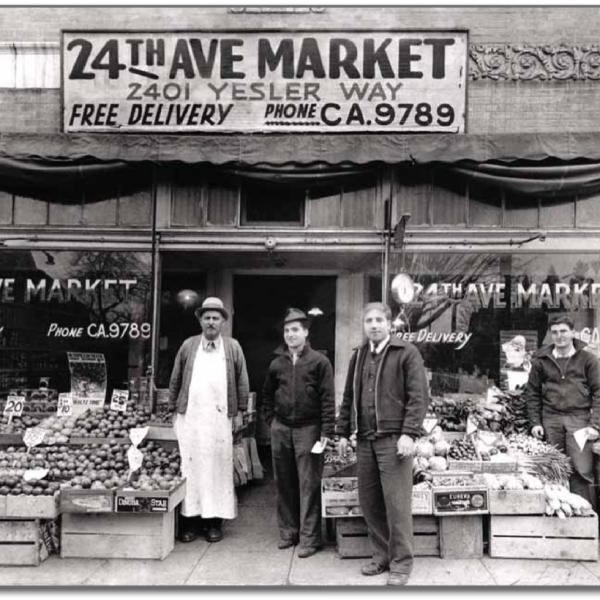
th 24 Avenue Market
2401 Yesler Way
I n 1934, two young Sephardic men from Turkey, Sam (Bension) Maimon (Bursa) and Jack Funes (Tekirdag) opened a grocery store on 24th and Yesler and named it 24th Avenue Market. In about 1940, Jack left to open “Funes and Oziel Furniture” and Isaac (Ike) Maimon, Sam’s younger brother who had been working for him since the store opened, came in as a partner.
Inside store are (left to right): Ike, a customer, Sam, and two store workers, Al Azose and Sam Mezistrano Sam (top) and Ike Maimon (bottom) were extremely personable and well-known throughout the Jewish community, turning the store into a cultural hub. While totaling purchases on hand-cranked adding machines, they would “ echar lashon” (dialogue) with their customers. Both were well versed in all things Sephardic (Ladino, history, etc.) Many of the community’s young men, some from the Black and Asian community, served as the store’s delivery truck drivers. The job carried a pride and mystique and was very much sought after; many went on to careers as rabbi, attorney, accountant, etc. Because Sam and Ike were traditional Orthodox Jews, the store closed early on Friday afternoons in winter, Saturdays and all the major Jewish Holidays. The store’s six-day work week was as follows: after morning synagogue services, Sam would open the store at 8:30 a.m. while Ike shopped the wholesale houses for fresh produce. Most days, the store was open until 8:30 p.m. Vacations were few and rare.
Because Sam and Ike were traditional Orthodox Jews, the store closed early on Friday afternoons in winter, Saturdays and all the major Jewish Holidays. The store’s six-day work week was as follows: after morning synagogue services, Sam would open the store at 8:30 a.m. while Ike shopped the wholesale houses for fresh produce. Most days, the store was open until 8:30 p.m. Vacations were few and rare.
In front of the store in 1936 are: Ike Maimon (later co-owner), Jack Funes (co-owner) and Solomon Maimon (brother of Sam and Ike), the delivery boy (3rd,4th, and 5th from left)
Sam and Ike offered easy credit to virtually all customers, each with their own handwritten ledger tablet. The fruit/vegetable prices were displayed on rolling stands in front of the store (small cardboard signs, handwritten). The store also offered free delivery, with no purchase minimum. At first delivery was limited to the Central District , but it expanded.
Inside store are (left to right): Ike, a customer, Sam, and two store workers, Al Azose and Sam Mezistrano
A 1950s mimeo flyer, the store’s only advertising and hand-delivered by kids after school, catered to the Sephardic households (e.g., avicas con arroz: beans & rice), but as customers changed (e.g., Seventh Day Adventists), products changed too.
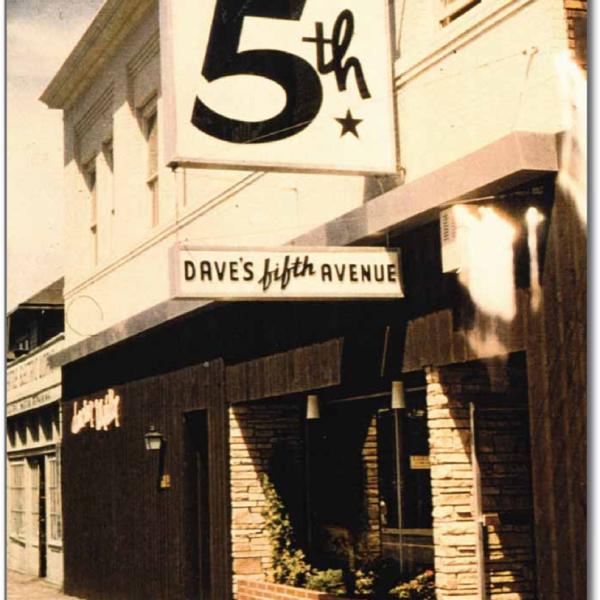
th Daves 5 Avenue
One night while Joe Venuti was playing in my night club, he told me that he had called Bing Crosby to come visit him. I didn’t pay much attention to what Joe said because I couldn’t imagine that Bing Crosby would ever enter my night club here in Seattle.
A few nights later I noticed a commotion at the front door. The gal that was checking ID was pulling on a man’s jacket. As I got closer, I realized it was Bing Crosby. I told her that I’d take care of him and to please let him go. I apologized to Mr. Crosby and introduced myself. Bing didn’t really want to be seen until intermission to sur- prise Joe, but Joe saw him in the crowd—and was so glad to see him.
Joe wanted Bing to come up and sing. The whole crowd went wild, clapping and yelling for Bing! He did go on stage and started joking with Joe. Bing sang a couple of songs—it was the greatest. That night Bing told me that he would be coming in the next night with Phil Harris. He did! For the rest of the week Bing and Phil were in every night. It was quite something! Phil played the drums and entertained us all. He asked Bing to join him, but Bing just enjoyed the music from Phil and Joe.
I’ll never forget the look on Bing’s face when I brought him a huge glass that held almost a halfgallon of beer!
I could have written a book entirely about what happened at the club in the two weeks they were at Dave’s 5th Avenue!
Story from Dave (Slim) Levy, owner of Dave’s 5th Avenue
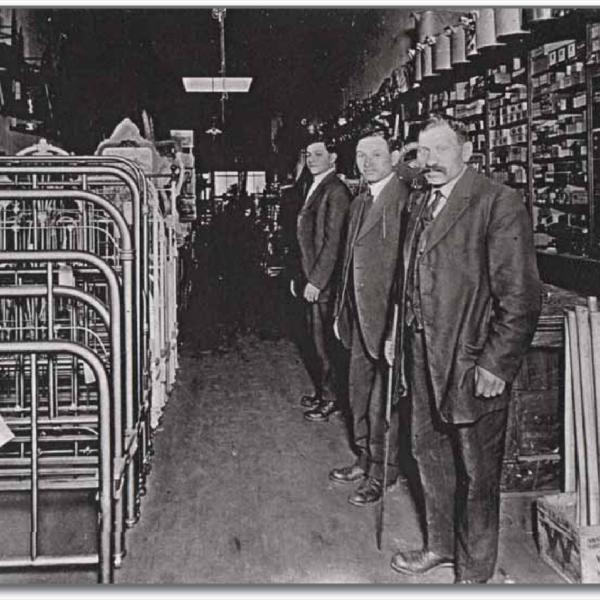
Thal’s Furniture
Bellingham, Wa
Thal’s Furniture was a mainstay of the Bellingham business community for the better part of 50 years. In 1912 it opened as Thal Brothers’ secondhand goods store at 427 West Holly Street and remained at that location as neighboring stores came and went. The store’s accounting books were kept in English and Yiddish.
The original proprietors of the store were Solomon Thal (Simon) and Max Thal. They were two of eight siblings who immigrated to Bellingham from the small Lithuanian shtetl of Skapiskis (Skopishok in Yiddish) in the early 20th century. Another brother, Louis, was either one of the store’s original owners or became involved in the store’s operation after 1918, the year that Solomon died at age 21, a victim of the great flu epidemic.
The store faced competition from other furniture enterprises in the same vicinity, including the Jewish owned businesses of Grieff Brothers, Levin’s Furniture and Northwestern Furniture owned by Joe Karash. Thal Brothers persevered and even bought out Northwestern in 1927.
In 1931 Louis’ son Myer graduated from the University of Washington and returned to Bellingham to join the business. After Louis passed away in the mid 1930s, Myer and his uncle Max ran the store together until 1947, when Myer took over full ownership. The store became known as Thal’s Furniture and Myer Thal continued as sole owner until 1960 when he and his family moved to Vancouver, B.C. ,and sold the store to Albert and Olive Gorsich.
Gorsich Furniture survived only a short while and Myer Thal ended up taking the store back. His children recall playing hide and seek in the store and posing as mannequins in the front window. They worked in the store as well. Larry was a delivery boy during the summer while Harvey recalls selling on the floor when he was 10. In the 1950s the store always had a three-room special on sale (living room, dining room and kitchen) for around $399. In 1953 or 1954 ,many townspeople converged on the store to view the arrival of the town’s first color television.
Story from Tim Baker, with Tanya (Thal) Braun, Harvey, Larry, and Rabbi Lennard Thal
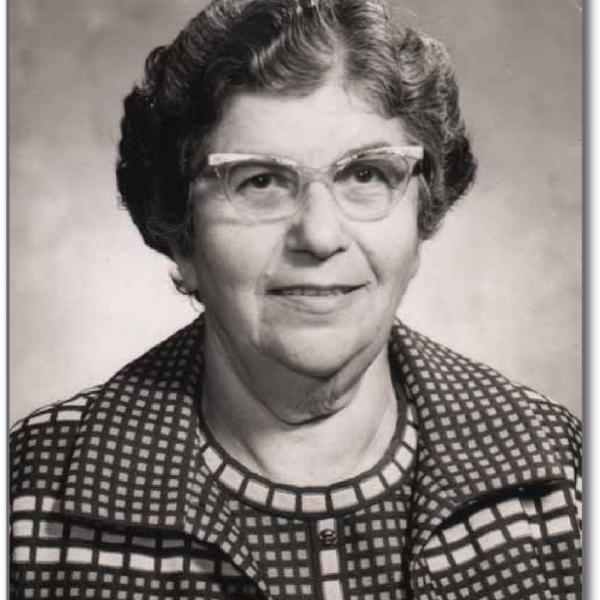
The Bohemian Bakery
My Aunt Martha Steiner, newly married, arrived in New York City from Czechoslovakia in 1933 not speaking any English. Knowing she was to settle in Seattle, she worried about the “Cowboys and Indians” of the west. She eventually taught herself English doing crossword puzzles.
When her in-laws arrived in 1939 she realized she needed to work and what she knew best was cooking and baking. In 1948 this energetic, gutsy lady decided to open her own business in Seattle’s Madrona district just three blocks from home. It was called The Bohemian Bakery and would be one of the few Jewish-woman-owned businesses in the area.
The bakery flourished, her pastries and cookies delighted all. Her pecan rolls, schneken, were a favorite among her customers. Martha delighted in giving children cookies and my friends a treat after school.
One customer favorite was her yeast dough coffee cake, filled with poppy seed, jam, sweetened cream cheese or custard. Her delicate cookies, always made with butter, were delicious. When totaling sales she would use a paper bag with a pencil, adding out loud in her native Czech language. It was fun to watch the startled look on the faces of new customers.
After fifteen years, sometimes working from 6:00 a.m. to 9:00 p.m., she decided to close the bakery. Still greeting customers with a big smile, this indefatigable lady would not slow down. She quickly joined Brenner Brothers on 27th and Cherry. They named a sandwich with her name “Martha’s Joy”. When Brenner Brothers moved to Bellevue, so did Martha.
At home she made Pesach cakes for special customers. Customers continued to call for her recipes until just five years ago, a full 35 years after the store closed. On her days off Martha made time to have her grandchildren for the weekend. They were delighted to be with their Grandma and enjoyed her specialties. Eventually their college friends were included. What an extended family! To this day friends remember their wedding cakes and birthday cakes with a doll in the center.
The Bohemian Bakery is a sweet place to remember, not only for the goodies, but especially Martha’s friendly energetic personality.
Story from by Diana Greenbaum
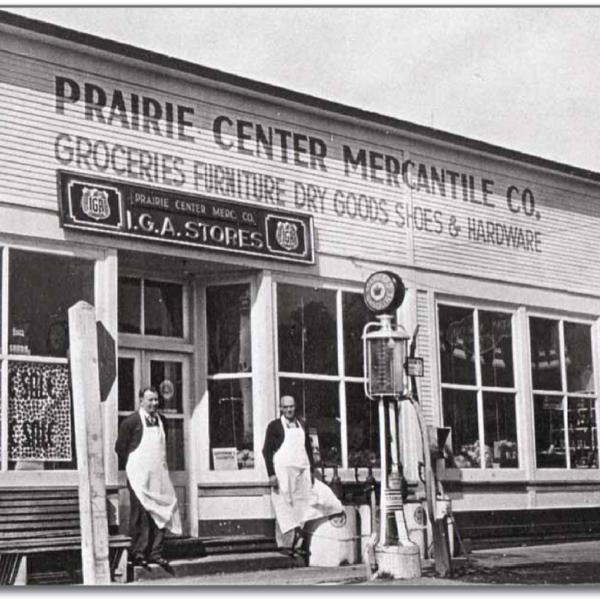
The Prairie Center Mercantile Co.
Coupeville, Wa
The Prairie Center Mercantile Company near Coupeville, Washington was owned and operated by my father, Samuel Gelb, from about 1918 to 1940, in partnership with Moritz Pickard.
My father left his native Hungary for the U.S. at age 19, even though he had no immediate family here. Before long, he made his way out to Seattle where Jacob Hiller, his father’s uncle, lived.
In Seattle my father met Gussie Roth, a nice Jewish girl whose family had moved to Seattle from her birthplace, Sacramento, California. My father also made the acquaintance of Moritz Pickard and together they decided to pool their resources and open up a general store on Whidbey Island, where they hoped to make their fortune. The store was located in Prairie Center just outside of Coupeville, at the corner of Highway 20 and Main Street, across the highway from Coupeville Elementary School. The building is still there.
The store became an IGA affiliate and carried a little bit of everything, including groceries, clothing, house wares and furniture. They also sold Standard gasoline at a pump in front of the store.
The Gelbs and Pickards were the only Jewish families in Coupeville, and they lived in separate houses next to the store. There was no organized Jewish community or services in Coupeville, but on the holidays my Gelb family went to Seattle to attend services at Temple de Hirsch, while the Pickards remained in Coupeville to attend to the store.
Around 1940, my father sold his share of the business to Moritz Pickard and moved to Bellingham, where he purchased Hohl Feed and Seed Co. The Pickards stayed in Coupeville for a number of years, eventually turning over operation of the store to their son, Herbert Pickard.
Story from Janet Gelb Koplowitz, with assistance from Tim Baker
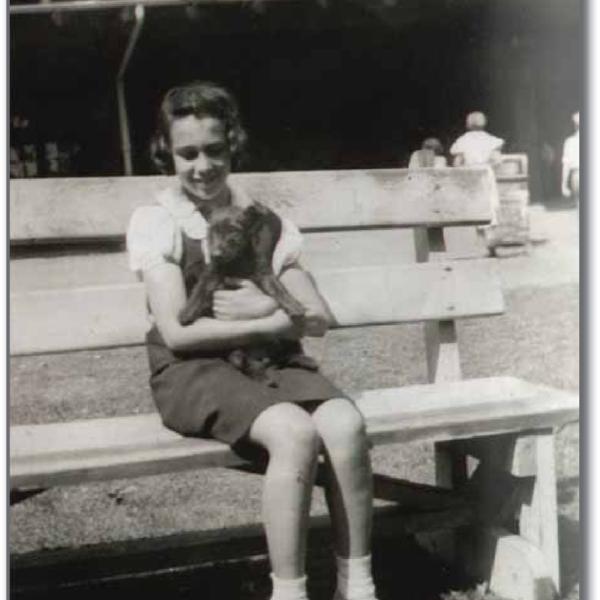
The Seattle Concessionaire
David Himelhoch, my grandfather (Grandpoppy), was born in Caro, Michigan, in 1885. He came to Seattle at the end of World War I to begin his adult life, and married my grandmother (Gammy), Leona Brin, in 1918.
His first business was a women’s dress shop called the Smart Shop at 3rd and Pine in Seattle. Though he sold women’s clothes, he once found, from one of his suppliers, tiny white fur coats for his two little girls to wear. His daughters were the light of his life - Carolyn Himelhoch Masin (Ben) and Marjorie Himelhoch Jacobs ( Jay).
During the stock market crash, Grandpoppy lost the Smart Shop. He was hired to be the manager of The Coliseum movie theater in 1929.
As economic times got even tougher during the 1930s, Grandpoppy used his ingenuity to create his next business. In 1933, he opened up a food concession near the entrance of The Woodland Park Zoo, and his business became known as The Seattle Concessionaire. This concession proved a success, and he opened another one closer to the animals. Then he opened eight more concession stands at the following parks and beaches: east and west Greenlake, Madison Park, Madronna, Alki, Golden Gardens, Seward Park, and finally a concession at Jefferson Golf Course. People came from all over to eat his special Milwaukee hot dogs!
My grandparents bought a lovely brick home on Broadway North as a result of their thriving business. That house is still there today. Eventually, they moved to the Olympic Hotel, where Grandpoppy passed away in 1950.
Gammy always was her husband’s supportive partner in running the concession business; she, with the help of her grown daughters, continued to operate the business after Grandpoppy’s death. She kept the Woodland Park concession stand open until she sold it to Dr. Miller in 1953.
Story from Marilyn Masin Kremen
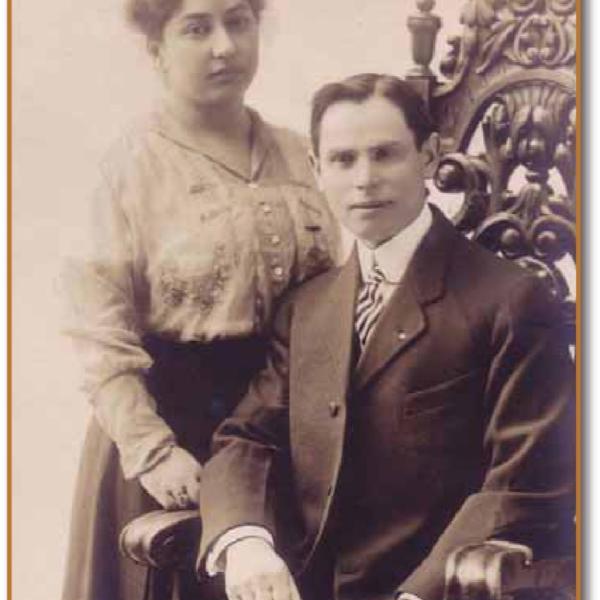
The Workingman’s Store
nd 2 Avenue & Washington Street
Wolfe Warshal arrived in New York from Russia in 1901 through Ellis Island. He walked across the United States with a pushcart because he wanted to be as far away from Russia as he could. He was about thirty years old when he arrived in Seattle where he met and married Nessie Goldstein who had arrived with her family from Russia, via Canada.
Wolfe opened the Workingman’s Store on the corner of 2nd and Washington as a Haberdashery for outfitting porters, loggers, railroad workers, and the hearty denim pants for the many hopeful men going to Alaska during the Gold Rush.
Wolfe had four daughters and helped three of his sons-in-law by lending them money to start up their businesses: Julius Myers of Myers Music,
Dave Freidman of Freidman Loans and David Bryce who ran the business after Wolfe died.
Wolfe had about twelve siblings, but brought his brother Jack and his wife Freida and their children to Seattle from Russia. Jack opened Warshal’s Sporting Goods Store on First Avenue at Madison.
Wolfe Warshal belonged to the Bikur Cholim, but was one of the founders of the Herzl Synagogue because, since he had only daughters, he wanted to sit with his family during Services.
Adapted from Washington: Then and Now, by Paul Dorpat and Jean Sherrard
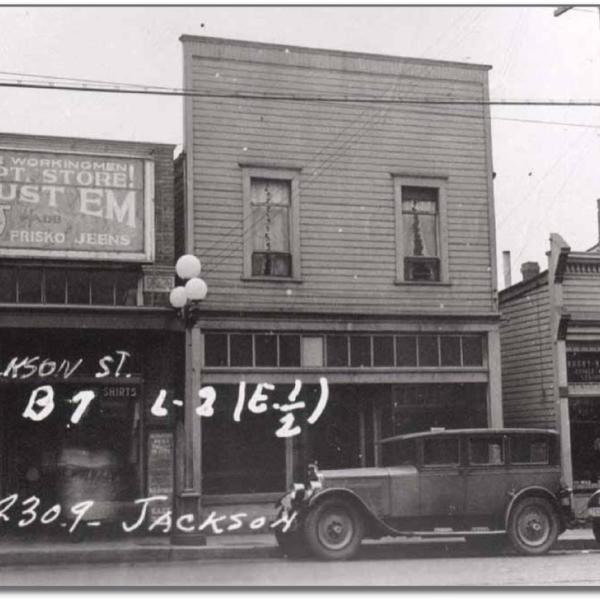
Thrifty Department Store
2311 Jackson Street
Michael N. and Esther Steinberg Ketzlach owned and operated the Thrifty Department Store at 2311 Jackson Street (near the corner of 23rd and Jackson) from 1928 to 1938. It was a retail dry goods store and its stock included work clothes, ladies dresses, piece goods, curtains, shoes and galoshes. Business was good until the depression; when business was slow relatives and friends would linger and visit.
All the merchants maintained friendly relations with one another. The decorum of the Thrifty Department Store was disrupted only once: three burglars at the safe of the Piggly Wiggly Store were spotted by the P. I. delivery boy who called the police. One burglar was shot on the Thrifty Department Store porch as he tried to escape.
The store served an ethnically diverse population as did other stores in the area. A German lady thought the Kezlach’s were “good people” in spite of being Jewish! One customer who moved to Juneau, Alaska would mail a family order to Mr. Ketzlach, and he, in turn, would ship merchandise to them. Customer service was the store’s priority whether the need was long distance or in the store.
In between his business activities Mr. Ketzlach worked for the JNF toward the establishment of the State of Israel.
Story from Reva Ketzlach Twersky
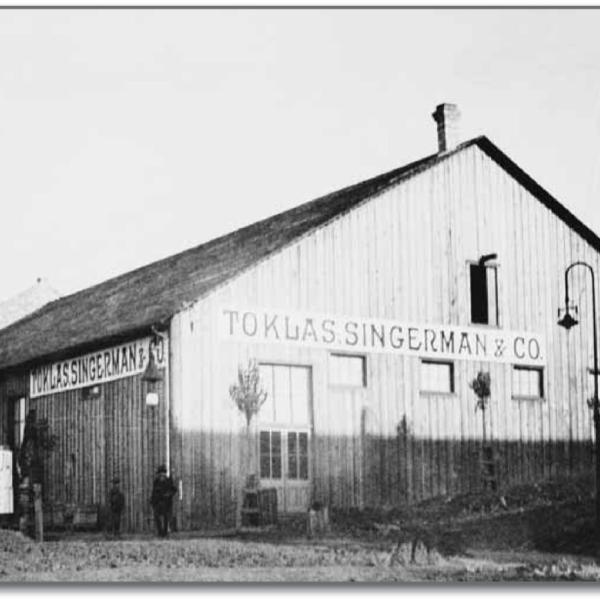
Toklas and Singerman
The Seattle roots of my wife Betty Lou (Friedlander) Treiger, and her sister Jackie (Friedlander) Goldfarb – and cousins Paul and John Friedlander – go back approximately 135 years. Great grandfather Paul Singerman steamed north from San Francisco, having arrived there by prairie wagon a few years earlier, landing in Seattle in about 1873 when the population numbered less than 2,000. He opened The San Francisco Store on old Commercial Street, and was reputedly Seattle’s first Jewish merchant.
His partner Ferdinand Toklas didn’t move up to join him until after the Great Fire of 1889, which was fortunate because immediately after the Fire, Singerman was able to wire Toklas in San Francisco to ship as much merchandise as fast as possible to restock the store.
Shortly after the Fire they built a substantial brick building on 1st Avenue, signed “Toklas and Singerman.” I don’t know why Toklas got top billing; his daughter Alice B. Toklas wasn’t famous until much later. After the turn of the century they sold out to their manager, a fellow by the name of McDougall. McDougall brought in a partner by the name of Southwick. McDougall & Southwick stayed in business for about a half century, at 2nd and Union.
If family lore is correct, after the sale to McDougall, Paul and his two sons, Billy and Isadore, opened a haberdashery, but the boys didn’t fare well in business. Uncle Isadore ended up in San Francisco, supported by his wife, Vera, who was a professional re-weaver. Betty Lou and I visited them on our honeymoon. We must have killed them because shortly after our visit they both died.
Paul Singerman was a man of action:
Before the Big Snow of 1880 . . . Singerman, was ready to move to new quarters in the Opera House building. [He] was too impatient to wait for a melt down. On January 8 he dug a channel across Commercial Street and began removing his stock. The move was good for business. The store became the city’s first department store . . .” Seattle Times, January 1, 1984
and a man known for his generosity:
“Paul Singerman, the pioneer clothing merchant and president of the firm of Singerman and Son . . . will give a turkey dinner to the blind . . . on the afternoon of Thanksgiving Day. . . . This will be the seventh annual dinner and will be continued each year indefinitely. Seattle Times, November 21, 1909
Story from Irwin Treiger
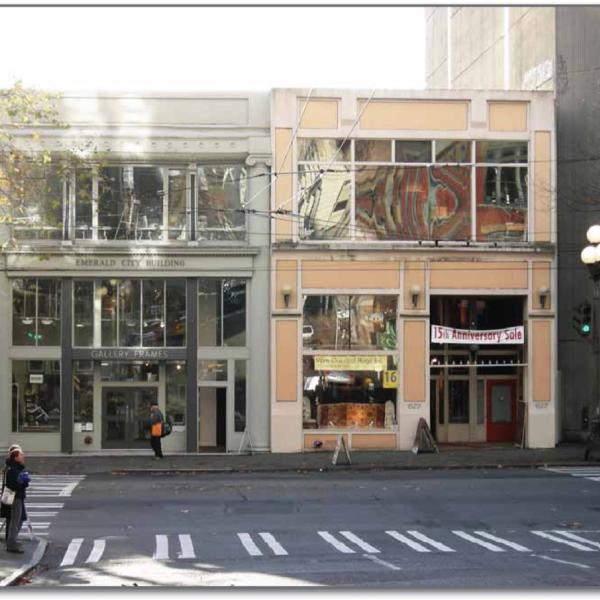
Totem Pole Loan
nd 616 2 Avenue
Earl Robbins was born in Russia in 1898, left the mother country at five and arrived in Seattle in 1913 at age 15. His first job was at OK Loans in downtown Seattle – that was what he was skilled at. He continued in that field through the Depression up until World War II.
Earl’s timing was excellent when in 1941 he and a partner purchased Totem Pole Loan which at the time was located at 616 2nd Avenue between Cherry and Yesler. Pawn shops were popular during the War and acted as a poor man’s banker or “Pay Day Loans” in today’s world. They thrived on repeat business and catered to customers that included Merchant Marines who would leave town for a while and needed a place to leave their belongings. That Earl was known for his honesty and fairness served him well during those years.
The store moved around several times in the 1940s but by 1950 settled into its permanent location. In 1951 Earl had bought out his partner.
This was a business that required you to know a lot about a lot of things, their value, what you could get if it was resold and how long you would have to carry it until it was resold. Earl knew these things and his caring professionalism and dedication to his customers served him well during his tenure owning the business.
“My father had purchased a case of ball point pens at a greatly reduced price,” recalls his son Arnie. “I knew the pens cost him 75¢ and he sold them for $10; he gave me one!”
Arnie continued, “I was working a part-time job selling shoes when one of my customers asked about the pen, how much it cost and would I sell it to him. He didn’t blink at the $10 price and I sold it to him knowing I could easily get another one in my father’s store. When I went back to Totem I related the story to my father, and when I asked for another pen he gave it to me. As I put it my pocket my father taught me a great lesson when he said, ‘Son, that will be $10, please!’”
Story from Arnie Robbins
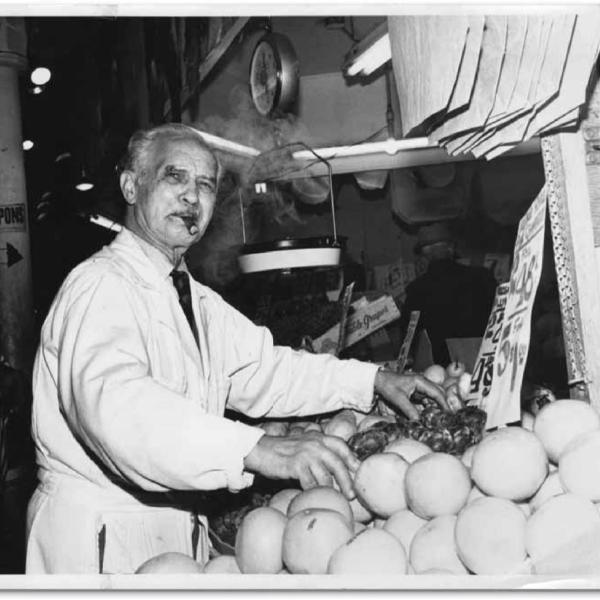
United Fruit Company
A t the age of 19, David Mossafer (nee Moussafir) left the Isle of Rhodes following the Turkish Revolution. In 1909, he moved to Seattle where his cousin, Rebecca Peha Israel, lived. She became his sister-in-law when he married Serena Peha. Though descending from a long line of rabbis, he was advised by his father: “Don’t be a rabbi . . . it’s not an easy life.” Trained as a boot maker in Rhodes, David worked shining shoes in Charlie Goldberg’s shop near 3rd & Madison. With the help of Arensberg & Sons, who provided tools and shoe supplies, he opened his own shoe repair shop three months later on 3rd & Union, and shortly after that a second shop on Pike Street with cousin Solomon (Sam) Peha as partner.
By 1912, he had developed lung problems from the shoe repair materials, so – after giving one shop to Sam and selling the other – he opened a fruit shop in the Pike Place Market, partnering with brother-in-law and cousin Marco Franco. By 1928, the business had become a chain of 18 stores throughout the Seattle area called United Fruit Company. Ness Peha became a business partner in 1929, but hard economic times forced David and Marco to sell all but the Pike Place
Market store in 1932. The Soriano brothers bought the Bremerton store. Ness Peha bought the University District store. In 1937, Marco Franco sold his half of the business to manager Solomon Eskenazi. David worked in the store every day until his retirement in 1971 at the age of 82. His son, Joseph Mossafer, remembers working in the store six days a week, before and after school on weekdays. Daughter, Bernice (Mossafer) Rind, recalls that when the owners of California Growers came to visit, David lifted up a couple of his oranges and said they tasted so sweet it was “as if they had been kissed by the sun.” The visitors wanted him to come to work for their company, but he didn’t want to. They later become the Sunkist Corporation.
Known for his honesty and warmth, David was friendly with prominent bankers, mayors and five generations of customers. Grandson David Rind remarks that for his grandfather—and many other Jews from Orthodox backgrounds who worked in the Pike Place Market—it was a difficult decision to work on Saturdays, but a necessary compromise to keep the business going.
It was sold to John and Peter Hasson in 1971.
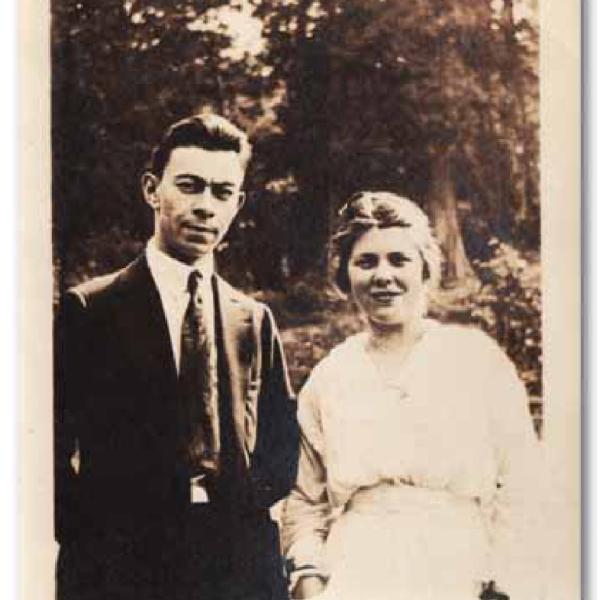
United Tailors and Clothiers
Sam and Rose Abrams, 1919 Rose and Sam Abrams, Alice, Sydney, David Sam and Rose Abrams, 1932 S servicemen on temporary leave, shipyard employees, Boeing and other defense industry workers, Russian seamen and women from Russian ships here to pick up war supplies. Civilians were now purchasing suits, slacks and other items. Russians were not conversant in English and they were delighted when my parents responded in Russian. amuel (Shmuel) Abramowitz was advised by his brother that America didn’t need more Jewish teachers and that he needed to learn a trade. Although educated in the yeshiva he departed to a larger town in Lithuania where he began his apprenticeship. He became a master tailor and was now ready for a new life in America. After a few months in Everett he moved to Seattle where he found a job as a tailor in a men’s wear store. About two years later, he met Rose Kossen at a dry cleaners shop where she worked. Dad was often working seven days per week doing alterations. We all helped out and sometimes my younger brother Syd would deliver the merchandise to the Russian ships. Syd recalled accompanying Dad to deliver clothing to a man living in Seattle’s “Hooverville” in about 1940 and was impressed with the range of customers coming from so many backgrounds.
Sam’s tailoring career was interrupted by his WWI Army service. When he returned to his work he became an American citizen with a new name (Samuel Lewis Abrams), was husband to Rose and father of two. Rose encouraged Sam to strike out on his own and thus United Tailors and Clothiers became another Jewish owned business on 1st Avenue. Sam’s store consisted of two adjacent store fronts, one side for suits, slacks, coats and the sewing machine and presser where Sam did alterations and tailoring and the other, the haberdashery, the cashier, and the business records.
The store struggled during the depression but during wartime the street bustled with people – servicemen on temporary leave, shipyard employees, Boeing and other defense industry workers, Russian seamen and women from Russian ships here to pick up war supplies. Civilians were now purchasing suits, slacks and other items. Russians were not conversant in English and they were delighted when my parents responded in Russian.
Dad was often working seven days per week doing alterations. We all helped out and sometimes my younger brother Syd would deliver the merchandise to the Russian ships. Syd recalled accompanying Dad to deliver clothing to a man living in Seattle’s “Hooverville” in about 1940 and was impressed with the range of customers coming from so many backgrounds.
The wartime days were prosperous but suddenly shipments of the Navy dress uniforms, mainstays of our business, stopped coming. Dad was deeply troubled by this and although the problem was resolved as the war came to an end, our Dad’s health deteriorated. On November 11, 1945, Armistice Day, a holiday very meaningful to him, he had a massive heart attack and died in his store. A few months later United Tailors and Clothiers was sold.
Story from Alice Siegal
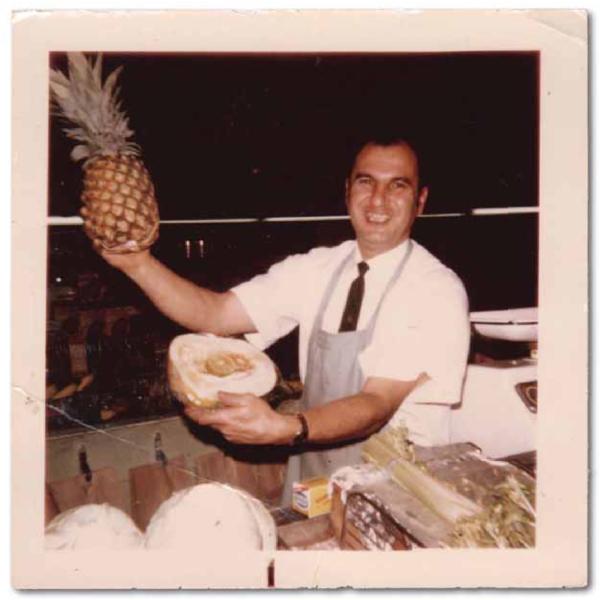
University Fruit and Produce
There was excitement on “The Ave” in the 50s. At that time, there was something magical in the University District. All the merchants were friendly and we were one big happy family. This went on for many years. Then the day came that we had to put bars on the windows and padlocks on the doors. The Ave was transformed into a nightmare.
I had a flower shop and a produce department. In those days, we had to import off season fruits and vegetables. We catered to different areas. Our customers came from Windemere, Sand Point, Broadmoor, and the Highlands, just to name a few. We also served the sororities and fraternities.
Our market consisted of a Van De Kamp Bakery, Carter’s Deli, and grocery store. We had live butchers who cut meat to order. The Van De
Kamp salesgirls wore Dutch uniforms and windmill caps.
I would have to say that Christmas was the most exciting time of the year for our business. We made up fruit baskets for Ness Flowers, sold poinsettias, wreathes, mistletoe, holly and everything that went with the holiday. Ness Flowers was also a family owned business on The Ave.
Twenty years was a long time to have a business in the University District. My partner was the late Leon Amon. Our market was unique in that we carried upscale produce and flowers, which the supermarkets did not. We could not have competed with them. Looking back, I enjoyed it all.
Story from Daniel Ben
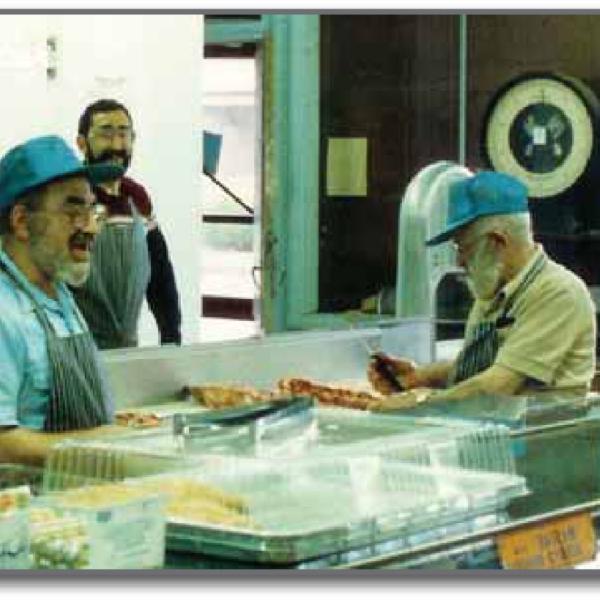
Varon’s Kosher Meats
2811 East Cherry Street / 3931 Empire Way
Harry Varon got into the meat business right from the start. After graduating from Garfield HS, he started out at Oliver’s Meats where he learned to be a butcher, how to cut the meat and deal with customers. He honed his skills further in the US Navy, joining up in 1940, before Pearl Harbor. He was a hard worker and advanced through the ranks (second class cook to Chief Commissary Steward), serving much of his time in Dutch Harbor Alaska.
In 1947, when Harry was newly married and Seattle already had five kosher butcher shops Harry decided to open up his own. He was younger than the others, with a lot of Navy butchering experience. When he went before the kashruth board most were not in favor of another butcher entering the business, but Mr. Ziegman, one of the butchers, argued that Harry was young and a returning veteran, so he should be given a chance, thus Harry was approved.
Varon’s Kosher Meats started out on Yesler Way, between 24th and 25th Avenues. About five years later Harry relocated to 2811 East Cherry Street and his brother Leon joined him as a partner. A few years later he took in Jerry Adatto as an assistant, who remained with the store almost 40 years. During the 1950s and 60s Varon’s became the primary kosher butcher in the city, catering to the needs of hundreds of Orthodox Jews in the area.
In 1968 following the riots brought on by the Rev. M. L. King assassination, all the store windows were broken, which proved to be a sign of big changes coming. Due to an urban renewal project his building was to be torn down so in 1972 Harry moved the store to 3931 Empire Way (Martin Luthur King Jr. Way). He set up shop again, this time as the only operating kosher butcher in the state.
Harry and his wife Rae had raised four children and their second daughter, Renee, while in Israel met a young British man, Roger Hirsch, whom she married. What a coincidence that Roger was a trained kosher butcher! In London, Roger had learned the trade at Frohwein’s Kosher Meats and at Smithfield College. In 1982 Roger and family moved to Seattle working in the shop, and later that year Leon retired. Roger took over ownership of Varon’s Kosher Meats the next year and he ran it for another 14 years. At the end of 1996, after nearly 50 years of operation, Roger was forced to close Varon’s due to the emergence of competition in the kosher meat business by large supermarkets.
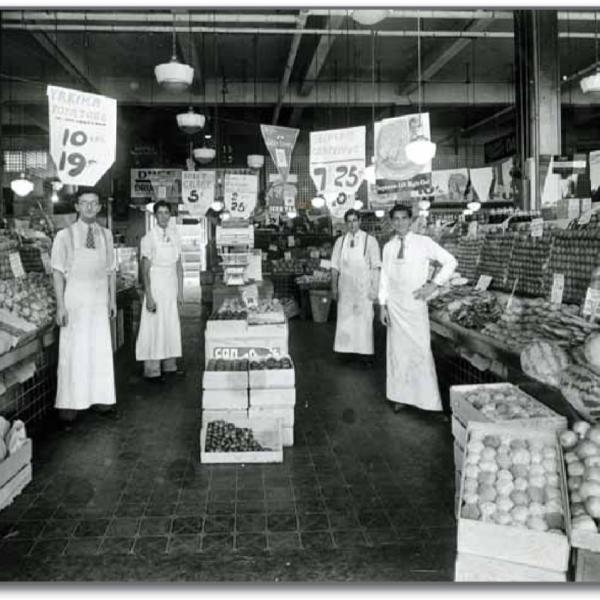
Victory Fruit Market & Angel’s Food Center
Victor Angel owned and operated two grocery stores in Seattle from about 1946- 1975, Victory Fruit Market and then Angel’s Food Center, both in the Capitol Hill neighborhood. Victor was the only American-born child of Bohor Yehuda and Bulissa Esther Angel, who had come to Seattle from the island of Rhodes with their seven older children.
Within the family Victor was therefore known as “El Americano”, and his personality and achievements matched his nickname. He believed in the American dream, that this is the land of opportunity. Hard work, good ideas, honest labor—and a sense of humor—will enable a person to earn a living, raise a family, and participate meaningfully in his community. He graduated from Garfield High School and in 1937 he married Rachel Romey. Victor worked full time in the fruit and vegetable business. Together with his brother Ray (Rahamim), Victor opened the Victory Fruit Market in the Broadway Market shortly after the end of WW II.
In the early 1950s Victor opened his new store, Angel’s Food Center, 621 Broadway East, in partnership with Al Bendicha Israel. Victor loved to say: “I always wanted to see my name in bright lights on Broadway.” He operated the store until his retirement in 1975.
Angel’s Food Center was too large to be a “mom and pop” grocery store, and too small to be a fullscale supermarket. It didn’t have a parking lot and it faced stiff competition from nearby chain-store supermarkets (Safeway). Yet, Victor made a great success out of his store. He prided himself on having the highest quality fruits and vegetables, beautifully displayed. He introduced a salad bar, long before it became fashionable. He offered free delivery, so many customers called in their orders. Victor believed that honest hard work would be rewarded, and that personalized friendly service would win and keep customers. He was famous for his smile, his witty quips, puns and jokes. His winning personality was the key to his success as well as his entrepreneurial spirit. Victor Angel , circa 1975
He passed on the entrepreneurial spirit to his children. His eldest son Bill said he “learned more about good marketing and business acumen from his father than in all his business classes at UW.” His son, Rabbi Marc, who, although he made a career of the rabbinate, saw the need to further his goals by founding such organizations as Sephardic House (to print Sephardicrelated books) and the Institute for Jewish Ideas and Ideals. His daughter, Bernice (Schotten), has a career in business in Sioux Falls, South Dakota.
His youngest son, Rabbi David, founded two successful real estate companies, Emerald City Investment and Management in Seattle and the Angel Group NY, in New York City.
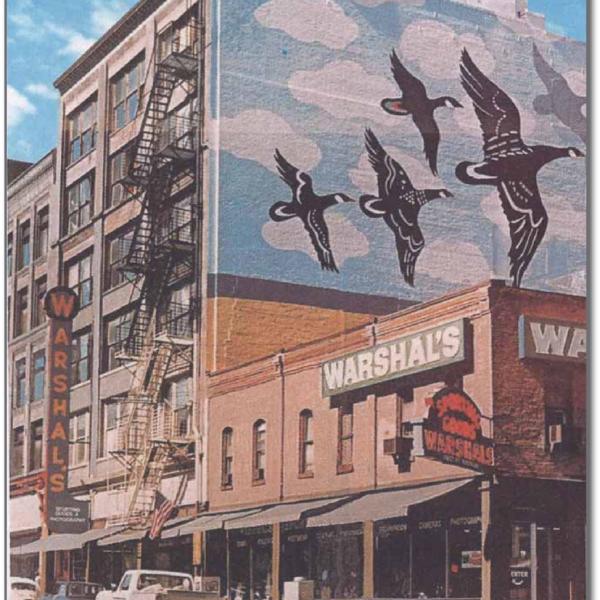
Warshal’s Sporting Goods Company
st 1 Avenue & Madison Street
I n 1911, Frieda and Jack Warshal left Warsaw Poland and sailed for Boston with their three sons and their daughters Sarah, Mary and Ruth. In 1912, they arrived in Seattle where Jack’s brother, Wolfe Warshal, owned a dry goods store. Jack opened his own store near Union Street and was eventually joined by his sons Bill, Adolph, and Milton.
Business was good and they moved down First Avenue near Madison. In 1936, with a robust mail order business, the store opened at the corner of 1st and Madison. J. Warshal & Sons had become the largest, most comprehensive sporting goods store west of Chicago. For 89 years and three generations, Warshal’s Sporting Goods was a Seattle icon.
Milton was killed in Normandy in 1944. Adolph and Bill enjoyed a genuine brotherly partnership. They worked together in the same office with desks facing each other; their personalities perfectly complimented each other. Many got their first job at Warshal’s, including extended family and young people in the Jewish community.
Customers relied on the skilled specialists in every department. Sam Angell managed the Photography Department for 60 years, providing generations of professional photographers and camera enthusiasts with knowledge, equipment and supplies.
“Closeouts” were a favorite part of the merchandise mix at Warshal’s downtown store . . . large quantities of excellent merchandise were acquired at deep discount and the savings passed on, like 2000 8-foot boats, 6,000 bowling balls, 2 tons of bat guano fertilizer!
Sports enthusiasts gathered to swap stories and trade information. People working downtown regularly found their way into the store during their lunch breaks to browse, listen, and buy. When the name Warshal’s Sporting Goods comes up— even today, many Seattleites recall with fond memories being taken to Warshal’s by parents and grandparents to experience the store, meet the staff, purchase the merchandise, and expand their hobbies and sports interests.
Jerry Warshal and Dennis Warshal took over and ran the store in the late 60s/early 70s. Warshal’s closed its doors in 2001 to make way for a hotel and condo development.
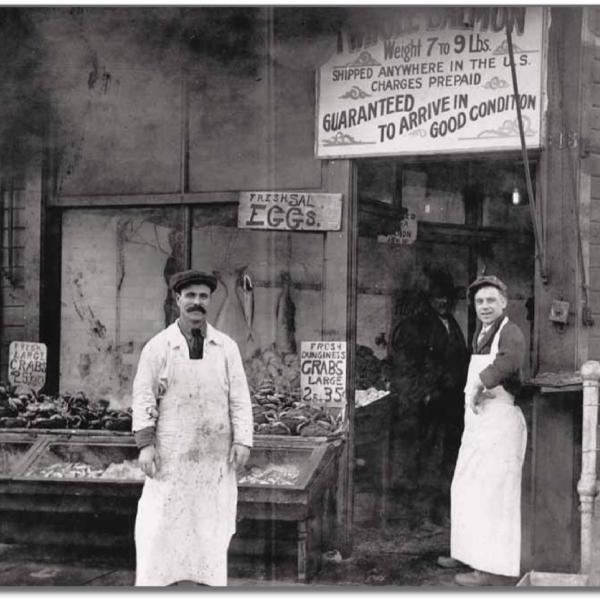
Waterfront Fish & Oyster Company
I n 1902, when Solomon Calvo and Jacob Policar landed in New York, they were told by a Greek acquaintance, who had also lived in Marmara, that if they took the train and went West as far as the train would take them, they would find a city there, where the train stops, called Seattle, and “you will like it there because it’s exactly like Marmara.”
They got off in Seattle (population 80,000). As they walked on the waterfront (all wooden streets, and not wide avenues) they looked for someone to help them. As these boys grew up with Greeks, they spotted a man they knew was Greek. He let them sleep in the back of his fish market, employing them during the day in the market itself. They spoke Turkish, Greek, Ladino, and Hebrew; but not English or Yiddish. Calvo and Policar made a return visit to Marmara after a time. Policar stayed for several years but Calvo returned to Seattle. Calvo finally started out on his own with a pushcart, loading it with fish at the waterfront, and walking to the Georgetown area selling house to house. Although he was not yet fluent in English, he said “his products spoke for him.”
He made enough to get a house on 10th and Yesler, and furniture, and wrote to his bride, Luna Levy of Tekirdag, whom he had married on the 1904 return trip to Turkey, to come to America. He started Western Fish & Oyster Co. which moved to a second location at 819 Railroad Avenue. He was purveyor to the first fishmongers in the Pike Place Market (the Amon and Levy families, among others). Later, just south of the Western Fish location, he opened Waterfront Fish & Oyster Company at 101 Alaskan Way, on a pier at the foot of Yesler Street. Fish boats would come directly to the end of the pier, where Waterfront had facilities to unload the catch onto scales, weigh and then pay the fishermen and move the catch directly into their market warehouse.
Calvo was one of the original members of Congregation Ahavath Ahim Synagogue in 1909, and later became a member of Bikur Cholim, B’nai B’rith, and the Sephardic Brotherhood. He passed away in 1964 leaving a rich history in both the business and Jewish Community.
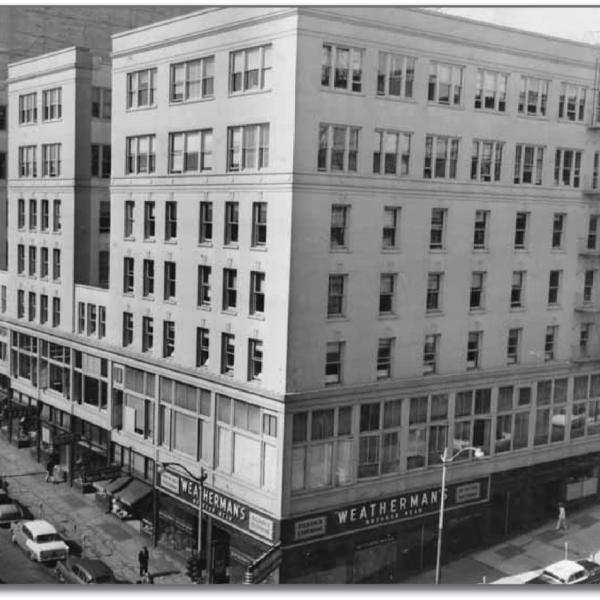
Weathermans Outdoor Wear
st 1 & University
1st and University, 1957. The Arcade Building was demolished in 1988 to become the site of the Seattle Art Museum. The entrance is in the exact location of the entrance to our store. W hen we were kids in the ‘50s, going downtown didn’t mean shopping. It meant going to visit the family – Nanny at Jean Hall, Gramps at Foreman and Clark, Dad and Zaida (they were always in business together ) at “the store.” We can still see and smell that store. There was a counter down the middle. Shoes and boots were sold on the left, coats, shirts and jackets on the right. There was a moose head on the wall, a stack of hat boxes on the shelf, and long leather bootlaces hanging in the little office in the back. At the end of each work day Dad threw sawdust on the wood floors and, using a long handled push broom, swept up and down the room in neat rows, pushing the sawdust as it picked up oil, dust and grime. Oseran) and Zaida bought and sold used office equipment. Following that venture they bought a business on the corner of 1st and University. That business began as the Arcade Military Store selling uniforms, decorations, patches and other military paraphernalia. After the war the military store became Weathermans Outdoor Wear. For a while, Weathermans continued to sell military products on the left side of the center counter and moved into boots, jackets, shirts and pants, including Stetson, Filson and Pendleton products on the right side of the counter. They sold durable tough clothes for tough men who fished, hunted, climbed and enjoyed rugged outdoor activities in the Pacific Northwest and Alaska.
Zaida (Ben Oseran) was born in Nikolayev in 1896. In 1911, the entire family immigrated to Camper, Manitoba (just outside of Winnipeg) as part of the Baron de Hirsch Jewish Colonization Association program to facilitate the emigration of Jews from Russia to colonies in North and South America.
Farming didn’t work out for the family, and in 1920 they left Canada and moved to Seattle where their friend Laura Berch lived. Over the years the family did anything it could to make a living. For a number of years, Dad (Lawrence
Oseran) and Zaida bought and sold used office equipment. Following that venture they bought a business on the corner of 1st and University.
That business began as the Arcade Military Store selling uniforms, decorations, patches and other military paraphernalia. After the war the military store became Weathermans Outdoor Wear. For a while, Weathermans continued to sell military products on the left side of the center counter and moved into boots, jackets, shirts and pants, including Stetson, Filson and Pendleton products on the right side of the counter. They sold durable tough clothes for tough men who fished, hunted, climbed and enjoyed rugged outdoor activities in the Pacific Northwest and Alaska.
Decades later when dad learned that The Seattle Art Museum was to be built at the site of his first business, he made a contribution to its capitol campaign because that corner was his home for such a long time. The “Hammering Man” works there now.
Story from Bill Oseran and Carol Oseran Starin
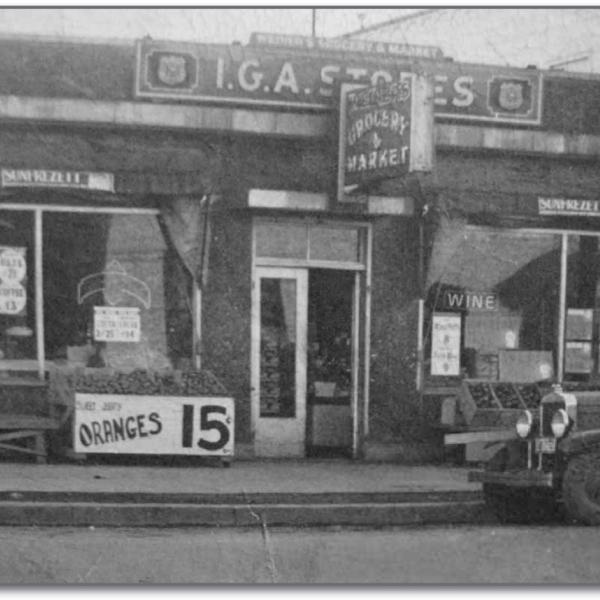
Weiner’s Grocery
Spokane, Wa
The history of Weiner’s Grocery can be traced back to the living room of Jennie Eckhaus at 324 South Walnut, which she had converted into a store with a variety of canned goods plus a refrigerator for a few perishables.
Phil Weiner, son of Jennie Eckhaus, also peddled rye bread and salami (brought in from Seattle) and home-cooked dinners to local Jews from this same living room.
In 1935, the success of the living room grocery warranted a change to a real grocery store build- ing at 3rd and Maple Streets. Weiner’s was first managed by Phil’s older brother Lou. When Phil returned from serving in the army in Europe in WWII, the two brothers became the co-managers of Weiner’s for the next 53 years.
Weiner’s Grocery was well known for their specialty food, deli food (including corned beef and roast beef made from scratch), and a variety of salads. They were especially noted for their home delivery service.
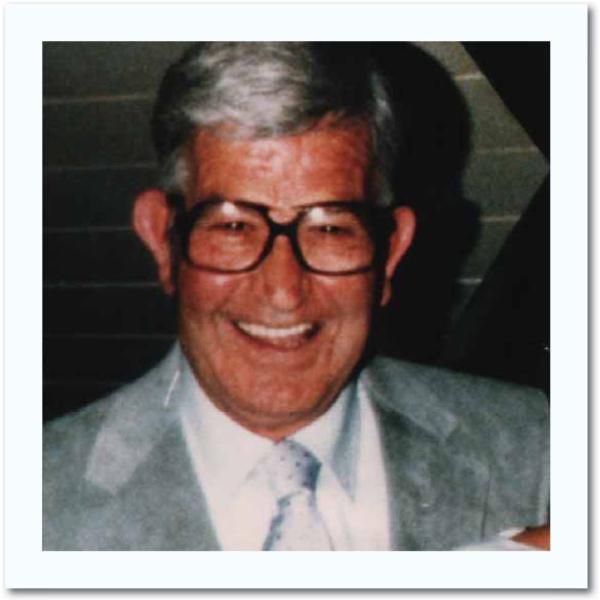
West Hill Fish Market
Jack Sadis Ralph Israel F West Hill Fish Market opened in the spring of l947. Sharing space with Hays Bros. meant that the large population of Scandinavians and Catholics contributed to the growth of the business. Both groups bought meat and Catholics bought fish on Fridays. West Hill gained a reputation for their fresh fish and service. ollowing World War II, and after 20 plus years working for Palace Fish Company, Ralph Israel decided it was time to seek the independence he craved and become the owner of his own business.
Through his contacts in the fish industry on the Seattle waterfront, Ralph heard about a retail market available in West Seattle. It was an outdoor market, well equipped and the building was shared with Hays Bros. Meat Market.
Ralph had to put the buying of the store together in a very short time. In addition to financial concerns, Ralph had to find a partner or employee to work with him. I remember the discussions at home when I was younger. Ralph knew many individuals he had worked with in the years at Palace Fish Co. He felt one of the best retail men he knew was Jack Sadis, who worked in the retail division of Palace Fish. Jack, a few years older than Ralph, was also born on the Isle of Rhodes and had also started working for Palace Fish. So arrangements were made for him to buy in as a partner.
West Hill Fish Market opened in the spring of l947. Sharing space with Hays Bros. meant that the large population of Scandinavians and Catholics contributed to the growth of the business. Both groups bought meat and Catholics bought fish on Fridays. West Hill gained a reputation for their fresh fish and service.
Ralph and Jack were active in the West Seattle Business Community. They developed business accounts with Bayshore Restaurant on Harbor Drive, West Seattle Hospital, Vann’s Restaurant, West Seattle Golf Club and Kermit’s Restaurant. Ralph and Jack knew most of their business neighbors at the Junction: Pete Campbell Insurance, Huskys deli, Leeds Shoes, Vann Bros. Restaurant, Huling Bros. Buick and the Hays Bros.
During the years there, West Hill only employed one full time person. By l952, the sons of Ralph and Jack filled in as extras when they were needed, from junior high school through college and beyond. In 1973 Ralph was tired and wanted to retire. Jack wasn’t ready to retire. After twentyseven years they decided to close the business. Story from Joyce Cordova
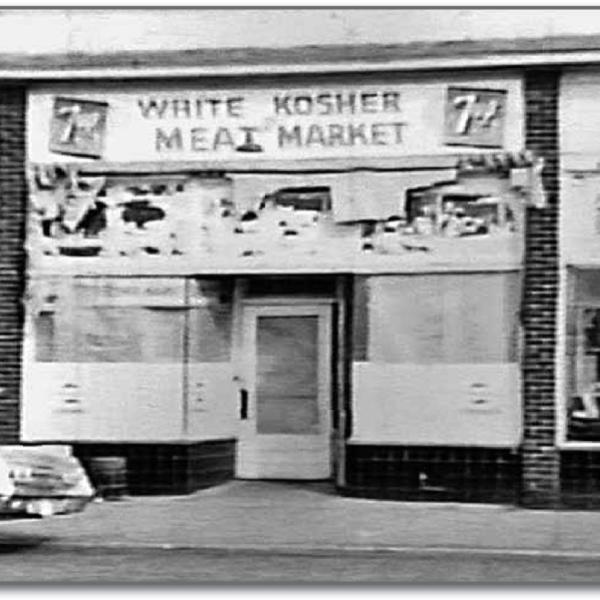
White Kosher Meat Market
East Cherry Street and Empire Way
Nessim (Sam) Azose started the White Kosher Meat Market in 1936 on Cherry Street between 27th Ave and Temple Place. White Kosher sold meat and chicken, and Sam’s brother-in-law, Nessim Behor Chiprut, ran the fish side. Next door was a grocery store run by another of Sam’s brothers-in-law, Marco J. Calvo.
White Kosher was the first kosher meat store to actually display all cuts of meat and fish in counters for people to see and choose, and also started free deliveries to customers. Quite a few young Sephardic men worked as drivers at one time or another. In addition to fresh meat they sold corned beef and sarseecha (a spicy sausage) produced at the shop. In 1945 Sam took ill and had to close down the shop later in the year.
A few years later Jack Maimon, who had run a successful grocery store on Yesler Way, sold the grocery and joined with Calvo as partner in restarting White Kosher as a butcher shop. With a large family, Maimon brought in other young Sephardic men to assist in the store and serve as delivery drivers.
One of these, Joel Benoliel, has very vivid memories of working in White Kosher. When he just turned 16 and had gotten his driver’s license, he built up his courage to approach his uncle, Jack, to whom he had not been close previously. He asked about working in the store, but Jack, checked with Joel to be sure he had his driver’s license. Jack looked over at his partner Calvo and said in Ladino, thinking Joel didn’t understand, that he had told a neighborhood boy to see him about the job but, after all, this was family! Marco wholeheartedly agreed and Joel was hired.
That began four years of learning from Uncle Jack. Jack worked tirelessly not only to support his family, but doing the extra things because, in making sure that the Kashruth in the shop was impeccable, he was living a mitzvah. His customers were dedicated to him, but he was more dedicated to them. He was scrupulously honest, down to the correct half-ounce that he might inadvertently overcharge a customer. He welcomed Jews of every level of observance with equal enthusiasm and they felt it. When there were no young men to deliver, Jack gave the job to a colorful older man, Mike Alkana. The store survived the 1968 riots unscathed due to his friendship with the tavern next door. However the work was hard and he was getting older, so Jack Maimon closed White Kosher in 1970.