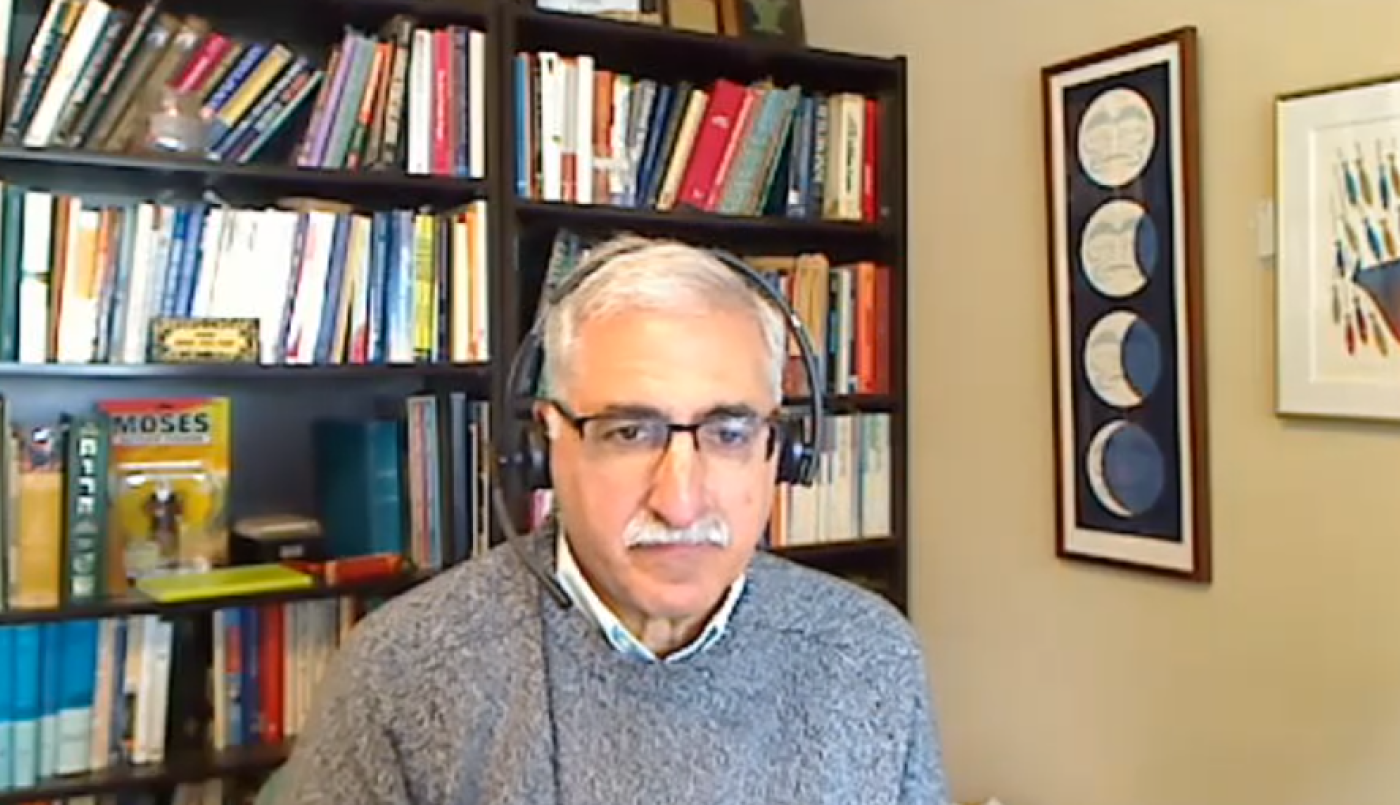
The founding leadership. So I was the point person from the URJ, as I may have mentioned that in the 2014 interview, I was the point person. And I think it's part of what helped increase my job at the URJ, which I went from 13% time to 10% time to 50% time to then 100% time. And I remember they offered me. I think it was after a year or two, it was Rabbi Lenny Thall who by who happened to be the vice president of the Union for Reform Judaism, who, by coincidence, grew up in Bellingham in Whatcom County. I remember Lenny said, after a year of my being with the URJ, what would now like to increase your time to, I guess what it maybe it would have been to half time at that point. And I had to say to him, you know, I wish you had told me three months ago, I just signed another contract with Congregation Beth Or. I can't take it. If you can wait a year, I'll commit to it right now. But if you need to hire somebody else. I have to concede. You. Please. Thankfully, he waited. And it's been a wonderful career. And Lenny and I are still in touch. And I could give you, you know, I won't recite it, but I could give you his phone number from memory. I have a funny thing about remembering numbers, especially phone numbers. The founding leadership. So I looked at 35 different sites. The goal was that it would be within two hours of SeaTac airport. So there were places that I looked at in Skagit County, Whatcom County, and east toward Yakima. I'm embarrassed to say I'm not sure of the county name there, but it was east of Snoqualmie Pass. Looked at places south of the airport near Olympia. It was actually once. Maybe we'll go just south of PDX of Portland's airport. So McMinnville, actually, we were going to go, and I may have said this, the 2014 Camp Baraka in Black Diamond. We actually had a deposit put down on the camp. And as the Love Israel family was kind of playing their cards, they were going bankrupt. That became the site, the founding leadership. So, there was lay leadership and professional leadership, and it was kind of like making the Golem. What am I talking about? It was a little bit of dirt from here and a little bit of ideas from there, and it was the URJ to think. And some from Northern California, where Ruben Arquilevich, now the director of the entire camping system, Reuben and I actually looked at property together, and he had some influence because he was the director at that point of camps, Newman and Swig. He and I actually tell the story because we were looking at property at Baker Lake. We went snowshoeing and got stuck in the snow up to our waists. We thought we would never get out of there, but we're here to tell the story. So there were all of these influences, and much of it happened organically, but even things we knew that we wanted to have, a strong environmental ethic. Well, there was, you know, so let's use someone said maybe we should use paper plates. No, do not use paper plates, even though it would save water. We're going to use glass dishes that can be washed and reused, only to find out later that, if even had we been composting using paper, it would have been helpful. It would have used less water and probably, in the long run, been better off. But we didn't know that. Some things early on there wasn't minhag. There wasn't a custom. Early on, a Birkat Hamazon developed at camp with its own hand signals. It's since been studied by Rabbi Chaim, PhD. Sarah Ben Or is a professor at Hebrew Union College in Los Angeles. Hope I'm getting her name right. She studies Jewish languages, Yiddish and all the, you know, Ladino. And they use actual colloquialisms and how they've developed. She has studied this Birkat Hamazon with its own hand signals that were developed at camp. And there are still some people who remember when it was created. But David Berkman, who was the first camp director, brought in things from his experience at Camp Harlem and Greene Family Camp in Texas. He brought some staff members with him from Greene Family Camp, and they shaped that early culture. I think, you know, Tefillo, prayer once a day. There were Jessica Stein and others in those early days who, some of the physical arrangements. There's a mosaic in the garden that. Jessica. I think it was Jessica. I believe it was Jessica who led that. Well, that's become a part of the feeling of camp. Now, Rabbi Alana Mills is the director. This will be her second summer. She is bringing in, as a rabbi, all kinds of things. So it continues to grow. The lay leadership is influential. It's this wonderful partnership. I don't know that others could have said. Let me let me rephrase it as there was an idea, an ideal that had to be brought to fruition over time. Some of it was, oh, predetermined. If I believe in predetermination, like there will be Birkat Hamazon after meals, there will be a song session. There will be prayer. There will be Shema in the cabins at night. But the exact details, those will be figured out and co-created and changed and grown over time, just isn't as the camp has grown. You know, they recently put in a high ropes course and a swing, and you know, and eventually a treehouse and, you know, goats and a little animal corner. So all of these things happen over time. You're smiling.