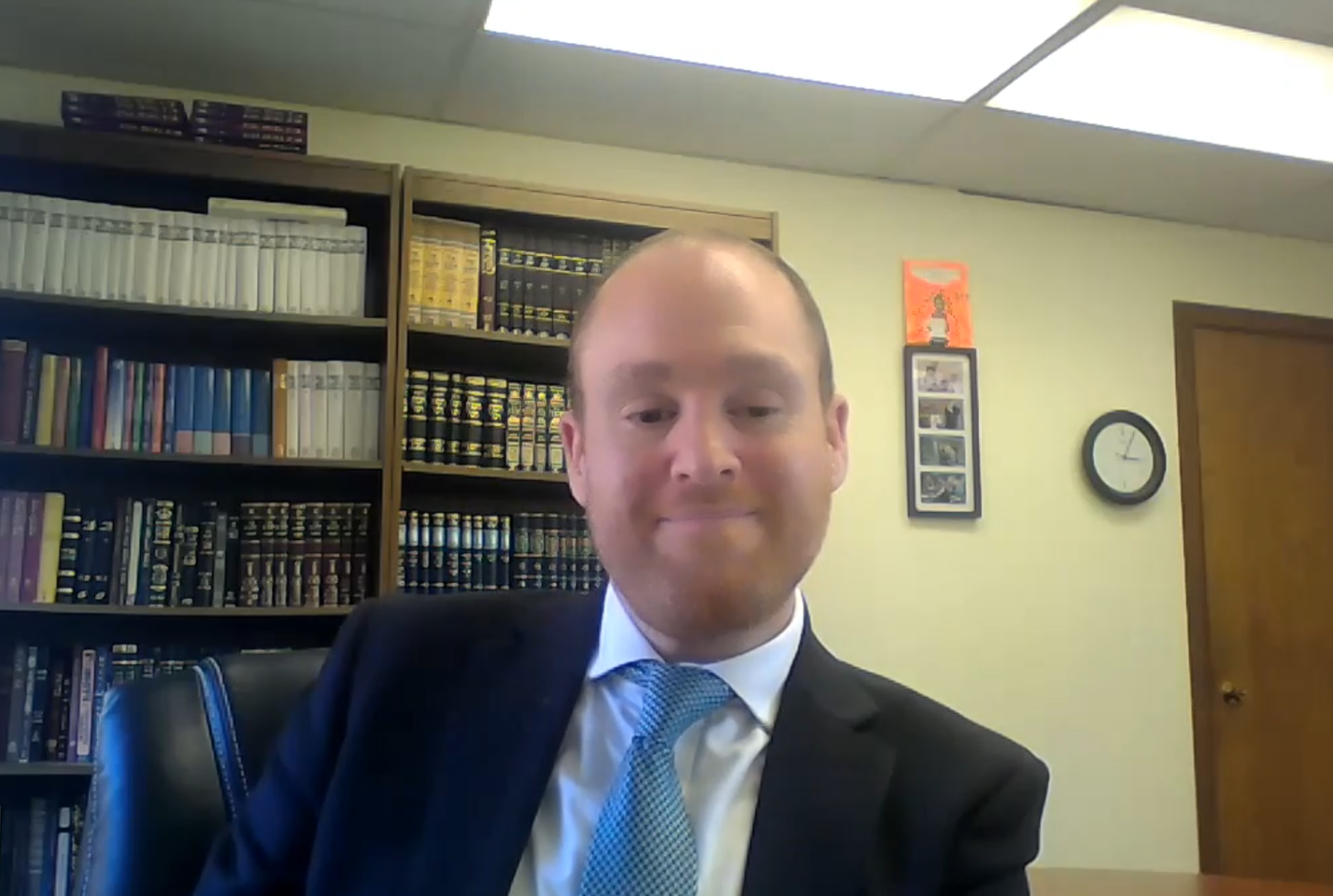
Yeah, I can tell you how I became a rabbi. Uh, it's called The Rubisa. The rubisa wanted to be a rubisa. So, uh, she told me, I think you should become a rabbi at a time where I didn't. I wasn't sure of my next steps. Uh, there was a rabbi here a few years ago who both know, uh, Rabbi Ron-Ami Meyers, the rabbi at, uh, Ezra Bessaroth. And. But I knew Rabbi Meyers back in Israel. He was a teacher of mine in yeshiva. And he recommended that I go to Yeshivat Hamivtar under the, uh, the main teachers of Rabbi Brovender and Rabbi Riskin. He said that would be a really good place for you after you get married. So I went there with Rabbi Meyers, uh, blessing. And I started. I started there learning, but I wasn't yet, uh, joining the, uh, rabbinic program yet. I was just doing another year, and there will be Sharon. She said to me at our table, you're going to share the Torah every Friday night, every Shabbat lunch. And it was from there that I started, uh, giving, uh, D'var Torah. In fact, I always tell young bar mitzvah boys I never gave a speech at my bar mitzvah because I was very shy. Mhm. So she was my first, uh. First person who believed in me and said, I think you should become a rabbi and I think you should give a devout Torah from there. As I mentioned, Rabbi Meyers, uh uh, Rabbi Riskin was a major impact on my rabbinic trajectory. He encouraged me, whether it was weekly or monthly sessions, to develop myself and to go on to go out after receiving rabbinic ordination and to go to, uh, you know, go back to communities in the diaspora and give back. Uh, it was while I was in my final year in Yeshivat Hamivtar in Efrat in Israel, that, uh, there was a new, uh, rabbi in the yeshiva. Rabbi Zeff. And Rabbi Joel Zeff gave the Rubisa and I our first jobs, and our jobs was to be the community, uh, directors of the yeshiva. And it was our responsibility to help the young men, the Bachurim, who are studying there to connect with the kollelim families, with the married men and their families, and to set up, uh, meals where the young men would come to the families for weeknight meals and for Shabbat meals. Uh, and I was given the opportunity to organize social events, dinners, sporting events, mid-week uh, soccer games and ultimate frisbee games. Uh, and it was also there that I was given the opportunity to start teaching my, uh, my first classes in the yeshiva. So that's how I started, uh, my first major position where I was probably paid to be, uh, that was all like, uh, good jobs, but, uh, didn't pay very well. But my first job was in Melbourne, Australia, and it was a fascinating time because in Melbourne, uh, they were looking for rabbis. I sent my resume to jobs in America and England. No one was hiring in 2009. It was the year after 2008, the global financial crisis. No one was hiring. Rabbis were staying in positions, no one was retiring. And I'd done interviews and, uh, nothing was going. And then I got a call, uh, right before Shavu'ot would I go on an interview to Australia? And I said, Australia. Now, that sounds like an adventure. And I interviewed in all these different, uh, communities in Melbourne and Sydney. There were different positions, uh, teaching and uh, uh, and some were pulpit positions. And I landed on a wonderful opportunity of teaching at uh Leibler Jaffna College in Melbourne, Australia. And six weeks into my time there, they said, uh, there's a Sephardic synagogue that doesn't have a rabbi, and would I be willing to help them over the summer for three or four weeks? And I said, okay, I'm Sephardic. But as you may have heard from my background story of my yeshiva, they were Ashkenazi yeshiva. They were Modern Orthodox Israeli yeshiva. They weren't particularly Sephardic. I said, I know how to do, uh, the Sephardic rites of reading the Sefer in the Moroccan style. But, uh, I might need some help in the, in the hazzanut. And they said, don't worry, Rabbi, you'll do just fine. And after three or four weeks, they said, we have no rabbi. Would you take on the job and be our rabbi and help? And it was a very part time job, just on Shabbats and Sundays. And it soon became more than just Shabbat and Sundays. And I did more, more rabbinics there, less teaching. We tried to play the game there. Which job was the primary job and which one was the secondary? But I, uh, I started off quarter time at the Sephardic synagogue and three quarters at the, uh, the school, and then half and half and then a little bit, a little bit of this, a little bit of that. And. It was really, uh, an adventure. I think I was, uh, only 26. No, 27 when I, uh, got my rabbinic ordination and went for my first, uh, position. So we were very young. I think we just had, uh, two, uh, little girls. Kokava and Gabby. Kokava was three, and Gabby was one and a half, uh, when we, uh, when we went to Australia. But by the time we left, uh, Kokava was just shy of her seventh birthday. Uh, Gabby was six. Ruthie was, uh, almost two, no, a year and a half just under- just over. And Tova had just been born. Tova was, uh, eight weeks old when we when we left Melbourne. But that was, uh, a very special time in our lives.