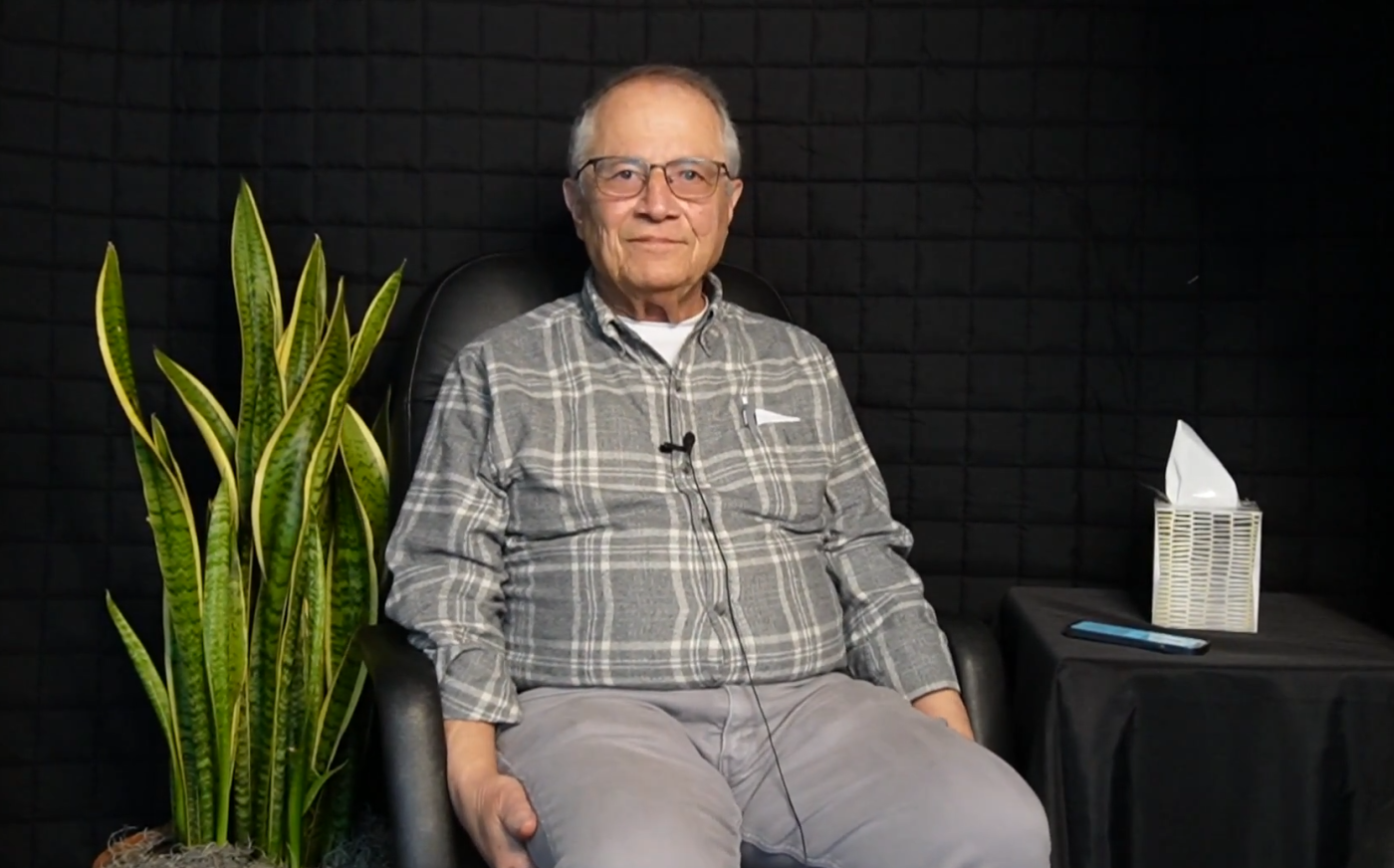
Yes, yes. So in my family is my children, my wife, my grandchildren and great grandchildren. And that's one level. And then my mother had 12, was one of 12. My father was one of eight. And my wife's family has a lot also. So our...that next level of family is. uh, they're living all over the place. And then, um, there's the what I consider to be a member of the family of people and organizations that have been very constant sort of part of my life just where I'm at. So to answer your question, for our immediate family, we have a WhatsApp group. My granddaughter gave the name Mashallah [laughs]. And so through that that what's one main means of communication we're sharing what's happening in the family. I sort of try and put a context about what's going on and where it is and how it fits, like with, say, Shabbat Shalom, instead of saying Shabbat Shalom, Shabbat Yitro, this is coming here, this is it. Or if there's something that's going...that we as a as a family do that is sort of unique...we, not everybody in the family has experience or knows as much as they can or should. I will put information on the WhatsApp chat group. Papu, that is what they called me, um, he always asks questions and they say, "Oh no, Papu." [laughs]. But they hear and they see that we have artifacts. We have, uh, the books that my father got from his father, and they're studying...so we're looking at books not just for what the printed content is, but also who owns it, how we used it, when he used it, and all of that. And that is something that I use in my family. It's also what I was talking about before as being an archivist. I have a lot. My wife would say, "Way too much." And for examples of books and things and papers that that, uh, I share with people when it's when it's an opportune time. And like I said before, there's communications. There's a sender and a receiver. I think another aspect-another real big purpose of the historical society is that senders don't always think it's time for them to send. Like, how many times do you have your grandparents...you wish you asked that question? "What was it like when they did that?" Right? So they either told us and we didn't pay attention, or they just never thought to ask it because that was part of their...who cared what they've done. And receivers have their lives full, and they're living day-to-day life, and they're they're going and pursuing whatever part they're doing. And so when the sender is ready to send, the receiver is not ready necessarily always to receive. And so what I personally try to do, and I think is the role of the historical society, is to be two things. One is a place where the sender decides to capture the information, the interviews and all of that. And so you've got what the sender wanting to send at least part of it. And so it's there for when the receiver wants...is receptive, and it's that stage of their life or that have that question I wish I had asked. And so being the keeper of of sending...of messages being sent to be ready to be received by them in their time and in their way, is one. The other thing is, and this is a much harder thing to do, but I think that you're working on it. This is something I think is a priority-is to say, because you have all these special, uh, looking at special part of our history, of our community and all that. So there you're saying...you're looking out there for receivers who can be prompted and attracted to come and see that part of the message that you're wanting to send.